Monthly Archives: March 2022

Ending of Stories: How Planning an Ending Will Help You Write Faster

Readers love the ending of stories, but do you feel like you don’t know how to write a really good ending?

It may seem a little odd to talk about story endings when you haven’t even started writing. Deciding on the type of ending you want, however, is an important part of planning a book.

You usually wouldn’t drive somewhere without a destination in mind. Knowing how your story ends will help you work out the important plot points in between, all the plot twists that eventually lead to that climatic moment.

But how exactly can you write a great ending before the story is even written? Let’s take a look at the essentials an ending must accomplish in order to write a satisfying ending to a great story.

Knowing these common types of endings, and how to decide what endings work best for your story, will bring your character arcs and story full circle.

This post shares writing tips to help you accomplish just that.

How to End Your Story Coaching Video

Want to know how to write an ending for a story? There are two thing you need to think about: how to come up with an ending that’s GOOD, and how to finish a story practically.

In this coaching video, Joe helps one author figure out how to write the end of a story, something she has always struggled to do.

3 Criteria for the End of the Story

There are a few things an ending must accomplish. Keep in mind that I speak about endings from the perspective of commercial fiction_fiction that moves the reader along, is entertaining to read, and puts plot and character above philosophy and literary prose.

Endings in literary and interpretive fiction may vary a little more in style. But if you’re looking to write a good story that sells, you will want your ending to meet the following criteria.

1. Your Book’s Ending Should be Logical

Have you heard the phrase Deus Ex Machina? It’s defined as “an unexpected power or event saving a seemingly hopeless situation.” In fiction terms, this means everything is suddenly and abruptly resolved by a previously unknown force.

A Deus Ex Machina is not a good way to end your book. It’s convenient. And convenient conclusions end in bad reviews written by disappointed readers.

Instead, the ending to your book should come about logically.

While this doesn’t mean it should be 100% predictable, it does mean that you wrap up your story in a way that is surprising but inevitable. In other words, your reader can reason through and understand how the events of the story led to the final conclusion.

Here is an example of a predictable vs. unpredictable vs. Deus Ex Machina ending:

Predictable: A detective is trying to solve a murder. He finds all the clues that point to person A with the help of person B, and it turns out to be person A in the end.

Unpredictable: A detective is trying to solve a murder. He finds all the clues that point to person A with the help of person B. Murderer turns out to be person B, who has been planting the evidence.

Deus Ex Machina: A detective is trying to solve a murder. He finds all the clues that point to person A with the help of person B. The murderer turns out to be person C, someone completely unrelated and who shows up at the last minute—with no warning to reveal themselves.

Notice that the unpredictable ending enables the reader to look back at the story and think, “Ah, now that makes sense,” whereas the Deus Ex Machina ending elicits the “Where did that come from?” response.

When your ending isn’t logical and doesn’t follow the reason, you risk leaving your readers feeling cheated for having read a whole book that has little to do with the final result.

2. Your Book’s Ending Should be Satisfying

The simplest way to write a satisfying ending is to resolve a secret or question that remained a mystery throughout the plot. This means that whatever questions are raised during the story—the ones that left the reader wondering something important—should be answered.

Better yet, these answers should tie back to clues or plot elements that were set up earlier in the story.

Take another look at the detective in our mystery novel example.

The main character is trying to solve a murder, so obviously the reader expects the murder to be solved at some point. The “whodunit” needs to be answered at the end. The kinds of answers may vary, but the ending needs to identify the murderer in order to have a resolved ending.

Here are a few ways the ending can go:

Satisfying/Predictable: The detective finds the murderer successfully.

Satisfying/Twist Ending: The detective solves the mystery, but it turns out the murderer has committed an elaborate suicide to frame someone.

Unsatisfying: The detective chases the clues to a dead end and at the end still doesn’t know who killed the victim. This might come in the form of a cliffhanger that doesn’t tie up important questions in the book, or an ambiguous ending that doesn’t resolve major plot points.

Note: You can include cliffhangers or ambiguous endings in a book, but only if you resolve the major questions driving the hook for the story. If you write these types of endings in a way that requires readers to read the next book, you’ll probably annoy them more than intrigue them. Readers need the answers to the big questions in the book they’re reading.

You need to write stand-alone books with series potential, not books dependent on their sequels.

While there is definitely literature out there with “unsatisfying” endings, you’re more likely to alienate readers in commercial fiction if you don’t give them an answer to the big question.

No one wants to read a whole book and be left feeling like nothing was resolved, even if that last line is unforgettable.

3. Your Book’s Ending Should Have a Sense of Finality

The end of your book should feel like, well, something ended.

The major crisis is averted. The princess is saved. The quest is over. The battle is won. Something that started at the beginning of the book is now over.

While this might seem pretty obvious for standalone books, you may find yourself asking “What about a series? What if my story goes on?”

The global story for a series doesn’t need to end for a book to have a sense of finality. However, each book does need to reach its own climax: we need to see a protagonist get or not get what they want (their story goal) in the end. Each book needs its own ending.

For example, every book in Harry Potter series ended with a climatic event that occurred at the end of the school year. Each book of the Lord of the Rings contains its own battle for survival, even if Frodo and Sam hadn’t reached Mount Doom yet.

Tying up a book in a series is much like tying up a scene—the story goes on, but whatever happened in this part of the story is over and done with.

5 Types of Endings for Stories

There are numerous books, articles, and schools of thought out there on the many types of endings. And there are comedic vs. tragic endings, resolved vs. unresolved endings, ambiguous vs. tight endings, to name a few.

There are no wrong ways to categorize endings, but for the purposes of this article, I prefer to speak from the point of view of planning. To do this, I want you to consider five types of endings for your book before you start writing.

You may end up with an ending that encompasses traits from more than one of these, but they are a good starting point for planning.

If you want to write faster, it helps to know how your story ends. Choose one of these five-story endings to decide this.

1. Complete Resolution

Also known as a happy ending. However, I dislike that name because the Complete Resolution isn’t always “happy.”

In Complete Resolution, all questions are answered, all loose ends are tied up, and all subplots are resolved. This type of ending is commonly used for standalone novels of all ages and genres.

When planning for a Complete Resolution ending, it’s important to keep track of all your subplots and plot elements to ensure that nothing is left hanging at the end. If a question is raised, it must be answered.

For example: Pride and Prejudice has a Complete Resolution. All loose ends are tied up, all couples are together, and all questions answered. The readers are left feeling satisfied that every problem has been resolved.

2. Incomplete Resolution

This is the kind of ending that’s usually more fitting for a series. As stated above, endings for individual books in a series usually leave something open in order to lead into the next step of the bigger story.

When planning for an Incomplete Resolution, it’s important to know what threads you want to tie up and what you want to keep open.

A good rule to keep in mind is to tie up subplots while leaving the main plot open to lead into the next book.

For example: Every Harry Potter book except the final one has an Incomplete Resolution. The school year is tied up and there’s usually some kind of conflict resolved or a mystery solved, but the question of what will happen with the looming return of Voldemort remains unasnwered.

3. Changed World

In this kind of ending, the external world/environment/life that the main characters start out with is no more. This is usually due to factors outside of the characters’ control. A few examples are natural disasters, being uprooted to a different city or country, or entering a new family.

The main focus of a Changed World ending is how your main character responds to their new situation. Their response could be a good one (acceptance, excitement, looking toward the future) or a bad one (denial, anger, mourning the past), but no matter how they react, the ending emphasizes that the past isn’t coming back, and the main character must decide how to move forward in their new situation.

When planning for a Changed World ending, consider your character’s personality and how they should respond to each step of the change their world is undergoing. Think about how you’re going to tie their actions early in the story to their ultimate reaction to the new state of their world.

For example: Star Wars, specifically Return of the Jedi, has a Changed World Ending. Luke and the rebels have defeated the empire and redeemed Darth Vader, and the galaxy has been irreversibly changed by these events. As the end, we see a scene of celebration, showing that the main cast is happy about this development, but there is still a sense of much to be done ahead to adjust to this new reality.

4. Changed Self

The Changed Self ending can be considered the counterpart to the Changed World ending. In this type of ending, your character goes through more internal than external change. Their environment or life in general more or less returns to its “normal” state at the end of the book, but they now see everything with fresh eyes because they are no longer the same person they started out as.

This type of ending can also be referred to as the Circular ending. But I prefer to focus on the change in self because I feel that places emphasize on the more important aspect of the story, which is character transformation.

When planning for a Changed Self ending, make sure to consider the impact the events in the book have on your character. Focus on the “how” and “why” of the character’s internal transformation and make sure that their thoughts and decisions ultimately point toward that change.

For example: My book Headspace has a Changed Self ending. In it, the main character, Astra, returns to her home after the events of the book. She finds that her house still looks the same as she left it several months ago, except now the daily, minute things of life seem unimportant because her perspective has changed.

5. Slice of the Future Ending—or Epilogue

Slice of the Future endings give the reader a peek into the life of your hero (or those your hero left behind) further down the road. It’s common for this to be done as an epilogue. The reason I single out this type of ending is because planning for this kind of ending is a little different from the others.

Slice of the Future gives perspective on the events that took place in the book. When you end a story after the main conflict, your main character is still very much fresh from what they’ve just gone through.

In most commercial fiction, what takes place within the book is a relatively short event that encompasses anywhere from a few hours to a few years. When you fast forward in time, you are telling your readers “this is how this event fits into the grand scheme of things.”

Knowing your book’s type of mood can help you pick your story’s ending.

This type of ending can be quite tricky because your character’s future may not match the future your readers want for them. Some readers very much enjoy Slice of the Future, while others prefer for it to be left up to the imagination. It’s not uncommon for books that use this kind of ending to be criticized heavily for writing a future that “doesn’t fit the character/story at all.”

Not only that, epilogues are often viewed as undesirable for commercial fiction by agents and publishers, so you may want to consider how essential this peek into the future really is for the story.

If you want to plan for a Slice of the Future ending, try to consider the overall mood of your book. While you can’t please everyone, it’s worth taking time to ensure that the future establish is at least consistent in tone with the rest of the the story.

A comedy would be better served with a happy, bright future, while a tragedy would fit better with a future that is melancholy and perhaps bittersweet. By matching the mood, you can at least give your readers a consistent experience.

For example: Mockingjay (the Hunger Games finale) and The Handmaid’s Tale have this type of ending/epilogue. Fan reactions to these endings have been mixed, ranging from very positive to terribly negative. It’s worth reading these series, considering how the peek in the future fits into the story as a whole, and think about whether you want to follow their example.

How to Find Your Perfect Ending

Now we turn our attention to your book.

Deciding on the type of ending you want helps give your book an overarching direction to follow. It’s much like drawing a rough sketch of what you want the final product to look like before you start adding details.

Keep in mind that rarely does an ending fit only one of the four categories listed above. The goal is not to pick one type of ending and force your story into the box, but rather decide on what it is you want to emphasize as the most important element of your book.

To determine what type of ending your book should have, ask yourself the following questions:

  1. What is my genre? Different genres may suit different endings. For example, comedy tends to have changed self endings, whereas epics tend to have changed world endings.
  2. What do I want my readers to feel at the end of the book? Determining what you ultimately want to communicate to your readers to write the perfect ending.
  3. Which is more important in the book: the internal struggle or the external struggle? An externally focused book would benefit more from a Changed World ending, whereas an internally focused book would benefit more from a Changed Self ending.
  4. Do I want to end the book with a sense of immediacy or a sense of wistfulness? Think of this as whether you want to end the story with your hero still standing on the battlefield or telling the story to their grandchildren. The first leaves more room for interpretation, whereas the latter gives a greater sense of finality. If you want that greater sense of finality, a Slice of the Future (Maybe call this Reveal instead?) ending might be what you want.

By deciding on your ending early, you not only have an overall direction for the plot of your book, but the tone and mood as well. Every step your story takes should lead your reader closer to the ending and the change that your character or story world takes.

Plan Your Ending If You Want to Write Faster

While some writers enjoy not knowing the ending of their book before writing, writers who  want to write faster will benefit from knowing how their plot ends, and how their characters have changed because of their journey.

To help you plan your ending, call back on the five types of endings covered in this article. Ask yourself which one accomplishes the emotion you want your readers to feel in the end, and then write that ending.

Jot down the last line.

It’s likely that if you feel good about your story’s ending—and it provides answers to all your story’s main questions—you’ll have written an ending that will satisfy your readers.

What kind of story endings do you like? Let us know in the comments.

By J. D. Edwin

Source: thewritepractice.com

Follow us on Facebook and Twitter

Visit us at First Edition Design Publishing

3 Crucial Steps That Will Improve Bad Writing

Today’s post is written by Jeff Goins. Jeff is the best-selling author of four books, including The Art of Work. His award-winning blog, Goinswriter.com, is visited by millions of people every year.

Deliberate writing practice is the foundation of The Write Practice. Deliberate practice writing can take your writing process to the next level.

If you want to meet your writing potential in life, you have to write. Just like basketball players spend hours shooting free throws so that they don’t choke when it counts in a game, writers need to ingrain a type of practice that works for their writing process into their DNA.

In this article, you’ll learn a writing practice that will help you develop a regular routine of practice to improve your creative writing skills.

Bad Practice—and the Illusion of Practice—Don’t Create Expert-Level Performance

Stephanie Fisher had come a long way from her hometown of Jamestown, New York, to Augusta, Georgia, but this was her dream and she wouldn’t give it up. The year was 2010, and it was her seventh time auditioning for American Idol.

She had never made it this far in the singing talent show, but this time, things were going to be different. This time, she would see the judges.

Dressed in a silvery sequined top, donning pearls around her neck and fishnet stockings, Stephanie stepped onto the platform of America’s most popular talent show, smiling nervously before the judges.

“Wow,” a couple of them said, remarking on her outfit.

“I almost wore the same thing,” Randy joked.

Simon rolled his eyes, obviously annoyed.

“Okay,” Kara said, “let’s hear it.”

In her black and white oxfords, Stephanie spread her feet apart as if to ready herself, and she opened with Peggy Lee’s “Fever.”

At this point, Stephanie was snapping her fingers and provocatively staring down the judges, who were audibly groaning. Her rhythm was off, the notes were wrong, and everyone on the set knew it, including Stephanie. They told her to stop. She frowned.

“Thank you, Stephanie,” Simon said.

“What did you think?” Kara asked.

“Terrible. Honestly, you can’t sing, sweetheart.”

Stephanie admitted to being a little starstruck in the presence of Victoria Beckham, who was a guest judge that day. Later she told a reporter this was something the producers told her to say. Victoria offered to turn around in hopes that it would make the contestant feel more at ease. Stephanie accepted the offer, which felt forced and a little too theatrical for me.

The young grad student started again, a little more awkwardly, this time singing “Baby Love” by The Supremes. It wasn’t any better. After a measure or two, Victoria turned back around. This time Kara added to the critical jabs, saying it was better when she was looking. Another burst of laughter erupted from the judges.

“With the greatest respect,” Simon said in a proper British accent, pausing for dramatic effect, “you have a horrible voice.”

“Really?” Stephanie said, looking stunned but still smiling nervously. All the preparation, all those long years of dreaming, had led to this?

“Yeah,” Randy chimed sympathetically. “You ain’t got it goin’ on.”

“You can’t give me a few minutes to get un-nervous?” she pleaded.

“We’d need years, Stephanie,” Simon said, and the judges again all laughed in unison. And as I watched the YouTube video recounting this painful story years after the fact, I realized how true that was.

It’s Not Just About Trying

Our parents told us to try our best. Whether at school or Little League, we were encouraged to give it our all, and that was enough to make them proud.

But the truth is there are different kinds of trying. Anders Ericsson has been studying this for years and in his book Peak, he’s come to a surprising conclusion: not all effort is equal.

Stephanie Fisher had been practicing singing for years. She’d been trying. But the 10,000-hour rule, at least as far as she understood it, had not worked. What was she doing wrong?

The answer, according to Ericsson, lies in what he calls deliberate practice.

In his recent book, Peak: Secrets from the New Science of Expertise, he says that when you embrace the deliberate-practice mindset,

. . . anyone can improve, but it requires the right approach. If you are not improving, it’s not because you lack innate talent; it’s because you’re not practicing the right way.

So what is the right way to practice? Deliberate practice requires the following:

  • You must push yourself past your comfort zone and attempt things that are not easy for you.
  • You must get immediate feedback on the activity you are practicing and on what you can do to improve it.
  • You must identify the best people in your field and find out what sets them apart, then practice like they do.

If you’re not doing these things, you’re not really practicing. At least, not in the way that is going to lead to excellence.

If you’re not engaging in deliberate practice, you’re not practicing in the way that leads to excellence.

The Secrets to Writing Like Hemingway

When Ernest Hemingway was living in Paris in the 1920s, he received an exceptional education in writing, a unique opportunity he may not have even been aware of.

Every day, he would get up and go to a cafe, where he would write for a few hours. First, he’d edit the previous day’s work, a discipline he developed that influenced his style for the rest of his life. Unlike many other authors at the time, he was constantly tightening his prose, trying to make it cleaner, shorter, better.

In the afternoons, he would visit his friends in the Latin Quarter, people like Gertrude Stein, Scott Fitzgerald, and Ezra Pound. They would critique his writing, give him feedback on what he was doing right and what he was doing wrong. Then he would apply what he learned.

This was an incredible opportunity, but it wasn’t an accident. Hemingway was born in Chicago, and after a brief stint in the Red Cross during WWI, he wandered for a while, trying to find his way in life. It was author Sherwood Anderson who encouraged him to move to Paris where “the most interesting people in the world lived.”

So he did, and nearly seven years later, when his informal apprenticeship was over, he had learned the discipline of deliberate practice.

Challenge Yourself to Deliberate Practice

If you want to do the same, you must:

  1. Push yourself in your practice. In my book The Art of Work, I call this painful practice, because it might hurt a little. That’s what happens every time we go outside our comfort zone.
  2. Seek out critical feedback. We live in the age of inflated egos when most people are afraid to give their honest opinions. But in order to become a truly great writer, you will need people in your life to tell you, “you can do better.”
  3. Seek out the greats and learn their secrets. You don’t have to move to Paris, but you need to find prominent writers in your genre, living or dead, and find out how they do what they do.

The truth is there are people who have a natural ability when it comes to writing, but this is incredibly rare. If you want to get better at writing, you need to construct some  writing goals for you this year, and then develop some practice plans that will help you develop good, deliberate practice writing habits.

More and more, science is proving that what we used to call talent is really just hard work that pushes you to a level of performance that you hadn’t previously attained.

What makes a writer great is not the talent, but the practice.

When was the last time you practiced something deliberately? What did you learn? Share in the comments!

By Jeff Goins

Source: thewritepractice.com

Follow us on Facebook and Twitter

Visit us at First Edition Design Publishing
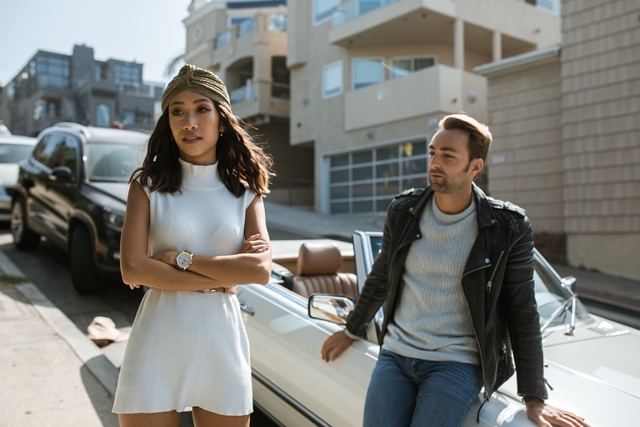
Relationship Thesaurus: Frenemies

Successful stories are driven by authentic and interesting characters, so it’s important to craft them carefully. But characters don’t usually exist in a vacuum; throughout the course of your story, they’ll live, work, play, and fight with other cast members. Some of those relationships are positive and supportive, pushing the protagonist to positive growth and helping them achieve their goals. Other relationships do exactly the opposite—derailing your character’s confidence and self-worth—or they cause friction and conflict that leads to fallout and disruption. Many relationships hover somewhere in the middle. A balanced story will require a mix of these dynamics.

The purpose of this thesaurus is to encourage you to explore the kinds of relationships that might be good for your story and figure out what each might look like. Think about what a character needs (good and bad), and build a network of connections for him or her that will challenge them, showcase their innermost qualities, and bind readers to their relationship trials and triumphs.

Frenemies

Description: Frenemies are friends or acquaintances who are also, on some level, rivals or adversaries. Maybe they have to get along on a sports team or at work but they’re vying for the same position. Perhaps insecurities accentuate the negative aspects of the relationship and stifle the positives. Personal politics may require them to maintain a veneer of friendliness, but at its core, the relationship is more about winning or exerting power. The frenemy relationship is a complex one that, if it fits your story, can add a ton of conflict and depth.

Relationship Dynamics
Below are a wide range of dynamics that may accompany this relationship. Use the ideas that suit your story and work best for your characters to bring about and/or resolve the necessary conflict. 

Characters getting along fine until a competitive element is introduced, at which point they go for blood
Athletic teammates cooperating to get a win but dedicating themselves personally to outdoing each other
One friend being reluctant to share information or cooperate with their frenemy co-worker or teammate because they don’t trust the other person’s motives
Both parties putting on a friendly front when they’re around other people but secretly not wanting anything to do with the other
One party alternating from friendliness and respect to manipulation and snubbing, constantly putting the other person off-balance
A superficial and disingenuous relationship that’s based on keeping one’s friends close but their enemies closer
Two parties not really liking each other but maintaining a civil relationship due to a long history together
Two people being fine one-on-one but turning into rivals when other friends or romantic interests enter the scene
One character constantly being sucked back into relationship with the frenemy despite a desire to steer clear
Two parties being best friends one day and not speaking to each other next (in a repeating, ongoing pattern)
One person never knowing where they stand with the other party
Being friends with someone who is super nice to the character’s face but is subtly undermining them behind the scenes
One party being so manipulated and gaslighted by the other person that they can’t see their faults or true nature—even when true friends and loved ones point them out
One “friend” always competing with the other (usually in an underhanded fashion), trying to take what they have

Challenges that Could Threaten the Status Quo
A third party (a coach, romantic interest, shared enemy, etc.) changing the dynamic between the two characters
One person developing a weakness or vulnerability that the other can exploitEither of the parties achieving something significant
One person finding themselves on the outs with their shared social group
One party circulating negative information (true or false) about the other person
One party developing empathy for the other
A change that results in less time being spent together
Losing the one person or thing that keeps the two together
One party giving up and refusing to compete or fight with the other

Wounds that Could Factor into the Relationship
A learning disability, A parent’s abandonment or rejection, A toxic relationship, An abuse of power, Battling a mental disorder, Being bullied, Being disowned or shunned, Being raised by a narcissist, Being rejected by one’s peers, Being the victim of a vicious rumor, Growing up in the shadow of a successful sibling, Having parents who favored one child over another

Conflicting Desires that Can Impair the Relationship
Both parties wanting to be the best at the same thing
Both parties seeking acceptance from the same person
One person seeking friendship while the other wants to control, manipulate, or minimize him/her
One friend wanting to clear the air and improve the relationship while the other wants to maintain the status quo
One person wanting to escape the relationship while the other wants to maintain it

Clashing Personality Trait Combinations
Needy and cruel, Confrontational and Timid, Controlling and Subservient, Trusting and Manipulative, Gossipy and Private, Mischievous and Humorless, Reckless and Responsible

Negative Outcomes of Friction
Someone’s reputation being ruined
Arguments and cat fights
The larger group losing something vital because the two people can’t work together
Other people being dragged into the frenemies’ drama
One party being ousted from the whole social group and being left on their own
The victim of a manipulative or devious frenemy doubting themselves and becoming insecure
The frenemies losing good friends who are tired of dealing with them
Either person continuing the same negative behaviors in their other relationships
A third party being hurt in the verbal or physical crossfire

Fictional Scenarios That Could Turn These Characters into Allies
Facing a new, mutual threat
A desperate situation in which each person has a skill or knowledge that the other person needs to survive
Instead of competing against one another, being forced to work together to win
A personal tragedy for one person that generates empathy from the other, humanizing that person and making the other party want to help
One party learning about the other’s past (why they are the way they are), resulting in them wanting to mend fences and help the other person instead of bring them down
The two realizing that they have been pitted against each other by an outside source

Ways This Relationship May Lead to Positive Change
Either party recognizing and valuing their own strengths and weaknesses (instead of envying and wanting what the other has)
The competition pushing each person to be better than they could have been on their own
One person recognizing that the friction is largely their own fault, and wanting to change for the better
One party recognizing that the relationship is toxic, and getting out of it
Either party (or both) learning to value the other’s strengths and uniqueness and ceasing to be threatened by it

Themes and Symbols That Can Be Explored through This Relationship
A fall from grace, Alienation, Betrayal, Coming of age, Deception, Friendship, Instability, Journeys, Teamwork

By BECCA PUGLISI

Source: writershelpingwriters.net

Follow us on Facebook and Twitter

Visit us at First Edition Design Publishing

How to Write When You Don’t Feel Like It: 5 Practical Tips You Can Try Today

Are there times in your life when it’s more difficult to write? Do you want to learn how to write when you don’t feel like it?

As a writer, you probably feel frustrated when the muse doesn’t show up, or you feel stuck on a bad idea for a story but desperately want to write one. One day you’re passionate about writing. You’re in the zone.

And then, something happens.

You skip a day. And then two. A week goes by and you haven’t written a paragraph. You enter a black hole of unproductive writing sessions.

You feel guilty, like you should be taking your writing more seriously, but you just can’t muster the willpower to actually write. This is real life for a real writer: there are days when we don’t want to write, where not even an extra-large cup of coffee will get you through a writing session.

In this article, we’ll talk about why you don’t feel like writing and what you can do about it.

It’s Normal to Not Feel Like Writing

At some point in every major writing project I’ve ever worked on, I’ve wanted to give up. I’ve gotten to the point where I’ve felt so exhausted, so stupid, so humiliated that I wanted to quit being a writer and give up my dream altogether.

Steven Pressfield calls this the Resistance, a malicious, sentient force actively seeking the destruction of your creative thinking and  art. I call it the ugly middle. Whatever you want to call it, the truth is that when you reach this point, you’re close to a breakthrough.

The best thing you can do is push through it.

5 Practical Tips to Push Through Unproductive Attempts at Writing

How do you push through? Here are five tips to help you focus on your writing when it’s the last thing you want to do:

Have you ever sat down to write and felt completely unmotivated? There are five practical tips you can try to push through your writing time—even if you don’t feel like writing.

1. Find Your “Creative Nook”

In the acknowledgments of The Golden Compass, Phillip Pullman thanked a museum café, saying that every time he went there, the problems he was having with his novel were solved in an hour.

Sometimes, all you need is the right location, your personal creative nook.

I wrote my first book sitting in a particular seat in a particular coffee shop. This location became my own personal writing space that, on many days, triggered my creative juices.

Others like to write outside or in their home office. How about you? Where do you feel most creative?

2. Make It Your Job

Many of the best writers, including Ernest Hemingway, Salman Rushdie, and Virginia Woolf, wrote professionally before becoming fiction authors (Rushdie was a copywriter, Hemingway and Woolf journalists).

If you want to become a better writer, you have to practice writing—and finding a full-time job in writing might be the creative career you need in order to actually dedicate plenty of time to writing.

Consider reaching out to your local newspaper or a company that needs marketing copy. Perhaps you can volunteer or even get a part-time job there.

For the last five years, I’ve worked professionally as a writer, and while there are still times I don’t want to write, the fear of disappointing the people I write for and the need to support myself and my family keep me going.

Also, there’s nothing like a deadline to boost your creativity!

3. Take a deep breath. If that doesn’t work, take a walk.

If you’re stuck in the middle of a writing project, you may just need to reset your brain. Try closing your eyes and taking several deep breaths.

If that doesn’t work, grab a notebook and a pen (or your iPhone with Evernote) and take a walk. This will clear your head and get your subconscious working to solve your creative blocks. Sometimes fresh ideas need to come from doing something different, and preferably something that causes movement.

Spending time out of a chair is good for your mental health—and physical health, too!

4. Hang Out With Other Writers

“You are the average of the five people you spend the most time with,” said Jim Rohn, and it’s true, the people you spend time with rub off on you. Your lack of motivation could stem from hanging out with the wrong people.

By hanging out with other writers, their passion for their writing will inspire you to go back to your own. It’s never a waste of time building a community of writers who you can support, and who will support you in return.

5. Sit With the Pain and Grieve

Sometimes, writing is just hard, and you can’t do anything about it.

I used to procrastinate and promised I would come back to my writing later when I felt more inspired. Now, I recognize that the pain is a given. The sooner I get through it, the sooner I can have a breakthrough.

So I scrunch my face up. I whine. I write in my grief journal. I grieve the fact that creativity, like birth, is always difficult. But the fruit is worth it.

And then I write, whether I feel like it or not.

The Best Writing Can Come After a Slow Period

Whether you’re an amateur writer or a published author, every writer experiences days where they just don’t feel like writing.

However, if you want to become a better writer, you have to practice—and this means writing through the bad writing days, or low moments where you just don’t feel like writing.

On day you don’t feel like writing, set some small, simple goals for you to accomplish and push through the disinterest. If this doesn’t work, or even if it does, try one of the five practical tips in this article to ignite a spark and love for writing again.

If you do this, you’ll be on your way to becoming a better writer—and a far more resilient one.

 What do you do when you don’t feel like writing? Let us know in the comments.

By Joe Bunting

Source: thewritepractice.com

Follow us on Facebook and Twitter

Visit us at First Edition Design Publishing

Best Practices for Working with an Independent Editor

By Lisa Poisso

Most writers have read the wide-eyed articles from newly-agented writers detailing the pressure of revising and returning edits on a tight schedule and working with an assigned editor. But what if you’re the one hiring the editor? By their nature as entrepreneurs, every independent editor’s business practices vary. Ask your editor about these common expectations and practices before agreeing to any work.

Before Your Edit

1. Agreements about the business details of your project protect you both. An agreement needn’t be a formal printed contract signed in person; an email constitutes a legal agreement. The agreement should define the scope of work, start and finish dates and other relevant deadlines, total cost and payment schedule, and a clear explanation of what happens if either party cancels or breaches the agreement.

2. New writers often mistakenly believe they need a nondisclosure agreement (NDA) to protect their material. Your work is legally copyrighted the moment you commit it to print, making NDAs cumbersome, unnecessary, and often a sign of professional mistrust.

3. Most editors require a deposit to get your book on their calendar, customarily ranging from a flat fee of $100 or more to the first half of the total fee. You can expect to pay your total editing bill in full before the editor releases the edited manuscript.

4. If you can’t or don’t want to use your editor’s preferred payment method, aren’t located in the same country as they are, or prefer a slow payment method like personal checks, ask if your choice will create any issues. Allow enough time to process payments without holding up the project.

5. Missing your editing date by even a day or two could leave your manuscript without time to fit into its scheduled slot, if the deadline is tight or your editor is busy. Communicate as soon as you suspect you may have a problem hitting your scheduled editing date.

6. The time it takes to edit a manuscript varies widely, depending on your manuscript’s needs, the type of editing, and the editor’s schedule and work practices. Developmental editing usually takes the longest. Line editing is slower than copyediting, and proofreading is the fastest editing service.

If there were such a thing as a typical editing rate among all these levels of service, it might run from 20,000 to 35,000 words per week. You get what you pay for. If all the editor has time for is a breakneck race through the manuscript, that’s precisely what you’ll get.

Don’t try to reverse-engineer what you think an editor’s editing rate should be based on words or pages per hour. Manuscript speed doesn’t account for writing an editorial report or letter; creating a style sheet; formatting and preparing the file; running automated software and macros to check mechanics, formatting, and style; an initial read-through; a follow-up read-through; or book mapping and structural analysis. If there’s no time for these (or if your editor prices the edit without them), you’ll be missing many aspects of a thorough professional edit.

7. Submitting a manuscript that’s as error-free as possible allows your editor to spend their time on elements that require professional skill and judgment. If the writing needs extensive spelling, grammar, and punctuation cleanup, those things are exactly where the editor will spend their time. Leaving messes for the editor to clean up costs money—your money. Clean manuscripts give editors elbow room to help you elevate your story and writing.

8. Don’t jump the gun with fancy formatting or graphics. It’s not time for your manuscript to look like a book yet. Standard manuscript format—12-point double-spaced Times New Roman, one-inch margins, first-line paragraph indents instead of tabs, one space (not two) between sentences, and no line space between paragraphs—lets your editor get right to work.

9. Although most editors spot-check facts and look for obvious errors (mostly for narrative and internal consistency), factual accuracy—including science, geography, history, and foreign languages—is your responsibility as the author.

During Your Edit

10. Some editors consider work complete when they return the edited manuscript to you. This is typical for edits designed to inspire revision and new writing, such as developmental or line edits. Other editors ask that you review and approve or revise their edits and return the manuscript for final adjustments; this is more typical for polishing edits like copyediting or proofreading. These editors will review some or all of your changes; the first sort consider that a new round of editing. Neither way is wrong or superior. Included follow-up rounds generally mean higher rates; many editors who don’t include follow-up rounds offer deep discounts for additional rounds. Ask your editor what’s included.

11. Especially early in your writing career, your manuscript could need multiple rounds of the same type of editing. If a developmental edit leads to significant changes, for example, you could need a second round after revisions. Don’t let this possibility take you by surprise.

12. Expect to work using Microsoft Word and tracked changes. Most editors use Word because it permits the use of editorial tools that increase the accuracy and quality of the edit, a benefit you very much want for your manuscript. Agents, editors, and other publishing professionals will also expect to receive your manuscript as a Word file, not as a PDF or “compatible” file. Word and tracked changes look intimidating but aren’t difficult to learn, and working with them is part of a writer’s baseline skills.

13. You may not hear much from your editor while your edit is in progress, or they may contact you with various questions. Both are normal. Editing isn’t a sequential process that starts with chapter one and finishes at “The End.” Editors work in layers. There’s often not much to say about an edit in progress beyond “Yep, still working.”

14. For anything but proofreading, edits are the beginning of the revision process, not the end. Reviewing a copyedit is relatively straightforward, but line and developmental edits are designed to steer you toward deeper, better writing. It’s up to you to follow through with the work.

After Your Edit

15. Editing is a subjective process, and you’re free not to take every edit and recommendation. It’s your book and your vision. Most editors include follow-up time to review points of confusion or disagreement. Disagreeing with the substance of the feedback, however, does not entitle you to a discount or refund.

16. A full-length edit can generate hundreds of comments and tens of thousands of edits. Considering this scope, the final manuscript will inevitably contain some residual errors. You can minimize these by starting with a manuscript as clean as you can possibly manage and finishing with a professional proofread.

17. Just as you wouldn’t want your editor to discuss or share your manuscript with others, it’s unprofessional to share your edits online or kvetch about the specifics with other writers or editors. The edited final product is yours to do with as you wish, but the edits, comments, and editorial feedback themselves are intended for you alone.

18. If you find yourself rejecting most of the edits and suggestions in your edit, you may have hired the wrong editor for the job or pushed for a level of editing your manuscript wasn’t ready for. More often, you simply need some emotional distance from the feedback. Putting away a difficult edit for a while can help you regain objectivity.

19. American authors, don’t file a 1099-MISC for editing fees if you paid using a service such as PayPal. Payments made with a credit card or payment card and certain other types of payments, including third-party network transactions, must be reported on Form 1099-K by the payment settlement entity under section 6050W and are not subject to reporting on Form 1099-MISC

20. Want to thank your editor? Recommend them in writers’ groups. It’s the editorial equivalent of posting a reader review online. And consider sending a signed copy of your book. If your editor doesn’t have space to keep it, they can donate it to a Little Free Library—more readers for your brilliantly edited creation.

This article does not constitute legal or financial advice; for specific issues and questions, you should seek advice from a qualified attorney or financial professional.

Source: writershelpingwriters.net

Follow us on Facebook and Twitter

Visit us at First Edition Design Publishing