Monthly Archives: April 2012

eBooks: Men Lie, Numbers Don’t #FED_ebooks #ebooks #author #writer

First Edition Design Publishing

How the eBook Revived Our Love for Literature

Source: http://www.literacynews.com

By: Tahar Rajab

It seems as if a very silent revolution is transpiring before our very eyes. To witness it unfold, one needs to simply look up the next time they’re seated on a train. That is if their attention isn’t already occupied by a piece of wonderful literature of course. You see, Great Britain is being transformed into a book reading nation and – if stats are anything to go by – it’s all thanks to the eBook.

Men lie, numbers don’t. Therefore, the statistics behind eBook and First Edition Design eBook Publishinghardcover books, along with reading preferences amongst the younger generation, is telling. EBook sales grew by a whopping 177% last year, with 53% of those who bought eBook readers proclaiming that they now read more books than they ever did before.

Perhaps the most crucial statistic however, lies within 50% of kids saying they want to read an eBook, with one third claiming they would read more with eBooks. Now as previously mentioned, ‘men lie, numbers don’t’, and so on that understanding (and after replacing ‘men’ with ‘kids’ of course), it may very be that these children wouldn’t read more with eBooks and are generally simply fibbing about their desire to read an electronic book. However, as such stats are all we have to go by, one would be correct in assuming that the upcoming generation is one with a rekindled (no pun intended) literature love affair.

Why?

The eBook has transformed lives and the way we approach literature. How it has done so, is really quite simple. Having the capability to do something spurs desire for it to be done. This is the case with the eBook, which by providing users with potentially hundreds of different titles to choose from in one device, stimulates the will to read.

Another reason can be found in the enormous gulf that once existed between books and technology. This can be better explained as a gap between the young and the old; between a generation that grew up with literature as a leading form of entertainment, to one that found leisure in technological advances, such as CD or mp3 players and handheld game consoles. With literature now being available on the latest technological handheld devices, this chasm is no longer, and both sides are now merged together.

Is All Rosy?
First Edition Design eBook Publishing

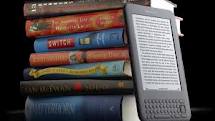
eBooks are outpacing print books

However, perhaps there is a detrimental side effect to the rise in eBook popularity. For every 100 hardcover books sold by Amazon, the website flogs 143 eBooks. EBooks are thus seemingly replacing hardcover works and Open PDFs replacing paper pages. This could result in a weaker emotional bond between readers and pieces of literature. It happened with music. The ability to contain mass amounts of music on mp3 devices, hindered the attachment listeners once felt to the music through a physical representation, like a CD. Literature lovers of my generation will surely agree with the logic that a hardcover book, with its fresh smell and untouched pages, brought with it an inexplicably affectionate sensation. That feeling cannot be reciprocated with eBooks.

After Considerable Thought

The renewed love for literature is most certainly a good thing and an unsung positive association with the upcoming generation. However, whether an eBook is a better source for written material is a completely different debate. Perhaps the whole idea of requiring an emotional bond with a book is rather illogical and ignorant of the fact that such bonds are made while reading the actual text, not by holding the work in one’s hand. However, whether reading off a screen is healthier for the eyes and brain is also a matter that needs conclusive research (much has been analysed though, at the moment; the results of different studies are contradictory). Thus for the moment, the conclusion is that due to things still being fresh and findings being inconclusive, further results are awaited in order to form a sound conclusion. You might need to re-read that last sentence several times, and maybe even print it off into paper form to understand it!

About the author: Tahar Rajab is a British freelance writer with a philosophical outlook

First Edition Design Publishing

eBooks Help the Environment #FED_ebooks #ebooks #Author #environment Pls RT

First Edition Design Publishing

eBooks Help the Environment One Download at a Time

Posted by Brian Clark Howard of National Geographic News

newswatch.nationalgeographic.com

By Allen Tellis

Sales of eBooks went up 164 percent from 2009 to 2010. eBooks, which include digital newspapers, books, blogs, or journal articles, can be readily downloaded right to a computer or mobile device.

eBooks had an 8 percent share of the book market in 2010, which rose to 15 percent by 2011. It is expected that in 2012, the market share of digital books will be around 20 percent. By 2025, eBooks are forecasted to comprise around 75 percent of the market.

First Edition Design eBook Publishing

It's all about Mother Earth

The steady rise of eBooks should benefit the environment by reducing use of paper and ink, and by slashing transportation, warehouse, and shelf-space impacts.

The printed book not only uses paper, but also requires a lot of water and energy. There are also other environmental impacts when storing and shipping physical books. eReaders use resources, of course, but by displaying many books and newspapers, their overall footprint is lower.

The amount of paper used for books in one year was estimated at 1.5 million metric tons, and each book produced gave off an estimated 8.85 pounds of carbon dioxide. Study groups have found that the carbon released from eBooks is offset after people read more than 14 eBooks. For the life cycle of a device for reading books, the carbon emitted is offset after the first year. The savings in carbon emitted into the air is around 168 kilograms for the following years after the first year of use.

An avid reader, who will read more than 10 books a year, should consider buying a device and download ebooks to benefit our environment. Some eReaders will allow you to search the Web and answer e-mails, as well as read all the books you desire. Using a reading device could bring down a person’s overall carbon footprint.

The prediction is that eBooks will eventually take over the printed word completely. Going paperless has been a long-time goal, though we still have a ways to go.

We also need to make more progress in recycling spent tablets and eReaders.

It’s also true that one potential downside of the eBook revolution is the decline of local bookstores. But a number of other factors are also at play, including rising rents, competition from big box stores and major online retailers, and changing consumer habits.

First Edition Design Publishing

First Edition Design Publishing

How to Be Happy #FED_ebooks #Author #ebook #book

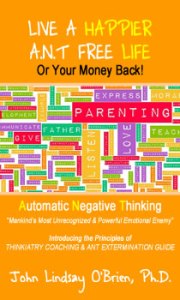
Live A Happier A.N.T Free Life, or Your Money Back by John Lindsay O’Brien, Ph.D. 

First Edition Design Publishing

Live A Happier A.N.T Free Life, or Your Monday Back

John Lindsay O’Brien, Ph.D.  presents  Live A Happier A.N.T Free Life, or Your Money Back in eBook and print as a coaching guide to explain how the author’s more than fifty-year personal struggle to find the Holy Grail of personal development, emotional health, and a happier life has come true, as it will for you!

Live A Happier A.N.T Free Life, or Your Money Back, ISBN 9781937520816 (eBook),  was published on April 9, 2012  by First Edition Design Publishing in Sarasota, Florida USA. It is currently available in eBook  at Amazon’s Kindle store and numerous other on-line retailers. In addition to those outlets, Live A Happier A.N.T Free Life, or Your Money Back was distributed in eBook format worldwide to over 100,000 locations including libraries, schools colleges, universities making it available in over 100 countries. The print version, ISBN 9781937520809 (print), will be available shortly through those channels that handle print books in addition to eBooks.

http://www.firsteditiondesignpublishing.com

First Edition Design Publishing

Atlanta area libraries embracing ebooks #FED_ebooks #ebooks #Author #Library

Source: www.examiner.com

By: Rick Limpert, Atlanta Gadgets Examiner

From Fulton to Cobb, libraries in and around Metro Atlanta are now offering ebooks, and library patrons couldn’t be more excited.

The number of ebooks being checked out of public libraries is doubling every six months, one recent survey stated.

First Edition Design Publishing

Apple's iPad

Ebook reader sales took off late in 2011 with the help of Amazon’s Kindle line, the Nook which is offered by Barnes & Noble, and the fact that more and more people are now iPad owners.

Cobb’s number of “unique library card users” checking out e-books jumped by almost 31 percent from November to December. Public demand was so great that Dekalb’s Public Library system paid $10,000 out of its budget to begin offering e-books in December. This was tough to do, but it had to be done to stay current.

While ebooks account for a fraction of the total books checked out of libraries each month, the number is growing and public library systems are adding more titles by the day.

And current best sellers are in most demand. The most checked out e-book in Cobb County last year was “2nd Chance” by James Patterson. His releases are so popular that there is often a waiting ist for his thrillers.

Book publishers are also aware of the trends and are not releasing some titles to libraries as they feel it is cutting into book sales and their profits. “If you look at the list of the Top 100 [ranked] books on Amazon, libraries may only have access to about 20 of them to buy,” says Scott Smith of the DeKalb public library system.

In the long run, ebooks should help libraries with their bottom line. Library website visits are up and that means less time waiting in line to check out books, and less tasks for librarians to do on a daily basis.

Residents of Gwinnett have really taken to ebooks. The Gwinnett Library website is so easy to navigate and they’ve also improved the “search” feature when it comes to ebooks to make life easier for customers.

Yes, there are issues with lending out ebooks from libraries, but like anything else, once the technology is embraced by all involved and the kinks can be worked out, this is how most of us will be getting out books in the future.

We all need to read more and whether you desire ebooks or still like turning pages of paper books, you should visit your local library and get reading.

Rick Limpert, Atlanta Gadgets Examiner

Rick C. Limpert is a freelance writer and columnist in Atlanta. He’s a writer and photographer who has covered technology, sports, and events all over the world. His works have been featured in numerous print and online publications.


Coming Soon – Flexible eBooks #FED_ebooks #ebook #Author

First Edition Design Publishing

Coming to an e-book near you – LG’s flexible e-paper display

Source: www.gizmag.com

By 

Like most display manufacturers, LG has kept a finger in the flexible e-paper pie. Now, however, the company has announced that its six-inch XGA resolution Electronic Paper Display (EPD) is now in full production, and should be in devices bound for Europe within the next month.

First Edition Design eBook Publishing

Coming to an e-book near you - LG's flexible e-paper display

LG’s new plastic EPD, claimed to be the world’s first in mass production, takes the form of a plastic substrate that is 0.7 millimeters (0.027 in) thick, about 2/3 the thickness of glass EPD devices. At 14 grams (0.49 oz) in weight, the new display comes in at less than half the weight of glass-based alternatives. However, the flexibility is what causes the plastic EPD to step up as a game changer. The rugged device will bend as much as 40 degrees from the plane of the display, will survive blows from a small urethane hammer and repeated drops from a height of 1.5 meters (4.92 ft).

“With the world’s first plastic EPD, LG Display has once again proven its reputation for leadership and innovation with a product we believe will help greatly popularize the E-Book market,” said Mr. Sang Duck Yeo, Head of Operations for LG Display’s Mobile/OLED division. “Based on our success in mass-producing plastic EPD, we are excited as we look toward applying concepts from this experience to future developments like plastic OLED and flexible displays.”

LG says it was able to adapt conventional LCD manufacturing technology to the production of the new product by reducing the process temperature of the LCD process to a level that the polymer structures of the plastic EPD could tolerate. The new display is to be shipped to Chinese ODMs, who hope to supply product to Europe by, according to the March 29 press release, “the beginning of next month.”

Public Libraries Expect Change, Focus on Ebooks #FED_ebooks #library #Author #ebooks

First Edition Design Publishing

From: lj.libraryjournal.com  By Meredith Schwartz

U.S. Public Libraries: A Snapshot of Priorities & Perspectives, based on a First Edition Design eBook Publishingsurvey conducted by OCLC, found that most public library staff anticipate that the top reason patrons are using their library will change in five years, though most of those think the change will be modest. Today, however, borrowing books and materials remain the top reason patrons use the library, at 62 percent, followed by technology at 33 percent, according to the report published on March 21.

Perhaps because it combines the two, most public library staff are focusing on e-books as one of their three top priorities, along with ensuring internet access and demonstrating value to funders. Public library staff expect both physical and online use of the library to increase, though growth of online use received a whopping 85 percent vote of confidence, compared to the narrow 55 percent majority of physical traffic increase. (Ebooks and other electronic resources also rank as the top initiative, with buildings/facilities a distant second.)

To keep themselves in the loop, most librarians focus on listservs and journals, though the most junior librarians are more likely to use social media.

A similar report based on OCLC’s survey findings from academic librarians will be published in the coming months.

www.firsteditiondesignpublishing.com

Where Hash Rules by George Aaron Cuddy released in #eBook #FED_ebooks #Author

First Edition Design Publishing 

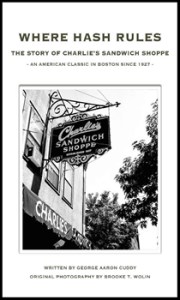
Charlie’s Sandwich Shoppe, Where Hash Rules

From bonappetit.com by Joanna Sciarrino

Charlie’s Sandwich Shoppe in Boston is something of a landmark. Since its opening in 1927, it has hosted a multitude of diners from Sammy Davis, Jr. to Julia Child, and it and continues to be a food destination for locals and celebrities alike. (On a brunch visit a few years ago, Tom Brady and then-girlfriend Bridget Moynahan spent their time waiting in Charlie’s out-the-door line by, shall we say, canoodling.)

So what makes this 32-seat, cash-only greasy spoon such a hot spot? If not its rich history–Charlie’s was a refuge for African Americans during segregation–or its dedication to customers–the restaurant was open 24 hours a day, 7 days a week for 32 straight years–then it’s definitely the food. Particularly the hash, because Charlie’s has some good hash. Like, really good. So good someone even wrote a book about it.

Written by George Aaron Cuddy, Where Hash Rules, is an e-book love letter to Charlie’s and its truly awesome turkey hash. Beyond that, it’s an intimate history about the owners, diners, and food that have made Charlie’s an institution. Studded with black and white images shot by BA’s very own Associate Photo Editor, Brooke Wolin, Where Hash Rules is worth the read for those who love food history and beautiful photography. And for those who love a damn good hash.

Where Hash Rules by George Aaron Cuddy, ISBN 9781937520748, was published on March 22, 2012 in eBook format by First Edition Design Publishing in Sarasota, Florida USA. It is available at Amazon’s Kindle store and other on-line retailers. In addition to those outlets,  Where Hash Rules was distributed in eBook format worldwide to over 100,000 locations including libraries, schools colleges, universities.

Why eBooks Need Libraries #FED_ebooks #Library #Author

From: americanlibrariesmagazine.org by Beverly Goldberg

About a week ago, an ALA colleague popped into my office with an epiphany. “Libraries will never die out. You know why? If they didn’t exist, people would be inventing them.” As you might imagine, that got us to talking and finding examples—and it certainly wasn’t hard. Little Free Libraries, anyone? They are springing up all over, and have certainly captured the imagination of the mainstream media, as several issues of American Libraries Direct have recently attested. When you think about it, as AL’s Librarian’s Library columnist Karen Muller has, the Occupy libraries movement sprung from the same human need to share ideas, and often there’s no better vehicle for that than the written word.

In fact, the human need for a library has even prompted the creation of ALA Fact Sheet #16: “Setting Up a Library.”

Karen was on a roll, for she then proceeded to pinpoint, in crystal-clear terms, the heart of the problem with ebooks: “Sharing is antithetical to ebooks.” In one sentence, she had deconstructed arguments over licensing models, pricing schemes, royalties, and copyright protections—the proponents of which defend as the only means of protecting the livelihoods of authors and bottom lines of publishers. But what about simple word of mouth as a means of increasing interest in a title and, ultimately, sales? Brick-and-mortar booksellers do it all the time in a time-honored tradition known as hand-selling. (Yes, so does Amazon with its “You might also like” app, if you don’t mind having your reading tastes second-guessed by an algorithm.) Libraryland’s version of hand-selling, of course, is called readers’ advisory, and benefits authors as well as publishers. If you doubt that, ask David Guterson, who credits librarians and booksellers alike for making his first novel, Snow Falling on Cedars, a bestseller, and him the recipient of the 1995 PEN/Faulkner Award for Fiction.

There’s no question that reading enthusiasts are also sharing enthusiasts and it’s inconvenient at best to share a copyrighted ebook with a friend when the only way to do it is to lend your friend your entire portable library, or e-reader, so she can enjoy that one title you want to recommend. No wonder physical libraries continue to capture the public’s imagination, along with their contents.First Edition Design eBook Publishing

So it should come as no surprise that, even as the people of Athens, Vermont, voted to disband their taxpayer-funded 117-year-old public library at a March 6 Town Meeting, they simultaneously made provisions for the town to set aside space in which to launch a new library when economic difficulties ease. Library booster Dolly Stevens switched roles in mid-meeting from saving the existing library to opening a volunteer-staffed library of some 4,000 books donated to her for the interim, reported the March 7 Brattleboro Reformer.

In Evanston, Illinois, where the Friends of the Library fought long and hard to keep the South branch open but ultimately lost the battle with the city council, the Friends are celebrating the first anniversary of their makeshift volunteer-run replacement, the Mighty Twig branch. The announcement this month that Chicago Public Library’s First Deputy Commissioner Karen Danczak Lyons would become the director of Evanston Public Library and that the board was being given fiscal autonomy seems to auger well for the Mighty Twig eventually to be splinted back onto the taxpayer-funded branch system.

Branch hours for such hard-hit systems as Indianapolis–Marion County Public Library, Santa Barbara (Calif.) Public Library, and Phoenix (Ariz.) Public Library either have been partially restored or seem on their way to expanding. These steps forward wouldn’t be possibilities if it weren’t for the perseverance of grassroots support—and that culture of sharing that libraries embody.

Take heed, ebook creators: You may not be holding quite as many cards in this high-stakes accessibility game as you think.

#     #     #

First Edition Design Publishing