Finish Writing Your Book: 3 Big Reasons Holding You Back

Do you struggle to finish writing your book, or really anything you start? If you said  yes, you’re not alone. In a poll we conducted (with real people!), seventy-two percent gave us the same answer.

Finishing writing projects can be tough! That doesn’t mean you can’t do it.

Here’s an important truth: you don’t have to be the next Ernest Hemingway or Stephen King in order to finish writing a book. It’s possible for you to find the writing time you need. But before you tackle your creative project, it’s worth examining why you haven’t been able to finish your story idea in the past.

In this article, I’m going to share three giant reasons most writers don’t finish writing their books—and how you can carve out everything you need to complete your current project.

Yes, Writing a Book Is Really Hard

I’ve been coaching small groups of writers as they finish their books. At the beginning of each new group, I tell them, “Writing a book is hard. It’s probably one of the hardest things you’ll ever do.”

“You were right,” they always tell me a few weeks later when they’re deep into their first drafts. “I didn’t really believe you before, but this is really hard!”

It’s no secret writing a book is hard. And yet the busiest person can finish writing their project if they understand why their book fell off course, and how they can get their book on track.

Here are three popular reasons you can’t finish writing your book: for fiction writers and those completing a nonfiction book.

3 Reasons You Can’t Finish Writing Your Book

There are many things many people fail to do that make finishing their books much more difficult. It is likely that what is holding you back has to do with one of these three reasons:

1. You don’t have a plan.

A story idea isn’t enough, even a great idea, a ground breaking idea, an idea that will change literature forever.

You have to have a a plan. “A great idea does not a book make. Learn three reasons writers don’t finish their writing projects (and how to overcome them).

Many writers resist this idea of having any type of outline before they start writing their book. They want to see where the stories go, they say. They’re free spirits, “artistic types.”

And yet, writers who finish projects, even anti-outlining pantsers, have some kind of plan. It may not be written down, and it might not be very good, but they have one.

How can you develop a plan that will bring purpose to your writing sessions?

The bare minimum plan for your book is a premise. A premise is the main idea of a book. In fiction—and especially screenwriting—the premise is also called a logline, a one-sentence summary of the protagonist, main conflict, and setting. In non-fiction, the premise is the central argument you’re making in the book.

If you’re uncomfortable with planning. You don’t have to write your premise down. You can even change your premise as you write your story (although, I wouldn’t be wary of that). In other words:

A plan is a starting point, not a commitment.

As general Eisenhower said,

[P]lans are useless, but planning is indispensable.

If you want to take planning to the next step, here are three planning methods for novelists:

  • Snowflake Method. A system invented by author Randy Ingram where you begin with a simple one sentence story (i.e. a premise) and expand it over several steps into fully-fledged novel.
  • Story Grid. A writing and editing system developed by veteran editor Shawn Coyne that uses the Foolscap Method and its six questions, including focuses like point of view and major moments and conventions in certain genres.
  • The Write Structure. My new book is written by a writer for writers. In it I offer common-sense principles that drive bestselling novels. I also offer practical advice on how to use these principles in your own writing, making it an invaluable resource for authors that can help them better understand what makes great story structure, and how to become a better storyteller themself.

You can learn more about how to apply writing structure by joining one of our programs passionate about helping you commit and finish a book: 100 Day Book or one of our yearly Mastermind groups, One Year to Publish.

2. You don’t have a team.

No writer is an island.

If you think you can write a book relying solely on your own willpower and without the support of others, you’re kidding yourself.

As I’ve studied the lives of great writers, one thing has stood out to me: great writers were friends with other great writers. Because of this, they were able to develop a consistent time that eventually lead to the completion of their awesome books. They had the support they ne

How do you get a team? Here are three things you can work on today:

Get buy in from your family and friends. The people closest to you will have a huge impact on your writing success.

In my own life, I noticed a shift in my self-confidence and productivity when my father stopped criticizing me and started praising my writing. He went from being skeptical of my writing to my biggest fan, and it made a huge difference in my output.

I would never have succeeded at starting The Write Practice and keeping it going those first, lonely years without my wife. I can remember having nervous breakdowns nearly every week, but she believed in me throughout, kept me focused, and helped me keep going.

If you want to finish your book, get your family and friends on your side. They’ll believe in you even when you stop believing in yourself. This is priceless.

Create relationships with other writers. There’s no greater motivation to get writing than hearing that one of your friends just finished their book, or got a publishing contract, or hit a bestseller list.

If you don’t have relationships with other writers, make them. Go to a writing conference (this one should be fun, use our code wicon2015twp for $50 off). Join an online writing community. Do something, because friendships with other good writers are as valuable as gold.

Share your struggles. It’s okay to not have your book figured out. It’s normal to hit a period of writer’s block. You’re not a bad writer if your book gets into trouble.

But failing to share what you’re struggling with is foolish.

This is the whole reason to have a team, so you can get help when you need it. Be vulnerable. And come up with strategies to write through struggling times.

3. You don’t have a rhythm.

Several years ago, I began writing every day. I didn’t always write a lot. It was just important that I wrote. Every day.

Sometimes I missed a day. Inevitably, the next day it would be twice as hard to write.

Then, about six months into my daily writing habit, I missed three days in a row. It was devastating. I didn’t write again for months. “You have to find your writing rhythm (and that rhythm probably looks like writing every day)

Yes, writing is hard. However, it’s much easier once you’ve made it second nature, once writing is so ingrained into your daily rhythm it’s almost harder to avoid it than do it.

If you want to finish your book, make a commitment to writing every day.

Some other obstacles to writing rhythm:

  • Lack of practice. The good news: writing gets easier over time!
  • Perfectionism. Perfect can wait for the final draft. Just write.
  • Not having a plan. Your plan helps you remember what to write next.

You Can Finish Writing Your Book

From jotting down a story premise to character sketches and outlines the strengthen your story structure and center your story’s focus—you can finish writing your book.

If you feel like you can’t, it’s likely you’re suffering from one of the big three reasons that prevent writers from finishing their writing projects discussed in this article.

When we recognize what’s holding us back, we can come up with a plan that will get us out of our writing slumps—and writing stops.

How about you? Have you had trouble finishing writing your book?  Let me know in the comments.

By Joe Bunting

Source: thewritepractice.com

Visit us at First Edition Design Publishing
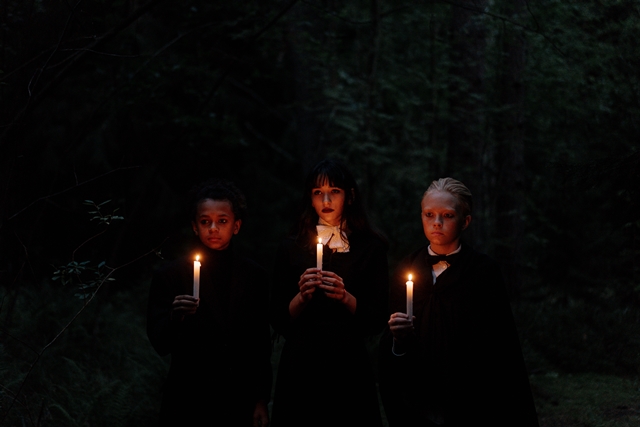
How to Be Horrific (in an Age-appropriate Way): YA Horror Fiction

Written by Alex Woolf

Young readers want to be scared, but parents don’t want to be alarmed. Alex Woolf – veteran young adult (YA) horror author of titles such as Soul Shadows, which was shortlisted for the RED Book Award, and Aldo Moon and the Ghost at Gravewood Hall – looks at how to write horror fiction aimed at young people on the cusp of maturity.  

We’re exposed to horror stories from an early age: a ravenous wolf dressed as a grandmother, a witch that fattens up a little boy in a cage, a gorgon with a face that is literally petrifying. Children have always loved being unsettled, scared, shocked and terrified, but there are, of course, limits. All who write horror for the young must be aware of these and tread sensitively. 

Achieving this balancing act can be particularly tricky, since young adults aren’t going to be satisfied with the genteel fantasy horror of goblins and monsters under the bed. On the other hand, anything too brutal or gory may not be appropriate either – at least in the eyes of their teachers, librarians and parents. Besides scariness, there are several other aspects of YA horror that have to be pitched right if it’s going to succeed in a crowded market. Here are a few tips for making yours reach out and grab the right readers. 

Give Your Topic a Twist

Young adults may no longer be captivated by the simple fairy tales of early childhood, but that doesn’t mean they won’t enjoy stories featuring similar supernatural beings. Ghosts, witches, vampires, zombies and werewolves have all been repurposed successfully in YA horror – the trick to find a new and exciting twist.  

One way might be to make the monsters teenagers themselves, with all the usual human problems like dating and acne being complicated by a thirst for human blood or a tendency to turn hairy and howl at the moon. If this is your preferred route, remember not to rely too much on laughs. Horror stories must, first and foremost, be scary. When choosing a topic, try casting your mind back to when you were a teenager and ask yourself, “Would this have scared me then?” 

Go Easy on the Gothic

Setting is one of the aspects that really marks out YA horror from spooky stories aimed at middle grade or younger audiences. Gone are the eerie forests and gothic castles of fairy tales, and along with them the comforting sense that this is a fantasy world with bad things that can’t really happen to us. YA horror is often set disconcertingly close to home, and usually in modern times. 

Common settings include schools, friends’ houses, pizza joints, shopping malls, bowling alleys, and other teen hangouts. That doesn’t mean protagonists enjoy much personal autonomy. The Dead House (Dawn Kurtagich) is partially set in a hospital for the mentally ill, where freedoms are severely curtailed. In Michael Grant’s Gone series, an invisible barrier cuts a town off from the outside world.  

There are no absolute rules, though. Many great modern YA horror tales have a distinctly old world or otherworldly backdrop. The Forest of Hands and Teeth (Carrie Ryan) and Miss Peregrine’s Home for Peculiar Children (Ransom Riggs) are just two examples of YA horror novels with fantastical settings.  

Empower Your Protagonists

The typical protagonist of a YA horror novel is a teenager with a troubled past, absent or dysfunctional parents, and/or an almost insane willingness to venture towards a suspicious noise in the middle of the night armed with nothing but a torch. The most important thing to remember about YA horror is that teen characters have agency. They are the powerful, brave and clever ones in the story.  

Unlike in horror stories geared toward younger audiences, where parents are needed for money and car rides and to tell the kids to stop imagining things, YA horror parents are weirdly absent, and the role of adult characters is usually either to terrorize our intrepid young heroes and heroines, or to offer them assistance (unless they are the police, in which case they are almost invariably useless).  

Don’t Hold Back on the Evil

Every successful YA horror tale requires an evil, yet also mysterious and fascinating villain at its heart. He, she or it can be either human or supernatural, but this assignation often marks it out from middle grade horror, where the villains tend to be magical entities. One popular subgenre of YA horror featuring human villains is the slasher, such as There’s Someone Inside Your House (Stephanie Perkins) or I Know What You Did Last Summer (Lois Duncan), where the killer is usually a mentally disturbed person stalking and killing young people because of some perceived wrong. These tend to be fairly formulaic and predictable, yet undeniably successful. 

Modern YA horror features an imaginative array of supernatural villains, too, from the vengeful and gluttonous spectres of A Banquet for Hungry Ghosts (Ying Chang Compestine) to the reverse-aged Hollowgasts of Miss Peregrine’s Home for Peculiar Children. But if you don’t feel up to creating your own evil entity, there are plenty of traditional monsters from which you can take your pick.  

Of these, the undisputed titan of YA horror villains remains the vampire. The trouble is there’s such a glut of these books on the market today. You’ll need to work extra hard to make your undead antagonist stand out. You might wish to take inspiration from The Coldest Girl in Coldtown (Holly Black), which introduces the debonair bloodsucker Lucien Moreau with his trademark cream suit and white shirt (the better to show off the blood of his victims), or the mysterious Mr. Crepsley and his performing spider in Darren Shan’s Cirque du Freak. And of course, one cannot ignore the beautiful sparkling vampires in Stephanie Meyer’s classic Twilight series. 

Keep It Tight and Punchy

In the age of Instagram and Snapchat, the typical teen reader’s attention span is pretty short, so it’s best to structure your horror novel in tightly written, punchy action scenes with plenty of scares. These can be interspersed with quieter moments to explore character, establish mood, and build suspense.  

It’s almost obligatory these days to open your novel in a moment of high-octane excitement to grab the reader’s attention and lure them in. Personally, I think this can be overdone, and I think a novel with a slow, yet intriguing or unsettling opening can be just as effective. Remember also to use plenty of sudden plot twists – teens love to be kept guessing about certain aspects of the story, such as who the next victim will be, and who is really the villain. 

Build Suspense

In terms of suspense, the same rules apply with YA as with all horror writing, only more so. So while an adult horror writer might be content to build suspense slowly with subtle hints of menace, the YA author likes to set the pulse racing early and keep that momentum going.  

The easiest way to do this is to get inside the lead character’s head so the reader gets to share their apprehension about what might be lurking in the cellar, or what could emerge when the sun goes down. This is why a lot of YA horror is written in the first person present, creating a strong sense of immediacy, so that whatever is happening is happening right now.  

Another fun way of building a menacing atmosphere is through imagery: a raven picking at the entrails of a rat, a fat centipede crawling out of a doll’s eye socket, a shadowy figure at the window of an abandoned house. YA readers adore this kind of thing. 

Be Scary

How scary, exactly, are you allowed to be? The surprising and gratifying truth is that with YA horror, there are no set-in-stone limits. Be as scary as you can – you can always backtrack later if you feel you’ve overdone it. Fear is subjective and difficult to quantify. I’ve never found snakes scary, for example, but have a particular dread of scuttling creatures like spiders and beetles. And, as every horror writer ought to know, the fear comes from what you don’t mention, the things you hint at but are never seen or entirely understood.  

Nothing fully described, however horrid, can ever be as scary as things imagined, and the teenage imagination is a wondrous and powerful thing. Readers will readily form their own mental images of the monstrous entities and dark deeds that haunt your book. What you should be very wary of in YA horror is focusing on gore, or describing violence in gruesome detail.  

Some YA authors manage to pull this off, such as Rick Yancey in Monstrumologist. He writes his gory scenes with an almost cartoonish exuberance, with heads wrenched from necks and steaming geysers of blood. This takes quite a bit of skill, but can be fun if done well. On the other hand, a decent horror writer should be able to evoke plenty of terror without indulging in an all-out splatterfest. 

Beware Happy Endings

Unlike younger readers, the YA audience does not hanker for a happy ending. In fact, they might be seriously disappointed by a conclusion where all the plot threads are neatly tied up, the villain vanquished, and the good guys riding off into the sunset.  

Rather, they want to be left feeling unsettled and discombobulated, with everything they thought they knew thrown out the window. They want to know that the horror, though foiled for now, may come back, that the evil has spread, and that new unsuspecting victims are about to get the shock of their lives.  

Above all, YA horror fans love a sequel!

Source: refiction.com

Visit us at First Edition Design Publishing
Writer’s Burnout: 6 Helpful Ways Any Writer Can Use to Overcome Burnout

by J. D. Edwin

Have you ever started writing a book with a burst of energy and enthusiasm? Did you feel like your fingers were flying off the keyboards, and then somewhere in the manuscript…they stopped. Have you ever become a victim to writer’s burnout?

At some point in the writing process, every writer feels exhausted.

It’s hard work writing a book, let alone working full time, caring for children or pets, and any other additional responsibility you have in life.

Nothing is more frustrating than when, for one moment, you felt fully immersed in your story. The next day you’re tempted to give up on it altogether. You’re tired. You need a rest.

First, this is normal. Second, you can overcome it!

In this article, I share my personal experience with writer’s burnout. I also suggest six helpful ways to overcome burnout so you can get back to writing—and not regret the time you spend with your story.

Writer’s Burnout Strikes Again

Last year, about fifteen months ago, I made a promise to myself:

I was going to start treating writing like a job and take it seriously.

I set no expectations or goals, only that I was going to start working on some aspect of my author career for a set number of hours each week and see where it takes me.

At the time I was working a fairly laid back job and desperately looking for something to focus on so I didn’t lose myself in the chaos of the pandemic and homeschooling my children. Ten hours a week, I told myself.

As it turned out, when you treat something like a job, things happen.

Soon I was writing bi-weekly articles, working on multiple new books, sending countless inquiries, and signing a publishing contract. I committed to publishing a trilogy with six months in between each book, gave talks to other writers, and networked in any way I could during pandemic conditions.

In November, I also changed to a much more demanding job where I functioned as a one-person team. I worked my day job full time, my writing job on nights and weekends, and kept two children alive somewhere in between. I worked every evening, every weekend, every holiday, every chance I had. I worked on my birthday. I worked while visiting my in-laws.

I even sought out chances to network and promote my book while away on my friend’s bachelorette weekend.

Have you found yourself in similar situations?

I launched a book while writing another book, then immediately got to working on launching another—while writing yet another.

I forgot my birthday and my anniversary because I was, you guessed it, writing.

I don’t know how many hours I work right now as an author. I lost track a long time ago. I was getting great at my writing progress and thrilled that my writing career was finally going somewhere. I thought I could keep going forever.

And then, to no one’s surprise, I burned out.

Has this happened to you?

Looking back on it, everyone saw it coming but me.

My friends and family all told me at different times that I was doing too much and needed to slow down. “You can’t keep up this pace forever,” they’d say. I refused to believe them.

How could I get tired of doing something I loved?

I’d kept it up for over a year. Surely I could keep going.

But one day I sat in front of my computer and realized my mind was blank.

I couldn’t write. Inspiration had left me. I wanted to sleep all the time and had a difficult time concentrating on anything during the day. I had no patience for work or writing and no interest in things I used to like, and I even found myself annoyed at the people around me because I was physically and mentally tense.

Can you relate?

Most importantly, I found I didn’t enjoy the writing process anymore. Even typing a few words became a challenge.

About two months have passed since then.

I’m slowly coming out of the other end of the haze. It was something I never thought would happen to me—a writer’s burnout. The process wasn’t, and still isn’t, easy. But I’ve learned a few things about myself, most of which were very humbling.

Today I want to share with you six realizations that helped me overcome the low moments in my writer’s burnout. This way, hopefully if you find yourself in the same position, you’ll be less stubborn than me.

You’ll know what you need to do in order to successfully conquer a writer’s burnout. “ At one point in our writing process, we all suffer from writer’s burnout. Learn six helpful ways to avoid writer’s burnout in this article!

6 Helpful Ways to Overcome Writer’s Burnout

Burnt Out GIFs | Tenor

1. Admit you are burned out

This sounds easy but is actually incredibly difficult.

No one likes to admit they’re at their limit. I certainly didn’t.

In fact, I still struggle with feeling like a failure for burning out at all. How can I be such a hypocrite? I’m the one who gives talks on productivity. I’m the one who writes entire novels in six to eight weeks and teaches other people how to do it. I can’t burnout. It goes against my whole brand!

Truth is, that’s ego talking.

We all burnout. We’re not machines that keep chugging, as much as we like to believe we are.

Burnout looks different for everyone. Some people become tired or depressed. Some people become anxious or jittery. For me, it took until I lost my passion for what I loved most to admit my tank was empty. If I had admitted it earlier, I might not have gotten to that point.

So if you feel tired, or bored, or frustrated, don’t ignore that feeling.

Take a moment and a deep breath and ask yourself if you might be doing a little too much. Be willing to recognize the signs of hitting your limit before you actually hit it.

You’ll be far better off for it.

The end [of the semester] is near! | Wellesley Student Blog

2. Ask for help

As much as we hate admitting to our limitations, we hate asking for help even more.

When I finally admitted to being burned out, I took an honest look at what I had on my plate and decided to finally ask for help.

  • I asked a friend to help me read and review the last few indie books on my plate.
  • I requested two days off work and used it to build up a cushion of articles so I could relax my writing schedule a little.
  • I asked family members to watch the children for a few extra hours.
  • I requested extra time on my current book—time I desperately needed, and time necessary to make my book the best it can be without neglecting other authoring activities. (There’s nothing wrong with giving yourself a little leeway.)

With a few things off my plate, I breathed easier and took time to get organized. I also kept myself from overloading the extra time with more tasks and instead allowed myself to spread out what I need to do over more time.

Asking for help is an important step you need to take to overcome burnout. Be honest with your loved ones that you need support.

Don’t be ashamed, be proud of yourself for doing this.

That Was The Best Nap I Ever Had GIFs - Get the best GIF on GIPHY

3. Self-care

Self-care can be kind of a buzzword. If you google self-care, ninety percent of what comes up is bath bombs and scented candles. If all of our problems could be solved by those, then life would be a lot simpler. “ Writers need to commit to their writing time. They also need to sc

Real self-care is a little more complex. It involves honestly identifying what you need and what you can do to fulfill it. This may take a few tries, but once you figure it out, it’s absolutely worth it.

For me, I did a very simple thing: I learned how to nap.

I’ve never been a napper, but in the midst of burnout, I realized my energy reserves were terribly low, especially in the afternoon. Low energy led to tiring evenings when I’m supposed to be doing most of my writing.

So I decided I had nothing to lose if I gave napping a try. I had to learn how to power nap in a way that works for me: twenty minutes in the early afternoon with the lights on so I don’t fall into too deep a sleep.

Working from home in the corner of the bedroom was finally proving to be convenient for something!

This simple change has been lifesaving. I felt much more refreshed not just in the afternoons, but on a day-to-day basis.

The solution won’t be this fast and easy for everyone. And this new addition to my day certainly didn’t solve everything. But sometimes a minor change can have a major impact, and that can be the first step to getting yourself back on track.

A minor change can have a big impact. What can you change in your daily routine to give you more energy to write—and less likely to avoid writer’s burnout?

Its Time For Change Time To Switch It Up GIF - Its Time For Change Time To Switch It Up Things Need To Change Around Here - Discover & Share GIFs

4. Change things up

Never underestimate the power of change.

Switching things up can give your brain a much-needed reset.

Earlier this year, I made a conscious decision to set aside my other passion—art—in order to make more time for writing. However, as the year wore on, I found myself increasingly frustrated and tired by the drudgery of working and writing.

A few weeks ago, I dug up a sketchbook on a whim and spent a few minutes sketching and—surprise, surprise—it turned out to be a much needed release.

Since then I’ve made an effort to spend time drawing at least once a week, even only for fifteen minutes. The change of pace has been much needed, more than I was willing to admit at first.

If you need to change activities up, do it. You might find your writing inspiration racing back to you with a little distance.

Being drunk and in the mood while at a bar... - GIF on Imgur

5. Lower the bar

This one is hard, because it sounds an awful lot like I’m asking you to compromise the quality of your work.

The truth is, burnout often has to do with high expectations.

We push too hard because we expect too much of ourselves and end up expending more energy and time than we have. And yet, when we get to that point, rather than accepting we’ve reached our limit, we end up being disappointed in ourselves for not meeting an expectation that was probably not realistic in the first place.

Lowering the bar doesn’t necessarily mean lowering the quality of your work. Rather, it means setting more realistic expectations based on your current available resources. “ Lowering the bar is one way to overcome writer’s burnout. This doesn’t mean lowering the quality of your work.

Learn six helpful ways to overcome writer’s burnout in this article.

On my part, I realized that I was expecting too much out of the current draft of my next book.

I was writing a second draft and expected it to be near-perfect when done, like my previous two books had been. But in reality, this book is far more challenging and frankly, a beast to write.

When burnout began to set in, I had to be honest and recognize that I was expecting too much out of this draft, that a third draft would probably be needed and there’s nothing wrong with that.

Just because my previous books didn’t need third drafts doesn’t mean I can’t write one for this book.

After admitting I needed a third draft, my stress level was much lower and I was able to focus on the overarching plot of the current draft rather than obsess over minute details.

YARN | ♪ Take a break ♪ | Hamilton | Video gifs by quotes | 732b7889 | 紗

6. Take a break

I can’t emphasize this enough: take a break.

A break is highly recommended when you suffer a burnout. And I fully admit that I put it off longer than I should. I didn’t want to stop writing, but a pause from the stress was becoming a necessity.

I have a full time job, limited vacation days, and a lot of deadlines. Taking a break from both my day job and writing is difficult, and my obsessive personality refuses to allow me to miss deadlines.

But the truth is, I didn’t realize how burned out I’d been until I lightened my load and took a break. It’s easy to get used to the feeling of being stressed and just live with it.

I hadn’t noticed how tense my body and chest were until I was finally able to relax. My physical and mental health were both suffering but it’s easy to ignore that when you’re wrapped up in the never-ending to-do list.

So rest. Relax. Cut yourself some slack. There’s more to life than word count.

And when you’re recovered, pick up your writing again.

Overcoming Burnout is Hard, And Possible

As I’ve said before, admitting to burnout is hard. If you are struggling with writer’s burnout, know that you aren’t alone.

The most important difference is that you can’t love writing if you don’t love the process. How could you? The process and writing come as  one beautiful package.

At the end of the day, it’s important to know what’s best for you. Writing life isn’t easy. There’s nothing wrong with adjusting routines to alleviate the burden or asking for help. Being honest with yourself and knowing your needs and limits will make you a happier, healthier, and a better writer.

When you feel like you don’t want to admit to your burnout, keep in mind that you will do no one and nothing—including your own work—any good if you are not functioning as your best self.

I’m still navigating this road. I’ve learned a lot about letting go of expectations and caring for my author self. The writer’s road is truly paved with life lessons.

My biggest hope for other authors is that you will be more aware of your wellness, both mentally and physically, so you allow yourself a break before you burn out.

After all, you book deserves a healthy, happy author.

Its All About Being Happy And Healthy GIF - Its All About Being Happy And Healthy Shea Whitney - Discover & Share GIFs

What about you? When did you suffer from writer’s burnout? How did you overcome it? Let us know in the comments.

Source: thewritepractice.com

Visit us at First Edition Design Publishing
The Ultimate Guide to Editing a Book

Written by Tal Valante

Congratulations! You’ve finished your first (or second, or fourteenth) draft, and now your baby is ready for those polishing touches that will make it truly shine. It’s time to edit your novel.

Ah, self-editing. Some writers swear by it, some writers swear it will kill them first. Either way, it must be done. Or mustn’t it?

Table of Contents

Getting Ready to Edit a NovelSelf-Editing Checklist for Line Editing (Copyediting)Self-Editing Checklist for ProofreadingA Note on Editing a Book

Should I Bother Self-Editing My Book?

If you plan to self-publish, the answer is, absolutely.

If you plan to publish traditionally, the answer is, definitely.

Here’s why.

Self-publishers:
No one can truly edit their own work. Spare yourself the 1-star reviews, and have your novel edited professionally before you publish it. However, self-editing your book first helps cut down on rates. The more you do yourself, the better quote you’ll receive.

Submitters:
Yes, you will likely be assigned an editor before publication. But in order to get there, you have to catch the publisher or agent’s attention. To that end, your manuscript has to be as clean as you can make it on your own. 

Before we sit down to work, let’s go over the different types of editing a book might require.

Types of Editing

A lot of work falls under the word “editing” or “revising,” but it all comes down to three types: developmental editing, line editing (also known as copyediting), and proofreading

It’s important to identify the types of editing your novel needs–and do them in the right order. Developmental editing, for example, will probably make you revise huge blocks of text. There’s no point proofreading before you do that, because all your effort and time will go to waste.

The correct order is as listed above: developmental editing first, then copyediting, and finally proofreading.

If you’re self-publishing, you’ll need all three. If you’re submitting your manuscript, all three should be provided to you at no cost by the publishing house.

Here’s what each of them means.

Developmental Editing

Developmental editors take a deep look at the novel structure. They look for plot holes, character development, pace and suspense, tight scenes, and other story-level details.

Self-editing on this level is almost impossible. It’s the Curse of Knowledge: you’re too close to the narrative, you know the facts too well, and you can’t imagine how new readers would perceive the story. Is it clear enough? Entertaining? Suspenseful? Engaging? You’re the wrong person to answer these questions.

You can find professional, hand-vetted developmental editors over at Reedsy

If that option for editing your book is a bit too pricey for you, you can find developmental editors on non-vetted platforms such as GuruUpwork, and Fiverr.

Either way, be careful to interview your candidates and make sure they are masters of your genre.

Developmental editing rates for fiction manuscripts run anywhere from $0.03/word to $0.90/word. Some editors quote by page. The standard page has 250 words, so costs are usually $7.50 to $22.50 per page.

For example, a YA Fantasy manuscript usually runs about 60,000 words. Be prepared to spend at least $1800 on developmental edits.

Pricey? Yes. Worth it? Oh yes. The right developmental editor can make or break your novel.

Line Editing / Copyediting

At this level of editing the manuscript, story is no longer an issue. Language is. But not usage and spelling issues. Copywriters look at your voiceword-choice, paragraph and sentence structure, readability, and so on.

This is something you can and should do on your own! Do it before you send your book to be professionally edited, and all the more before you submit your novel anywhere.

Expect to pay $0.012/word to $0.02/word. Per page, the cost will be $3 to $5. 

For a 60,000-word manuscript, that’s about $1,020. 

Proofreading

The last but not least editing pass will weed out grammar and spelling errors, typos, inconsistency in names, and the likes. It’s a language-only pass.

Expect to pay about $0.01/word to $0.015/word. That would be $2.50 to $3.75 per page. 

The same 60,000-word manuscript would cost about $720.

Some professional editors will lump line editing and proofreading under the same service. This combined service should cost about $0.02/word to $0.03/word. That would be $5 to $7.5 per page.

Getting Ready to Edit a Novel

Four more steps before we tackle the checklists. 

  1. Let your manuscript breathe. Put it aside once you finish writing it (Stephen King recommends 6 weeks). This pause will let you come back to it with a clearer view. Instead of remembering what each word should say, you’ll be more able to see what each word actually says. Then you can judge if it works or not.
  2. Arm your vision. Install GrammarlyProWritingAid, or a similar piece of software to help you catch grammar and spelling issues. They’re not enough, but they’re absolutely a good beginning. (Both Grammarly and ProWritingAid have free versions, but ProWritingAid’s is more limited.) 
  3. Arm your ears. Install or bookmark a text-to-speech service to help you catch spelling errors, typos, repetitive sentence structure, overly long sentences, and so on. Natural Reader is a good free choice, for example.
  4. Pace yourself. Don’t attempt to edit huge blocks of text every day. The more tired you are, the more issues you’ll miss. Then you’ll just have to re-edit your work on the next day. Take frequent breaks to stretch, close your eyes, or do some deep breathing. This will boost your efficiency.

Now that you’re ready, let’s get to editing!

Self-Editing Checklist for Line Editing (Copyediting)

  1. In every scene, make sure the reader knows who the POV character is, what characters are present, and where the characters are situated in relation to each other. Don’t dump this information in bulk. Instead, sprinkle it over some dialog and action.
  2. If you’re writing a limited POV (first person or third-person limited), stop after every sentence and ask yourself: Can my POV character know/hear/think/see these details? For example, a character cannot see the color of its own eyes or the expression on its own face. Edit out whatever your POV character can’t perceive. 
  3. When you write a description, make sure it plays on all five senses (unless your character can’t sense that way). Go for the unusual details: the smell of dust in the air of a construction site; the cool, dry air of a well-maintained library; the explosive taste of sun sugar tomatoes on a pizza. 
  4. For limited POV, ask yourself after every description: Would my POV character notice these details? Would my POV character care about these details? Edit out or downplay whatever your POV character won’t bother focusing on. For example, if your POV character is fashion-blind, he probably won’t notice someone’s blazer cut—he might not even know it’s a blazer rather than a jacket.
  5. Also for limited POV, make sure you describe objects and places not the way they are, but the way your POV character would perceive them. For example, if someone at a café is working on a new laptop, a poor character wouldn’t describe its model and maker. She’d describe it as a sleek laptop she could never afford herself.
  6. Make sure each paragraph has a single key idea. If there’s more than one idea in a paragraph, break it into as many paragraphs as needed. 
  7. Generally speaking, keep the page “airy” with white space. Huge blocks of text scare away readers. To avoid that, vary your paragraph length, and use large paragraphs sparingly.
  8. In dialog, start a new paragraph whenever someone begins speaking. Different speakers should not be in the same paragraph unless they’re talking at the same time, kind of like this: “I know what you did,” Jeremy said at the same moment that Louisa said, “I don’t care.”
  9. If your dialog runs long, break it up with action that reconnects the characters with their environment. Otherwise, you’ll get the “floating head” syndrome, where the reader loses all sense of the scene except for the dialog itself. Have your characters interact with objects around them as they talk. We humans rarely remain at complete rest during conversation.
  10. Destroy all exclamation points outside of dialog. An exclamation point, as F. Scott Fitzgerald said, is like laughing at your own joke.
  11. Use varying sentence lengths. Keep most of your sentences short-to-medium, with only the occasional long, winding sentence in between.
  12. Use varying grammatical structures. “He verbed” can only get you so far. But steer clear of the “Verbing, he verbed” structure (for example, “Sitting, he looked at…”). For one, it sounds amateurish. For another, if you use it a few times, it sounds conspicuously repetitive.
  13. If you do use “Verbing, he verbed,” only do it when the two actions are supposed to happen at the same time. That’s what this structure means. If one action is supposed to take place before the other, use a different structure.
  14. In 99% of all cases, use the active voice: “I ate the cookies,” rather than, “the cookies were eaten.” Apply the Zombie Test if you’re not sure—try adding “by zombies!” after the action. If it sounds right (albeit hilarious), that’s the passive voice. Change it to the active.
  15. Use a word frequency counter to weed out overused words. Readers will start noticing these after a while, and it will throw them off. You can use a free online counter such as Word Counter.
  16. Weed out most adverbs and replace them with stronger verbs. If he talked loudly, he shouted or called out. If she walked quickly, she strode. If he ate fast, he gobbled down the food. In addition to manually catching adverbs, run a search for “ly” and double-check those words. 
  17. Weed out weak words such as very, almost, nearly, suddenly, started to, began to, really.  They add little to the narrative.
  18. Weed out weak sentence structures. Watch out especially for sentences that begin with “There was,” “There is,” “It was,” “It is,” etc. Use them sparingly.
  19. Weed out filter words, such as “think,” “see,” “hear,” etc. when they are outside of dialog. Instead of “Johnny heard her scream,” use simply, “She screamed.” The fact that you mention it implies that Johnny is hearing it. 
  20. Weed out 99% of “that,” “things,” and “stuff.” Use precise words instead, unless you deliberately want to sound vague. 
  21. Watch out for “Saidism,” the excessive use of “said” synonyms. Use “said” or action tags most of the time. Only when the tone cannot be inferred from the words, consider using a different verb. For example, Nicky can say, “To hell with you!”  There’s no need to shout it, because the exclamation mark is enough of a shout. 

Self-Editing Checklist for Proofreading

  1. Start by running your manuscript through Grammarly, ProWritingAid, or the like. Don’t automatically accept every suggestion, but do consider every suggestion to see what’s unclear about your phrasing.
  2. Next, run your manuscript through the text-to-voice software of your choice. Listen to the narrator closely. If you find it hard to focus on sounds while you read, put away the manuscript and just listen. If there’s anything that sounds even a bit off, pause the narrator and check your manuscript. Keep an ear out for overly long sentences, too.
  3. Search for known trouble-makers:
    • Their (belonging to them) / they’re (short for “they are”) / there (that way, in that location)
    • Farther (more distant) / further (more advanced)
    • Affect (a verb meaning “to influence”) / effect (a noun meaning “a result”)
    • Who (like “he”) / whom (like “him”) / whose (like “his”) / who’s (short for “who is”)
    • Its (belonging to it) / it’s (short for “it is”)
    • That (refers to inanimate objects) / who (refers to people)
    • Then (“at that time,” or “next”) / than (used for comparison) 
    • Lose (the opposite of “to win”) / loose (the opposite of “tight”)
    • There are no such things as “alot” (it’s “a lot”) and “infact” (it’s “in fact”).
    • There are many more. If you’re unsure about any word in your manuscript, look it up in the context of a sentence example to make sure you get it right.
  4. Search and replace all double spaces. They are relics of a publishing world long-gone. In your word-processing software, start a new “Search and Replace.” In the search phrase box, hit the spacebar twice. In the replace phrase box, hit the spacebar once. Select “Replace All.” 
  5. Print out the manuscript and read it carefully. Highlight errors and typos. Write comments on post-it notes and stick them directly onto the relevant page. 
  6. Mind how you capitalize and punctuate dialog
  7. Keep your tenses consistent. If you’re writing the story in the past tense, present-tense verbs have no place in it. 
  8. Scene break? Use an extra empty line, or centered asterisks (* * *), or a single centered pound sign (#).

A Note on Editing a Book

Remember, no one can completely self-edit his or her own manuscript. You’re bound to miss things. That’s okay. Self-editing is not meant to replace professional editing by a fresh set of eyes. Its job is to increase your chances with traditional publishers–or to save money when hiring a professional editor for self-publishing.

And finally, learn to enjoy, or even love, editing. Think of it as a golden opportunity to squeeze the most juice out of every word you use in your novel, or to sharpen the arrow which you will fire into your readers’ hearts. Make the most of it, and it will make the most of your novel.

Source: refiction.com

Visit us at First Edition Design Publishing

Hands Down The Best Way For Writers To Use Their Imagination

When you’re young, life is a blank slate to fill. So we fill it with heroic stories. We act them out with our friends. And we dream big dreams of what life will be like when we grow up.

Then we get older and pretending turns to jealousy.

“If I was like him, I’d be unstoppable.”

“If I had more money, I’d be happier.”

“If life was fair, I’d have everything I wanted.”

Well, you’re not him.

You can earn more money.

And life will never be fair.

The problem with imagination

When I was a kid, I always imagined I was someone else.

We do that because we don’t think we’re enough on our own. We need help.  We need a superpower.  We need something to make us more attractive than we are without that little something extra.

I was 23 years old before this truth hit me in the chest.

Zig Ziglar taught that if you’re not using what you have now, you wouldn’t use what you had if you were someone else. It’s not the power or the skill that matters.  It’s what you do with it that counts.

I wasn’t a natural at basketball. I had to throw a lot of balls at the net before one went in.  And I had to throw even more to hit the basket more than once a day.

It all began when I saw myself hitting the net—in my imagination. Like the Little Engine That Could, I thought I was able, so I did.

How would my life have been different if I had imagined myself as the superhero? What could I have accomplished if I acted as if I had the traits I wanted?

I can’t say for sure, but I know this: I’d have had more courage, more confidence, and a stronger imagination.

What does this have to do with writing?

We all know creative writers use their imaginations regularly.

But what about nonfiction writers?

And what if imagination didn’t have to stop with the stories we tell?

Imagination is the fountain that waters the dreams you’ve planted. Use it to write the story you’re living and the story you sell to others.

Why is this important?

Imagination is full of pictures. Vivid imagination has sounds, tastes, and feelings to go with it—but without pictures, it’s empty.

What do we use when we teach kids to read? Pictures. Lots of them. On every single page.

When you see it, you believe it.

No matter what you write, paint pictures. Facts without stories are dull.  Data without connection is meaningless.  Circumstances without a narrative are forgettable.

If you want to learn how to win people to your way of thinking, listen to a storyteller. Watch a TV program.  Study that commercial that led you to buy that course, that car, or even that brand of toothpaste.  What picture did they paint?  What pictures did they draw in your imagination?

Learn that and you’ll have a power that amazes you and your readers.

Start painting word pictures now

Word pictures are easier to paint than you think.

Here are some we use regularly in conversation:

  • Metaphors
  • Analogies
  • Anecdotes
  • Jokes
  • Comparisons
  • Allegories
  • Hypotheticals

Most of the time we do this when we’re trying to make something complex easy to understand. We want the light to come on for our audience so they can say, “Oh, now that makes sense.” We do that by comparing the unfamiliar with something we know like the back of our hands.

Once they see, they can agree.

Then they can decide to act on what they know.

Want to add power to this technique? Decide before you write a word what you want your reader to feel when she reads them. Do that, and the words will flow out of you like water flows down the side of a mountain.

I’ll leave you with an exercise to try next time you write. If you’re tempted to tell your reader what you want them to know, show them instead. Just describe what you see so your reader can see it, too.  Bonus points if you can evoke emotion with your picture.

Telling is as boring as listing your points on a PowerPoint slide. Would you tell people about your wedding without showing them pictures?

Imagination is a powerful thing. Use yours for good, and you’ll be an unforgettable writer.

By Frank McKinley

Source:positivewriter.com

Visit us at First Edition Design Publishing

5 Ways Trauma Makes Your Character an Unreliable Narrator

By Lisa Hall-Wilson

Trauma is defined as anything that’s overwhelming or unpleasant that causes long-term mental or emotional problems. Trauma rewires the brain and causes disordered thinking. So, if you’re looking for a way to SHOW a character’s trauma background, to show the WHY behind poor choices, irrational behaviour, etc., use internal dialogue that reflects this disordered thinking. This is the key to creating emotional connections for readers. 

Below are some common ways that trauma causes problematic thinking patterns. Showing this flawed thinking, the emotional reactions to it, and the behaviours it causes will reveal to readers what’s important to your character, what inner obstacles they face, and often a whole lot about their priorities, values, and self-worth.

1. Fear And Safety Are Constantly Considered

For a character who’s endured trauma and continues to struggle with the aftermath of that event, the brain becomes preoccupied with staying safe and is very sensitive to any sense of fear. Imagine placing a smoke alarm directly over your toaster. You’d get a lot of false alarms, but that wouldn’t mean the alarm or the toaster were malfunctioning.

A brain preoccupied with staying safe will see danger around every corner – literally, whether that’s the reality or not. And when danger lurks around every corner, the energy required to see it coming, be ready at a moment to react to it, is exhausting. Every decision is filtered through this risk assessment. 

Does your character need to sit near a door? Do they need to know a LOT of details about a party, event, or meeting before they can agree to go? Will they avoid anything that might remind them of the past trauma? Maybe they take ten flights of stairs everyday because the elevator feels unsafe (since there’s no quick escape from it). The illusion of control is very comforting. And of course, this can stray into self-sabotage, right? Because when an office shuffle moves them out of a workspace with a door and into a cubicle, they end up quitting.

2. Truth Isn’t Based on Fact or Reality

Decisions are made based on a blending of past experience, this preoccupation with fear and safety, anxiety of what could happen, and/or on personal truth (see below for inner dialogue problems). Those with PTSD assess everything based on what DID happen and strive to make sure it never happens again. Those with generalized anxiety see the world through the lens of what COULD happen. Often though, these assessments always skew to the negative. They don’t often see the hope or potential in a new situation or positive change, only what could be harmful.

One of my favourite examples of this is Karl Urban’s portrayal of “Bones” in the latest Star Trek movies.

Kirk : I think these things are pretty safe.

‘Bones’ : Don’t pander to me, kid. One tiny crack in the hull and our blood boils in thirteen seconds. Solar flare might crop up, cook us in our seats. And wait’ll you’re sitting pretty with a case of Andorian shingles, see if you’re still so relaxed when your eyeballs are bleeding. Space is disease and danger wrapped in darkness and silence.

Kirk : Well, I hate to break this to you, but Starfleet operates in space.

‘Bones’ : Yeah. Well, I got nowhere else to go. The ex-wife took the whole damn planet in the divorce. All I got left is my bones.

These sentiments don’t have to be spoken aloud; sometimes, the negative can be shown through internal dialogue. This edge-of-your-seat-expectation that the sky is falling, or that sense of waiting for the other shoe to drop – imagine what that would feel like. How exhausting that would be. The juxtaposition between what the character wants to do to feel safe and the decision or action they actually take can be very compelling.

This goes past just being grumpy or irritable. The key is showing the inner tension and the real impending sense of constant doom that pervades the trauma character’s thinking and emotions. For example, many who struggle with PTSD believe they’ll die young, though they won’t have a concrete reason for that belief. So maybe they want to do everything right now. Maybe they take risks that are truly unsafe.

3. Most Of Life Becomes Black or White

When a character with a trauma background is struggling, their disordered thinking often becomes very black and white. There’s little nuance or room for subtlety in the effort to stay safe and not feel afraid.

I can’t trust anyone.
I can’t trust any man.
Everyone hates me.
Everyone is talking about me behind my back.

Show the reader this isn’t actually true. For instance, you can have other characters counter this with behaviour or dialogue. By showing that the character’s thinking is unreliable, the reader gets a sense that something’s out of balance. The reader can see why the character makes the decisions they make while also seeing the flaws in that thinking or rationale. The character’s decisions only need to be rational TO THEM in that moment.

4. Inner Monologue Delivers Harmful Messages

For the character with a trauma backstory who’s unconsciously (or consciously) preoccupied with safety and predisposed to fear, often the messages they tell themselves influence their reactions. The character may in fact seek out situations where those messages are confirmed (confirmation bias or a self-fulfilling prophecy). How you craft these messages can show the reader a whole lot about how the character sees themselves and their place and value in their world.

The messages are not based on fact or reality but on a personal truth/belief that’s been reinforced over time. In real life, many people aren’t aware of those harmful messages, but in fiction, we need to show this clearly so the WHY of the character’s decisions make sense. Some common harmful messages those struggling with past trauma repeat to themselves include:

I’m not lovable.
I’m stupid.
It was my fault this happened.
I don’t matter.
There must be something wrong with me.

Sprinkling in thoughts like these shows the reader the character’s foundational understanding of their worth. If this is done well, it adds buckets of tension. These small bits of inner reflection answer the WHY for readers without needing to tell them the character struggles with depression or PTSD or intrusive nightmares, etc. They can also show that the character isn’t consciously looking to harm themselves with risky or dysfunctional behaviors, that they may be seeking out those situations because they actually believe they deserve the consequences.

5. The Status Quo Is A Survival Mechanism

When the character knows what’s coming–even if it’s harmful or painful—that’s better than facing what’s unknown. They know how to handle/survive the known. That illusion of control is pervasive. They can’t imagine a different future, and often don’t feel they deserve anything better. 

Stepping out into something new, changing old patterns, trusting someone new – these become heroic efforts for those struggling with past trauma. The character’s internal reaction, emotions, and thinking should reflect the monumental effort and courage this kind of change requires. 

Trauma and Disordered Thinking: Showing vs. Telling

To pull everything together, here’s what trauma looks like when it’s told vs. shown. You can decide which is more powerful, more compelling.

Telling: Stan woke up from the nightmare, sweat pouring off his face. He took a deep breath. It was just the PTSD again giving him bad dreams.

ShowingStan bolted upright, chest heaving. He searched the dark corners of the bedroom, his heart pounding against his rib cage like a man buried alive. Sweat covered his chest and back, and he shivered under the brush of cool air from the ceiling fan. He’s at home. He kicks off the covers and sets his bare feet on the cold floor. Not in the desert. Not at the FOP. His toes curl under from the chill. There’s no sniper. His heart slows to a dull bone-jarring beat. He’s safe. 

But Billy is still dead. Tears fill his eyes and the moan that erupts from his gut stays trapped in his throat, constricting his airway. He stares at his hands, willing them to stop trembling. What’s the matter with him? He makes fists and pounds the mattress. This is what he got for coming home in one piece. He glances at the clock. Three hours til dawn. He reaches for the bottle next to the bed.

Trauma and anxiety are like the schoolyard bully who seems too big to fight. But the underdog character who takes this on, who pulls the curtain on the wizard, so to speak, is very compelling. Everyone has faced a similar situation in the form of a childhood bully, an overbearing boss, whatever. Most people know what that feels like and what it would take to stand up for themselves and enact change.

Source: writershelpingwriters.net

Visit us at First Edition Design Publishing

This is How to Create a Blog THAT Matters

written by Bryan Hutchinson

Over the years I’ve been asked a version of the same question when it comes to starting a personal blog:

What should I write about that will become popular?

What should I write about that will go viral?

What should I write about that will make me money?

Okay, that’s three questions, but really, it’s just one question asked differently. What most everyone wants to know is:

What should I blog about that will succeed to make money?

The answer is as simple as it is complicated and has two parts:

1) Create a blog that matters

2) And forget about the money

You read that right.

You may have noticed that I recently started a new blog. It’s not about a popular topic with a lot of potential for going viral, or for that matter, making money. But I can tell you this, it’s the most excited I have been about starting a new blog and sharing something I’ve been interested in since I was a kid.

Considering my enthusiasm for the subject (I’ll get to that in a moment), I believe I can and will maintain the blog for a long time to come without the need for a financial incentive.

However, the vast majority of personal blogs are abandoned.

Up to 95%, in fact.

The #1 reason why so many blogs are abandoned is that people started them for the wrong reasons.

It’s a sad reality but most personal bloggers start their blog because they think they can make loads of money doing it via advertising, or launching a book, or promoting some other product. Sorry, not sorry, but that’s a terrible reason to start a blog and none of the above brings in much more than a few bucks, if any–anyway.

The odds of actually making good money with a blog are extremely low.

Out of the personal blogs that are not abandoned less than a fraction make money via blogging alone. I don’t care who tries to sell you on the idea you can get rich from blogging, all I can say is, run. It’s very unlikely to happen.

Indulge me, here. Forget about starting a blog for money for a moment.

Whether you are an introvert or a charismatic rock star, the best personal blog to create for you should be about something you care aboutsomething that matters to you! The more you care, the better.

In fact, that’s the prime way even an introvert like me can become a charismatic rock star online! By blogging about something you’re into, something you care about more than anything else in the world, and from your own education and experience, you know your topic to the nth degree.

If you’re thinking of starting a personal blog and you’re looking for a topic to write about, you’ve already failed!

I mean it.

You already know what you should be sharing, trust me. More importantly, trust yourself.

Listen, look inward and write about what you care about the most, I don’t care if it is newborn kittens, visiting Disneyland, climbing redwood trees, or traveling to haunted locations around the world. It will matter because you genuinely care about it.

There’s something about talking about, writing about, and sharing something one really, truly cares about and enjoys enthusiastically that supersedes everything else.

It’s folly to find a popular topic where others are having success and simply start a blog to try to copy someone else’s success in a genre you care very little or nothing about. This happens more often than you might realize. In fact, you might even be caught up in it right now.

I’ve had a lot of success with Positive Writer because I care about writing and I enjoy talking about what has helped me become a prolific writer. I was successful with my previous blog, ADDer World, about ADHD, for the same reason. I cared about it. I’m very passionate about the topics.

Now, I’m creating a new blog about something I’m even more passionate about and have been interested in longer than anything else. And frankly, I’m really not interested in making money from it and although I have a book that mixes well with the subject, it’s not for the book. Actually, I hope the opposite is true and the book attracts people to the blog.

You read that right.

It’s not about creating a popular blog or about making money. It’s strictly about my passion for travel and visiting ruins across Europe, which I have been doing for dozens of years, with the twist that I also share the evidence I’ve gathered about rare, unexplainable experiences I’ve had visiting some of those places, potentially paranormal.

Nothing has fascinated me more. So now, it’s time I take my own advice and share my experiences on my new blog.

The new blog is so non-mainstream that it has very little chance to become a popular, viral type of blog. But I don’t care. And, that my friends, is probably why it will attract interested readers anyway. Because I sincerely care about the experiences and stories I’m sharing, first and foremost.

If you want to create a personal blog that matters, consider doing it for the same reasons.

Did You Know: Seth Godin created his blog to share his thoughts daily, he accepts no guest posts, no ads, and any affiliate Amazon funds he generates are donated? He writes every word. He doesn’t do it to make money. Oh, and, it’s also considered the #1 blog on the planet.

If you’re someone who doesn’t have an overwhelming personality, that’s okay.

It’s probably even better that way, you can create an alternate blogger identity online and be a rock star IF you share what you truly care about! But ONLY if you care about it.

It’s hard to fake passion, if not impossible.

Create a personal blog about what you care about and enjoy it for what it is, nothing more and nothing less, and that my friends, is what matters.

Here’s the thing, if you follow this simple advice and not give up even when it really doesn’t seem like anyone else cares or will care, that’s when you can learn and improve your skills as a writer and blogger without worry about making mistakes.

Sooner or later, if you keep at it and you have a unique point of view, readers and viewers will find you. When that happens maybe you can monetize, but if it’s a personal blog, I beg you don’t worry about that. Do it for you, first. See what happens.

There’s a tweet making the rounds for good reasons, it states:

The Queen’s Gambit has been viewed by 62 Million people. The producer, Allan Scott, is on BBC News talking about how it took 30 years, with 9 rewrites, and every studio he showed it to said that no one would be interested in chess. PLEASE PERSEVERE WITH THAT THING YOU’RE MAKING
@Keano81

Amy Charlotte Kean Tweet Allan Scott Queen's Gambit

So, you know what to do. Create a blog that matters to YOU.

Source: positivewriter.com

Visit us at First Edition Design Publishing

The Importance Of Paper When You Plan Your Story

Sometimes we need to use paper when we write. This post is about the importance of paper when you plan your story.

I love paper. There is just something about writing by hand on a piece of paper. The faint scratch that becomes a new story, a new picture, a new poem. All that potential. It is at once terrifying and glorious.

A new document in MS Word doesn’t quite feel the same, but I’ve learnt to appreciate that too. (Mostly because I have terrible handwriting and the rate of deterioration is alarming.) I have to type up my work. However, in every story, there comes a point where I need to print it out. I need to hold it in my hand. I usually only do this at the very end, but until then I need to be able to plan and I want to create the same effect for my planning. I need to make my ideas tangible and my story concrete.

Disclaimer: printing is a sacred act and not a decision that is taken lightly. Trees are important and I beg you not to waste.

This week in the 52 Scenes novel writing challenge we’re posting our 40th scene. We have 12 more scenes to write until we reach the end. It was at this point that I realised how important paper was to me. Paper makes the idea real. It turns ideas into books. It brings my story to life.

Our homework for this stage of the challenge is to plot the end. This is not to say it is the first time we are plotting, but it is more about going back and making sure the right things are happening and that we are keeping track of the changes. This means we are making lots and lots of lists.

This is where the realness of paper comes in.

The Importance Of Paper When You Plan Your Story

1. You Can ‘See’ Your Book

There are many ways to do this. Scrivener has awesome corkboards. I use the headings function in Word, but that still means you are clicking back and forth between documents. What helps me the most at this stage is to ‘see’ the whole thing. Think of it as ‘your book at a glance’.

2. Material

Post-It-Notes, index cards, big whiteboards. Find what works for you and make your story visible. I use one scene per card, and I use colours to show who the viewpoint character is.

Extra Reading: Why All Aspiring Novelists Need A Vision Board

3. Placement

Put this board nearby when you write. You really want to be able to see it. Whenever you are stuck or need another line to add, look at the board and see which thread you can pick up.

4. Remember

Writing a book means you have a lot to remember. What was that character’s name again? Or which hotel did you send them to in scene 3? Glance at your board and see it all. No more scrolling and scrolling and scrolling. This is also a brilliant sub-plot tracker.

5. When Do You Do This?

Some writers can do this right from the beginning. For me, I need to keep the momentum going. When I find myself slowing down and needing to go back to find details it is good to formalise these things. This usually happens somewhere near the middle and becomes more and more important as the story progresses. Near the end, it is imperative for me.

My fellow writers have made amazing boards to keep track of their work:

Yogani Singh
Yogani Singh

Hanri Mostert
Hanri Mostert

Susanne Bennett
Susanne Bennett

The Last Word

There are many ways to make your story real and to cement your ideas while you write. Experiment and find a system that works for you.

Mia Botha by Mia Botha

Source: writerswrite.co.za

Visit us at First Edition Design Publishing

6 Practical Research Techniques For All Writers

In this post, we explore research techniques for all writers, bloggers, students, and journalists.

Research is important for good writing.

Grammatical mistakes are an easy fix. Research errors or flawed facts are not, especially once a piece has been seen and shared by its readers.

Are you a blogger, writer, or journalist?

You wouldn’t want to know that a professional nurse read your medical fiction story, and hated it. You wouldn’t like to hear that a news story or link you referenced was incorrect, outdated, or spam. You don’t want to get hate-mail from an actual business with the same name as your villain’s evil corporation.

Research right, or send your story’s credibility to the graveyard. Factual flaws and procedural mistakes can ruin a potentially great work.

Here are six practical research techniques for writers.

6 Practical Research Techniques For All Writers

Mistakes are embarrassing for the writer, and backfires on the publication. Flawed research takes away from good writing. But then, how can writers always get their facts straight?

1. Use Search Engines Right

Search engines can be a useful research tool. Used wrong, search engines can also be misleading or take your research in the wrong direction.

  1. Use quotation marks to search for exact words.
  2. Prefer authoritative sources above informal results.
  3. Always verify one source with another, even if #1 ‘seems’ correct.
  4. Use advanced features for a refined search (for example, specific dates or domains).

Search engines are tools, and like knives, it matters what you’re pointing them at.

Examples:

  1. TinEye – lets you find potential sources for an image.
  2. Pipl – lets you find people and personal information.
  3. DuckDuckGo – does not track ‘cookies’ and gets more individual results.

2. Archival Digs

Archives are beneficial to verify facts, but also to establish timelines. What was news in September, 1973 – the date when your character time travels?

Search specific archives (by keyword) if you would like to know, verify, or place a fact.

Newspapers, blogs, and academic sources usually have archives. If archives are not public, direct your questions to the nearest email address.

Archival searches are much like a time-machine: go right back to the language and topics of the age.

Examples:

  1. NY Times Archive
  2. The Wayback Machine
  3. Google News Archive

3. The Online Experience

Visiting every writing destination in person is a writer’s dream. But what if you have to write about a place you don’t have the time or money to be?

An online experience allows writers to verify crucial location-facts in an instant.

  1. Maps & Street View
  2. Interactive Virtual Tours
  3. Live Streaming Feeds

A virtual tour will never be as good as physically being there: but for scene research or fact verification, a thorough online expedition is useful.

Examples:

  1. A List Of Virtual Tours
  2. Museums With Virtual Tours
  3. Google Maps

4. Interviewing

Interviews are the answer if you are a writer who doesn’t know something (or needs to verify something else).

Search engines allow you to ask general questions, but lack the discussion of a good interview.

How would the average person act after committing a crime – even a murder? Ask a prosecutor, judge, or police officer during an interview. Otherwise, you as a writer, would be guessing at a situational plot.

That is just one example.

Where do you locate experts?

  1. Universities
  2. Representative Organizations
  3. Authoritative Or Industry Forums
  4. Listing Websites

If you write fiction and see a situation happening, ask the right experts: is this possible and plausible?

There’s almost nothing worse than a factual faux-pas when you could just have asked someone.

Examples:

  1. LinkedIn
  2. Expertise Finder
  3. ExpertFile

5. Serious Study

Search engines and interviews don’t (always) reveal all. Niche markets or technical fictitious scenes can require a hands-on approach from the writer.

Dear writer, it becomes time for more serious study:

  1. Tutorial videos
  2. Free courses
  3. Paid courses

Throw yourself into the deep end, and learn how to do it yourself. Acquire a new (legal!) skill alongside your planned character or article.

I learned how to play bridge several years ago. Today, I write a daily playing card column. Learning a new skill paid off.

What will you learn for your craft?

Jean M. Auel, as one example, undertook a similar approach to her research. She would spend a great deal of time with professors and experts, physically learning skills like fire-making herself.

Examples:

  1. Skillshare
  2. YouTube
  3. EdX

6. Checking Research (For Writing)

Mistakes happen due to guesswork, and a lack of double-checking. Research should always be checked for accuracy and consistency.

Never assume an editor will look, and never guess that everything is as correct as when you last looked.

Expert beta-readers are recommended for fiction and nonfiction. Choose an expert to assess your scenes and paragraphs for accuracy. It’s better to have one expert tell you, than to hear it from a hundred readers after publication.

Have you noticed that many writers thank experts in the liner notes or introduction? It is because accuracy is always preferred!

Examples:

  1. Fiverr: Beta Readers
  2. Beta Reader
  3. Reedsy Beta Readers

The Last Word

Research is a large part of what makes writing good, or painful to read. If you’ve ever found factual mistakes or procedural errors as a reader, you’ll know why you should avoid these errors as a writer!

By Alex J. Coyne.

Source: writerswrite.co.za

Visit us at First Edition Design Publishing

Relationship Thesaurus Entry: People Who Are Dating

Successful stories are driven by authentic and interesting characters, so it’s important to craft them carefully. But characters don’t usually exist in a vacuum; throughout the course of your story, they’ll live, work, play, and fight with other cast members. Some of those relationships are positive and supportive, pushing the protagonist to positive growth and helping them achieve their goals. Other relationships do exactly the opposite, derailing your character’s confidence and self-worth or they cause friction and conflict that leads to fallout and disruption. Many relationships hover somewhere in the middle. A balanced story will require a mix of these dynamics.

The purpose of this thesaurus is to encourage you to explore the kinds of relationships that might be good for your story and figure out what each might look like. Think about what a character needs (good and bad), and build a network of connections for him or her that will challenge them, showcase their innermost qualities, and bind readers to their relationship trials and triumphs.

People Who Are Dating

Description:
Dating involves two people meeting socially, typically in an effort to identify a life partner. This is the early part of a romantic relationship, where those involved are getting to know one another by spending time together—very often, before much physical intimacy occurs. These dates are an opportunity to evaluate their compatibility and one another’s suitability for marriage, which is oftentimes the objective of courtship.

Relationship Dynamics
Below are a wide range of dynamics that may accompany this relationship. Use the ideas that suit your story and work best for your characters to bring about and/or resolve the necessary conflict. 

Two people who are eager to get to know each other
Two people who are highly compatible and interested in the same things
Two people who are very different, reinforcing the idea that opposites attractOne party portraying an image that isn’t an accurate reflection of who they are
A relationship that remains superficial, as those involved avoid topics that might ruin things
Both parties wanting it to work out so badly that they’re blind to the other person’s faults
Either party entering the relationship with recent, unresolved baggage (a breakup, the death of a loved one, being fired from a coveted job, etc.)
An uneven relationship, where one party wants more from the other person or wants to move more quickly

Challenges That Could Threaten The Status Quo
The other person needing to relocate for work, school, or familyOne party discovering that the other is seeing multiple people
An ex coming back into one’s life
One party failing to bond with a love interest’s children or pets
Secrets from one party’s past coming to light
One party becoming controlling, manipulative, or abusive
One person’s family or best friends not approving of the love interest
Being offered a job or school opportunity that requires increased focus, time, or energy
One party grappling with their sexual or gender identity
One party feeling pressured to change to stay in the love interest’s good graces
Medical or mental health needs arising that the other person isn’t prepared to handle
Discovering incompatible views on life choices (sex, marriage, children, morals, etc.)
One party facing financial difficulties 
Learning something unsettling about the other party (they’re related to someone infamous, suspecting them of criminal activity, etc.)

Conflicting Desires that Can Impair the Relationship
Both parties disagreeing on the frequency or type of communicationOne party wanting children while the other does not
One or both parties not being ready to commit or advance the relationship
One party losing romantic interest
Both parties holding onto differing religious beliefs while expecting the other to change
One party wanting a career that the other does not support
One party wanting to date others or bring an outside party into the relationship
One party wanting control over the other person

Clashing Personality Trait Combinations
Abrasive and Oversensitive, Controlling and Independent, Inflexible and Spontaneous, Proper and Rebellious, Adventurous and Timid, Extroverted and Introverted

Negative Outcomes of Friction
Arguments and fights
Experiencing anxiety or diminished self-worth
Being dumped
Staying in a less-than-ideal relationship because the character believes it’s better than being alone
Losing relationships with people who disapprove of the romantic relationship
The relationship becoming imbalanced (in the level of romantic interest, power, etc.)
Ghosting the other party 
Not attending gatherings where disapproving friends or family will be present, and missing out
Changing oneself to please the other person and losing sight of one’s identity

Fictional Scenarios That Could Turn These Characters into Allies
Discovering a mutual dislike of the same person
Sharing an important hobby or interest
Embracing an unplanned pregnancy
A geographical relocation that benefits both parties
Having a shared business interest
One party stepping into a dangerous situation for the other
One party supporting the other through a difficult time
Both parties sharing an important secret

Ways This Relationship May Lead to Positive Change
Mutual love and respect leading to compromise and increased satisfaction
Trying new activities and expanding one’s comfort zoneBoth parties expanding their knowledge of one another’s culture, religion, nationality, etc.
Taking a leap of faith and being rewarded for it
Discovering a new hobby or favorite pasttime
One party becoming more like the other (in a positive way)
Learning what it means to be imperfect, and loving someone anyway
Finding peace through extending forgiveness and grace

Themes and Symbols That Can Be Explored through This Relationship
Beginnings, Betrayal, Endings, Family, Friendship, Innocence, Isolation, Journeys, Love, Stagnation, Teamwork, Vanity, Violence, Vulnerability

By BECCA PUGLISI

Source: writershelpingwriters.net

Visit us at First Edition Design Publishing