What Speed Do You Read? Take This Test! #FED_ebooks #Writer #Author #ebooks

Source: Fox News – Kansas City, MO

KANSAS CITY, MO. — Think you’re a fast reader? Want to put your reading skills to the test? Well, now, thanks to Staples.com, you can.

But first, declare yourself!

Are you a “skimmer” or a reader? The idea is that you can be a really fast “skimmer” but if you don’t remember what First Edition Design Publishingyou’ve read — were you really reading?

In today’s Internet age people tend to skim paragraphs looking for key words. Doing so bumps up your reading rate to about 700 words per minute — but you also lower your comprehension rate. Still, if you’re looking for key words for pinpointed information, this style of reading can be beneficial.

On average, adults read about 300 words per minute. According to Staples, the speed reading record is 4,700 words a minute.

If you think you can beat that and want to put your reading skills to the test, Staples has created just the thing for you. Staples’ timed test allows you to compare your reading skills to the national average. But don’t skim because you’ll also be tested on your comprehension via three quiz questions.

Ready? Set, go!

ereader test

Source: Staples eReader Department

First Edition Design PublishingFirst Edition Design Publishing, based in Sarasota, Florida, USA leads the industry in eBook distribution.They convert, format and submit eBooks to Amazon, Apple, Barnes and Noble, Sony, Google, Kobo, Diesel, 3M, Ingram, Baker and Taylor, Nielsen, EBSCO, scores of additional on-line retailers and libraries, schools, colleges and universities. The company also has a POD (Print On Demand) division, which creates printed books and makes them available worldwide through their distribution network.

First Edition Design Publishing

Sweet Deals for New Apple Stores #FED_ebooks, #Apple #ebooks

 The lure of the Store: Why authorities are sweetening deals for new Apple Stores

Source: thenextweb.com

By Matt Brian  –  19 May 2012

First Edition Design Publishing

The lure of an Apple Store can be so great that local authorities are doing all they can to sweeten the deal for the world’s biggest technology company, waiving rents and taxes in order to have it set up an Apple Store in their area.

New York’s Grand Central Terminal wanted Apple so bad it dropped its leasing fees and in Salt Lake City, authorities are rumoured to have dropped rents completely, to incentivise the opening of a new Apple Store.

Apple’s retail dominance

As a business, Apple’s retail stores are booming. In its second financial quarter (ending March 2012), the company saw sales rise by some 90 percent, breaking records with a $24.67 billion in quarterly revenue and $5.99 billion in profits.

A staggering 71 million customers visited Apple’s retail stores between January and March, an increase of 28 million from a year earlier. Apple’s impressive footfall is proving to be a catalyst for retail spending in the areas in which they are located, pushing the money spent back into the local economy.

A recent ABC News report states that Apple is going to open a new store in Salt Lake City, located in City Creek. The company already has one store in the the Utah city but thanks to what appears to be a massive retail incentive, it may open a new store before the end of the year.

What is the big incentive? According to ABC’s sources, City Creek has offered a “major concession package” that is thought to include five years free rent.

What makes Apple so special?

The truth is, realtors and local authorities know that when an Apple Store is opened in an area, tech savvy consumers come from surrounding areas to view products, seek help and spend money on luxury electronics. Put simply, spending will flow into City Creek.

The rental deal isn’t a one-off either.

While authorities will never confirm it — even City Creek’s Marketing Director said it “does not release the terms of its leases” — Apple’s lease for its impressive store in New York’s Grand Central Terminal is a third of that paid by other retailers and restaurants in the area.

In fact, the lease is costing Apple $60 per-square-foot, where other retailers are expected to pay $200 for the same area, and it has escaped having to share any of its revenue with Grand Central’s operator, the Metropolitan Transportation Authority, according to papers obtained by the New York Post.

Apple’s success was directly benefitted other companies in the Terminal. In just seven weeks, Apple’s newest New York store helped one restaurant boost sales by 7 percent — impressive as it’s already co-owned by basketball legend Michael Jordan.

That restaurant – The Steakhouse — directly attributes its increased footfall to the nearby Apple Store with its other co-owner stating: “The jump only happened after Apple opened.”

Moving Forward

Apple is showing no signs of slowing its retail expansion, it’s already seeing an average of 22,000 customers, per store, per week. Of course, it wants to further increase that figure.

As of January 2012, Apple operated 363 stores and has opened a small number since then. In 2012, it has plans to open 40 new stores, including a handful in China, perhaps its most important market.

In order to facilitate this, Apple has allocated $900 million for its new stores, some of which have been confirmed in Germany, Spain, France and Australia.

Apple’s retail success is down in part to its customer service, ease of purchasing, level of detail in its stores — and the quality of its products. However, the company isn’t completely satisfied with its operations, and has brought aboard former Dixons CEO John Browett to drive its retail business forward.

Tim Cook has said that the Dixons exec will bring “Apple to an even higher level of customer service and satisfaction.”

Part of this plan apparently involves automating its sales processes, which includes investment in its ‘Personal Pickup’ service, which allows customers to buy products online and pick them up from their local Apple Store.

Apple also launched a new iOS payment service called EasyPay, providing a simple way for customers to enter an Apple Store and pay for their purchase using their iPhone, without having to seek assistance from a sales clerk.


The company is set to release a new iPhone and update its range of Mac computers in the coming months, no doubt incentivising Apple fans to return to their local store to check them out.

As it stands, the company is setting the standard for retail, with other technology companies — including Microsoft — rushing to open similar stores and build rapport and most importantly gain trust from their customers.

Apple might be benefitting from its success, in terms of the money it saves from leases, but companies in the vicinity of an Apple Store don’t seem to mind. It’s difficult to complain that a company is getting preferential treatment when it helps boost your own revenues and increase the number of people coming to the area.

First Edition Design PublishingFirst Edition Design Publishing, based in Sarasota, Florida, USA leads the industry in eBook distribution.They convert, format and submit eBooks to Amazon, Apple, Barnes and Noble, Sony, Google, Kobo, Diesel, 3M, Ingram, Baker and Taylor, Nielsen, EBSCO, scores of additional on-line retailers and libraries, schools, colleges and universities. The company also has a POD (Print On Demand) division, which creates printed books and makes them available worldwide through their distribution network.

First Edition Design Publishing

LOCAL LIBRARIES USING E-BOOKS #ebooks #writer #author #library #FED_ebooks

LOCAL LIBRARIES USING E-BOOKS TO MODERNIZE

Source: stonington.patch.com

By Bree Shirvell

For bookworms there have never been so many ways to read a book and local libraries are trying to meet the demand. 

While grocery stores may ask their customers, paper, or plastic but local libraries are asking their patrons print, or electronic. Libraries throughout New London county and Rhode Island are using e-books as a way to modernize with the industry.

The Waterford Public Library began offering downloadable e-books and e-audioboks in November of 2011 as way to meet the growing demand of their customers.First Edition Design eBook Publishing

“By offering e-books the library is doing what it has always done—making books available to the widest possible audience for free—hardcover books, paperback books, audiobooks and now digital books,” Waterford Public Library director Roslyn Rubinstein said.

Waterford Library patrons seem to love the new service. According to Rubinstein in the eight weeks since they launched their e-book borrowing service almost 250 customers have borrowed eBooks through the library.

While Rubinstein said the Waterford Library’s circulation of all materials has increased over the past few years the Stonington Free Library said their circulation decreased in 2011 but seems to be increasing with the e-books so far in 2012.

The Stonington Free Library began offering a number of downloadable forms including e-books in the spring of 2011. Library Director Margaret Victoria said ebook borrowing has started to increase in the fall of 2011.

“The offering of books in a variety of formats, loaning movies, music, offering Internet access, photocopiers, faxing, word processing (it used to be typewriters), and now loaning e-books and e-readers is the way we serve our community,” Victoria said.

The Stonington Free Library and 12 other libraries in the service area of the Eastern Connecticut Community Foundation gave a grant of $100,000 to use as appropriate for their community. The Stonington Free Library used half of the money for technology services as way to meet the needs of their patrons by offering e-books.

Just over the border in Rhode Island, library patrons are old hands at eBooks. According to Nina Wright at the Westerly Public Library as part of the Ocean state Libraries began adding e-books to the statewide share catalog in 2006. In 2007, Westerly Public Library patrons checked out 305 e-books, last year in 2011 that number was up to 4,379.

“We are mindful of the fact that technology is constantly evolving and it is important that public libraries do the same,” Wright said. “It is how we will remain relevant and important to the communities we serve.”

First Edition Design PublishingFirst Edition Design Publishingbased in Sarasota, Florida, USA leads the industry in eBook distribution.They convert, format and submit eBooks to Amazon, Apple, Barnes and Noble, Sony, Google, Kobo, Diesel, 3M, Ingram, Baker and Taylor, Nielsen, EBSCO, scores of additional on-line retailers and libraries, schools, colleges and universities. The company also has a POD (Print On Demand) division, which creates printed books and makes them available worldwide through their distribution network.

First Edition Design Publishing

US eBooks Reach Critical Mass Overseas in 2011 #FED_ebooks #author #writer #ebooks

US eBooks Reach Critical Mass Overseas in 2011

Source: goodereader.com

By Michael Kozlowski

The US Digital Publishing industry is enjoying a tremendous success in their eBook export business. In 2011 the overall business has seen international expansion into many foreign markets and are reaping the rewards.

In Europe eBook sales dramatically increased by 219% and garnered around $5.8 million dollars in revenue. Exports to the UK were the big story in 2011 with a massive gain of over 1,316.8% which equates to around $7.1 million dollars in sales. Meanwhile African market has grown by over 21.9%, reaching a zenith of 3.8 million, and increased by 15.4% to Latin America, where overall revenue was $16.7 million. In total, the US trade publishers net sales revenue increased 7.2% between 2010-11 to $357.4 million dollars. eBooks as a proportion of total sales increased from 1.5% to 6%.

According to the Association of American Publishers the main facets for international growth was international sales, First Edition Design eBook Publishingmarketing and distribution. US publishers saw sales of trade titles increase to countries across the globe from the year 2010-11, due to internet access to a full range of English language titles, particularly those unavailable in many markets, the rise of eBooks internationally and new readers.

The main countries of growth for US digital publishing exports was UK, Germany, Spain and France. Amazon and Kobo have been pushing hard into these countries offering localized versions of their online stores. They also have been cultivating relationships with local publishing companies to put an emphasis on homegrown talent. It seems that many countries cannot get enough of their English language talent spearheaded by the likes of James Patterson, Charlaine Harris, Walter Issac and Suzanne Collins.

Michael Kozlowski is the Editor in Chief of Good e-Reader. He has been writing about electronic readers and technology for the last four years. His articles have been picked up by major and local news sources and websites such as the Huffington Post, CNET and more. Michael frequently travels to international events such as IFA, Computex, CES, Book Expo and a myriad of others.

First Edition Design PublishingFirst Edition Design Publishing, based in Sarasota, Florida, USA leads the industry in eBook distribution.They convert, format and submit eBooks to Amazon, Apple, Barnes and Noble, Sony, Google, Kobo, Diesel, 3M, Ingram, Baker and Taylor, Nielsen, EBSCO, scores of additional on-line retailers and libraries, schools, colleges and universities. The company also has a POD (Print On Demand) division, which creates printed books and makes them available worldwide through their distribution network.

The Changing Politics of the Self-Publishing Stigma #indieauthor #writer #selfpublish #author #FED_ebooks

First Edition Design Publishing

Sticks & Stones: The Changing Politics of the Self-Publishing Stigma

Written by Terri Giuliano Long for indiereader.com

Bookselling This Week just reported that brick and mortar booksellers are making it easier for self-published authors to garner coveted shelf space in their stores. With indies crossing into this and other territory usually staked out by the traditionally published, the battle between self-published and traditionally pubbed authors has heated up. Rumor has it, one big-name author even resorted to rallying fans, fuming about the deleterious effect eBooks have had on her income. Another traditionally published author went so far as to refer to self-publishing as “literary karaoke.”

The lines, it seems, have been drawn.

The “literary karaoke” slur notwithstanding, the stakes are less about the quality of indie books and more about the money indies are grabbing from their traditionally pubbed brethren. From the outcry, you’d think self-publishers were stealing and eating their babies—and, in a way, maybe they are.

While traditional publishers have seen an increase in overall profits, their mass-market and hardcover segments have been hard hit by burgeoning digital sales. According to the Association of American Publishers (AAP), in 2011 e-book sales rose 117%, generating revenue of $969.9 million, while sales in all trade print segments fell, with mass-market paperbacks plunging by nearly 36%.

As sales decline, industry leaders worry that some houses may focus on the more profitable hardback format, publishingFirst Edition Design Publishing paperback editions of only their highest grossing titles. For conventional authors, especially mid-listers, this would be a significant blow. As Rachel Deahl reports in Publisher’s Weekly: “ . . . the shift will kill the much-needed second bite books get at the marketing and publicity apple.”

If e-books are causing the ruckus, why focus all the ire on indies?

Fact is, most people buy a book for one reason: they want a good read. Assuming the book delivers, they don’t care who published it; many don’t even notice. With publishing cachet exerting less influence on purchasing decisions, price has become more of a factor. In a depressed economy, it’s only natural to look for a deal—and indie authors offer one. With greater flexibility and lower overhead, self-publishers can afford to sell their e-books for a fraction of the price charged by large publishers.

Now, in addition to declining paperback royalties, traditional authors face stiff competition from inexpensive self-published e-books. No wonder they’re angry.

Nevertheless, casting aspersions by aggressively promoting the indie stigma is unfair – and unwarranted. “The idea that all self-published books are sub-standard is erroneous,” says literary agent Jenny Bent, founder of The Bent Agency in Brooklyn, New York. Will Clarke, one of Bent’s clients, self-published his first two books, “Lord Vishnu’s Love Handles” and “The Worthy”. After Simon & Schuster republished, Bent points out, “he got a full-page rave review for both of them in the New York Times Book Review.”

Self-Published Books ”Refreshing and New”

Naomi Blackburn, founder of the Sisterhood of the Traveling Book, a 400-member Goodreads book club, believes self-publishing has opened the door for new voices and given readers a far greater selection. Ranked #29 on the Goodreads list of top reviewers in the U.S. and #35 globally of all time, Blackburn reads nearly a book a day. She’s grown tired of traditional publishers “shoving dried-up authors down consumers’ throats and subjecting readers to substandard work, especially if they find a ‘cash cow.’” These days, Blackburn veers toward self-published books or works put out by smaller houses. “I usually find the works to be refreshing and new,” she says.

If bestseller lists are any indication, and surely they are, then millions of readers are following in Blackburn’s footsteps. Nowadays, indie titles regularly crack—even top —the NY Times and USA Today bestseller lists. John Locke, Barbara Freethy, Gemma Halliday, and Amanda Hocking have all broken into the million-plus sales club, and well over 100 indie authors have sold more than 50,000 books. No, gorilla-size sales figures do not guarantee the quality of an indie title, any more than huge numbers indicate the quality of a conventionally published book. The numbers do suggest that readers see value in indie books and they’re purchasing indie titles in droves.

Which is perhaps why some offenders have resorted to bullying, aggressively promoting an indie stigma that ceased to be unilaterally credible (if it ever was) around the time The Shack—an indie publication—sat for approximately 172 weeks on The New York Times bestseller list.

With millions of indie titles on shelves, some are bound to be lacking. Sometimes, says Jenn, a book editor and blogger, also known as “Picky Girl,” the lack of quality is immediately evident. “A cover that looks childish, out of date, or amateurish often speaks for the story it houses.” By publicly decrying the need to perfect their craft or bragging about writing and publishing quickly, Indie authors make themselves easy targets, says M.J. Rose, bestselling author and owner of AuthorBuzz.com. “Self-publishing shouldn’t be an excuse to not do the hard work,” Rose adds.

True enough. But not all traditionally pubbed books are Pulitzer-worthy either. The difference is, when a traditional title garners negative reviews, only that book gets panned. No one cites examples of poorly written traditionally published books to support any conclusion about all traditional titles. Besides, lousy books are a non-factor anyway. Readers don’t talk about books they don’t like and retailers don’t put poor selling books in recommendation queues, so the books languish on the shelves.

Nor is it true, as detractors claim, that it’s impossible to separate the chaff from the grain. Jennifer, the blogger at Books, Personally, finds the best indie reads through her Twitter network and blog. Like Jennifer, readers can use their social networks to find fab indie titles. They can also peruse reviews on reader sites like Goodreads, ask their friends for recommendations, or rely on reviews posted by a favorite book blogger. For the most popular current titles, readers can check the IndieReader “List Where Indies Count,” a list of the top 10 best-selling indie books, updated weekly.

Today’s Indie Authors Choose to Self-Publish

No question, traditional publishers play an important role in the publishing world. Still, for better or worse, the days when they were the sole gatekeepers are behind us. Today, rejection by traditional houses says little about a book. “Some wonderful books [are rejected] for various reasons—nothing to do with quality,” says Jenny Bent. A publisher may reject a book because it doesn’t fit into a clear category. A traditional house may also turn down a book if it doesn’t have an obvious audience or if the author has too small a platform or a poor sales track with previous books.

In the old days, determined authors turned to self-publishing—or vanity presses, as they were called—as a last resort. Serious authors, concerned about being black- balled, dared not self-publish. As a result, talented authors like John Kennedy Toole, whose posthumously published masterpiece, “A Confederacy of Dunces,” won a Pulitzer Prize (1981), went to their grave believing their work did not measure up.

Today, many talented authors choose the self-publishing route and they do it for a variety of reasons. Jackie Collins recently shocked the literary world with her announcement that she planned to self-publish a new, rewritten version of her novel “The Bitch”. “Times are changing,” Collins said of her decision, “and technology is changing, so I wanted to experiment with this growing trend of self-publishing.”

Industry superstars like New York Times bestselling authors Barbara Freethy and C.J. Lyons use self-publishing platforms to market their out-of-print backlists. Other authors are drawn to self-publishing because of its flexibility, the ability to publish within their own timeframe, for instance—perhaps to leverage topical interest or mark an anniversary. Others authors self-publish out of a desire for artistic control.

Self-publishing can also be a practical way to build an audience. Today, publishers expect authors to have a solid platform. By self-publishing, emerging authors can build the fan base necessary to attract a traditional publisher for their next work. Other authors, long-timers as well as newbies, feel they can make more money on their own. At $2.99 a pop, authors earn nearly $2.00 on every eBook sale. Even at 99¢, with average royalties of 33¢ to 60¢, earnings on a hot-selling book can quickly out-pace the meager advance offered to all but the superstars by a traditional house.

These days—insult-hurling aside—traditional and indie authors are more alike than different. Mindful of their increased scrutiny, self-publishers take full advantage of the myriad professional services available to authors. Indies hire experienced editors to copyedit and proofread. For their cover and interior designs, some work with the same graphic artists who design for the traditional houses. Professionals are available and widely used to covert documents to digital and paperback formats, and POD printing has gotten so good that, to the typical untrained eye, print-on-demand books are virtually indistinguishable from books printed on an offset press.

Literary agent and publishing consultant Joelle Delbourgo, founder and president of Joelle Delbourgo Associates, Inc., formerly a senior publishing executive at Random House and HarperCollins, says some self-publishers go a step further and work with a professional publishing partner, a strategy she recommends. A publishing pro with a track record of success can bring an author to the next level, Delbourgo says.

For a few years, Bethanne Patrick, a publicist and media consultant also known as “The Book Maven,” creator of the global reading community Friday Reads, was skeptical of self-publishing. Through her work in social media, Patrick has read more indie titles and gotten to know writers who’ve chosen to self-publish. More and more indie authors, she’s noticed, seek the advice of freelance editors, publicists, and marketing consultants—and she’s intrigued.

As well-educated and experienced writers—emerging authors who’ve honed their craft as well as established and traditionally published authors—increasingly opt to go the indie route, the bar is rising. As with indie musicians and filmmakers, indie authors bring new life to an evolving industry. Today, readers have access to a wealth of funny, poignant, brilliant voices of talented new authors from around the globe—voices that, just a few years ago, might have been silenced by the old guard.

The opportunity to self-publish—to publish their books their own way—has given both emerging and established authors more freedom than ever before. So, yes, now thatreaders choose which books to purchase and support, dollars may shift and some traditional authors may be forced to give up a slice of the pie. Change is never easy; inevitably, there are bumps and bruises along the way. But, like or not, indie publishing is here to stay. And the publishing world will be all the richer for it.

Terri Giuliano Long is a contributing writer for IndieReader and Her Circle eZine. She has written news and features for numerous publications, including the Boston Globe and the Huffington Post. She lives with her family on the East Coast and teaches at Boston College. Her debut novel, “In Leah’s Wake,” began as her master’s thesis. For more information, please visit her website. Or connect on Facebook,Twitter or Blog.

First Edition Design PublishingFirst Edition Design Publishingbased in Sarasota, Florida, USA leads the industry in eBook distribution.They convert, format and submit eBooks to Amazon, Apple, Barnes and Noble, Sony, Google, Kobo, Diesel, 3M, Ingram, Baker and Taylor, Nielsen, EBSCO, scores of additional on-line retailers and libraries, schools, colleges and universities. The company also has a POD (Print On Demand) division, which creates printed books and makes them available worldwide through their distribution network.

First Edition Design eBook Publishing

#Apple Tablet Sales to Soar #iPad #ebook #Author #Writer #FED_ebooks

Tablet Sales Expected to Soar with Apple (Mostly) Dominating

Source: WSJ.com

CIO Journal.  May 15, 2012

By Thomas Loftus, News Editor

Tablet sales are echoing the “wild exuberance” of the cellphone industry in its early years, market watcher IHS iSuppli  said in a report issued on Tuesday, predicting that unit growth will soar 85% to 126 million in 2012 and 63% to 205 million in 2013. Apple’s iPad is expected to dominate sales, capturing 61% of 2012 market share. But IHS iSuppli predicts that things could get more interesting for the industry (and CIOs) in late 2012 with the launch of a new generation of tablets that use the forthcoming Windows 8 operating system.

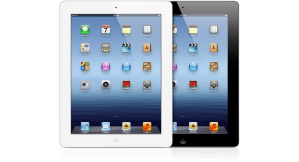
Apple’s iPad

IHS iSuppli predicts that these ‘PC-type’ tablets will generate 8 million unit sales next year, a 160% increase over expected 2012 figures. By comparison, what IHS Suppli calls “media tablets,” such as Apple’s iPad, will boast a more modest—but still impressive—60% increase in sales with 197 million units in 2013. PC tablets will appeal to business users looking for desktop-like features such as opening multiple windows and access to traditional desktop applications. As CIO Journal reported, Lenovo is among the enterprise PC makers hoping to tap  this demand, with a Windows 8 tablet.

Despite hopes for the PC tablet, Apple remains the vendor to beat inside and out of the enterprise. After dipping to 55.1 percent share of the tablet market  in late 2011 owing to the launch of Amazon’s Kindle Fire, the company is on track to claim 61%, the same portion it had in 2011. IHS Suppli director Rhoda Alexander cited the Apple platform’s “complete hardware-plus-content ecosystem,” first forged with the creation of the iPod and the iTunes music store, as a significant obstacle for any rival to overcome.

IHS Suppli cited rumors concerning the possible deployment of a smaller 7.8 inch display version of the Apple iPad. If Apple does release such a version, IHS iSuppli writes, the emphasis will be on playing up the quality of the overall tablet experience, and not on a substantially lower price.

First Edition Design Publishing

First Edition Design Publishing, based in Sarasota, Florida, USA leads the industry in eBook distribution. They convert, format and submit eBooks to Amazon, Apple, Barnes and Noble, Sony, Google, Kobo, Diesel, 3M, Ingram, Baker and Taylor, Nielsen, EBSCO, scores of additional on-line retailers and libraries, schools, colleges and universities. The company also has a POD (Print On Demand) division, which creates printed books and makes them available worldwide through their distribution network.

First Edition Design eBook Publishing

Amazon Killed the Book Reviewer Star #Author #Writer #FED_ebooks #ebook

First Edition Design Publishing
Amazon Killed the Book Reviewer Star

Source: TechCrunch.com

By Gregory Ferenstein

Authors no longer have to impress stodgy English majors to get their book a quality review: new research from the Harvard Business Reviewshows that the aggregate rating of Amazon reviewers are every bit as good as professional book critics.

First Edition Design eBook PublishingProfessional book critics, on the other hand, suffer from nepotism: critics give more favorable reviews to their colleagues, authors who agree with their ideological slant, and if the book has been given an award by other critics. The result, implies this new research, is that Amazon has democratized the book reviewing process, with consumer reviewers less beholden to special interests and more representative of the book-reading masses. Perhaps most importantly, it rebuts critics who have claimed that Amazon is nothing more than a cauldron of corrupt and uneducated opinions.

Despite the strict editorial firewall between writers and commercial interests, “reviewers may not always have the incentive to provide objective reviews,” explains Professors Dobrescu, Luca and Motta in a new study of the professional book review industry. Newspapers and magazines are 25% more likely to offer a review of an author who has written for their publication before; unsurprisingly, the reviews are slightly more positive. Moreover, professional reviews suffer from self-congratulatory institutional nepotism: novice authors get slammed more often than established ones, especially if they haven’t won any awards.

The new research provides ample firepower against academic critics of consumer reviews, who say that Amazon is a circus of corrupt and uneducated reviewers.

“The democratization of reviewing is synonymous with the decay of reviewing,” lamented Professor of English Morris Dickstein, “The professional reviewer, who has a literary identity, who had to meet some editor’s exacting standard, has effectively been replaced by the Amazon reviewer, the paying customer, at times ingenious, assiduous, and highly motivated, more often banal, obtuse, and blankly opinionated.”

Others have implied that Amazon contains far worse than uncritical literary buffoons. Cornell professor Trevor Pinch discovered systemic corruption within the ranks of top 1,000 Amazon reviewers, many of whom are given perks for good reviews or abstaining from bad ones.

But, if Amazon really is a literary cesspool, why did Dobrescu and his colleagues find that consumer reviews were nearly identical, on average, to professional critics, (under conditions when professionals would not be biased)? The likely explanation is what social scientists call the “wisdom of crowds.” A randomly selected consumer reviewer is no match for a professional reviewer, but the average opinion of all laymen is less biased than an expert.

This fact was famously discovered by Sir Francis Galton, who found that crowds of people were astonishingly good at guessing the weight of a cow, despite individual guesses being all over the map. Stupid answers are tossed around the actual right answer in equal proportion, marking the truth like treasure on a map surrounded by circular dots (for a fun video explanation of the wisdom of the crowds, check out the PBS video below featuring Neil deGrasse Tyson).

Moreover, psychologists have long known that experts are not the bastions of objective intellectual rigor that they are often made out to be. Berkeley Political Psychologist, Philip Tetlock, famously found that experts are no better at forecasting the future or interpreting evidence than the average layman; and, sometimes, they perform worse than randomly guessing. In Louis Menand’s words, experts “are poorer forecasters than dart-throwing monkeys.” Experts, Tetlock found, are biased by their own pre-conceived worldviews, and simply use more sophisticated analysis to unwittingly justify what they already believe.

In other words, both professionals and amateurs are susceptible to bias. But on Amazon the masses moderate the corruption, partisanship, and stupidity peppered throughout the crowd. In contrast we rarely read more than one professional book review leaving our purchasing decisions up the view of one mind.

At the very least, even if Amazon is biased, consumers will have far more in common with one another than a professional critic. So, as you’re deciding what new political tell-all will accompany you on your next plane flight, feel confident that the unpolished democratic masses have your best interests in mind.

First Edition Design PublishingFirst Edition Design Publishing, based in Sarasota, Florida, USA leads the industry in eBook distribution. They convert, format and submit eBooks to Amazon, Apple, Barnes and Noble, Sony, Google, Kobo, Diesel, 3M, Ingram, Baker and Taylor, Nielsen, EBSCO, scores of additional on-line retailers and libraries, schools, colleges and universities. The company also has a POD (Print On Demand) division, which creates printed books and makes them available worldwide through their distribution network.

First Edition Design Publishing

Publishing News #Author #Writer #ebook #Publishing RT

First Edition Design Publishing

We have lots of good news to tell you this month: another one of our eBook authors hit Amazon’s Bestseller list, we were interviewed over at examiner.com, everybody is live on Google Play, and accolades keep rolling in for First Edition Design Publishing. You can read it all here… MORE

First Edition Design PublishingFirst Edition Design Publishing, based in Sarasota, Florida, USA leads the industry in eBook distribution. They convert, format and submit eBooks to Amazon, Apple, Barnes and Noble, Sony, Google, Kobo, Diesel, 3M, Ingram, Baker and Taylor, Nielsen, EBSCO, scores of additional on-line retailers and libraries, schools, colleges and universities. The company also has a POD (Print On Demand) division, which creates printed books and makes them available worldwide through their distribution network.

First Edition Design Publishing

Shift from print books to #ebooks #Author #Writer #FED_ebooks

 E-book Nation

First Edition Design Publishing

First Edition Design Publishing

 First Edition Design Publishing http:www.firsteditiondesignpublishing.com, based in Sarasota, Florida, USA leads the industry in eBook distribution. They convert, format and submit eBooks to Amazon, Apple, Barnes and Noble, BooksOnBoard, Sony, Google, Kobo, Diesel, 3M, Ingram, Baker and Taylor, Nielsen, EBSCO, scores of additional on-line retailers and libraries, schools, colleges and universities. The company also has a POD (Print On Demand) division, which creates printed books and makes them available worldwide through their distribution network.

BooksOnBoard’s Top Ten Authors and eBooks This Week in the US #ebooks #author #writer #FED_ebooks

First Edition Design Publishing

BooksOnBoard’s Top Ten Authors and eBooks This Week in the US

WEBWIRE – Monday, May 14, 2012


The runaway success of the erotic Fifty Shades trilogy by E.L. James has sparked questions regarding BooksOnBoard’s erotica policy—specifically, where readers can find BooksOnBoard’s erotic content.

“Because some erotic content may be offensive to our readers and too easily accessible to children who visit our site, we have an erotic filter on the site that prevents almost all erotica titles from being viewable unless readers authorize it in their accounts,” explained Bob LiVolsi, BooksOnBoard’s founder and CEO. “Without an account, our visitors are unable to see erotica. However, once they have registered an account, they can check off the ’Show Erotic Content’ box found in their account profile.”

Readers have been opting in to view erotic content this week, bringing E.L. James’s ebooks onto the Bestselling Romance eBooks lists in both the US and the UK.

1. Deadlocked – Charlaine Harris
2. 11th Hour – James Patterson and Maxine Paetro
3. City of Lost Souls – Cassandra Clare
4. Bitterblue – Kristin Cashore
5. The Inquisitor’s Key – Jefferson Bass
6. Act of Terror – Marc Cameron
7. The Sacred Scroll – Anton Gill
8. Red Blood, Black Sand – Chuck Tatum
9. Guilt by Degrees – Marcia Clark
10. The Evil that Men Do – Jeanne M. Dams

Bestselling Romance eBooks
1. Fifty Shades of Grey – E.L. James
2. The Last Boyfriend – Nora Roberts
3. Lady Maggie’s Secret Scandal – Grace Burrowes
4. Beauty – Laurell K. Hamilton
5. Worth Fighting For – Sondrae Bennett
6. Fifty Shades Darker – E.L. James
7. Under a Vampire Moon – Lynsay Sands
8. The Duchess of Love – Sally MacKenzie
9. The Duke’s Perfect Wife – Jennifer Ashley
10. Beguiling the Beauty – Sherry Thomas

Bestselling Authors
1. Charlaine Harris
2. James Patterson
3. Jefferson Bass
4. Cassandra Clare
5. Kristin Cashore

Bestselling Romance Authors
1. E.L. James
2. Nora Roberts
3. Lynsay Sands
4. Grace Burrowes
5. Jennifer Ashley

BooksOnBoard is the largest independent online retailer of eBooks, with an inventory of over one million titles.  BooksOnBoard is also one of the largest retailers of downloadable Audio Books, and carries formats compatible with eBook Readers such as: Android devices, Kindle Fire, Apple iPad, iPhone, iPod Touch, Sony PRS-300 eBook Readers, Cybook Opus Pocket eBook Readers, Cybook Gen3 eBook Readers, and Astak EZReader Pocket Pro eBook Readers.

First Edition Design PublishingFirst Edition Design Publishing http:www.firsteditiondesignpublishing.com, based in Sarasota, Florida, USA leads the industry in eBook distribution. They convert, format and submit eBooks to Amazon, Apple, Barnes and Noble, BooksOnBoard, Sony, Google, Kobo, Diesel, 3M, Ingram, Baker and Taylor, Nielsen, EBSCO, scores of additional on-line retailers and libraries, schools, colleges and universities. The company also has a POD (Print On Demand) division, which creates printed books and makes them available worldwide through their distribution network.

https://www.facebook.com/first.edition.design