First Edition Design Publishing
Libraries, patrons, and e-books
Source: PewInternet.org Released: June 22, 2012
by Kathryn Zickuhr, Lee Rainie, Kristen Purcell, Mary Madden and Joanna Brenner
Summary of findings
12% of readers of e-books borrowed an e-book from the library in the past year. But a majority of Americans do not know that this service is provided by their local library.
Some 12% of Americans ages 16 and older who read e-books say they have borrowed an e-book from a library in the past year.
Most e-book borrowers say libraries are very important to them and their families and they are heavy readers in all formats, including books they bought and books lent to them. E-book borrowers say they read an average (the mean number) of 29 books in the past year, compared with 23 books for readers who do not borrow e-books from a library. Perhaps more striking, the median (midpoint) figures for books reportedly read are 20 in the past year by e-book borrowers and 12 by non-borrowers.
But most in the broader public, not just e-book readers, are generally not aware they can borrow e-books from libraries. We asked all those ages 16 and older if they know whether they can borrow e-books from their library and 62% said they did not know if their library offered that service. Some 22% say they know that their library does lend out e-books, and 14% say they know their library does not lend out e-books.
These findings are striking because more than three-quarters of the nation’s public libraries lend e-books.1
In the general public, even many of those who presumably have an interest in knowing about the availability of free library loans of e-books are not sure about the situation at their local library:
- 58% of all library card holders say they do not know if their library provides e-book lending services.
- 55% of all those who say the library is “very important” to them say they do not know if their library lends e-books.
- 53% of all tablet computer owners say they do not know if their library lends e-books.
- 48% of all owners of e-book reading devices such as original Kindles and NOOKs say they do not know if their library lends e-books.
- 47% of all those who read an e-book in the past year say they do not know if their library lends e-books.
E-book borrowers appreciate the selection of e-books at their local library, but they often encounter wait lists, unavailable titles, or incompatible file formats.
Focusing on those who do borrow e-books from libraries, two-thirds say the selection is good at their library: 32% of e-book borrowers say the selection at their library is “good,” 18% say it is “very good,” and 16% say it is “excellent.” Some 23% say the selection is only “fair,” 4% say it is “poor,” and 8% say they don’t know.
We asked those who borrowed e-books whether they had experienced several of the difficulties that could be associated with such borrowing, and found that:
- 56% of e-book borrowers from libraries say that at one point or another they had tried to borrow a particular book and found that the library did not carry it.
- 52% of e-book borrowers say that at one point or another they discovered there was a waiting list to borrow the book.
- 18% of e-book borrowers say that at one point or another they found that an e-book they were interested in was not compatible with the e-reading device they were using.
Many Americans would like to learn more about borrowing e-books.
We also asked all those who do not already borrow e-books at the public library how likely it would be that they might avail themselves of certain resources if their library were to offer them. The results:
- 46% of those who do not currently borrow e-books from libraries say they would be “very” or “somewhat” likely to borrow an e-reading device that came loaded with a book they wanted to read.
- 32% of those who do not currently borrow e-books say they would be “very” or “somewhat” likely to take a library class on how to download e-books onto handheld devices.
- 32% of those who do not currently borrow e-books say they would be “very” or “somewhat” likely to take a course at a library in how to use an e-reader or tablet computer.
Those most interested in these services include some groups that librarians are especially eager to reach. African-Americans, Hispanics, and those who live in lower-income households are more likely than others to say they would be interested in borrowing pre-loaded e-reading devices and take classes about how to use the devices and download books.
58% of Americans have a library card, and 69% say that their local library is important to them and their family.
Some 58% of those ages 16 and older have a library card, and 69% report that the library is important to them and their family. Women, whites, and parents of minor children are more likely to have library cards than other groups, and having a library card is also strongly correlated with educational attainment: 39% of those who have not completed high school have a library card, compared with 72% of those with at least a college degree. Those living in households making less than $30,000 per year, those living in rural areas, and adults ages 65 and older are less likely than other groups to have a library card.
At the same time, African-Americans and Hispanics are more likely than whites to say that the local library is important to them and their families. Overall, 38% of Americans ages 16 and older say that the public library is “very important,” and 31% say it is “somewhat important.” Some 17% say it is “not too important,” while 13% say it is “not important at all.” By comparison, some 48% of African-Americans say the library is very important to them, along with 43% of Hispanics, compared with 35% of whites.
When it comes to specific library services, African-Americans are more likely than whites 1) to use the local library to get access to historical documents or genealogical records; 2) to use the library to get access to databases such as legal or public records; and 3) to use the library to access or borrow newspapers or magazines or journals.
Library card holders are more than twice as likely to have bought their most recent book than to have borrowed it from a library. Many e-book borrowers purchase e-books, too.
In our December 2011 survey, 78% of those ages 16 and older said they had read a book in the past year. We asked those book readers about their borrowing and buying habits.
Among those who had read a book in the previous year, 48% say they had bought their most recent book; 24% borrowed it from a friend; 14% borrowed it from the library; and 13% got it another way. Among library card holders, a similar proportion (47%) say they had bought their most recent book, while 20% borrowed it from a friend, 20% borrowed it from the library, and 12% got it another way.
Among those who read e-books, 41% of those who borrow e-books from libraries purchased their most recent e-book.
We also asked book readers about their general preferences when it came to getting books. Fully 55% of the e-book readers who also had library cards said they preferred to buy their e-books and 36% said they preferred to borrow them from any source—friends or libraries. Some 46% of library card holders said they prefer to purchase print books they want to read and 45% said they preferred to borrow print books.
When it comes to e-book borrowers, 33% say they generally prefer to buy e-books and 57% say they generally prefer to borrow them.
The importance of buying books to e-book borrowers is also apparent when it comes to the places where they get book recommendations. Some 71% of e-book borrowers say they get book recommendations from online bookstores and websites; 39% say they get recommendations from the staff at bookstores they visit; and 42% say they get recommendations from librarians.
Asked where they look first when they are trying to find an e-book, 47% of those who borrow e-books from libraries say they first look at online bookstores and websites and 41% say they start at their public library.
Library card holders use more technology, and they report that they read more books.
Library card holders are more likely to own and use digital devices than those who don’t have cards. Card holders are more likely than others to be internet users (87% vs. 72%), more likely to own a cell phone (89% vs. 84%), and more likely to have a desktop or laptop computer (81% vs. 67%). And they are more likely than others to say they plan to purchase an e-reader or a tablet computer.
Library card holders also report they read more books than non-holders. In the 12 months before our December survey, library card holders report that they read an average (the mean number) of 20 books, compared with 13 books for non-card holders. The median (midpoint) figures for books reportedly read are 10 by library card holders and 5 by non-holders.
Leading-edge librarians and patrons say that the advent of e-books has produced a major transformation in book searching and borrowing at libraries.
In addition to conducting a representative phone survey, we also solicited thousands of comments online from library staff members and library patrons about their experiences in the relatively new world of e-books and e-book borrowing. Here are some of the main themes in their answers:
- Book-borrowing habits are changing. Some of the most avid library users report they are going to library branches less and using the library website more for book and audio downloads. Additionally, patrons’ browsing is moving from in-library catalogs to online searches of library websites. As a result, “routine” traditional library interactions between patrons and librarians are receding in some places as interactions shift to online communications and downloads.
- Library holdings are changing. A number of librarians report that some funds for purchasing printed books have been shifted to e-book purchases. Others’ libraries have cut back on other media purchases, such as CD audiobooks, to free up funds for purchases of e-books.
- Librarians’ roles are changing. A majority of the librarians who responded to our query said they are excited about the role that e-books have played in their institutions and the way that e-books have added to patrons’ lives. At the same time, many report that much more of their time is devoted to providing “tech support” for patrons—both in their hardware needs and mastering software and the web—and away from traditional reference services. Librarians often are anxious about the new set of demands on them to learn about the operations of new gadgets, to master every new web application, and to de-bug every glitch on a digital device. A notable portion of librarians report they are self-taught techies. Staff training programs often help, but librarians report wide variance in the quality of some training efforts.
Imagining the future of libraries
Patrons and librarians were fairly uncertain about the exact way that libraries would function in the future. Overall, most librarians from our online panel thought that the evolution of e-book reading devices and digital content has been a good thing for libraries, and all but a few thought that the evolution of e-book reading devices and digital content has been a good thing for reading in general.
Still, there was a strong sense in answers from librarians and users that significant change was inevitable, even as readers’ romance with printed books persists. Some patrons talked about libraries with fewer printed books and more public meeting and learning spaces. Some librarians struggled to see past a murky transition. There was a combination of apprehension and excitement in their answers without a clear consensus about the structure and shape of the institution.
In brief: About this research
Quantitative data
All the statistics in this report, including all specific data about various groups, comes from a series of nationally-representative phone surveys of Americans. They were conducted in English and Spanish, by landline and cell phone. The main survey, of 2,986 Americans ages 16 and older, was conducted on November 16-December 21, 2011, and extensively focused on the new terrain of e-reading and people’s habits and preferences. This work was underwritten by a grant from the Bill & Melinda Gates Foundation.
Several other nationally-representative phone surveys were conducted between January 5-8 and January 12-15, 2012 to see the extent to which adoption of e-book reading devices (both tablets and e-readers) might have grown during the holiday gift-giving season, and those growth figures are reported here. Finally, between January 20-Febuary 19, 2012, we re-asked the questions about the incidence of book reading in the previous 12 months in order to see if there had been changes because the number of device owners had risen so sharply. In general, however, all data cited in this report are from the November/December survey unless we specifically cite the subsequent surveys.
Qualitative material
The qualitative material in this report, including the extended quotes from individuals regarding e-books and library use, comes from two sets of online interviews that were conducted in May 2012. The first group of interviews was of library patrons who have borrowed an e-book from the library. Some 6,573 people answered at least some of the questions on the patron canvassing, and 4,396 completed the questionnaire. The second group of interviews was of librarians themselves. Some 2,256 library staff members answered at least some of the questions on the canvassing of librarians, and 1,180 completed the questionnaire. Both sets of online interviews were opt-in canvassings meant to draw out comments from patrons and librarians, and they are not representative of the general population or even library users. As a result, no statistics or specific data points from either online questionnaire are cited in this report.
“Libraries Connect Communities: Public Library Funding & Technology Access Study 2011-2012,” the American Library Association and the Information Policy & Access Center (University of Maryland), June 19, 2012. http://www.ala.org/research/plftas/2011_2012 ↩
About Pew Internet
The Pew Research Center’s Internet & American Life Project is an initiative of the Pew Research Center, a nonprofit “fact tank” that provides information on the issues, attitudes, and trends shaping America and the world. The Pew Internet Project explores the impact of the internet on children, families, communities, the work place, schools, health care and civic/political life. The Project is nonpartisan and takes no position on policy issues. Support for the Project is provided by The Pew Charitable Trusts. More information is available at http://www.pewinternet.org.
 First Edition Design Publishing, is the world’s largest eBook distributor. Ranked first in the industry, they convert, format and submit eBooks to Amazon, Apple, Barnes and Noble, Sony, Google, Kobo, Diesel, 3M, Ingram, Baker and Taylor, Nielsen, EBSCO, scores of additional on-line retailers and libraries, schools, colleges and universities. The company also has a POD (Print On Demand) division, which creates printed books and makes them available worldwide through their distribution network. The Company is a licensed and approved eBook Aggregator, Apple Developer and Microsoft Solution Provider.


 The Madonna Ghost , ISBN 9781622870356, is a mystery that combines an intriguing ghost story with the adventures and romance of a young heroine, Annie Tillery and her boyfriend, Ty Egan. Using forensic science to solve the double puzzle of the ghost and her aunt’s disappearance, our heroes stumble on a plot that involves national security, are kidnapped, nearly dying in a boating accident, to save the day.
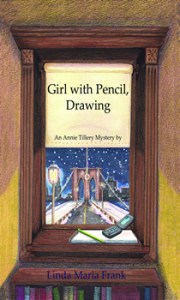 suspect and calls upon Annie to help solve the crime. As Annie and her NYPD detective aunt, Jill Tillery, brave the dangers of an international art fraud ring in an attempt to clear Francesca’s name, they soon realize that the key to solving the case revolves around a mysterious brownstone in Brooklyn whose inhabitants present tantalizing and elusive clues.
 As a teacher of forensic science for almost 20 years, Linda Maria Frank decided to create mysteries around the science she found most interesting. She also wanted to create a smart, edgy, young female detective to solve the cases. The result was Annie Tillery. Frank likes to call her books “Nancy Drew meets CSI”. Her books capture, not only her love of mystery and science, but those things she found most exciting in life; sailing, falling in love, and a fascination with New York City. She is the Producer of the Writer’s Dream TV Show.
 First Edition Design Publishing is the world’s largest eBook distributor. Ranked first in the industry, they convert, format and submit eBooks to Amazon, Apple, Barnes and Noble, Sony, Google, Kobo, Diesel, 3M, Ingram, Baker and Taylor, Nielsen, EBSCO, scores of additional on-line retailers, libraries, schools, colleges and universities. The company also has a POD (Print On Demand) division, which creates printed books and makes them available worldwide through their distribution network. The Company is a licensed and approved eBook Aggregator, Apple Developer and Microsoft Solution Provider.









 First Edition Design Publishing - a hybrid publisher