Tag Archives: writing practice

How to Revise Your Story Like a Pro

It’s suddenly 2018. Have you set an awesome writing goal for yourself this year?

I have, and I’m incredibly excited about it!

For some of us, that goal involves writing something brand new.

But for most of us, our 2018 writing goals probably involve rewriting a work in progress. It’s a draft, roughly complete or unfinished, that never seems to be “done,” no matter how much we tinker with it.

There’s a reason we get stuck in these perpetual works in progress. And if we don’t figure out how to overcome it, we might find ourselves in the same sticky mess 365 days from now.

The Myth of Revision

In secondary school, we are taught the writing process: Plan, Draft, Revise, Proofread, Publish.

As a secondary teacher, I face the most resistance from my students in that third step: Revision.

The first reason why is that we simply don’t want to do it. Revision isn’t nearly as enjoyable as creation, or as easy as correcting surface errors. Plus, it can be overwhelming, leaving us wondering if we even know how to revise a story.

But the second reason why we resist is the word itself, “Revision.” It’s a misleading term. It doesn’t really exist.

What we really have to do when we revise is rewrite.

And no one wants to rewrite, because rewriting is painful.

Demo Day

To properly revise, we have to identify that our existing creation is deeply flawed.

And while it may have been beautiful once before, it is negatively affecting the story around it.

Much like the Demo Day scenes in our favorite HGTV shows, we can’t simply work around the flaws. They’re affect everything else too directly, and have to be taken out with a sledgehammer.

Yet we don’t want to do it. We feel like we’re hurting the ones we love, or “our babies.”

Revision can literally feel like betrayal and death, because we have to accept that our creation, something that we have lovingly cultivated, must be destroyed.

Is it possible to keep parts of our old creation and rebuild around it?

Yes, but it’s surprising (and depressing) how seldom this works. Odds are, if a chapter, paragraph, or sentence isn’t working, it has to go.

Ouch.

Saving Our “Children”

Here’s the good news: Our creations don’t literally have to die.

Instead, they should get added to a “storage” document. When I was writing my novel, The Bean of Life, I was swinging my editorial sledgehammer like Chip and Joanna after drinking a case of Red Bull (my wife watches a lot of Fixer Upper).

Yet every one of my beautiful creations, my little narrative children, was carefully cut and pasted into my “TBoL Storage” document. For each stored bit, I labeled it with a bookmarked heading so I could easily find it if needed.

And you know what? I used it. There were many times I went back into that document and rescued a sentence or phrase that still had a role to play in the story.

But to be honest, I don’t remember 95% of those bits in that storage document (which is 50,000 words long). I’ve forgotten them, mostly because they were ultimately forgettable.

So here’s a tip for how to revise your story: do yourself the loving favor of protecting your creations. Never hit the “Delete” button (unless it’s just a typo). Always cut-and-paste your creations into storage, where they will be safe.

Enlightened Rewriting

To truly revise our work in progress and bring it to a state of “done,” we must rewrite it — often from a blank page one.

This doesn’t sound fun, and it will certainly be a lot of work.

But this new creation won’t feel anything like the first time. A first draft is like hacking our way through dense, dangerous jungle. This draft will be like climbing the stairs of an ancient temple where an enlightened monk awaits us at the top.

Here’s why you need to rewrite on a blank page: A crowded page is a prison; a blank page is freedom.

Trying to work within the confines of our old ideas and rigid prose does not provide the creation freedom that we need.

We need space. We need opportunity.

Maybe a blank page is something you find intimidating. No problem. Keep an important piece of description, or a line of dialogue, to spark your creativity. Give yourself a launch pad.

But remove the shackles of yesterday’s ideas.

It’s a new year, a time for new ideas. And it’s time for a major breakthrough on that perpetual work in progress.

Rewrite With Confidence!

Every old draft is a massive lesson that teaches us about our stories. The fact that we didn’t “get it right” doesn’t make us failures — it makes us artists. Art is failure of a very persistent nature. Some of the best pieces of art in the world were regarded as failures by their creators and contemporaries, and now are revered and copied.

So (re)write this year with confidence!

If your goal is to build the habits and mindset of a successful storyteller, this is a crucial step to take. We have to be able to put old ideas aside, learn from them, and take risky steps forward. Otherwise we will be stuck in a prison of the past, forever fearing the touch of the creative sledgehammer and its wonderful power.

What do you think? Can you revise, even on a crowded page, filled with old ideas that might not be working? Or do you prefer the freedom of an empty page of unlimited possibility?

What steps do you take to revise your stories? Let the community know in the comments!

By David Safford
Source: thewritepractice.com

Visit us at First Edition Design Publishing

3 Steps to Complete Your Writing Goals in the New Year


For the last two weeks I have received emails from over eight different companies offering to teach me how to have a wonderful and amazing year next year. Their premise is that I will have a wonderful year if I complete a goal. Since I am a writer, perhaps I should complete some writing goals.

com

The companies offer to give me practical advice to assist me. Some of them even offered to give me a certificate of completion when I finished their course. The least expensive offer was close to five hundred dollars.

Today, I will give you my three steps to complete a goal and have a great New Year. And, I won’t charge you five hundred dollars.

3 Steps to Complete Your Writing Goals

I will give you a preview of the three steps. Beware, the next three lines contain spoilers:

Step One: Decide what you want to do

Step Two: Write down what you want to do

Step Three: Do what you wrote down.

1. Decide what you want to do.

Step one may seem simple. The most important word in step one is DECIDE. Yes, make up your mind.

You are creative, right? A writer. You have so many story ideas, which one should you do first?

Pick one. Just one. Work on this idea until it is finished. Focus. Finish.

But first you have to make up your mind. You can never finish something if you don’t start. So for now, make up your mind.

(If you are not sure what you should decide to do, consider these writing goals.)

People cannot hit what they do not aim for.

― Roy T. Bennett

2. Write down what you want to do.

Step two is essential. Well, all three steps are essential. Don’t skip a step.

You have to write down what you want to do.

Don’t rely on your memory. When you wake up the next day and your six cats are meowing to be fed, if you haven’t written down what you want to do, you might never remember. You have bills to pay and cats to feed. If it is not written down, you might not remember what you want to accomplish.

How many pages will you write today, this week? Decide, then write it down. Find a friend who would be willing to receive weekly updates from you. Send them at the end of the week how much you have written.

If you have a goal, write it down. If you do not write it down, you do not have a goal — you have a wish.

― Steve Maraboli

Dr. Gail Matthews, a psychology professor at the Dominican University of California, after studying two hundred and sixty seven people, discovered you are more likely to complete goals if you write them down or share them with a friend. Seventy percent of the participants who sent weekly updates to a friend achieved their goal or got more than halfway there. But of the people who didn’t tell a friend or write down their goal, only 35 percent made it that far.

3. Do what you wrote down.

Step three is an action step. You do what you wrote down.

You can control your future if you always obey what is written down. Before you go to bed tonight, write down what you want your future self to do. Such as, “Write three pages today.” When you wake up you will see the note you wrote the night before, and you will do what it says.

Last night I had my husband decide what time he was going to get out of bed this morning. First he wrote, “I want to get out of bed at seven.” I had him change it to “I will get out of bed at seven.” Then he signed the statement and I signed it as a witness to his promise. He made up his mind: step one. He wrote it down: step two.

This morning at seven, he hit the snooze button. Dr. Matthews’s suggestion to tell your goal to a friend helped my husband this morning. I opened the blinds, turned on the shower, and ripped off all the covers on the bed. Then he did step three and got out of bed.

The Gift of Writing Goals

In twelve more sleeps it will be the first day of a new year. A day of hope; a day where we can begin again. We can have that feeling every day, but the first day of a new year feels like a gift.

So, as you start your new year, think of the three steps. You don’t have to buy a fancy course. You can write. You can complete your goal of writing a first draft, editing the novel you wrote in November, or writing the story of why you flew to Asia in 1983 with a one-way ticket to Bangkok.

Decide what you want to do, write it down, and do it. I believe in you.

Tell your story.

Do you have trouble completing your writing goals? What do you do to help you complete them? Let us know in the comments.

by Pamela Hodges
Source: thewritepractice.com

Visit us at First Edition Design Publishing

Are Writers Born Or Made?

Ebook Publishing Design Edition First Graphic Aggregators Ebooks Publishers Distribution POD Designing Approved Aggregator How Services Academic Distributor Chapter Submission Professional Firsteditiondesignpublishing.com published book market

Publisher – Aggregator – Master Distributor

by JOANNA PENN on AUGUST 9, 2013, from The Creative Penn!

When we start writing,  it can be daunting to read the amazing books by our author heroes and wonder how we can ever be that good.

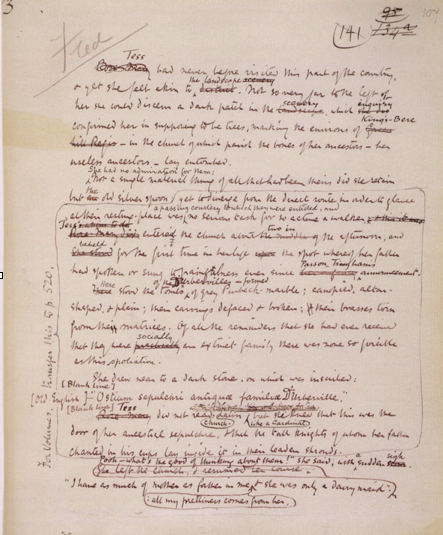
Thomas Hardy's Tess

Thomas Hardy’s edited manuscript of ‘Tess of the D’Urbevilles, one of England’s greatest writers

Surely, for them, the words just flowed perfectly from brain to page with effortless grace?

But I have seen Thomas Hardy’s manuscript of Tess in the British Library. Check out that editing! Even the greats went through the same creative process as we do. Today’s guest article from Chris Allen explores this further.

Many writers dream of writing from a young age, but are we born with a literary gift, or is it a skill honed over many years?

It’s easy to regard the celebrated thriller authors of our time – Ian Fleming, Sir Arthur Conan Doyle, Frederick Forsyth, John Le Carré et al – as being superhuman at their craft and having innate talent. We see the countless reprints with the special edition covers, but we don’t see the knock-backs, the evolution of their writing style, and the hard slog they too went through on the road to success.

My first attempts at writing were woeful.

Never what you’d call a disciplined student – school always seemed to get in the way of life – once I decided writing was my calling, I had a fanciful notion that ‘it’, whatever it was, would come naturally. It didn’t.

Discovering Ian Fleming’s The Man With The Golden Gun in the school library as a young teen was the moment that the fanciful notion became a quest.  Hoping to achieve what Bond’s creator had done – building a world of international espionage, heart-stopping action, complex characters and intrigue, I opted to take the experience angle, therein avoiding study, to write my own brand of thrillers. All of which prompts the question:

How do well-intentioned, aspiring writers tread the path to becoming great storytellers?

Chatting recently with a couple of popular Australian authors, namely Greg Barron (author of Savage Tide & Rotten Gods) and Luke Preston (author of Dark City Blue), who with myself and Tony Park are co-founding members of the Action Thriller Writers Association of Australia (ThrillerEdge.com), I wanted to find out how they had honed their abilities. Was it a walk in the park for them? Or was it, like most of us, decades of learning?

Words are Addictive

Luke Preston’s stories have been proclaimed “Noir on No-Doz.” He first put pen to paper around the age of sixteen and the pen hasn’t left his hand since. For Luke, “Writing is not about achievement. It’s about survival. The words are an addiction for which the only cure is getting the words on the page.”

Greg Barron, recently described as “a political thriller writer at the very top of his game,” embarked on his path to publication while in his mid-thirties, and the journey so far has taken more than a decade.

Greg says, “Not only am I not a natural, but I’m a slow learner. There was a moment when I realised that great writing requires both clarity and imaginative embellishment in equal measure. That was about seven years after I started writing. My first drafts are clunky and terrible. Reading them over for the first time is depressing.” Despite that, Greg’s teachers identified early on that he was skilled at putting words together and told him to do something with it.

Meanwhile, never a great student, actually learning to write wasn’t something I did (or ever wanted to do) in a formal sense. Although, having done a fair bit of writing throughout my professional career – in military, law enforcement and government, where the descriptions were necessarily short and sharp, and the facts accessed quickly – this helped in honing my style.

What is Talent, Anyway?

The most important things in life are only achieved with practice, patience and commitment. To some, including me, writing is no different: the concept of natural talent has been profoundly absent in most aspects of my life, instead having to work for everything, which, in itself, is not a bad state of affairs.

There were, for example, at least six full versions of the manuscript that eventually became my first novel, Defender. That process, along with the proofreading, editing, and re-editing, is the only real creative writing development I’ve done.

Luke Preston grew up in the decade that invented Atari and home video, commenting, “Any kid with a pen in his hand instead of a joystick is probably going to be considered talented.” But Luke was a storyteller from early on, and determined each word would be better than the last.

Greg recognizes now that determination was the key ingredient necessary to complement those early assessments of his writing potential, saying, “I don’t think it was evident that I would have the dogged persistence necessary to write a good book, as I had a mind that jumped around all over the place.”

It Takes One Million Words

Teachers, playwrights, university lecturers and agents can act as inspiration during a writer’s apprenticeship, helping to spur burgeoning talent along. Another fool-proof trick is to read widely, but remember to keep your own literary heroes close as a daily reminder of the great heights we writers reach for.

Luke Preston observes that “the hardest part of writing is learning how to write like you.” He says, “I’m not sure there’s such a thing as a natural writer. To me it’s like saying that somebody was born a natural plumber. Storytelling is a craft and a trade. It takes ten years and one million words to build a good writer and when you’re not good, you’re bad.”

As an unabashed Fleming and Conan Doyle fan (some would hazard to say nut), it’s been a tortuous journey in terms of my desire to emulate their creative strengths. By way of an origin point for my inspiration, a copy of Casino Royale, Fleming’s first novel, has permanent residence on my writing desk.

That said, success on their scale has never been my yardstick. I’m drawn to the way Fleming and Conan Doyle created iconic characters based upon their own life experiences. By putting myself at the core of the principal character, while drawing on other interesting characters, both real and fictional, I make my protagonist a hybrid of all those things.

Luke Preston has benchmark writers whose books live on his desk. He says, “When I’m tired, hungover, fed up or just downright lazy, I dip into those books that remind me of the calibre or work I’m up against.”

While Luke currently has copies of Less than Zero by Bret Easton Ellis and L.A. Confidential by James Ellory next to him, Greg Barron would love to write as vividly as Wilbur Smith, with the beautiful prose of F Scott Fitzgerald, and the detail of Leon Uris. He says, modestly, “In reality, I’ll fall short on all three counts!”

Be Your Best Writer

As creative capitalists, we are each on our own path, some days trudging through treacle, others where we take rare moments of literary flight, so this notion of reaching the apex of a writing career is debatable. More likely is the realization of an idea of us as writers, as it was first dreamed and imagined those many years ago.

Writing words has been a profession for Greg, in terms of his habits and attitudes, long before being published. Today, he has a vision of himself, “at my desk, attempting to do my best every day, falling short most of the time, but persisting.”

Luke Preston strives to be the best writer he can be. He says, “If I had tried to write like anybody else it just wouldn’t have worked. A writer is an accumulation of their experiences, childhood, fears, desires and favourite colours.”

To me, being a successful writer meant reaching that time of life when one could look contemplatively out of a window, recalling people, places and life experiences, while wrestling with how those things might be presented on the page. To some extent, that’s happening, although I’m yet to wear a dinner jacket or drink martinis while doing it!

Between us, we may have published five books and written millions of words over many decades, but success remains an abstract concept.

As Preston says, “I’m not convinced that overnight success exists in the business of words. I’d wager that the writer who believes they were, secretly has a couple of unreadable manuscripts hidden away in their bottom drawer.”

Do you think writers are born or can we learn over time? Please do leave your comments below.

About the Author

chrisallenBefore penning his Alex Morgan espionage series, Chris Allen served as a Paratrooper with three Commonwealth armies; undertook humanitarian aid in East Timor; protected Sydney’s iconic Opera House sails post 9/11; and as Sheriff of New South Wales, held one of Australia’s oldest law enforcement appointments.

Chris’s first novel in the Intrepid series, Defender, was self-published before being re-released by Momentum Books with his second novel, Hunter, at the end of 2012. Both novels rocketed to the top of the charts on iTunes and Amazon with Hunter becoming a bestseller and there is a US film / TV franchise based on his novels in development. His third title, Avenger, will be published next year.

You can read the full transcripts of each author’s interview over at the intrepidallen.com/blog.

Defender: Intrepid 1 is on Amazon.com: http://amzn.to/15jGQr4
Hunter: Intrepid 2 is on Amazon.com: http://amzn.to/12lQIhV

Visit: www.firsteditiondesignpublishing.com

Ebook Publishing Design Edition First Graphic Aggregators Ebooks Publishers Distribution POD Designing Approved Aggregator How Services Academic Distributor Chapter Submission Professional Firsteditiondesignpublishing.com published book market