Monthly Archives: May 2012

The Changing Politics of the Self-Publishing Stigma #indieauthor #writer #selfpublish #author #FED_ebooks

First Edition Design Publishing

Sticks & Stones: The Changing Politics of the Self-Publishing Stigma

Written by Terri Giuliano Long for indiereader.com

Bookselling This Week just reported that brick and mortar booksellers are making it easier for self-published authors to garner coveted shelf space in their stores. With indies crossing into this and other territory usually staked out by the traditionally published, the battle between self-published and traditionally pubbed authors has heated up. Rumor has it, one big-name author even resorted to rallying fans, fuming about the deleterious effect eBooks have had on her income. Another traditionally published author went so far as to refer to self-publishing as “literary karaoke.”

The lines, it seems, have been drawn.

The “literary karaoke” slur notwithstanding, the stakes are less about the quality of indie books and more about the money indies are grabbing from their traditionally pubbed brethren. From the outcry, you’d think self-publishers were stealing and eating their babies—and, in a way, maybe they are.

While traditional publishers have seen an increase in overall profits, their mass-market and hardcover segments have been hard hit by burgeoning digital sales. According to the Association of American Publishers (AAP), in 2011 e-book sales rose 117%, generating revenue of $969.9 million, while sales in all trade print segments fell, with mass-market paperbacks plunging by nearly 36%.

As sales decline, industry leaders worry that some houses may focus on the more profitable hardback format, publishingFirst Edition Design Publishing paperback editions of only their highest grossing titles. For conventional authors, especially mid-listers, this would be a significant blow. As Rachel Deahl reports in Publisher’s Weekly: “ . . . the shift will kill the much-needed second bite books get at the marketing and publicity apple.”

If e-books are causing the ruckus, why focus all the ire on indies?

Fact is, most people buy a book for one reason: they want a good read. Assuming the book delivers, they don’t care who published it; many don’t even notice. With publishing cachet exerting less influence on purchasing decisions, price has become more of a factor. In a depressed economy, it’s only natural to look for a deal—and indie authors offer one. With greater flexibility and lower overhead, self-publishers can afford to sell their e-books for a fraction of the price charged by large publishers.

Now, in addition to declining paperback royalties, traditional authors face stiff competition from inexpensive self-published e-books. No wonder they’re angry.

Nevertheless, casting aspersions by aggressively promoting the indie stigma is unfair – and unwarranted. “The idea that all self-published books are sub-standard is erroneous,” says literary agent Jenny Bent, founder of The Bent Agency in Brooklyn, New York. Will Clarke, one of Bent’s clients, self-published his first two books, “Lord Vishnu’s Love Handles” and “The Worthy”. After Simon & Schuster republished, Bent points out, “he got a full-page rave review for both of them in the New York Times Book Review.”

Self-Published Books ”Refreshing and New”

Naomi Blackburn, founder of the Sisterhood of the Traveling Book, a 400-member Goodreads book club, believes self-publishing has opened the door for new voices and given readers a far greater selection. Ranked #29 on the Goodreads list of top reviewers in the U.S. and #35 globally of all time, Blackburn reads nearly a book a day. She’s grown tired of traditional publishers “shoving dried-up authors down consumers’ throats and subjecting readers to substandard work, especially if they find a ‘cash cow.’” These days, Blackburn veers toward self-published books or works put out by smaller houses. “I usually find the works to be refreshing and new,” she says.

If bestseller lists are any indication, and surely they are, then millions of readers are following in Blackburn’s footsteps. Nowadays, indie titles regularly crack—even top —the NY Times and USA Today bestseller lists. John Locke, Barbara Freethy, Gemma Halliday, and Amanda Hocking have all broken into the million-plus sales club, and well over 100 indie authors have sold more than 50,000 books. No, gorilla-size sales figures do not guarantee the quality of an indie title, any more than huge numbers indicate the quality of a conventionally published book. The numbers do suggest that readers see value in indie books and they’re purchasing indie titles in droves.

Which is perhaps why some offenders have resorted to bullying, aggressively promoting an indie stigma that ceased to be unilaterally credible (if it ever was) around the time The Shack—an indie publication—sat for approximately 172 weeks on The New York Times bestseller list.

With millions of indie titles on shelves, some are bound to be lacking. Sometimes, says Jenn, a book editor and blogger, also known as “Picky Girl,” the lack of quality is immediately evident. “A cover that looks childish, out of date, or amateurish often speaks for the story it houses.” By publicly decrying the need to perfect their craft or bragging about writing and publishing quickly, Indie authors make themselves easy targets, says M.J. Rose, bestselling author and owner of AuthorBuzz.com. “Self-publishing shouldn’t be an excuse to not do the hard work,” Rose adds.

True enough. But not all traditionally pubbed books are Pulitzer-worthy either. The difference is, when a traditional title garners negative reviews, only that book gets panned. No one cites examples of poorly written traditionally published books to support any conclusion about all traditional titles. Besides, lousy books are a non-factor anyway. Readers don’t talk about books they don’t like and retailers don’t put poor selling books in recommendation queues, so the books languish on the shelves.

Nor is it true, as detractors claim, that it’s impossible to separate the chaff from the grain. Jennifer, the blogger at Books, Personally, finds the best indie reads through her Twitter network and blog. Like Jennifer, readers can use their social networks to find fab indie titles. They can also peruse reviews on reader sites like Goodreads, ask their friends for recommendations, or rely on reviews posted by a favorite book blogger. For the most popular current titles, readers can check the IndieReader “List Where Indies Count,” a list of the top 10 best-selling indie books, updated weekly.

Today’s Indie Authors Choose to Self-Publish

No question, traditional publishers play an important role in the publishing world. Still, for better or worse, the days when they were the sole gatekeepers are behind us. Today, rejection by traditional houses says little about a book. “Some wonderful books [are rejected] for various reasons—nothing to do with quality,” says Jenny Bent. A publisher may reject a book because it doesn’t fit into a clear category. A traditional house may also turn down a book if it doesn’t have an obvious audience or if the author has too small a platform or a poor sales track with previous books.

In the old days, determined authors turned to self-publishing—or vanity presses, as they were called—as a last resort. Serious authors, concerned about being black- balled, dared not self-publish. As a result, talented authors like John Kennedy Toole, whose posthumously published masterpiece, “A Confederacy of Dunces,” won a Pulitzer Prize (1981), went to their grave believing their work did not measure up.

Today, many talented authors choose the self-publishing route and they do it for a variety of reasons. Jackie Collins recently shocked the literary world with her announcement that she planned to self-publish a new, rewritten version of her novel “The Bitch”. “Times are changing,” Collins said of her decision, “and technology is changing, so I wanted to experiment with this growing trend of self-publishing.”

Industry superstars like New York Times bestselling authors Barbara Freethy and C.J. Lyons use self-publishing platforms to market their out-of-print backlists. Other authors are drawn to self-publishing because of its flexibility, the ability to publish within their own timeframe, for instance—perhaps to leverage topical interest or mark an anniversary. Others authors self-publish out of a desire for artistic control.

Self-publishing can also be a practical way to build an audience. Today, publishers expect authors to have a solid platform. By self-publishing, emerging authors can build the fan base necessary to attract a traditional publisher for their next work. Other authors, long-timers as well as newbies, feel they can make more money on their own. At $2.99 a pop, authors earn nearly $2.00 on every eBook sale. Even at 99¢, with average royalties of 33¢ to 60¢, earnings on a hot-selling book can quickly out-pace the meager advance offered to all but the superstars by a traditional house.

These days—insult-hurling aside—traditional and indie authors are more alike than different. Mindful of their increased scrutiny, self-publishers take full advantage of the myriad professional services available to authors. Indies hire experienced editors to copyedit and proofread. For their cover and interior designs, some work with the same graphic artists who design for the traditional houses. Professionals are available and widely used to covert documents to digital and paperback formats, and POD printing has gotten so good that, to the typical untrained eye, print-on-demand books are virtually indistinguishable from books printed on an offset press.

Literary agent and publishing consultant Joelle Delbourgo, founder and president of Joelle Delbourgo Associates, Inc., formerly a senior publishing executive at Random House and HarperCollins, says some self-publishers go a step further and work with a professional publishing partner, a strategy she recommends. A publishing pro with a track record of success can bring an author to the next level, Delbourgo says.

For a few years, Bethanne Patrick, a publicist and media consultant also known as “The Book Maven,” creator of the global reading community Friday Reads, was skeptical of self-publishing. Through her work in social media, Patrick has read more indie titles and gotten to know writers who’ve chosen to self-publish. More and more indie authors, she’s noticed, seek the advice of freelance editors, publicists, and marketing consultants—and she’s intrigued.

As well-educated and experienced writers—emerging authors who’ve honed their craft as well as established and traditionally published authors—increasingly opt to go the indie route, the bar is rising. As with indie musicians and filmmakers, indie authors bring new life to an evolving industry. Today, readers have access to a wealth of funny, poignant, brilliant voices of talented new authors from around the globe—voices that, just a few years ago, might have been silenced by the old guard.

The opportunity to self-publish—to publish their books their own way—has given both emerging and established authors more freedom than ever before. So, yes, now thatreaders choose which books to purchase and support, dollars may shift and some traditional authors may be forced to give up a slice of the pie. Change is never easy; inevitably, there are bumps and bruises along the way. But, like or not, indie publishing is here to stay. And the publishing world will be all the richer for it.

Terri Giuliano Long is a contributing writer for IndieReader and Her Circle eZine. She has written news and features for numerous publications, including the Boston Globe and the Huffington Post. She lives with her family on the East Coast and teaches at Boston College. Her debut novel, “In Leah’s Wake,” began as her master’s thesis. For more information, please visit her website. Or connect on Facebook,Twitter or Blog.

First Edition Design PublishingFirst Edition Design Publishingbased in Sarasota, Florida, USA leads the industry in eBook distribution.They convert, format and submit eBooks to Amazon, Apple, Barnes and Noble, Sony, Google, Kobo, Diesel, 3M, Ingram, Baker and Taylor, Nielsen, EBSCO, scores of additional on-line retailers and libraries, schools, colleges and universities. The company also has a POD (Print On Demand) division, which creates printed books and makes them available worldwide through their distribution network.

First Edition Design eBook Publishing

#Apple Tablet Sales to Soar #iPad #ebook #Author #Writer #FED_ebooks

Tablet Sales Expected to Soar with Apple (Mostly) Dominating

Source: WSJ.com

CIO Journal.  May 15, 2012

By Thomas Loftus, News Editor

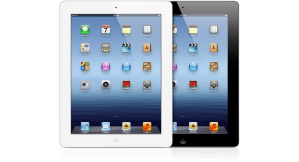
Tablet sales are echoing the “wild exuberance” of the cellphone industry in its early years, market watcher IHS iSuppli  said in a report issued on Tuesday, predicting that unit growth will soar 85% to 126 million in 2012 and 63% to 205 million in 2013. Apple’s iPad is expected to dominate sales, capturing 61% of 2012 market share. But IHS iSuppli predicts that things could get more interesting for the industry (and CIOs) in late 2012 with the launch of a new generation of tablets that use the forthcoming Windows 8 operating system.

Apple’s iPad

IHS iSuppli predicts that these ‘PC-type’ tablets will generate 8 million unit sales next year, a 160% increase over expected 2012 figures. By comparison, what IHS Suppli calls “media tablets,” such as Apple’s iPad, will boast a more modest—but still impressive—60% increase in sales with 197 million units in 2013. PC tablets will appeal to business users looking for desktop-like features such as opening multiple windows and access to traditional desktop applications. As CIO Journal reported, Lenovo is among the enterprise PC makers hoping to tap  this demand, with a Windows 8 tablet.

Despite hopes for the PC tablet, Apple remains the vendor to beat inside and out of the enterprise. After dipping to 55.1 percent share of the tablet market  in late 2011 owing to the launch of Amazon’s Kindle Fire, the company is on track to claim 61%, the same portion it had in 2011. IHS Suppli director Rhoda Alexander cited the Apple platform’s “complete hardware-plus-content ecosystem,” first forged with the creation of the iPod and the iTunes music store, as a significant obstacle for any rival to overcome.

IHS Suppli cited rumors concerning the possible deployment of a smaller 7.8 inch display version of the Apple iPad. If Apple does release such a version, IHS iSuppli writes, the emphasis will be on playing up the quality of the overall tablet experience, and not on a substantially lower price.

First Edition Design Publishing

First Edition Design Publishing, based in Sarasota, Florida, USA leads the industry in eBook distribution. They convert, format and submit eBooks to Amazon, Apple, Barnes and Noble, Sony, Google, Kobo, Diesel, 3M, Ingram, Baker and Taylor, Nielsen, EBSCO, scores of additional on-line retailers and libraries, schools, colleges and universities. The company also has a POD (Print On Demand) division, which creates printed books and makes them available worldwide through their distribution network.

First Edition Design eBook Publishing

Amazon Killed the Book Reviewer Star #Author #Writer #FED_ebooks #ebook

First Edition Design Publishing
Amazon Killed the Book Reviewer Star

Source: TechCrunch.com

By Gregory Ferenstein

Authors no longer have to impress stodgy English majors to get their book a quality review: new research from the Harvard Business Reviewshows that the aggregate rating of Amazon reviewers are every bit as good as professional book critics.

First Edition Design eBook PublishingProfessional book critics, on the other hand, suffer from nepotism: critics give more favorable reviews to their colleagues, authors who agree with their ideological slant, and if the book has been given an award by other critics. The result, implies this new research, is that Amazon has democratized the book reviewing process, with consumer reviewers less beholden to special interests and more representative of the book-reading masses. Perhaps most importantly, it rebuts critics who have claimed that Amazon is nothing more than a cauldron of corrupt and uneducated opinions.

Despite the strict editorial firewall between writers and commercial interests, “reviewers may not always have the incentive to provide objective reviews,” explains Professors Dobrescu, Luca and Motta in a new study of the professional book review industry. Newspapers and magazines are 25% more likely to offer a review of an author who has written for their publication before; unsurprisingly, the reviews are slightly more positive. Moreover, professional reviews suffer from self-congratulatory institutional nepotism: novice authors get slammed more often than established ones, especially if they haven’t won any awards.

The new research provides ample firepower against academic critics of consumer reviews, who say that Amazon is a circus of corrupt and uneducated reviewers.

“The democratization of reviewing is synonymous with the decay of reviewing,” lamented Professor of English Morris Dickstein, “The professional reviewer, who has a literary identity, who had to meet some editor’s exacting standard, has effectively been replaced by the Amazon reviewer, the paying customer, at times ingenious, assiduous, and highly motivated, more often banal, obtuse, and blankly opinionated.”

Others have implied that Amazon contains far worse than uncritical literary buffoons. Cornell professor Trevor Pinch discovered systemic corruption within the ranks of top 1,000 Amazon reviewers, many of whom are given perks for good reviews or abstaining from bad ones.

But, if Amazon really is a literary cesspool, why did Dobrescu and his colleagues find that consumer reviews were nearly identical, on average, to professional critics, (under conditions when professionals would not be biased)? The likely explanation is what social scientists call the “wisdom of crowds.” A randomly selected consumer reviewer is no match for a professional reviewer, but the average opinion of all laymen is less biased than an expert.

This fact was famously discovered by Sir Francis Galton, who found that crowds of people were astonishingly good at guessing the weight of a cow, despite individual guesses being all over the map. Stupid answers are tossed around the actual right answer in equal proportion, marking the truth like treasure on a map surrounded by circular dots (for a fun video explanation of the wisdom of the crowds, check out the PBS video below featuring Neil deGrasse Tyson).

Moreover, psychologists have long known that experts are not the bastions of objective intellectual rigor that they are often made out to be. Berkeley Political Psychologist, Philip Tetlock, famously found that experts are no better at forecasting the future or interpreting evidence than the average layman; and, sometimes, they perform worse than randomly guessing. In Louis Menand’s words, experts “are poorer forecasters than dart-throwing monkeys.” Experts, Tetlock found, are biased by their own pre-conceived worldviews, and simply use more sophisticated analysis to unwittingly justify what they already believe.

In other words, both professionals and amateurs are susceptible to bias. But on Amazon the masses moderate the corruption, partisanship, and stupidity peppered throughout the crowd. In contrast we rarely read more than one professional book review leaving our purchasing decisions up the view of one mind.

At the very least, even if Amazon is biased, consumers will have far more in common with one another than a professional critic. So, as you’re deciding what new political tell-all will accompany you on your next plane flight, feel confident that the unpolished democratic masses have your best interests in mind.

First Edition Design PublishingFirst Edition Design Publishing, based in Sarasota, Florida, USA leads the industry in eBook distribution. They convert, format and submit eBooks to Amazon, Apple, Barnes and Noble, Sony, Google, Kobo, Diesel, 3M, Ingram, Baker and Taylor, Nielsen, EBSCO, scores of additional on-line retailers and libraries, schools, colleges and universities. The company also has a POD (Print On Demand) division, which creates printed books and makes them available worldwide through their distribution network.
First Edition Design Publishing

Publishing News #Author #Writer #ebook #Publishing RT

First Edition Design Publishing

We have lots of good news to tell you this month: another one of our eBook authors hit Amazon’s Bestseller list, we were interviewed over at examiner.com, everybody is live on Google Play, and accolades keep rolling in for First Edition Design Publishing. You can read it all here… MORE

First Edition Design PublishingFirst Edition Design Publishing, based in Sarasota, Florida, USA leads the industry in eBook distribution. They convert, format and submit eBooks to Amazon, Apple, Barnes and Noble, Sony, Google, Kobo, Diesel, 3M, Ingram, Baker and Taylor, Nielsen, EBSCO, scores of additional on-line retailers and libraries, schools, colleges and universities. The company also has a POD (Print On Demand) division, which creates printed books and makes them available worldwide through their distribution network.

First Edition Design Publishing

Shift from print books to #ebooks #Author #Writer #FED_ebooks

 E-book Nation

First Edition Design Publishing

First Edition Design Publishing

 First Edition Design Publishing http:www.firsteditiondesignpublishing.com, based in Sarasota, Florida, USA leads the industry in eBook distribution. They convert, format and submit eBooks to Amazon, Apple, Barnes and Noble, BooksOnBoard, Sony, Google, Kobo, Diesel, 3M, Ingram, Baker and Taylor, Nielsen, EBSCO, scores of additional on-line retailers and libraries, schools, colleges and universities. The company also has a POD (Print On Demand) division, which creates printed books and makes them available worldwide through their distribution network.

BooksOnBoard’s Top Ten Authors and eBooks This Week in the US #ebooks #author #writer #FED_ebooks

First Edition Design Publishing

BooksOnBoard’s Top Ten Authors and eBooks This Week in the US

WEBWIRE – Monday, May 14, 2012


The runaway success of the erotic Fifty Shades trilogy by E.L. James has sparked questions regarding BooksOnBoard’s erotica policy—specifically, where readers can find BooksOnBoard’s erotic content.

“Because some erotic content may be offensive to our readers and too easily accessible to children who visit our site, we have an erotic filter on the site that prevents almost all erotica titles from being viewable unless readers authorize it in their accounts,” explained Bob LiVolsi, BooksOnBoard’s founder and CEO. “Without an account, our visitors are unable to see erotica. However, once they have registered an account, they can check off the ’Show Erotic Content’ box found in their account profile.”

Readers have been opting in to view erotic content this week, bringing E.L. James’s ebooks onto the Bestselling Romance eBooks lists in both the US and the UK.

1. Deadlocked – Charlaine Harris
2. 11th Hour – James Patterson and Maxine Paetro
3. City of Lost Souls – Cassandra Clare
4. Bitterblue – Kristin Cashore
5. The Inquisitor’s Key – Jefferson Bass
6. Act of Terror – Marc Cameron
7. The Sacred Scroll – Anton Gill
8. Red Blood, Black Sand – Chuck Tatum
9. Guilt by Degrees – Marcia Clark
10. The Evil that Men Do – Jeanne M. Dams

Bestselling Romance eBooks
1. Fifty Shades of Grey – E.L. James
2. The Last Boyfriend – Nora Roberts
3. Lady Maggie’s Secret Scandal – Grace Burrowes
4. Beauty – Laurell K. Hamilton
5. Worth Fighting For – Sondrae Bennett
6. Fifty Shades Darker – E.L. James
7. Under a Vampire Moon – Lynsay Sands
8. The Duchess of Love – Sally MacKenzie
9. The Duke’s Perfect Wife – Jennifer Ashley
10. Beguiling the Beauty – Sherry Thomas

Bestselling Authors
1. Charlaine Harris
2. James Patterson
3. Jefferson Bass
4. Cassandra Clare
5. Kristin Cashore

Bestselling Romance Authors
1. E.L. James
2. Nora Roberts
3. Lynsay Sands
4. Grace Burrowes
5. Jennifer Ashley

BooksOnBoard is the largest independent online retailer of eBooks, with an inventory of over one million titles.  BooksOnBoard is also one of the largest retailers of downloadable Audio Books, and carries formats compatible with eBook Readers such as: Android devices, Kindle Fire, Apple iPad, iPhone, iPod Touch, Sony PRS-300 eBook Readers, Cybook Opus Pocket eBook Readers, Cybook Gen3 eBook Readers, and Astak EZReader Pocket Pro eBook Readers.

First Edition Design PublishingFirst Edition Design Publishing http:www.firsteditiondesignpublishing.com, based in Sarasota, Florida, USA leads the industry in eBook distribution. They convert, format and submit eBooks to Amazon, Apple, Barnes and Noble, BooksOnBoard, Sony, Google, Kobo, Diesel, 3M, Ingram, Baker and Taylor, Nielsen, EBSCO, scores of additional on-line retailers and libraries, schools, colleges and universities. The company also has a POD (Print On Demand) division, which creates printed books and makes them available worldwide through their distribution network.

https://www.facebook.com/first.edition.design

The best edition: Meet First Edition Design Publishing #Author #Writer #ebook #publishing RT

The best edition: Meet First Edition Design Publishing

 examiner.com

By Liz McKeown  Nashville Books Examiner

First Edition Design Publishing is a Print on Demand (POD) and ebook publishing company with clients in over 18 countries. First Edition Design’s scope spans from self-publishing to book distribution to software application development.

Question: Did First Edition Design Publishing get started as a self-publishing First Edition Design Publishingcompany or did it start out with software application development?

Answer: The company dates back almost three decades. Its roots go back to graphic design. That was at the dawn of the internet, web site development and so forth. Early on, we became Apple Developers and Microsoft Solution Providers. With digital technology expertise well in hand, we were well positioned as we grew into the burgeoning ebook industry. Our past experience and relationships enabled us to establish a massive global distribution network. Our background is what moved us into position as publishers, aggregators and Master Distributors.

Question: If someone has an ebook on Amazon already and just wants a distributor and more attention for the book, what does First Edition Design Publishing have to give?

Answer: As Master Distributors, we submit authors’ books to over 100,000 distribution points in over 100 countries including on-line retailers, libraries, schools, colleges and universities. In addition to Amazon, we submit books to Apple, Barnes and Noble, Sony, Google, Kobo, Diesel, 3M, Ingram, Baker and Taylor, Nielsen, EBSCO, and scores of other on-line booksellers. We do provide a comprehensive list, which is constantly growing, at http://www.firsteditiondesignebooks.com/html/distributionchannels.html

Question: What does your company offer that its rivals don’t?

Answer: As mentioned–unequaled distribution. On top of that, we provide awesome customer support and the best cost to value in the industry for services.

Question: I know First Edition Design Publishing offers fiction and non-fiction. Are there any categories of books that you and others in your company are particularly excited about?

Answer: Children’s books is an area we have always served, but we are now experiencing a tremendous surge in that department. Academic books are another growth area for us.

Question: I understand that comic book authors have an easier time publishing their illustrated work as ebooks. Can First Edition Design Publishing accomodate authors with pictures, graphs, etc.?

Answer: Yes and no. If you submit your file with color pictures and the e-reader which many are black and white; the picture will only appear to be black and white to the reader.

The availability of color e-reader devices has greatly improved over the last year or two with the proliferation of the Kindle Fire, Barnes and Noble’s Nook Color, Apple’s iPad, smartphones, and others, all of which support color graphics. You also have to keep in mind an e-reader is smaller than a printed book. Therefore, viewing any details of a picture will be very difficult for the user.

The format of the picture cannot be wrapped around any text. The picture must reside either at the top or under a block of text. If you submit your book with graphics and the picture is not formatted properly, we will move the picture to the top or bottom of the corresponding text area.

One other option is to remove the picture and provide a link as to where the picture resides. You can set up an html page with your pictures, upload the page, right click on the picture and copy picture link. Insert the link instead of submitting the picture. The text of the link should be “picture”. The reader will know to tap on the “picture” link to view.

Question: What’s new in First Edition Design Publishing?

Answer: We had another ebook release, Daria Rose and The Day She Chose by award-winning Children’s Book Author Yvonne Capitelli, hit Amazon’s bestseller list last week. This month, we also further expanded our ebook distribution in Japan, Australia, Canada, Germany, France, Italy and Spain. We also added MBS Books, Textbooks.com, Feedbooks, OnlineBookPlace, SmartEbook.com, Starland Books and Eguidebooks to our distribution list along with three more Christian book outlets, Mardel, Parable, and Berean. There are a few other dynamic projects in development that we will announce in the upcoming months.

Question: What is the biggest mistake a self-published author can make?

Answer: Since you asked, the biggest mistake would be for an author to not contact us before submitting their manuscript to us. It can save them a lot of unnecessary heartache. With that said, (another big mistake) is not having their work professionally proofread and copy edited. We see so many “rookie errors” in writing style by indie authors in addition to the usual grammar faux pas. It can really kill a book.

From a book marketing standpoint, I see distinct areas for failure. The first is setting unrealistic goals and having expectations for far greater than what the author and book content can generate. With or without high expectations, most authors don’t put nearly enough time or effort into marketing their book. Authors always want marketing advice… but many don’t apply it and follow through. Another area is poor book cover design. We have had some really awful covers submitted. By the time it gets to the submission point—some authors are emotionally attached to their cover. They don’t (or will not) see what a good art editor or designer sees and the author doesn’t want to part with it. It’s just another area where knowing what the market expects, in addition to skill and wisdom, that pays a dividend.

Question: Any advice for people specifically interested in publishing a POD book?

Answer: Be sure your manuscript is error free before submitting it. Typos, misspellings, misused words, etc. can get costly to change later, or disastrous, if you’ve ordered copies and they contain errors. You will have no one to blame but yourself. Don’t worry about interior design. A good self-publishing service will set it up for you and provide a proof to look over for your approval before it goes to the print house.

Question: Would you recommend that a POD author buy about 25-50 copies of the book and sell them at in event, such as a book fair?

Answer: Book fairs, BOR (Back Of Room) sales at author talks, and book signings are all great ways to promote a book. An author should always have some copies on hand, but how many is the question. That’s the beauty of POD (Print On Demand). With First Edition Design Publishing’s service, authors don’t have to order large quantities, unless they want to. A minimum order for print books is only five. Most authors will see that they have the potential to sell many more books on-line. That’s where the value of a Master Distributor comes in.

Question: I have seen a lot of book trailers on You Tube that are nothing more than the author reading from the book in front of a camcorder. What makes an exciting, enticing book trailer, in your opinion?

Answer: Like anything else that’s audio-visual—it needs a hook. You have to grab the viewers’ attention in the first fifteen seconds. It has to have energy.

Question: Is there anything you want to tell me that I haven’t asked?

Answer: The whole ebook publishing industry is in a fluid state. Major announcements are being made on a weekly basis. As a company, we’ve been able to view the evolution from a slightly different angle. As I said, we were on the digital scene well in advance of the ebook arrival around 2007. Authors who shy away from adding an ebook version to their already published print book, or new release, are giving away a big market share. After all, it’s about giving readers what they want and delivering a book in the way they want to read it. And again, it’s about availability through wide distribution.

Amazon has been selling more ebooks than print books by a considerable margin. Border’s Books sat on their corporate hands when ebooks rolled out. They viewed it as a passing fad that would never catch on. The rest is history. What more do you need to know? Ebooks aren’t the future; they’re the present. Authors and publishers have to respond to the market demands.

I was on a flight last night and looked around. I counted seven people reading ebooks on a variety of ereader devices and one person was reading a paperback. Okay—so that’s a small random sampling of the population, but it says a lot. Authors, and future authors, who rail against ebooks, are only kidding themselves. Then again, there were people who couldn’t accept changes in transportation when the automobile started to become popular 100 years ago.

Want to know more about First Edition Design Publishing? Click here: http://www.firsteditiondesignpublishing.com/

First Edition Design Publishing

Nashville Books Examiner

Liz has a Bachelor’s Degree in Journalism from Michigan State University. She worked as a writer and actress for Shockwave, a science fiction comedy radio show from 1993-1995 on KFAI, Minneapolis-St.Paul. She has more than 1000 followers on Twitter who are indie romance, Vampire, mystery or Chick Lit writers. Liz has over 10 years experience as a secretary for two world-famous research scientists; the late Professor Karl Folkers co-discoverer of Vitamin B12; and Professor Lee Wattenberg, founder of Cancer Prevention Research. Her duties included typing up, proofreading and submitting medical research articles for publication in such periodicals as Cancer Research, Science and AACR (American Association for Cancer Research). In addition to book reviews, Liz wants to interview indie authors, especially those who write romance novels, mysteries, Vampire books, time travel, paranormal romance, New Age and paranormal books. 


Target to stop selling Amazon Kindles #ebooks #Author #Writer #FED_ebooks

First Edition Design Publishing

Target to stop selling Amazon Kindles in its stores

Even if it loses offline Kindle sales elsewhere, impact on Amazon is minimal, analysts say

By Matt Hamblen

Computerworld – Target plans to stop selling Kindle e-readers in its brick-and-mortar stores after seeing buyers test the devices in its showrooms only to later buy them online from Amazon.

Target’s decision was reported this week in The New York Times, after analysts reported in January that the company wasn’t willing to let online-only retailers use its 1,800 stores to showcase their products while undercutting Target’s prices.

Target’s decision could influence other retailers that sell Kindles, including

Wal-Mart, Staples and Best Buy, analysts said. Amazon and the other physical retailers didn’t respond to a request for comment.

“Target’s problem is a common problem for brick-and-mortar companies,” said Rob Enderle, an analyst at Enderle Group. “Customers will find what they want at the store, then leave and shop for the best price online.”

Smartphone apps now available allow customers to scan a barcode on a product in a store and instantly look for better prices at other stores in the area and online, Enderle noted.

First Edition Design Publishing

Amazon’s Kindle Fire

What has made matters worse at Target is that Amazon’s Kindle Fire tablet also serves as Amazon’s online storefront to everything Amazon sells, Enderle added. “So that’s like Target is promoting all of Amazon, and Target’s not a fan of doing that,” Enderle said.

Enderle said if other brick-and-mortar retailers stopped selling Kindles, Amazon’s physical shelf space could dry up and Amazon would have to find shelf space by opening stores in malls or kiosks. Barnes & Noble has one advantage in selling Nook e-readers and tablets because it can offer a place for users to test out the devices before buying them, analysts said.

Jack Gold, an analyst at J. Gold Associates, said he would not be surprised to see Best Buy or Staples, among others, “push back on selling Amazon Kindles as a result of this frustration with Amazon.”

However, even if large retailers stop selling Kindles in their stores, Gold sees a “minimal effect on Amazon and Kindle sales” simply because most of their devices are sold directly.

Also, offline retailers wouldn’t see much material impact if they stopped selling the devices, since there was probably only a small mark-up for them, Gold added.

Amazon has sold its Kindles at a loss, primarily to encourage purchases of books and other merchandise with the device where it can make a profit, Gold noted. “It’s not a real penalty to Amazon to only have direct sales of the device,” he said.

 covers mobile and wireless, smartphones and other handhelds, and wireless networking for Computerworld. Follow Matt on Twitter at Twitter @matthamblen or subscribe to Hamblen RSSMatt’s RSS feed. His email address is mhamblen@computerworld.com.

First Edition Design Publishing

First Edition Design Publishing http:www.firsteditiondesignpublishing.com, based in Sarasota, Florida, USA leads the industry in eBook distribution. They convert, format and submit eBooks to Amazon, Apple, Barnes and Noble, Sony, Google, Kobo, Diesel, 3M, Ingram, Baker and Taylor, Nielsen, EBSCO, scores of additional on-line retailers and libraries, schools, colleges and universities. The company also has a POD (Print On Demand) division, which creates printed books and makes them available worldwide through their distribution network.

First Edition Design eBook Publishing

Quality Books Take Time #FED_ebooks #Author #Writer #Indieauthor

Quality Books Take Time

Source: www.rachellegardner.com

By: Rachelle Gardner

Back in the early ’80s there was an ad campaign for Paul Masson wine where Orson Welles famously uttered, “We will sell no wine before its time.”

The message was powerful; it conveyed, “We care so much about producing the highest quality wine that we refuse to rush the process. We won’t try to bring it out faster to increase profit. We won’t skimp on the craftsmanship that makes our wine so good. It takes time, and we will give our wine the time it needs.”

I couldn’t help thinking about that as I considered what I wanted to say today about the time and craftsmanship it takes to write a high quality book. I’m not talking about a book that everyone has to love. I’m talking about a book that has the basics: a solid story, well-developed characters, conflict that engages the reader, a satisfying resolution, well-crafted sentences and paragraphs, literate use of words, and a lack of typos and other egregious, noticeable errors. Even if it’s non-fiction, the basics apply except instead of characters, we need well-developed ideas.

With the proliferation of self-pub, online retailers are flooded with books that contain almost none of those basics. Books that scream “vanity” and “I just wanted to get rich quick.” Books that say, “I was too impatient, or too arrogant, or too ignorant, to either learn the very most basic writing techniques, or to get an editor’s eyes on this before it went public.”

I’ve said many times — I’m in favor of self-pub and e-pub and all the various ways writers now have to get their words out there.

But here’s the truth:

If you don’t pay attention to the quality control of your work, you’ll kill your writing career before it even starts.

Readers are not stupid. They may be downloading 99¢ e-books like crazy right now. But they’re already starting to figure out that something’s not right. Many of these books are poorly written and desperately need editing. (Even Amanda Hocking’s Trylle series, originally self-published, went through extensive editing at St. Martin’s before they re-released it.)

So why should you care? It seems many have the attitude of, “Why should I spend all that extra time and money on editing when people are going to buy it anyway?” Here’s why I think you should care:

If you self-publish a book that sucks, you may permanently lose potential readers.They pick up the book, it’s poorly crafted, they don’t like it — and they cross your name off their mental list of good authors. Down the road, perhaps you’ve become a better writer, perhaps you’ve finally decided to work with an editor, but unfortunately it’s too late for all those readers who are already convinced your books aren’t worth buying. Why risk that? Why not take the time to make sure your work is ready?

This idea of taking the time to properly craft a book applies to those in traditional publishing as well. Many of my clients become frustrated with me because I push them to make their proposals better and better; I may push them to write more chapters of their non-fiction books, I may push them to do a complete revision on a novel before submission. They’re anxious. They just want to get it out there. But I don’t work that way. I will sell no wine before its time.

I believe we need to keep holding books to a high standard. I want us all to keep insisting on quality reading material, not settling for whatever someone could slap together and impatiently upload to Kindle with barely a lick and a promise.

One of the main arguments writers use for self-publishing is the speed at which they can get their books up for sale. They’re proud of themselves for circumventing the laborious publishing system that — yes — takes forever. But many of them have nothing to be proud of. I’ve bought and read numerous self-pubbed books now, and in general the quality isnoticeably inferior to what most traditional publishers are putting out. (And all of those self-pubbers who are doing it poorly are giving a very bad name to the handful who are doing it well.) Many are sacrificing craftsmanship for speed.

It’s a trade-off that diminishes us all.

I say, let’s commit to selling no books before their time. Are you with me?

Update: Since so many people are mentioning in the comments that it’s hard to know how to find an editor, I wanted to give you a couple of resources. The latest post by Victoria Strauss on Writer Beware is about how to vet an independent editor. Also, I have a list of freelance editors here on my site.

© 2012 Rachelle Gardner, Literary Agent

First Edition Design Publishing http:www.firsteditiondesignpublishing.com, based in Sarasota, Florida, USA leads the industry in eBook distribution. They convert, format and submit eBooks to Amazon, Apple, Barnes and Noble, Sony, Google, Kobo, Diesel, 3M, Ingram, Baker and Taylor, Nielsen, EBSCO, scores of additional on-line retailers and libraries, schools, colleges and universities. The company also has a POD (Print On Demand) division, which creates printed books and makes them available worldwide through their distribution network.

First Edition Design Publishing


Microsoft Squares Off Against Amazon & Apple in #eBooks #FED_ebooks #Author #Writer

Source: Forbes.com

Microsoft Squares Off Against Amazon & Apple in eBooks

Microsoft has invested $300 million in a new subsidiary floated by Barnes & Noble, which will include its Nook business and its educational College business.  Microsoft’s cash infusion will get it a 17.6% equity stake, valuing the subsidiary at $1.7 billion. With this move, Microsoft is jumping into the e-books business, in which it will compete with the likes of AmazonApple and Google.

Barnes & Noble is the second largest player in the e-book space, but much smaller than Amazon, which completely dominates the market. Apple has been trying to get a foothold in the space and recently found itself in the middle of an antitrust investigation by the DoJ against major book publishers.

#     #     #

First Edition Design Publishing http:www.firsteditiondesignpublishing.com, based in Sarasota, Florida, USA leads the industry in eBook distribution. They convert, format and submit eBooks to Amazon, Apple, Barnes and Noble, Sony, Google, Kobo, Diesel, 3M, Ingram, Baker and Taylor, Nielsen, EBSCO, scores of additional on-line retailers and libraries, schools, colleges and universities. The company also has a POD (Print On Demand) division, which creates printed books and makes them available worldwide through their distribution network.

More…

First Edition Design eBook Publishing