5 Steps for Restarting Your Book Marketing Efforts After a Break

Print On Demand First Edition Design Publishing

Publishers – Aggregators – Master Distributors

Another great post from Duolit!

“Break’s over.” – Jed Bartlet, The West Wing

Photo: araza123 | FlickrLife loves to throw curveballs.

As soon as you’re feeling good about how things are moving —WHAM! — something comes along to knock you back.

If you’re part of our mailing list, you’ve read about the personal curveballs Shannon and I were thrown this summer, but I’m sure you’ve experienced similar situations, too.

A change in seasons (“Summer’s here — I’m going outside!”), big life events (“I’m having a baby!”) and just the simple ebb and flow of life all affect our priorities, habits and schedules.

At some point in your writing career, building your fanbase will be the farthest thing from your mind.

When you first waver off track, it might just be for a few days. But then, a week goes by…then a month, and before you know it, it feels harder and harder to get back into marketing your work and easier and easier to extend the break.

Eventually, you realize that you need to get back to promoting your work.

But where do you start?

Falling behind is terrifying. You’re afraid that you’ve done irreparable damage to your writing career by taking a break.

I mean, what if you have to start from — gulp — scratch?!

How to Get Back on Track After Taking a Fanbase-Building Break

First off, simply take a deep breath.

Even if you’ve been out of the game for a few months (or longer!) you won’t have to start promoting your work from scratch, unless you want a clean slate. Regardless of how dire it feels, the fans you’ve gained and the progress you’ve made won’t be negated by the time off.

I don’t want to mislead you — it takes effort to get the ball rolling again, but it won’t be as much as you think.

Are you ready to get started? Put on some relaxing music and let’s work through the five steps for getting back on the book marketing bandwagon!

1. Cut yourself some slack

Many writers I know (myself included) have terribly guilty consciences. Heck, I can still feel bad over mistakes I made as a kid!

But, one thing I’ve realized about guilt over the years is that it doesn’t do anything to help you move forward.

So, the first step for getting back on track is to forgive yourself for veering off in the first place. Taking a break does not make you a bad, bad author who doesn’t care about her career — it just makes you human!

Take a (-nother) deep breath and remember: the passed time is what it is; you’ve done nothing wrong.

2. Assess the situation

Now that you’ve taken care of the guilt, let’s figure out where you left off the last time you were working on promotion. It’s the best way to decide how to move forward. As a start, ask yourself:

  • Do I have a website? If so, where?
  • Do I have a blog? If so, where?
  • Which social networks am I a part of?
  • What was the last promotion/promotional activity I was working on? What were the results?
  • Who are my readers? How was I trying to reach them?
  • Who were my biggest fans and/or author allies? How do I get in touch with them?

Spending a few moments on the survey serves two purposes:

  1. Reminds you of the progress you’ve made in the past
  2. Puts you back into the self-promotion mindset

Basically, it gives you all the information you need to start moving forward and making new plans!

3. Focus on promotions you enjoy

While falling off the wagon can happen to even the most enthusiastic author, it happens more often to those who dread promotion or are only using certain promotional tools because they feel like they have to.

I officially give you permission to stop this madness!

Shannon and I are both huge proponents of book marketing your way. When the responsibility’s all on your shoulders, you get to decide which methods you want to use. Why? Because, if using Twitter triggers head-bashing tendencies, you will start finding reasons not to log in.

Remember: much to many authors’ chagrin, there is no one true path to publishing and promotional success. Some authors couldn’t imagine their success without Facebook, but others (who are doing just as well) have never even used the service.

Blaze your own trail and only partake in the promotional avenues you feel comfortable with and enjoy. You’ll be happier (and more successful) in the end!

4. Take small steps

After a break, you’ll feel tempted to make up for lost time by taking on a bunch of new marketing projects at one time, but don’t do it! If you do, that initial, enthusiastic push will fizzle into burnout, and that’s what we want to avoid this time, right?

Instead, focus on one promotional project at a time and break that task down into smaller steps. In this vein, we’re starting a new blog series with a monthly project for you to tackle, but you can easily do this yourself with any of your marketing ideas.

As an added bonus, breaking down a single idea into smaller steps will allow you to accomplish each one more quickly — and what feels better than quickly checking things off your to-do list?

5. Build in breaks

This time around, get ahead of the game by building mini-breaks into your promotional life. You’ll not only keep up your enthusiasm for promotion, but you’ll also become a pro at restarting things after a few days or a week off. Then, when real life strikes, you’ll know exactly how to bounce back!

If taking time off doesn’t make you feel comfortable, instead focus on moving at a pace that is maintainable for you.

As an example, if you realistically have 5 hours a week to devote to promotion, don’t try to schedule in 10 hours of work. Or, if you have more motivation during certain weeks, accomplish more during that week and plan for a more relaxed schedule the following week.

Very few of us work at this whole book marketing “thing” full-time. The more flexible you are with planning your time and accomplishing your goals, the happier (and more productive!) you’ll be.

Visit: www.firsteditiondesignpublishing.com

Ebook Publishing Design Edition First Graphic Aggregators Ebooks Publishers Distribution POD Designing Approved Aggregator How Services Academic Distributor Chapter Submission Professional Firsteditiondesignpublishing.com published book market

The Power of Words

Are Writers Born Or Made?

Ebook Publishing Design Edition First Graphic Aggregators Ebooks Publishers Distribution POD Designing Approved Aggregator How Services Academic Distributor Chapter Submission Professional Firsteditiondesignpublishing.com published book market

Publisher – Aggregator – Master Distributor

by JOANNA PENN on AUGUST 9, 2013, from The Creative Penn!

When we start writing,  it can be daunting to read the amazing books by our author heroes and wonder how we can ever be that good.

Thomas Hardy's Tess

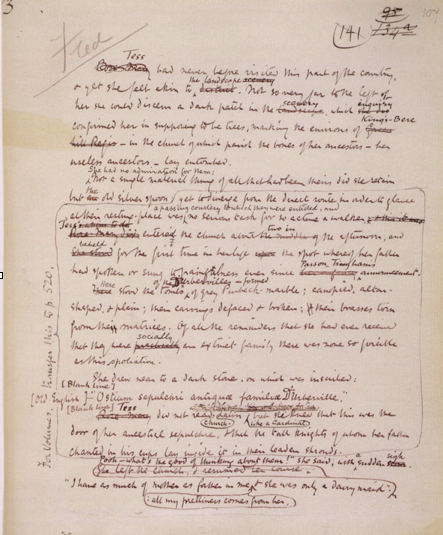
Thomas Hardy’s edited manuscript of ‘Tess of the D’Urbevilles, one of England’s greatest writers

Surely, for them, the words just flowed perfectly from brain to page with effortless grace?

But I have seen Thomas Hardy’s manuscript of Tess in the British Library. Check out that editing! Even the greats went through the same creative process as we do. Today’s guest article from Chris Allen explores this further.

Many writers dream of writing from a young age, but are we born with a literary gift, or is it a skill honed over many years?

It’s easy to regard the celebrated thriller authors of our time – Ian Fleming, Sir Arthur Conan Doyle, Frederick Forsyth, John Le Carré et al – as being superhuman at their craft and having innate talent. We see the countless reprints with the special edition covers, but we don’t see the knock-backs, the evolution of their writing style, and the hard slog they too went through on the road to success.

My first attempts at writing were woeful.

Never what you’d call a disciplined student – school always seemed to get in the way of life – once I decided writing was my calling, I had a fanciful notion that ‘it’, whatever it was, would come naturally. It didn’t.

Discovering Ian Fleming’s The Man With The Golden Gun in the school library as a young teen was the moment that the fanciful notion became a quest.  Hoping to achieve what Bond’s creator had done – building a world of international espionage, heart-stopping action, complex characters and intrigue, I opted to take the experience angle, therein avoiding study, to write my own brand of thrillers. All of which prompts the question:

How do well-intentioned, aspiring writers tread the path to becoming great storytellers?

Chatting recently with a couple of popular Australian authors, namely Greg Barron (author of Savage Tide & Rotten Gods) and Luke Preston (author of Dark City Blue), who with myself and Tony Park are co-founding members of the Action Thriller Writers Association of Australia (ThrillerEdge.com), I wanted to find out how they had honed their abilities. Was it a walk in the park for them? Or was it, like most of us, decades of learning?

Words are Addictive

Luke Preston’s stories have been proclaimed “Noir on No-Doz.” He first put pen to paper around the age of sixteen and the pen hasn’t left his hand since. For Luke, “Writing is not about achievement. It’s about survival. The words are an addiction for which the only cure is getting the words on the page.”

Greg Barron, recently described as “a political thriller writer at the very top of his game,” embarked on his path to publication while in his mid-thirties, and the journey so far has taken more than a decade.

Greg says, “Not only am I not a natural, but I’m a slow learner. There was a moment when I realised that great writing requires both clarity and imaginative embellishment in equal measure. That was about seven years after I started writing. My first drafts are clunky and terrible. Reading them over for the first time is depressing.” Despite that, Greg’s teachers identified early on that he was skilled at putting words together and told him to do something with it.

Meanwhile, never a great student, actually learning to write wasn’t something I did (or ever wanted to do) in a formal sense. Although, having done a fair bit of writing throughout my professional career – in military, law enforcement and government, where the descriptions were necessarily short and sharp, and the facts accessed quickly – this helped in honing my style.

What is Talent, Anyway?

The most important things in life are only achieved with practice, patience and commitment. To some, including me, writing is no different: the concept of natural talent has been profoundly absent in most aspects of my life, instead having to work for everything, which, in itself, is not a bad state of affairs.

There were, for example, at least six full versions of the manuscript that eventually became my first novel, Defender. That process, along with the proofreading, editing, and re-editing, is the only real creative writing development I’ve done.

Luke Preston grew up in the decade that invented Atari and home video, commenting, “Any kid with a pen in his hand instead of a joystick is probably going to be considered talented.” But Luke was a storyteller from early on, and determined each word would be better than the last.

Greg recognizes now that determination was the key ingredient necessary to complement those early assessments of his writing potential, saying, “I don’t think it was evident that I would have the dogged persistence necessary to write a good book, as I had a mind that jumped around all over the place.”

It Takes One Million Words

Teachers, playwrights, university lecturers and agents can act as inspiration during a writer’s apprenticeship, helping to spur burgeoning talent along. Another fool-proof trick is to read widely, but remember to keep your own literary heroes close as a daily reminder of the great heights we writers reach for.

Luke Preston observes that “the hardest part of writing is learning how to write like you.” He says, “I’m not sure there’s such a thing as a natural writer. To me it’s like saying that somebody was born a natural plumber. Storytelling is a craft and a trade. It takes ten years and one million words to build a good writer and when you’re not good, you’re bad.”

As an unabashed Fleming and Conan Doyle fan (some would hazard to say nut), it’s been a tortuous journey in terms of my desire to emulate their creative strengths. By way of an origin point for my inspiration, a copy of Casino Royale, Fleming’s first novel, has permanent residence on my writing desk.

That said, success on their scale has never been my yardstick. I’m drawn to the way Fleming and Conan Doyle created iconic characters based upon their own life experiences. By putting myself at the core of the principal character, while drawing on other interesting characters, both real and fictional, I make my protagonist a hybrid of all those things.

Luke Preston has benchmark writers whose books live on his desk. He says, “When I’m tired, hungover, fed up or just downright lazy, I dip into those books that remind me of the calibre or work I’m up against.”

While Luke currently has copies of Less than Zero by Bret Easton Ellis and L.A. Confidential by James Ellory next to him, Greg Barron would love to write as vividly as Wilbur Smith, with the beautiful prose of F Scott Fitzgerald, and the detail of Leon Uris. He says, modestly, “In reality, I’ll fall short on all three counts!”

Be Your Best Writer

As creative capitalists, we are each on our own path, some days trudging through treacle, others where we take rare moments of literary flight, so this notion of reaching the apex of a writing career is debatable. More likely is the realization of an idea of us as writers, as it was first dreamed and imagined those many years ago.

Writing words has been a profession for Greg, in terms of his habits and attitudes, long before being published. Today, he has a vision of himself, “at my desk, attempting to do my best every day, falling short most of the time, but persisting.”

Luke Preston strives to be the best writer he can be. He says, “If I had tried to write like anybody else it just wouldn’t have worked. A writer is an accumulation of their experiences, childhood, fears, desires and favourite colours.”

To me, being a successful writer meant reaching that time of life when one could look contemplatively out of a window, recalling people, places and life experiences, while wrestling with how those things might be presented on the page. To some extent, that’s happening, although I’m yet to wear a dinner jacket or drink martinis while doing it!

Between us, we may have published five books and written millions of words over many decades, but success remains an abstract concept.

As Preston says, “I’m not convinced that overnight success exists in the business of words. I’d wager that the writer who believes they were, secretly has a couple of unreadable manuscripts hidden away in their bottom drawer.”

Do you think writers are born or can we learn over time? Please do leave your comments below.

About the Author

chrisallenBefore penning his Alex Morgan espionage series, Chris Allen served as a Paratrooper with three Commonwealth armies; undertook humanitarian aid in East Timor; protected Sydney’s iconic Opera House sails post 9/11; and as Sheriff of New South Wales, held one of Australia’s oldest law enforcement appointments.

Chris’s first novel in the Intrepid series, Defender, was self-published before being re-released by Momentum Books with his second novel, Hunter, at the end of 2012. Both novels rocketed to the top of the charts on iTunes and Amazon with Hunter becoming a bestseller and there is a US film / TV franchise based on his novels in development. His third title, Avenger, will be published next year.

You can read the full transcripts of each author’s interview over at the intrepidallen.com/blog.

Defender: Intrepid 1 is on Amazon.com: http://amzn.to/15jGQr4
Hunter: Intrepid 2 is on Amazon.com: http://amzn.to/12lQIhV

Visit: www.firsteditiondesignpublishing.com

Ebook Publishing Design Edition First Graphic Aggregators Ebooks Publishers Distribution POD Designing Approved Aggregator How Services Academic Distributor Chapter Submission Professional Firsteditiondesignpublishing.com published book market

Ancient Marginalia: Yesterday’s Naysayers

First Edition Design Publishing

Publisher – Aggregator – Master Distributor

Reposted from Digital Book World
Categories: Expert Publishing Blog
July 25, 2013 |  | 0
Print Friendly

Print_is_dead

This is an historic day.  Today, the reputable news source The Onion has announced the death of print at the advanced age of 1,803.  The piece reports:

“Print, which had for nearly two millennia worked tirelessly to spread knowledge around the globe in the form of books, newspapers, magazines, pamphlets, and numerous other textual materials, reportedly succumbed to its long battle with ill health, leaving behind legions of readers who had for years benefited from the dissemination of ideas made possible by the advent of printed materials.”

I would like to remember print by going back to its early years – to a time when, as a punky young upstart, print was lingering on street corners spooking the squares.  You see, print wasn’t always the stately (if not stodgy) elder statesman it was just before its demise.  Actually, it was something of a boogyman even in its infancy as mere writing.

Prior to writing, cultures relied mostly on oral transmission of stories and information.  Oral cultures (the common mode for ~150,000 years) place great emphasis on mnemonics, formulaic expressions, and the social immediacy of face-to-face communication.  There was an emphasis on the present and on the group and on a certain fluidity of knowledge.  Words were not objects, but were acts loosely memorized and differentially performed between physically proximal people.

Writing showed up on the scene and immediately raised eyebrows.    Writing allowed massive information storage in a non-neurological medium. It allowed folks to communicate with others who were not there – writing lets information and stories travel through time and space in a way that your brain simply cannot.  This was great for inventories and laws but even more awesome for communicating, well, almost everything.

Plato_Silanion_Musei_Capitolini_MC1377

Plato backs the wrong horse.

But not without a price. An alphabet is very disruptive technology.  The transition from orality to writing restructured consciousness in immediate and observable ways.  And this made some people cranky.  Like Plato, who writes (ironically!) of writing:

“If men learn this, it will implant forgetfulness in their souls; they will cease to exercise memory because they rely on that which is written, calling things to remembrance no longer from within themselves, but by means of external marks. What you have discovered is a recipe not for memory, but for reminder. And it is no true wisdom that you offer your disciples, but only its semblance, for by telling them of many things without teaching them you will make them seem to know much, while for the most part they know nothing, and as men filled, not with wisdom, but with the conceit of wisdom, they will be a burden to their fellows.”

Ouch!  And Plato was upset about handwritten texts. Young printwas even more of a thug – if Greek and Latin papyrus scrolls freaked out the neighbors, what of the almost infinite collection of mechanically printed compendia unleashed by moveable type?  For some, the advent of readily available and widely distributed books served only to kill the word, enfeeble minds, and empower fools.

465px-Printer_in_1568-ce

Ink and elbow grease, Exhibit A

What would happen if none ever had to memorize anything?? They could just look it up in books!  What if people read wrong information?? Or worse, information that you didn’t want them to read?? Power brokers like popes and bishops were quick to condemn widespread literacy and book distribution.  In 1486, for example, Archbishop Berthold of Mainz forbade the printing of any book that he did not approve.  A piece of satirefrom the time has a bishop complaining that though banishing ministers was easy, silencing printers was not, “…no Art yet could prevent these seditious meetings [of printers].  Two or three brawny Fellows in a Corner, with mere Ink and Elbow-grease do more harm than a hundred [wayward ministers].”

Even people in the business were spooked – Hieronimo Squarciafico, a 15th Century Venetian print editor famously stated “Abundance of books makes men less studious.”

Alas. These guys were on the wrong side of fate.  Print, as we know, went on to become the basis of civilization.  Until its death on July 25, 2013.

Of course, we still live in a print culture.  But binary situates us at another crossroads.  We can now reintroduce some of that orality that print could not deliver.  We can invent ways of reading that extend and expand on print’s work. Here at the rosy-fingered dawn of digital, swift-footed binary can carry us closer to Ithaca

Visit: www.firsteditiondesignpublishing.com
Ebook Publishing Design Edition First Graphic Aggregators Ebooks Publishers Distribution POD Designing Approved Aggregator How Services Academic Distributor Chapter Submission Professional Firsteditiondesignpublishing.com published book market

What Makes Iconic or Popular Characters Unforgettable?

First Edition Design Publishing

Publisher – Aggregator – Master Distributor

Posted by  at Writing Forward!

iconic characters

Why are iconic characters so memorable?

Luke Skywalker is the obvious hero of Star Wars, so why do Han, Leia, and Darth Vader get all the attention? When I think about the characters from Star Wars, Luke is often the last one who comes to mind. It’s not that he’s utterly forgettable, but he doesn’t stand out from the crowd of characters who surround him, despite the fact that the story centers on him. The other characters easily overshadow him, even the characters whose roles are not as critical to the story.

All of the characters from Star Wars are iconic, but some are more memorable than others. What can we learn from iconic characters and how can we create unforgettable characters in our own stories?

Plot vs. Characters

Not all stories call for an iconic character. The Da Vinci Code has been criticized for its relatively uninteresting characters, but the story is not about the characters; it’s about an ancient conspiracy, a puzzle. The characters are supposed to take a backseat to the plot, and an iconic character might have distracted from the story.

We can compare The Da Vinci Code and its protagonist, Robert Langdon, to Indiana Jones, whose quests are fun but not nearly as deep or complex as Robert Langdon’s. We want to go on Indiana Jones’ adventure because we want to go with him. We take the Da Vinci Code adventure for the sake of the quest itself; any character could serve as a guide.

If you’re thinking about developing an iconic character, first ask whether it’s appropriate for your story. Great detectives, for example, may be interesting and likeable but they’re rarely iconic because in the mystery genre, we’re reading to solve the mystery more than we’re reading to spend time with a particular character. For example, I like Harry Boschjust fine but I didn’t read Michael Connelly’s books so I could spend time with Harry. I read to find out who did it.

That doesn’t mean big, riveting, plot-driven tales can’t include iconic characters. But it’s worth considering whether you want your character to overshadow your plot or vice versa. Sometimes, the best stories are a good balance of compelling characters and plot. They may not be what we’d consider iconic, but they’re riveting enough.

Studying Popular Characters

In film and literature, certain characters have captured people’s imaginations and won their hearts–characters like Scarlett O’Hara, Indiana Jones, and Katniss Everdeen became more famous than the authors who created them. So what is it that makes some characters unforgettable? Let’s do a brief study of a few iconic and popular characters from film and literature:

Scarlett O’Hara (Gone with the Wind): People keep telling me she’s an anti-hero, that she’s wicked and unlikeable, but I adore Scarlett O’Hara. Remember, she’s only sixteen years old when the story starts. Keeping her age in mind, her envious, arrogant nature is more understandable. She goes on to do whatever she must to survive, take care of her family, and keep her land. Surrounded by war and famine, Scarlett doesn’t have much of a chance to mature but eventually, she thrives. She becomes an aggressive, independent woman who takes charge of her own destiny in a time and place when women were generally submissive, passive, and dependent on men. What makes her iconic is that she goes against the grain, and in the film, she boasts a striking wardrobe and memorable catch-phrases (fiddle-dee-dee, I’ll think about it tomorrow).

Atticus Finch (To Kill a Mockingbird): I’m not sure Atticus Finch is iconic but he’s definitely one of the most popular characters in literature. He’s a man who stands up against racism in a time and place where racism is the acceptable and preferable norm. Yet he’s admired and respected in his community despite the fact that he opposes their outdated, bigoted ways, which is not an easy thing to pull off. Like Scarlett, he goes against the grain, which is a trait we’ll see in many iconic characters.

Indiana Jones (Raiders of the Lost Ark): I already mentioned Indie so let’s look at what makes him so iconic. Like the others, he goes against the grain. By day, he’s a handsome, refined professor in a tweed suit and spectacles. The rest of the time, he’s a daring adventurer who risks life and limb for ancient archeological artifacts. His iconic status gets a lot of help from his banged-up brown fedora and trusty whip as well his trademark wisecracks.

Katniss Everdeen (The Hunger Games Trilogy): Everyone else depends on a corrupt government system for sustenance but Katniss jumps the fence (figuratively and literally) to hunt and gather for her family’s survival. Her iconic status is boosted by the mockingjay symbol and her bow and arrow and her status as an icon is cemented when she plays the game in a way that fits her moral standards rather than playing it to pacify the government.

Iconic Characters Share Similarities

I once heard that the best stories are either about extraordinary characters in ordinary situations or ordinary characters in extraordinary situations. I’d say that most iconic characters break the mold; they are extraordinary and so are their situations.

We can observe similarities that make these iconic characters memorable. I would say they all deviate from social norms and expectations. Most of them have distinct clothing or accessories and memorable catch-phrases.

We can learn even more about iconic characters by asking questions and further studying them:

  • Why is Batman more iconic than, say, Aquaman? Why is Catwoman more iconic than Poison Ivy?
  • Who is your favorite character (iconic or not) in film or literature? What was it that made the character so compelling to you? Was it the character’s looks? Attitude? Backstory?
  • There are popular characters, like Atticus Finch, and then there are truly iconic characters like Batman, Indiana Jones, and Katniss Everdeen. What’s the difference between a popular character and an iconic character? What makes one character popular while another becomes iconic?

Visit: www.firsteditiondesignpublishing.com

Ebook Publishing Design Edition First Graphic Aggregators Ebooks Publishers Distribution POD Designing Approved Aggregator How Services Academic Distributor Chapter Submission Professional Firsteditiondesignpublishing.com published book market

Let’s Go MultiLingual!

Print On Demand First Edition Design Publishing

Publishers – Aggregators – Master Distributors

As our international market has been growing in non-English speaking areas, we have opened up a new service that we are very excited to announce – We are now accepting submissions in ALL languages.

All languages are welcome for submission including Spanish, French, Italian, German, Japanese, Chinese, Portuguese.

multilang01

All languages are welcome, however we will request an independent third party to verify content which is done at a nominal fee.

Visit: www.firsteditiondesignpublishing.com

Ebook Publishing Design Edition First Graphic Aggregators Ebooks Publishers Distribution POD Designing Approved Aggregator How Services Academic Distributor Chapter Submission Professional Firsteditiondesignpublishing.com published book market

Where Should You Begin Your Story? – An Excerpt from Structuring Your Novel

First Edition Design Publishing

Another great writing post by K.M. Weiland | @KMWeiland

From her Blog “Wordplay: Helping Writers Become Authors”

Just for fun, today I’d thought I’d give you a sneak peek of my upcoming bookStructuring Your Novel: Essential Keys for Writing an Outstanding Story. The book, available September 1, 2013, x-rays our notion of storycraft to get past the outer aesthetics right on down to the muscular and skeletal systems that make our books work. Once we grasp the mechanics of structure, we’re able to take so much of the guesswork out of crafting a strong story from start to finish.
Today, I’d like to share an excerpt from Chapter 2, which talks about one of the trickiest questions any author is faced with: Where to begin the story?


***
Authors are much more likely to begin their stories too soon, rather too late. We feel the pressure of making sure readers are well-informed. They have to understand what’s going on to care about it, right? To some extent, yes, of course they do. But the problem with all this info right at the beginning is that it distracts from what readers find most interesting: the character reacting to his current plight.

What is the first dramatic event?

The question you need to ask yourself is, “What is the first dramatic event in the plot?” Finding this event will help you figure out the first domino in your story’s line of dominoes. In some stories that first domino can take place years before the story proper and therefore will be better told as a part of the backstory. But, nine times out of ten, this will be your best choice for a beginning scene.

What is your first major plot point?

Another thing to keep in mind is the placement of your First Plot Point, which should occur around the 25% mark (we’ll discuss this in more depth in Chapter 6). If you begin your story too soon or too late, you’ll jar the balance of your book and force your major plot points at the 25%, 50%, and 75% marks off schedule.
(We’ll be discussing these plot points and their placements at length later on, but, for now, let me just emphasize that these placements at the quarter marks in the story are general guidelines. Unlike movies, which operate on a much tighter structural timeline, novels have the room to allow long series of scenes to build one into the other to create the plot points as a whole—and thus can occur over long sections, even chapters, rather than smack on the money at the quarter marks.)
Consider your First Plot Point, which will be the first major turning point for your characters and, as a result, often the Inciting or Key Event (which we’ll also discuss in Chapter 6). The setup that occurs prior to these scenes should take no more than a quarter of the book. Anymore than that and you’ll know you’ve begun your story too early and need to do some cutting.

What are the three essentials?

The most important thing to keep in mind is the most obvious: No deadweight. The beginning doesn’t have to be race-’em-chase-’em, particularly since you need to take the time to introduce and set up characters. But it does have to be tight. Otherwise, your readers are gone.
How do you grip readers with can’t-look-away action, while still taking the time to establish character? How do you decide upon the perfect moment to open the scene? How do you balance just the right amount of information to keep from confusing readers, while at same time raising the kind of intriguing questions that make them want to read on? When we come down to it, there are only three integral components necessary to create a successful opening: character, action, and setting.
Barnes and Noble editorial director Liz Scheier offered an anecdote that sums up the necessity of these three elements:

 A professor of mine once posed it to me this way, thumping the podium for emphasis: “It’s not ‘World War II began’! It’s ‘Hitler. Invaded. Poland.’”

Scheier’s professor not only made a sturdy case for the active voice, he also offered a powerful beginning. Let’s take a closer look.

How to Launch A Book In 3 Steps

First Edition Design Publishing

Another great guest post from Duolit!

The following is a guest post from Nick Thacker.

While any kind of launch – whether the launch of a book, a product, or something else entirely – usually involves many steps and lots of pieces, it can also be distilled down into its core components.

I’ve launched a few things over the past two years, including nonfiction books and products, and I am also in the middle of a fiction book launch. And while each of these launches were different in style, methodology, and subject matter, I’ve found that there were three basic elements that went into each one.

Prerequisites

Let’s assume you’re launching a book. You’ll need to have a few things taken care of before you even begin planning your launch:

A great product (book). “You can’t polish a turd…” maybe you’ve heard that expression before. If not, I’m sure it makes enough sense that I don’t need to explain.
An audience. You don’t necessarily need a large audience, but at the very least you should have a good idea of who that audience is. Know what they’re interested in, know how they like to find new authors and books, and know how to reach them.
A goal. Want to make money? Want to break into the Amazon bestseller lists? Want to have something to show off to friends and family? These are all great goals, but without specifying that goal, you’re going to feel lost.
Got it?
Once you’ve nailed these prerequisites, you’re ready to launch a book – in three steps!

A quick note: I know you’re going to think that these “steps” really represent “phases” of multiple steps, and you’re right. Just understand that each of these phases can include as many steps and as much detail as you’d like (and are able to accomplish).

Step 1: Plan

“Fail to plan, plan to fail.” You must write out a marketing plan for your book – this should include at the bare minimum:

A timeline
A list of marketing/advertising/promotion venues
Goals
Your timeline can be as simple as, “by next month, I will have written x blog posts, spent x dollars on advertising, and hosted x book signings.”

Obviously the more detail you put in this timeline, the more use you’ll get out of it, but it doesn’t need to be ridiculous – things change, and nothing goes exactly to plan. Keep it simple and save the stress.

For the “venues list,” you’re just trying to get your ideas down on paper (or into a computer). By writing down your chosen advertising/marketing venues, you’re setting up a psychological “accountability partner,” and getting a feel for the logistical side of your launch.

Lastly, set goals.

Write them down – make sure you know exactly what those goals are. Don’t be vague. And don’t set hopes – ideals that are just results out of your control – set goals: actionable, measurable, check-off-able items that help you feel like you’re getting somewhere.

Step 2: Prepare

Once you’ve taken some personal “brain time,” move into the “action time.” This phase is when you’ll write, send, and schedule guest posts, interviews, Q&As, and any other marketing “collateral,” and when you’ll want to actually do the things on your Action Plan list from above.

It’s great to follow your timeline, but it’s really difficult to stick to the plan once things start rolling – give yourself ample time (more than expected) to knock out the to-do list you’ve set for yourself.

Step 3: Launch and Measure

This is it – the moment you’ve been waiting for!

It’s time to press “Go” on that launch!

…And when you realize that there’s no “Go” button, don’t freak out – the “launch” phase is just that: a phase.

It starts with the book launch (if you’ve set up a pre-order on Amazon, this date is the “publish” date), and the first order of business will be to tend to any comments you’ve received on those guest posts, respond to emails regarding any “pre-launch” giveaways/specials, and try to not go crazy during the (soon-to-be) busiest week of your life.

Plan some time to not think about the launch as well – it’s great for your sanity, relationships, and long-term health. Schedule downtime, relaxation, going to the movies, etc.

Most importantly, measure the results of your efforts. Use tracking software – Google Analytics, MailChimp’s reporting features, Amazon’s KDP Select Reports, or whatever – to keep tabs on how well your “launch campaign” is doing.

Don’t worry too much during this phase about tweaking and/or changing your plan mid-launch – just go with it, and let the measuring work for you. When all is said and done, you’ll have plenty of time to figure out what when on under the hood.

Rinse and repeat
Launching – anything – takes time, effort, and practice, and the first time you launch a book you’re going to do something wrong.

Actually, every time you launch something you’ll do something wrong – but that’s okay.

There’s no better way to learn than to make some mistakes and try it again. Scrutinize the results closely (remember that part about measuring?), and figure out what you can improve upon next time around. Figure out what really didn’t work, what took too much time for too little ROI, etc.

Above all, do it again. Launch another book, and then another. There’s no marketing quite like having a large backlist, and that’s the only type of marketing that you can actively pursue while you’re writing (‘cause it’s the same thing…).

Visit: www.firsteditiondesignpublishing.com

Ebook Publishing Design Edition First Graphic Aggregators Ebooks Publishers Distribution POD Designing Approved Aggregator How Services Academic Distributor Chapter Submission Professional Firsteditiondesignpublishing.com published book market

8 Promises You’re Making to Readers—and Then Breaking

Ebook Publishing Design Edition First Graphic Aggregators Ebooks Publishers Distribution POD Designing Approved Aggregator How Services Academic Distributor Chapter Submission Professional Firsteditiondesignpublishing.com published book market

Publisher – Aggregator – Master Distributor


Reblogged from – Wordplay: Helping Writers Become Authors

8 Promises You’re Making to Readers—and Then Breaking

By K.M. Weiland | @KMWeiland

A book is a contract between reader and writer. The reader is promising to pay attention to the story and emotionally invest in the adventure. In return, the writer is promising to fulfill certain expectations about the fictional experience.

When we fail to fulfill this contract with our readers, we are, in essence, breaking our promises to them. These promises range from the big one at the top of the list (“I promise this will be a good read”) to a number of smaller ones along the way. Let’s take a look at eight common promises you may be making to your readers—and then breaking.


1. I promise every instance of conflict will end with an appropriate climax.

Conflict must always lead to a specific outcome. It can’t fizzle away into nothing. Characters can’t just say, “Whoops, guess we misunderstood each other,” shake hands, and walk away. Whenever you introduce a conflict, you also have to make sure you pay it off with some sort of confrontation, disaster, or triumph.


2. I promise my characters will always behave within the parameters of their established personalities.

We never want our characters acting out of character. This doesn’t mean characters can’t act in surprising or even shocking ways. But not only do their actions have to resonate within the personality we’ve established for them, their actions also have to result from appropriate and understandable motives.


3. I promise I will always pay off significant foreshadowing.

Foreshadowing is present in our stories for two reasons: 1) to prepare readers for big events down the road and 2) to ratchet up the tension. If you use foreshadowing to raise your tension, only to have readers discover there was never really anything for them to be tense about, they’ll either feel you’ve cheated them—or you were too dumb to notice what you did.


4. I promise that characters who are important in the beginning of the story will not be forgotten about by the end.

Only Charles Dickens could get away with opening The Old Curiosity Shop with a first-person narrator who, without explanation, disappears from the story after a few chapters. If a character is introduced as important early on in your story, he either needs to play an important role throughout or, at the very least, his disappearance from the story later on needs to be appropriately explained.


5. I promise every cause will end in an appropriate effect—and vice versa.

Every action needs to be followed by an appropriate reaction. And every reaction needs to make sense in relation to some preceding action that caused it. One character can’t suddenly want to kill another without an appropriate reason, just as another character can’t realistically act with passivity toward the murder of his family.


6. I promise my protagonist(s) will play an appropriately active role in the climax.

At its heart, deus ex machina, the technique of resolving a conflict through some powerful outside means (such as the cavalry rushing in to save the wagon train), is a broken promise to readers. Your audience has followed your protagonist all the way to the end of your story. They want to see him take action to defeat the antagonist via means that have been foreshadowed through the story.


7. I promise not every scene will play out exactly as readers expect.

Readers like the element of surprise. Within the confines of certain expectations, they want you to shock their socks off. They open your book expecting you to take them to surprising places. When you fail to do that, they will grow bored with the stereotypes.


8. I promise to abide by genre conventions—within reason.

Ingenuity with genre is the lifeblood of innovative fiction. But you also have to realize that your genre itself will be promising readers certain things. If you fail to live up to those expectations, readers will be disappointed. In a romance, your leading couple better fall in love. In an action story, there better be explosions. In a historical, there better be history.
Always be aware of what you’re promising readers. If you’re falling short of any of these promises, then double your efforts to not just fulfill them, but to go above and beyond reader expectations.


Are You Meeting Your Writing Goals? Try These Productivity Tips For Writers

First Edition Design Publishing

Publisher – Aggregator – Master Distributor

from JOANNA PENN at The Creative Penn

Time seems to fly by and our writing goals can sometimes fall behind in the craziness of the day to day.

manage day to dayBalancing writing with ‘real life’ and business tasks as well as family and other commitments can become a strain.

But we need to step back now and then, assess the situation and reset our behaviors in order to achieve our goals.

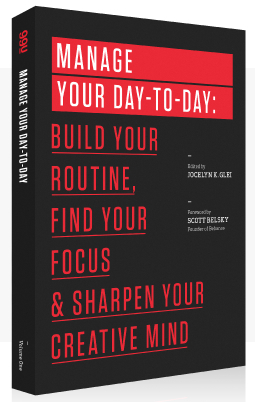
I’m not a productivity geek, but I do have processes and systems and I love to learn about new ways to optimize my workflow. I recently read ‘Manage Your Day To Day: Build Your Routine, Find Your Focus and Sharpen Your Creative Mind‘ from 99U, one of my favorite blogs.

It gave me plenty of pages of notes, but the significant changes for me are:

Do not check email or social before I have done my first creation block of the day

e.g. 1500 words on latest WIP. In order to achieve this, I have removed my email app from my mobile phone and am using Antisocial software to block access to those while still allowing me on the internet for research (which I often need as I write). I started doing this at the beginning of the year, but I fell off the wagon. Not firmly back on it.

Look strategically at personal and business goals and decide what I can get rid of and what I can streamline.

I’m still looking at this but I will be restructuring this site somehow, and making the process flow easier so I have more creation time. But don’t worry, it won’t be going anywhere!

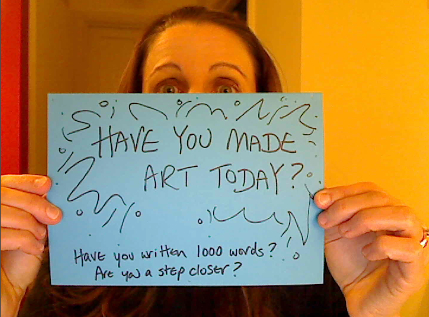
have you made artI asked my email list about their tips for productivity

Here are some of the responses I received back (some paraphrasing). Perhaps they will help you, or you can add yours in the comment section below.

[By the way, you can join the email list by signing up and ownloading the Author 2.0 Blueprint here]

Benjamin Tiller: I get my writing done first thing in the morning before work – with no TV, no phone, no wifi on the laptop. Word count goals have been great. I utilize the full screen feature in Scrivener to limit other distractions.

Annemarie Slee: Try www.workflowy.com. Easy for list making, but also very useful for outlining your ToC. You can set times and dates easily too.

Attention management, not time management

Grace Marshall: It might help to think of it as attention management rather than time management – gets you noticing and tracking the thing that you can actually manage – your attention, rather than time itself. And here’s how to beat writer’s procrastination.
Jon Jefferson: I use three things as a crutch to help me stay focused: The times I write, doing pre-writingto get all the extraneous out of my mind, and timed writing for set blocks of time to focus in.

Word count chart

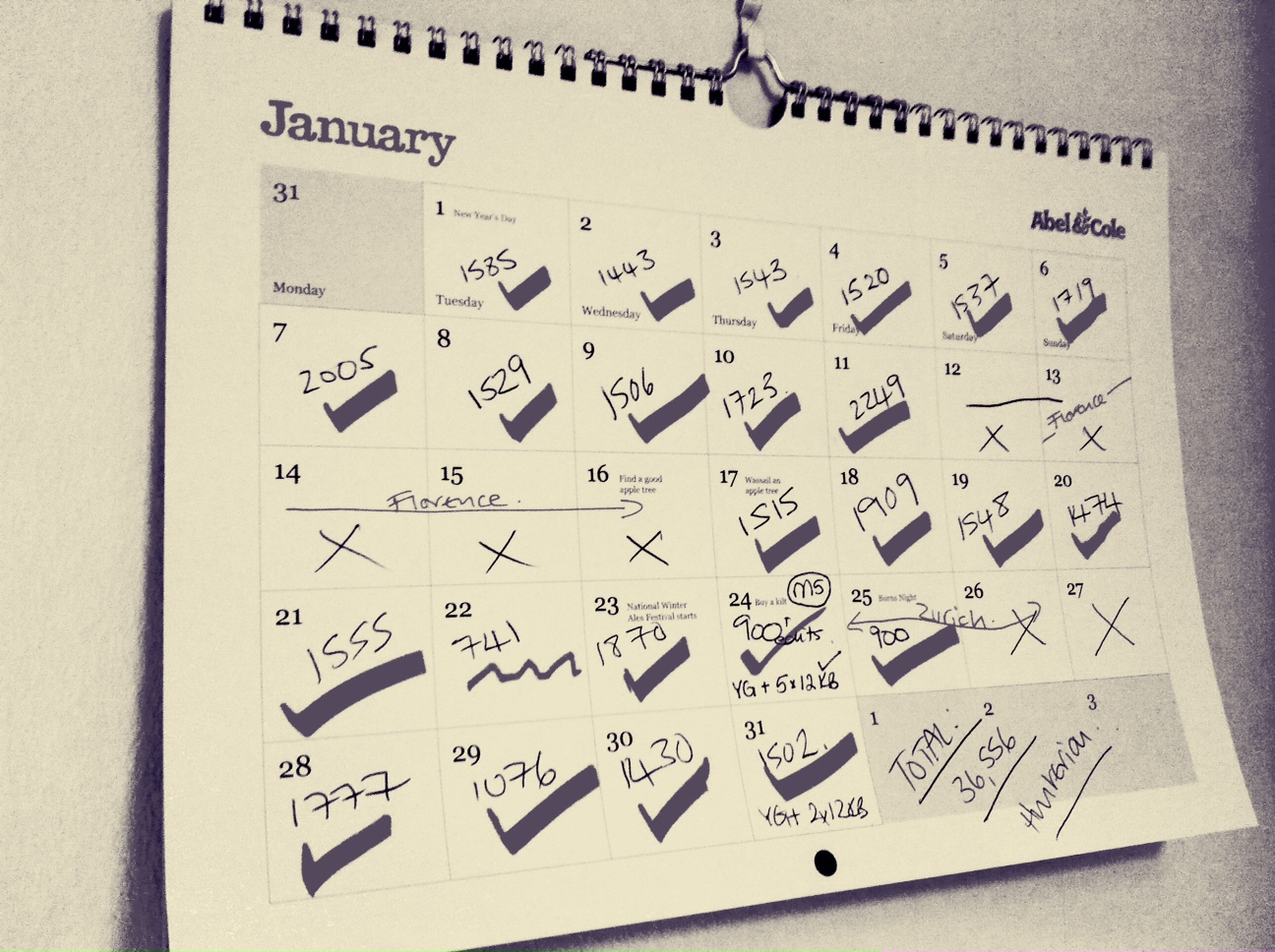
My daily word count chart

Jean Reinhardt: I found that when I was stuck on my YA book, I could write if I switched genres (to a short story, now a novella). This means I am writing two books at the same time, but switching genres works for me and keeps things flowing.

Find what works for you – even if it is in the bathroom!

Stacie Whitney: I’m a mother of a young child who gets up and wants attention as soon as she hears me come out of the bathroom in the morning.  So on that first morning to get my book written, I went into the bathroom with my computer, locked the door, and got to work.  I wrote the entire outline and two chapters before breakfast!
After a week of early morning bathroom writing sessions, I was somehow able to sneak into the living room, and the rest of the book was written (mainly) in early morning hours before the rest of my family was awake.Basically, my tip is to find whatever space and rhythm work best for you and DO that! And be willing to alter it if circumstances change.

Jason Lewis: the only way that I can write effectively is to completely lock myself away (metaphorically) from social media. The best way I’ve found so far is to take a long train journey; get the netbook out and just write like there’s no tomorrow. Racked up six thousand words the other day (my single most productive day by a long distance) on a five hour journey. The reason being I cannot get a signal on my phone and I refuse to pay to access the internet on the train.

Karlene Cameron: When I write, I keep the computer turned off. That does it for me.

Lyle Nicholson: Set a block of time, and then use it.  If it’s one hour or three hours, close your door, or your external senses and write.  Even if you don’t write, and you just doodle on a pad, or write silly things for the hour or three hours, use that as your creative process time. The mind is an amazing instrument, if you give it space and time, it will take you in marvelous directions.

Write by hand – away from the computer

writing coffeeCarlie Van Amerongan: I’ve just started doing my writing by hand. I used to do everything on the computer, and I would easily get distracted, by all the other things I could do on the computer… and no amount of willpower would help! Since I’ve started doing it this way, I’m much more productive, even if the rate of words to page is a little slower. I’m enjoying the process more, and I think in the end I get more words out. Far from a productivity tip, this is a brand new practice for me… but so far it seems to be working.

Kathleen Heady: I carry an old-fashioned legal pad with me, or a notebook would do, and when I have time throughout the day, I work on whatever my current writing project is — longhand. I substitute teach so I often have downtime to do this, but sometimes it is easier to pick up a pad of paper than go on the computer with all the distractions it offers. Then later I can type up my work when I am in a less creative mood.

Sally Chippendale: 1000 words per day and don’t start later than 10am. If you are blocked move straight on to the next scene. If you have children put their favorite tv show on and neglect them for an hour and a half. I make one decent coffee beforehand; that is my only set up requirement/custom that I allow myself. I printed out and pinned above my desk one long excel spreadsheet detailing each scene in one sentence, headings included  day, characters, action, reason. Then highlight each line when complete, for satisfaction value.

Tom Evans:
1. Breathe in through alternate nostrils five times (use a finger to close each nostril off in turn)
2. Doodle or mind map what you are about to write about
3. Then meditate or go for a walk before you start writing
4. Resist the temptation to edit while writing
5. Have a treat lined up for when you finish each session (e.g. a cup of tea and digestive biscuit)
Tom is an author, bookwright and creative catalyst. His latest book is called The Zone and is an exploration of how to get in and stay in it. More details here …  http://www.tomevans.co/books/the-zone/

Find a few good writing website/blogs and stick to them.

Don’t be distracted by a hundred updates inboxing you each day. This happened to me, for a few days I spent more time reading than writing.

Betty Halsey: disable the internet on my computer and leave my phone in a different room.

Francis Wade, author of Bill’s Im-Perfect Time Management Adventure: In our age, improving your time management skills continually is a must, and it’s best done by slowly adapting new habits, practices and rituals, rather than chasing down the latest gadget, shortcut or trick. Deliberate practice anyone?
There are clearly a lot of similarities, and yes, I know the irony of blogging about this topic and distracting you from writing at the same time!