Tag Archives: mystery

How to write a mystery novel?

So you’re interested in learning how to write a mystery book.
It makes me happy to hear it.
Since I hid behind the Lincoln Logs in Mrs. Jenkins’ third-grade classroom so I could read my first Nancy Drew book alone, I have loved mysteries.
That day, mystery snagged me, and ever since, she has been leading the way.

Being a mystery reader is the finest way to get ready to write a mystery book.
You must be able to rely on reflexes that you’ve honed over years of reading.
And to help you through the difficult times, you’ll need the dedication of a loyal supporter.

Being completely honest, there is a ton that goes into creating a mystery book.
However, if you invest the time and energy to make it happen, you’ll benefit greatly in the long run.
So let’s get going.

Being a mystery reader is the finest way to get ready to write a mystery book.
You must be able to rely on reflexes that you’ve honed over years of reading.
And to help you through the difficult times, you’ll need the dedication of a loyal supporter.

Being completely honest, there is a ton that goes into creating a mystery book.
However, if you invest the time and energy to make it happen, you’ll benefit greatly in the long run.
So let’s get going.

Readers of mysteries like figuring out puzzles and looking forward to the conclusion.
But readers have much higher expectations than that.
Readers want to empathize with the protagonist, feel the excitement of the chase, and feel satisfied that the offender has been punished.

In every genre, but especially in mystery writing, meeting reader expectations is of utmost importance.
Approximately 33% of all fiction sales in the English language belong to the mystery genre, which has a huge fan base.
You’re putting yourself in a position to succeed in the mystery genre if you can win over even a small fraction of that audience.

Which mystery subgenre fits your writing style the best?

The mystery genre has numerous subgenres, and some authors are better suited to various mystery subgenres.

For example, cozy novels need a lot of character and setting detail to keep the sluggish pacing engaging.
Cozies are lighthearted mysteries with a bloodless crime that frequently involves a victim who has little connection to any of the protagonists. The violence occurs off-stage.

Without a lot of action, cozy authors must be able to crank out upwards of 60,000 words while keeping it interesting.
The primary character is highlighted rather than the crime.

Medical and legal mysteries, as well as police procedurals, demand in-depth specialized expertise.
These are best suited for experts in these subjects, for meticulous writers who enjoy the minute details of technique.
If you get it incorrect, readers will spit you out, and a little bit of research won’t help you get by.

As much of the gathering and analyzing of clues will fall to a group, with each member contributing to the crime’s solution, this kind of writer should also be adept at creating teams for their characters.

Readers look for a really compelling, believable main character in Private Eye/Noir books.
The PI will engage with police, and those conversations must be realistic, therefore familiarity with or study in this area is not required.

Which type of mystery best suits your writing style?

The main character earns a living by conducting background checks and other investigations, among other things.
A writer who wants to write a PI novel should have experience in IT or a similar sector because modern PIs are excellent computer users.
It’s undoubtedly a noir if the tone of the book is grim, grimy, extremely gory, or unashamedly urban.

Suspense is another element, but that is a topic for another day.

Recognize the tropes

Like all genres, mystery is replete with tropes, which are recurring themes or literary devices that readers are familiar with.
“The butler did it” and “locked room mystery” are a couple of instances.
While some of these may seem cliché to you, mystery enthusiasts adore and rely on the majority of them.
Instead of avoiding them, the idea is to discover novel ways to approach them, so that readers experience both a sense of familiarity and a sense of surprise.

Plan ahead .
He advises taking into account the following four elements when crafting a mystery:

technique of murder.
Find a new angle on what has already been done.
I quickly searched for creative murder techniques on Google, and as you could expect, the list of results was incredibly large.
At your own peril, explore.
The Darwin Awards are a different resource you could take into account when looking for uncommon ideas.

Object of the opponent.
What does the villain ultimately want?
Dent describes it as a kind of treasure, either literally or figuratively.

The crime and the villain should provide the context for the tale.
The setting ought to come after you’ve got those under control.

the cause of the hero.
What’s at stake is a different way to look at things.
What will the hero get out of achieving his objective?
What will he forfeit if he loses?

One more quick suggestion for outlining, this from Scott Meredith and Algis Budrys. Formulate a…

Character
In a setting
With a problem
Put your protagonist through a series of try/fail cycles while solving the crime, escalating the stakes with each cycle
The last try/fail cycle is the most perilous and challenging of all and is followed either by the hero’s success in catching the murderer and bringing him to justice, or his ultimate failure

Continue knowing your genre and analyzing it.
However, don’t allow studying prevent you from writing.
If you want to create a mystery novel, try it out because writing is the best kind of practice!

Have you thought of a mystery novel idea?
Have you created a smart riddle that, in your opinion, would make a fantastic mystery novel?
In the comments box, make a comment about it.

By Rima

Visit us at First Edition Design Publishing
Is My Story A Mystery, Horror, or Thriller?

By Lucy V Hay

Lots of writers enjoy mystery, horror and thriller novels … but are not too sure what differentiates them. As a result, when they attempt their own, they might get stuck.

As a script editor in the UK who’s worked on predominantly horror and thriller, plus as an author myself who has written mystery, I am in a position to advise!

First up, let’s take a look at mystery.

Mystery

I had one of those English Literature teachers who’d bellow ‘To know a word is to define a word!’ This means I always look first at the dictionary. Here’s what it says about mystery:

A novel, play, or film dealing with a puzzling crime, especially a murder.

“the 1920s murder mystery, The Ghost Train”

This is an okay definition. Whilst mystery typically involves a crime – Agatha Christie is STILL the queen of the genre – it’s the ‘puzzling’ nature that is most important.

Typically there will be a BIG REVEAL at the end when the person BEHIND IT ALL is unveiled. Mysteries tend to be cerebral on this basis.

Horror

Here’s what the dictionary says about this one:

A literary or film genre concerned with arousing feelings of horror.

“a horror film”

In other words, we want to be SCARED by Horror. That tracks! So far, so good.

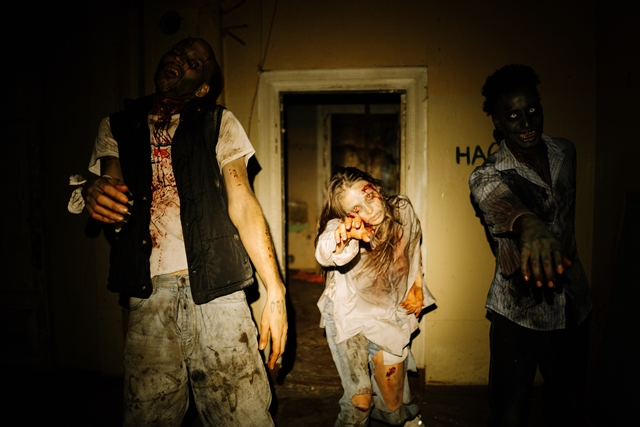
Horrors tend to lay out the potential threat from the beginning: a creature, a serial killer, a haunted house, etc. This means in a Horror we are principally VOYEURS. We sign up to watch terrible things happen to people.

In certain subgenres, this is obvious. So-called ‘torture porn’ movies like the SAW franchise invite us to witness murder and mayhem in ever-increasingly spattering ways.

But even in less grotesquely flamboyant horror, the story will relate to a cultural, base fear most of us have.

Fears for our children (especially them dying); fears of being taken away/sent into a hell-like place; fears of being out of control; about sex, rape, pregnancy or other violations; of being eaten alive, being dismembered, or burned alive.

What’s more, these types of story feel unstable and make us worry FOR the characters in it … And yes, maybe even freak out when said characters are attacked and/or killed. This is why groups of characters picked off one by one can be so popular in horror stories.

Thriller

A novel, play, or film with an exciting plot, typically involving crime or espionage.

“a tense thriller about a diamond heist that goes badly wrong”

This is less illuminating. After all, mystery can involve crime or espionage too … Plus there’s lots of thrillers that do neither of these things. Now what??

Wait! The keyword in this definition is ‘exciting’. As the name ‘thriller’ suggests, our story just needs to THRILL. This usually happens with some kind of deadline as a ‘race against time’: a chase, if you will.

In contrast to Horror, the Thriller invites the viewer to put themselves in the protagonist’s place. The story will ask, ‘What would YOU do?’.

*Something* is happening – but the characters in the center often don’t know exactly what and/or why. They will chase after this mystery in order to solve it – whether it’s a conspiracy, a supernatural occurrence, an abduction, or something else.

Thrillers typically relate to a more intellectual fear most of us have, such as our children being kidnapped; of abduction/being held hostage; of living in an unsafe home; having our identities stolen; being watched or persecuted in some way; of authorities who cannot be trusted, such as governments, teachers, or medical staff. This is why the lone protagonist in a Thriller is so popular.

So what’s the breakdown here?

  • A Mystery needs a BIG REVEAL of whom is BEHIND IT ALL (usually at the ending, but not always)
  • Mysteries tend to be puzzles that need to be solved
  • In Horror, we sign up for the SCARES
  • Horrors tend to be voyeuristic
  • Horrors often focus on groups of people, picked off one by one
  • Thrillers don’t tend to be Horrors (since Horrors lay out the threat from the beginning)
  • In a Thriller, we sign up for the CHASE
  • Thrillers often focus on lone protagonists who are ‘up against it’
  • Thrillers tend to be ‘races against time’
  • Mysteries may be Thrillers as well, or they may not

A Big Question

I believe we can decide what our novels are by asking one BIG question …

‘… Do I want to keep my antagonist hidden until the ending or not?’

If you don’t want to keep the antagonist hidden, you’re probably writing a horror. This is because you need to establish the threat from the outset.

If you DO want to keep your antagonist hidden for that BIG REVEAL, then you’re probably writing a mystery or thriller.

(Of course this will depend on the story, we’re talking generalizations here … but from my work with writers, it’s surprising how often this question works!).

Learn the Conventions

So, if you’re writing a Horror, obviously your novel needs to be scary. A good way of studying the conventions of Horror is by considering why your favorite Horror novels scared *you*.

In my case, Heart-Shaped Box by Joe Hill scared me so much it took me a whopping three weeks to read it because I kept getting creeped out!

The story of a washed-up rock star who buys a ghost on the internet he then can’t get rid of, the threat in Heart-Shaped Box is established early on. Hill piles of dread by the ton, making even the smallest moments seem frightening. As the chapters build towards a bloody, crescendo ending, we can’t be sure anyone will get out alive.

If you’re writing a thriller or mystery, it’s slightly different. Personally, I favor mystery elements in Thriller (if not a full-blown mystery) because I love twists. This may – or may not – feed your BIG REVEAL, it’s up to you.

But if you’re hiding your antagonist’s true intentions, you need to be careful. One of the biggest issues B2W sees when writers try this is they hold the antagonist back BUT don’t replace that role function with another. This then means there’s a big fat hole where ‘nothing happens’.

Devices such as red herrings, misdirection, working theories, a stooge antagonist, etc. will help you write a satisfying plot AND compelling characters in your thriller or mystery.

In other words, stuff that **stands in for the perp** … ’til we get to the actual perp. 

You can do this no matter what genre or type of story you are writing. Immerse yourself in the mystery genre via mystery novels, movies, & police procedurals to guide you. 

Good luck!

Source: writershelpingwriters.net

Follow us on Facebook and Twitter

Visit us at First Edition Design Publishing

Writing a Mystery: Do Your Research Right

When writing procedural fiction, research is the hot, molten core that determines how good your story is going to be. This is especially true when it comes to writing a mystery, where your story depends on thrilling twists, on-point procedure, and accurate finer points, ranging from how a firearm should act to what happens to a human body after death.

It takes a lot of research to get procedural fiction right, but it doesn’t have to be a complete mystery. Here’s how to approach intensive research for your mystery fiction novel or short story by jumping right into the deep end.

Learning Procedure

Successful mystery fiction relies on understanding proper and legal police procedure. If a real detective can read your novel and not find a single error in procedure, you’ve done your job well – and you’d be surprised at just how many detectives and police officers read detective, mystery, and police fiction during their break.

Procedure means things like how suspects will be arrested, how they will be charged, how evidence is collected and processed – and this is all vital information to get right from the beginning.

Let’s not forget about consistency with internal procedure. For example, a wayward cop wouldn’t be able to shoot their way through a chapter like in a Bruce Willis flick and face no consequences from victims or their superiors.

Procedure is different in every country, and sometimes even in every state. If you’re writing about a specific area, it’ll have a specific police station connected to it – and it’s especially important to get your facts straight.

Get in touch with the police station you’re writing about and find out if they would be happy to accompany you through a walk-around of the station: Most are happy to do this, and it gives you a basic framework to go with.

Know where to draw the line when making fiction reflect real life. Your fictional officers can’t correspond to anyone actually working at the station.

If you don’t know something about procedure, there are 3 ways to get the information:

  • Search it online first.
    Search engines are a huge pit of information – though, keep in mind that not all of it is correct. Still, you can find a lot of information just by searching the right keywords. Use authoritative and official sources at all times.
  • Look it up in a book.
    You’ll build up a good collection of textbooks as a crime writer – and you’ll have a great excuse for the weird library you keep at the same time. For facts you don’t know, sometimes it’s a big help to consult a textbook – though make sure the one you’re consulting is the one currently being used by professionals working the beat.
  • Ask a professional.
    The best way to confirm a fact is to ask someone in the career or industry you’re writing in – and this applies as much to fiction writers as it does to journalists. Have a list of resources you can call up in the event of questions like this. Eventually you’ll build up a good relationship with your sources.

Technically, the fourth way is knowing procedure from the inside – but most writers haven’t worked in a legal or law enforcement career, nor have they ever been arrested.

Researching and Shadowing Real-Life Professionals

When writing a mystery, the value of shadowing a real-life professional is absolute gold.

Here, you’ll see and experience things that you wouldn’t come across anywhere else – and you surely won’t find this kind of information online. It’s living, breathing experience – and you’d be surprised at how many professionals are happy with a visit to their work environment from a writer taking notes.

Send an e-mail with some background on your story, and you might be surprised when you’re able to see the inside of it all. Listen to the person in charge, keep your eyes open, and stay out of the line of fire. Oh, and wear a ballistic jacket. (Before you laugh, I wasn’t kidding about that one – and that’s from experience.)

If and when this is not possible, the internet remains a wonderful resource: There are many case files, as well as case information and weird documented crimes that you can read through to form a background and find out facts.

Getting Rank Right

Every country lists ranks and positions differently – and every rank has a different role when a crime or investigation is involved. Don’t guess, and hold off on any rank puns like “Sergeant Pepper” or “General Knowledge.”

Here are some suggestions for where to look up the world’s common police ranks:

Write Laws Right

Procedure and rank aren’t the only things you have to think about when writing a mystery. Criminal law (and sometimes other laws) will also be a huge part of your writing – so make a list of resources and legal experts who don’t mind answering random questions from writers. There are many out there.

Keep in mind that federal and state laws might differ in certain countries. Again, ask a legal expert such as a lawyer or law professor when you aren’t sure how something would be handled in real-life.

It’s advised that you familiarize yourself with any relevant laws as a crime writer, too – so stock up on law books and resources and keep them nearby, especially the country’s relevant criminal act.

Here are a few as a starting guideline:

Gruesome Facts

Life’s gruesome facts matter when you’re writing mystery fiction. For example, the way things would decompose under certain circumstances – or just what kind of sound a knife makes going into a human body. (Clue: “Thud” or “Thwack,” depending on the knife.)

For these, don’t guess, and don’t rely on what you’ve seen in other fiction. That’s the easy way out. Swallow your pride and go ask an expert (which will usually fall in the realm of a doctor, nurse or forensic pathologist in this case) to make sure you get it right.

They can give you the answer to a lot of theoretical situations for your character, too – but make sure you clarify why you’re asking this, and give your sources some background on your writing career: Otherwise, they might think you’re nuts and put in a call to the police themselves.

More practical research can also be called for: Sometimes you’ll have to get your hands dirty and take a raw Sunday roast to a shooting range, but that’s half the fun – as long as you aren’t breaking any laws.

Writing a Mystery: Further Reading

Remember those textbooks we mentioned earlier? Sure, it looks the same as a serial killer’s Kindle, but you get to say that it’s for research. Here are six excellent ones to get your collection started:

Thorough outlining and research is all that it takes to remove the mystery out of writing mystery fiction. Crime can pay when you’re a crime writer – now go out there and create your fictional sleuth!

Source: refiction.com

Visit us at First Edition Design Publishing

Elements of Suspense: The Cliffhanger

Once upon a time writers actually left their characters hanging from cliffs. In the early days of movies, when theaters ran serialized episodes of a story, a cliffhanger ending was a good way to ensure viewers would make the effort to come back next week. The same was true for serialized novels run in newspapers and magazines. Writers intentionally left characters hanging (not necessarily from a cliff) to entice readers to purchase the next installment.

Today’s readers and moviegoers may roll their eyes at Pauline hanging by her fingertips from a cliff, but the cliffhanger technique is still very much in use. If we change the definition of cliffhanger from:

a situation of imminent disaster usually occurring at the end of an episode of a serialized film

to the broader concept of:

a moment of unresolved danger or conflict

then a cliffhanger can happen anywhere a writer needs to crank up the tension. The key here is unresolved. Something is left hanging.

Consider the commercial breaks in a typical detective show. When do the breaks happen? Just after some new evidence is discovered that threatens to take the investigation in a whole new direction. Viewers are left hanging during the commercial, wondering what the hero will do with the new information.

In a similar vein, writers use the cliffhanger technique at the end of a chapter, scene, or beat to keep readers turning pages.

How to use the unresolved tension of a cliffhanger to increase suspense in your manuscript

  1. End a scene in the middle of danger. The tried and true cliffhanger ending—a bad thing has happened and the character is left some kind of danger at the end of a scene. You might switch to a different set of characters in the next scene and leave the poor hero hanging for a scene or two, or you might continue the action in the next scene. Either way, the reader must keep reading to find out how the situation is resolved.
  2. End a scene by hinting that a bad thing is about to happen. The doorknob turns… A shadowy figure appears in the window… The heroine hears the voice she’s been dreading for pages… This is similar to number one, except the danger is only implied, leaving the reader to imagine all sorts of horrible things that are about to ensue.
  3. End a scene by hinting that a bad thing might be about to happen. A subtler variation of number two. Instead of the heroine hearing a voice she recognizes and dreads, what if she hears a voice she doesn’t recognize? Is it a friend or a foe? The reader doesn’t know until they read on.
  4. End a scene on an ambiguous note. Instead of making it clear exactly what happened and how that affects the main character, try leaving things a little less clear. Sometimes a writer can accomplish this simply by backing up a few sentences. Instead of ending the scene with the sleuth deciding she needs to question the shop clerk, back up a few sentences and end with the information that could be interpreted to mean the clerk was guilty.

The cliffhanger technique isn’t just for the end of chapters or episodes, however. You can use subtle touches of cliffhanger anywhere in your story.

  1. End a conversation with a tantalizing bit of information. Imagine the sleuth is talking with an informant who tells him about a new clue that’s come to light. But instead of giving all the details right away, the informant says, “I found something in the wall of the garage. You’d better come take a look.” The sleuth will naturally ask for details, but the if informant refuses to give them, both sleuth and reader will be dying to find out what’s been unearthed. Ratchet up the tension further by forcing the sleuth to finish his current task before he can go take a look.
  2. Leave a character in a high emotional state. Tension is not only created by external danger. Sometimes the conflict is within a character.  Examples: The hero gets word his wife has cancer while in the middle of a meeting, or the heroine has an argument with her fiancé but has to break it off to interview a key suspect. These bits of unresolved life issues can add tension even when they have nothing to do with the main plot.

Bottom line: Look for places in your story where you can leave a situation unresolved, however briefly. Closure is important at the end of story, but unresolved tension is what keeps the reader turning page after page to get there.

By Lisa E. Betz
Source: almostanauthor.com

Visit us at First Edition Design Publishing
 

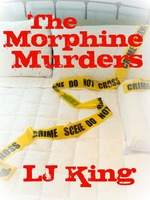
First Edition Design Publishing Releases The Morphine Murders by LJ King #FED_ebooks #Author #Writer

First Edition Design Publishing

First Edition Design Publishing has released LJ King’s debut novel The Morphine Murders.

The Morphine Murder’s protagonist Raina Prentiss jeopardizes her relationship, her job, a friendship, and maybe her life in LJ King’s breakout murder mystery. Prentiss goes full force into a double murder investigation without a badge, superpowers, or a vampire boyfriend.

First Edition Design eBook Publishing (aggregator) formats, converts and submits your book to over thousands of eBook distribution points worldwide and to the top internet retailers including but not limited to - Apple, Amazon, Barnes & Noble, Sony, Kobo, Google, EBSCO and Diesel. We format and convert your book to the different needs of each distribution point, including a custom ePub file. We will assign a custom ISBN for your eBook / POD publication, as well as register and submit your title to the Library of Congress (POD)

Author LJ King

Raina Prentiss never imagined that she would investigate a homicide beyond the comfort of her couch, armed with a remote, but that’s exactly what happens when she inadvertently finds circumstantial evidence connecting her boss to not one, but two local murders. With the reluctant approval of her police lieutenant boyfriend, Danny, she launches Mission Bottle to obtain her boss’ DNA. She recruits her co-worker, Tyler, to divert their boss’ attention while Raina sneaks around and swipes his water bottle. But a simple waft of Tyler’s scent, or the heat from his body, transports her back to the feeling of the feather-light pressure of his mouth on hers, teasing her, taunting her, during the passionate kiss she found herself entwined in a few weeks prior. With no DNA found at the crime scenes to match to their sample, Raina together with Tyler, and Danny and his detectives, continue to investigate. Because of her easy access to her boss, Raina is convinced that she is the key to obtaining proof and solving the case. Determination blinds the risks incurred by hunting a killer, as Raina uses inside information from Danny to plan her next mission. 

LJ King’s 252 page suspense filled thriller The Morphine Murders is available in hardcover, softcover and ebook formats at all on-line booksellers.  

When New York author LJ King isn’t defending her position that she is not an eccentric recluse but a focused writer, she is out of her office at the beach, playing tennis, gardening, and doing things with people.

For more about The Morphine Murders and LJ King visit www.ljking.net

First Edition Design Publishing  is the world’s largest eBook and POD (Print On Demand) distributor. Ranked first in the industry, First Edition Design Publishing converts, formats and submits Fiction, Non-Fiction, Academic and Children’s Books to Amazon, Apple, Barnes and Noble, Sony, Google, Kobo, Diesel, 3M, Ingram, Baker and Taylor, Nielsen, EBSCO, and scores of additional on-line retailers, libraries, schools, colleges and universities. The company also has a POD  division, which creates printed books and makes them available worldwide through their distribution network. The company is a licensed and approved Aggregator and holds licenses with both Apple and Microsoft. First Edition Design Publishing is the world’s largest eBook and POD (Print On Demand) distributor. Ranked first in the industry, First Edition Design Publishing converts, formats and submits Fiction, Non-Fiction, Academic and Children’s Books to Amazon, Apple, Barnes and Noble, Sony, Google, Kobo, Diesel, 3M, Ingram, Baker and Taylor, Nielsen, EBSCO, and scores of additional on-line retailers, libraries, schools, colleges and universities. The company also has a POD division, which creates printed books and makes them available worldwide through their distribution network. The company is a licensed and approved Aggregator and holds licenses with both Apple and Microsoft.

  www.firsteditiondesignpublishing.com

First Edition Design Publishing is the world’s largest eBook and POD (Print On Demand) distributor. Ranked first in the industry, First Edition Design Publishing converts, formats and submits Fiction, Non-Fiction, Academic and Children’s Books to Amazon, Apple, Barnes and Noble, Sony, Google, Kobo, Diesel, 3M, Ingram, Baker and Taylor, Nielsen, EBSCO, and scores of additional on-line retailers, libraries, schools, colleges and universities. The company also has a POD division, which creates printed books and makes them available worldwide through their distribution network. The company is a licensed and approved Aggregator and holds licenses with both Apple and Microsoft.