Tag Archives: thriller

Is My Story A Mystery, Horror, or Thriller?

By Lucy V Hay

Lots of writers enjoy mystery, horror and thriller novels … but are not too sure what differentiates them. As a result, when they attempt their own, they might get stuck.

As a script editor in the UK who’s worked on predominantly horror and thriller, plus as an author myself who has written mystery, I am in a position to advise!

First up, let’s take a look at mystery.

Mystery

I had one of those English Literature teachers who’d bellow ‘To know a word is to define a word!’ This means I always look first at the dictionary. Here’s what it says about mystery:

A novel, play, or film dealing with a puzzling crime, especially a murder.

“the 1920s murder mystery, The Ghost Train”

This is an okay definition. Whilst mystery typically involves a crime – Agatha Christie is STILL the queen of the genre – it’s the ‘puzzling’ nature that is most important.

Typically there will be a BIG REVEAL at the end when the person BEHIND IT ALL is unveiled. Mysteries tend to be cerebral on this basis.

Horror

Here’s what the dictionary says about this one:

A literary or film genre concerned with arousing feelings of horror.

“a horror film”

In other words, we want to be SCARED by Horror. That tracks! So far, so good.

Horrors tend to lay out the potential threat from the beginning: a creature, a serial killer, a haunted house, etc. This means in a Horror we are principally VOYEURS. We sign up to watch terrible things happen to people.

In certain subgenres, this is obvious. So-called ‘torture porn’ movies like the SAW franchise invite us to witness murder and mayhem in ever-increasingly spattering ways.

But even in less grotesquely flamboyant horror, the story will relate to a cultural, base fear most of us have.

Fears for our children (especially them dying); fears of being taken away/sent into a hell-like place; fears of being out of control; about sex, rape, pregnancy or other violations; of being eaten alive, being dismembered, or burned alive.

What’s more, these types of story feel unstable and make us worry FOR the characters in it … And yes, maybe even freak out when said characters are attacked and/or killed. This is why groups of characters picked off one by one can be so popular in horror stories.

Thriller

A novel, play, or film with an exciting plot, typically involving crime or espionage.

“a tense thriller about a diamond heist that goes badly wrong”

This is less illuminating. After all, mystery can involve crime or espionage too … Plus there’s lots of thrillers that do neither of these things. Now what??

Wait! The keyword in this definition is ‘exciting’. As the name ‘thriller’ suggests, our story just needs to THRILL. This usually happens with some kind of deadline as a ‘race against time’: a chase, if you will.

In contrast to Horror, the Thriller invites the viewer to put themselves in the protagonist’s place. The story will ask, ‘What would YOU do?’.

*Something* is happening – but the characters in the center often don’t know exactly what and/or why. They will chase after this mystery in order to solve it – whether it’s a conspiracy, a supernatural occurrence, an abduction, or something else.

Thrillers typically relate to a more intellectual fear most of us have, such as our children being kidnapped; of abduction/being held hostage; of living in an unsafe home; having our identities stolen; being watched or persecuted in some way; of authorities who cannot be trusted, such as governments, teachers, or medical staff. This is why the lone protagonist in a Thriller is so popular.

So what’s the breakdown here?

  • A Mystery needs a BIG REVEAL of whom is BEHIND IT ALL (usually at the ending, but not always)
  • Mysteries tend to be puzzles that need to be solved
  • In Horror, we sign up for the SCARES
  • Horrors tend to be voyeuristic
  • Horrors often focus on groups of people, picked off one by one
  • Thrillers don’t tend to be Horrors (since Horrors lay out the threat from the beginning)
  • In a Thriller, we sign up for the CHASE
  • Thrillers often focus on lone protagonists who are ‘up against it’
  • Thrillers tend to be ‘races against time’
  • Mysteries may be Thrillers as well, or they may not

A Big Question

I believe we can decide what our novels are by asking one BIG question …

‘… Do I want to keep my antagonist hidden until the ending or not?’

If you don’t want to keep the antagonist hidden, you’re probably writing a horror. This is because you need to establish the threat from the outset.

If you DO want to keep your antagonist hidden for that BIG REVEAL, then you’re probably writing a mystery or thriller.

(Of course this will depend on the story, we’re talking generalizations here … but from my work with writers, it’s surprising how often this question works!).

Learn the Conventions

So, if you’re writing a Horror, obviously your novel needs to be scary. A good way of studying the conventions of Horror is by considering why your favorite Horror novels scared *you*.

In my case, Heart-Shaped Box by Joe Hill scared me so much it took me a whopping three weeks to read it because I kept getting creeped out!

The story of a washed-up rock star who buys a ghost on the internet he then can’t get rid of, the threat in Heart-Shaped Box is established early on. Hill piles of dread by the ton, making even the smallest moments seem frightening. As the chapters build towards a bloody, crescendo ending, we can’t be sure anyone will get out alive.

If you’re writing a thriller or mystery, it’s slightly different. Personally, I favor mystery elements in Thriller (if not a full-blown mystery) because I love twists. This may – or may not – feed your BIG REVEAL, it’s up to you.

But if you’re hiding your antagonist’s true intentions, you need to be careful. One of the biggest issues B2W sees when writers try this is they hold the antagonist back BUT don’t replace that role function with another. This then means there’s a big fat hole where ‘nothing happens’.

Devices such as red herrings, misdirection, working theories, a stooge antagonist, etc. will help you write a satisfying plot AND compelling characters in your thriller or mystery.

In other words, stuff that **stands in for the perp** … ’til we get to the actual perp. 

You can do this no matter what genre or type of story you are writing. Immerse yourself in the mystery genre via mystery novels, movies, & police procedurals to guide you. 

Good luck!

Source: writershelpingwriters.net

Follow us on Facebook and Twitter

Visit us at First Edition Design Publishing
How to Write a Hook by Thrilling Your Reader With Danger

If you want your readers to not just pick up your book, but keep turning the pages, you need to learn how to write a hook that will draw them through the story so they never want to put it down. Try baiting your hooks with the thrill of danger to keep your readers on the line.

Reading are tantalized by the scent of danger in our stories, and we’re able to enjoy it from the safety of our beds or beach chairs.

A good book that pulls us in deep might make us feel like the danger is real, and we often experience it as such, but we can indulge ourselves in it and savor that vicarious thrill because we’re in a protected zone.

Today, we’re going to explore how to use hooks baited with danger to snag and hold reader interest.

Danger Excites Readers with Action

Sometimes the most delectable danger in fiction is subtle and conveyed by covert means, as in psychological suspense. But more often, danger and action go together, the kind of action that carries risk.

For instance, a car moving down the street is action, but there’s no inherent danger attached to the movement, so it does nothing to hook the reader. But with a few adjustments, we can make that moving car into something dangerous indeed.

Put a small child behind the wheel, a four-year-old playing around in the driver’s seat who happened to release the brake. Or maybe the automobile is squealing along with six cop cars in pursuit. Maybe it’s three o’clock in the morning, the streets are deserted, and the car is the only thing that’s moving, pinning the protagonist in its headlights.

It takes more than action to create the danger hook. It must be action that makes you sit up and take notice.

“Reading fiction gives us the thrill of danger without the risk. Give your readers the indulgence of that vicarious thrill.

Remember Reader Expectation

Most of us can recognize action when we see it on the page, so I’m not going to spend a lot of time on that sort of danger hook—bullets flying, villains chasing, karate chops raining down.

That type of clear and present danger provides a strong hook to carry the reader forward, but it fades fast, so you need to be ready with another hook.

In this article, I’ll spend time focusing on the more subtle varieties of danger hooks. As always, it’s vital to consider genre and reader expectations when crafting your danger hook. Different types of readers will perceive the hook in different ways. You want to be sure you’re baiting your hook to capture your target audience.

Ask yourself—will my core readers feel danger when they read this sentence? When a reader picks up a suspense or thriller, for instance, they expect to encounter danger. Readers make assumptions based on their expectations, so if I ended a scene like this:

“He knows where to find me.”

Seasoned readers of suspense fiction will attach sinister meaning to the phrase. They will find it dangerous, while readers who don’t normally read taut mysteries and thrillers won’t necessarily process it the same way.

Taken at face value, there’s no danger hook—he knows where to find me. So what?

Use the Right Bait to Reel in Your Reader

As you increase the number of hooks in the passage, the tension builds and the pacing accelerates. Be sure you are using an appropriate amount for your audience (or the appropriate type of tension). Cozy readers aren’t looking for a fast-paced adventure, so scale back. Always think about who you’re writing for, and write to that target.

While most readers will respond favorably to a degree of danger in their story, make sure you dial it up or down to suit your audience. And the focus will change, as well. “ The amount of tension in your story depends on what your readers expect.

For example, readers who prefer a more literary tale will want to focus on the character’s emotional response, while readers who are expecting a light romance or caper will be more interested in getting to what happens next.

Let’s Take a Look at Some Examples

“Decorations had to be set up, food had to be arranged. She wanted the room to be as nice as possible for the two hundred CCCBA members who’d been looking forward to the party for months.” Fast, Jeffery Deaver

Do you see the danger here? No, I didn’t think so. I use this as an interesting example of how the danger hook works in context, depending on reader expectation and information flow. As it stands, there is no danger, and no hook. However, when I show you the hook that opens the story:

“They were just about to see the octopus when she received a text alerting her that two hundred people were going to die in two hours.”

Now you see the danger. It’s not only in the hook contained in this opening sentence, but when Deaver closes the later scene with my first example, the innocuous paragraph turns deadly dangerous—those two hundred people at the party are going to die.

Notice how he weaves in a number of Raising Question hooks, too. Who’s going to die? How are they going to die? What can be done to stop it happening? What’s with the octopus?

Here Are Some More Examples:

“A few miles to the east as the crow flies, in a lost village in the Sabarthes Mountains, a tall, thin man in a pale suit sits alone at a table of dark, highly polished wood.” Labyrinth, Kate Mosse

This example opens the second chapter in the book. Nothing has come before to set it up, as in the last example, but because readers who pick up Labyrinth are expecting a tense story full of peril, they’ll read danger into this sentence, making it a pretty good hook. Note how the author threads in words that impart a somber tone—lost village, pale suit, dark polished wood.

“’You’ve heard of Pavlov’s dogs,’ the man said. He wore a blood-streaked apron and a crooked smile. ‘These fellows put them to shame.’” Furrows, Joslyn Chase

The danger can be inherent, like the runaway car I mentioned earlier, or implied, like in the above example. This paragraph is the opening to a horror story, so when the reader sees the blood-streaked apron and crooked smile and thinks about animals trained to salivate at the ring of a bell, danger alarms go off.

“When I get to the steps of my lakeside home, the door is open. I slowly walk in, my hand reaching for the phantom weapon at my side, everything about me extended and tingling as I enter the strange place that used to be mine.” The Dark Snow, Brendan DuBois

This is the story opener, and though nothing much is actively happening, we feel the danger along with the protagonist.  And, again, we have hooks working in tandem with other hooks. The opening raises many questions which the reader will want to have answered, drawing him forward into the next paragraph and beyond.

5 Tips for How to Write a Danger Hook

If you ask, “Will my target reader feel danger when reading this sentence or paragraph?” and can answer in the affirmative, you have a danger hook. But there are a few things to keep in mind to ensure you’ve made it the best it can be.

  1. Use strong verbs and surprising actions.
  2. The danger can be inherent or implied.
  3. Always keep reader expectations and genre considerations in mind.
  4. If you use the same danger/action hook again, later in the story, you’ll have to escalate or innovate or the effect will be diluted.
  5. When using a danger hook for the opening of a story, it has nothing to stand on, no prior context to draw upon, so it must stand on its own merit.

A Case in Point

Let’s examine the ending of a scene from my thriller, Nocturne In Ashes. What if I’d written it like this in my first draft:

A radio call came through, but no one picked up.

Okay, not terrible, but it’s a waste of a good opportunity for a strong danger hook. Let’s see what we can do to shape it up.

In the empty Explorer, the radio squawked, but no one picked up.

Now we’ve got a strong and descriptive verb—squawked. And the Explorer is empty, a word that implies desolation and perhaps something gone horribly wrong, given the context and the genre, which gives us a flavor of the setting. Here’s the published version.

“In the empty Explorer, the two-way radio squawked, demanding attention. No one heard and no one answered.” Nocturne In Ashes, Joslyn Chase

Now, we’ve got the terms “two-way radio” and “demanding attention,” which carry implications to the reader’s brain. One party is urgently attempting to reach another party without success. “No one heard, and no one answered” drives home the possibility that something dire is happening. Danger is in the air.

Look for Opportunity

If you haven’t built hooks into your manuscript, don’t despair. On revision, look for opportunities to create or strengthen hooks. And remember to use hooks in combination with other hooks. So far, we’ve studied the Raising Question hook and the Danger hook, but there are many more.

If you want to learn more about hooks, a great resource is Mary Buckham’s book Writing Active Hooks.

Have fun with this. Remember what it felt like to create a sense of danger in the games we played as children. Go play with some danger hooks and reel in your target readers.

How about you? Do you love stories with a flavor of danger? Do you see how the Danger Hook might strengthen your writing? Tell us about it in the comments.

By Joslyn Chase

Source: thewritepractice.com

Visit us at First Edition Design Publishing
Deconstructing Best Sellers in Your Niche Genre

I’ve been studying thrillers because I’m about to write a thriller series. Even though I’ve written a couple of novels with thriller elements, I want to nail this genre. I want my novels in this series to fit right up there with best-selling authors.

And that has involved a lot of work. I spent a bunch of money flying to NY to attend Thrillerfest (and I’m so glad I did!). I took a masters class, and all-day ATF workshop (the highlight of the week!), I met with and shmoozed with best-selling authors. I listened to panel discussions. And so much more.

In addition, I’ve been doing hours of research online. I’ve made phone appointments to talk with experts (FBI, ATF, park rangers, lightning experts, etc.). I am heading up to Seattle to scout locations and meet with local ATF special agents and park rangers in Mt. Rainier.

Yes, I take my writing seriously, and that means I do my homework. Before I wrote my latest novel in my Western series, I went to Wyoming to get a feel for Laramie, the state penitentiary, and the environs. I also went to many museums, dug into newspaper archives, and read passages from books that I couldn’t check out and had been written decades ago that shed light on the 1870s (the decade in which my series is set).

One of the most important things a writer can do, and which I’m in the process of doing now, is deconstruct best sellers in her genre.


I can’t emphasize this enough. Few writers that I work with ever take the time to do this. Sure, they read mysteries because they want to write mysteries. But they aren’t tearing them apart.

That’s so important to do! Why? Because best sellers in a niche genre have a specific structure.

For example: I took four thrillers that I love, which are very different from one another, and I made a chart and briefly wrote a summary of the first four scene in each novel. I put the novel titles at the top of a sheet of paper and I put scene #1, scene #2, etc. down the left side. Guess what I learned just from this simple exercise?

That those first four scenes accomplish very specific things. That those scenes have specific action and purpose. What did I do then? I plotted out my first four scenes based on their structure. I feel very confident that those scenes I write will be exactly what I need to kick off my thriller.

Do Your Homework!

I’ve written on how to write a sample chapter in your targeted genre. That’s a very helpful thing to do, and that’s my next step.

Think about grabbing a half-dozen novels in your genre and try making a chart, like I do. Here’s what I do when I want to tear apart a genre.

I take pieces of paper and runa vertical line down the middle. On one side I put the scene # and plot summary—just a few sentences to tell what happened in the scene. On the other side facing it I write what the scene did structurally for the story.

If a scene shows the hero working in his job and thinking about how his best friend just got married and he wishes he could find the right woman, I might write “see hero in his ordinary life. Establish his core need for love.” There is no exact way to word this. Just keep in mind you aren’t trying to copy the plot in any way. You just want a feel for the pacing of the story and how complicated it is, when certain plot elements come into play, how many subplots and what kinds there are.

When you study the mechanics of tone, pacing, description, and all your basic elements, the style and voice will fit the genre. With deconstructing plot, you can get a feel for the actual kind of storytelling you need to do.

Many authors use charts to lay out their scenes, and I find them extremely helpful. This is very similar. You may just want to create a brief paragraph summary of each scene in the novel you’re deconstructing, or you may want to go deeper into the details, showing the time covered in the scene, the overall amount of time the entire novel covers, or following subplots. Play around with ideas to find one that works for you.

Because I didn’t want to copy the structure exactly when I deconstructed a novel, I didn’t try to match each scene exactly. I wanted more of a general overview so that the plot I came up with could have room to breathe and grow.

But you might find you want a much closer match. You might, for example, choose a popular thriller and decide to have the exact number of scenes with each scene basically accomplishing the same objectives, aiming for the same length.

There are other ways to deconstruct a novel than the one I use. Example:

Scene #

Chapter

Opening line

Pages

POV

Characters present in the scene

Date

Location

Gist of what’s happening

Conflict

POV’s goal for the scene

Author’s goal for the scene

The reader reads on because…

The scene advances the story because…

Scene/chapter hook

Feeling it leaves me with

Deconstructing can be done with any type of book genre. And it leaves plenty of room for your originality, voice, style, plot ideas. You don’t want to be a copycat. Sure, go ahead and write a mail-order bride historical romance. Yes, there are dozens out there. But they are huge sellers. Thousands of readers want more. There is nothing wrong with adding another one.

How original do your plot and characters have to be? Maybe not all that much. But if you can come up with an interesting scenario no one else has done, some characters with problems and personalities that are fresh and engaging, there is no reason your novels won’t sell up there with all the others.

So spend time on this and really nail your genre. It may take weeks. Don’t rush. Plot out your story, flesh out great characters, and practice writing a scene or two. Be sure to refer to your research chart that looked at the mechanics for your scenes. Show the chapters to critique partners, or find some readers of that genre willing to give you feedback to see if you nailed your genre.

Once you feel you have, you’re ready to get writing that book.

Another thing that helps as you read through these books is to keep a notebook and jot down phrases and expressions, word choice. I found this helpful when doing my historical, as I picked up adjectives and verbs that fit the era. I later did more thorough research online for slang, expressions, and vocabulary for the 1870s West. But even with contemporary novels, jotting down interesting phrasing or words that catch your eye can help spark ideas for your book (without copying them exactly).

Source: livewritethrive.com

Visit us at First Edition Design Publishing
Elements of Suspense: The Cliffhanger

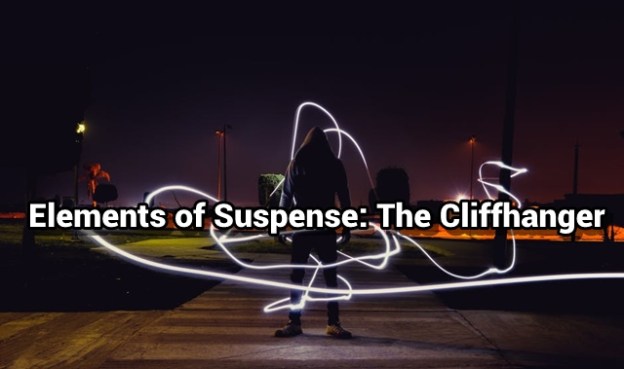
Once upon a time writers actually left their characters hanging from cliffs. In the early days of movies, when theaters ran serialized episodes of a story, a cliffhanger ending was a good way to ensure viewers would make the effort to come back next week. The same was true for serialized novels run in newspapers and magazines. Writers intentionally left characters hanging (not necessarily from a cliff) to entice readers to purchase the next installment.

Today’s readers and moviegoers may roll their eyes at Pauline hanging by her fingertips from a cliff, but the cliffhanger technique is still very much in use. If we change the definition of cliffhanger from:

a situation of imminent disaster usually occurring at the end of an episode of a serialized film

to the broader concept of:

a moment of unresolved danger or conflict

then a cliffhanger can happen anywhere a writer needs to crank up the tension. The key here is unresolved. Something is left hanging.

Consider the commercial breaks in a typical detective show. When do the breaks happen? Just after some new evidence is discovered that threatens to take the investigation in a whole new direction. Viewers are left hanging during the commercial, wondering what the hero will do with the new information.

In a similar vein, writers use the cliffhanger technique at the end of a chapter, scene, or beat to keep readers turning pages.

How to use the unresolved tension of a cliffhanger to increase suspense in your manuscript

  1. End a scene in the middle of danger. The tried and true cliffhanger ending—a bad thing has happened and the character is left some kind of danger at the end of a scene. You might switch to a different set of characters in the next scene and leave the poor hero hanging for a scene or two, or you might continue the action in the next scene. Either way, the reader must keep reading to find out how the situation is resolved.
  2. End a scene by hinting that a bad thing is about to happen. The doorknob turns… A shadowy figure appears in the window… The heroine hears the voice she’s been dreading for pages… This is similar to number one, except the danger is only implied, leaving the reader to imagine all sorts of horrible things that are about to ensue.
  3. End a scene by hinting that a bad thing might be about to happen. A subtler variation of number two. Instead of the heroine hearing a voice she recognizes and dreads, what if she hears a voice she doesn’t recognize? Is it a friend or a foe? The reader doesn’t know until they read on.
  4. End a scene on an ambiguous note. Instead of making it clear exactly what happened and how that affects the main character, try leaving things a little less clear. Sometimes a writer can accomplish this simply by backing up a few sentences. Instead of ending the scene with the sleuth deciding she needs to question the shop clerk, back up a few sentences and end with the information that could be interpreted to mean the clerk was guilty.

The cliffhanger technique isn’t just for the end of chapters or episodes, however. You can use subtle touches of cliffhanger anywhere in your story.

  1. End a conversation with a tantalizing bit of information. Imagine the sleuth is talking with an informant who tells him about a new clue that’s come to light. But instead of giving all the details right away, the informant says, “I found something in the wall of the garage. You’d better come take a look.” The sleuth will naturally ask for details, but the if informant refuses to give them, both sleuth and reader will be dying to find out what’s been unearthed. Ratchet up the tension further by forcing the sleuth to finish his current task before he can go take a look.
  2. Leave a character in a high emotional state. Tension is not only created by external danger. Sometimes the conflict is within a character.  Examples: The hero gets word his wife has cancer while in the middle of a meeting, or the heroine has an argument with her fiancé but has to break it off to interview a key suspect. These bits of unresolved life issues can add tension even when they have nothing to do with the main plot.

Bottom line: Look for places in your story where you can leave a situation unresolved, however briefly. Closure is important at the end of story, but unresolved tension is what keeps the reader turning page after page to get there.

By Lisa E. Betz
Source: almostanauthor.com

Visit us at First Edition Design Publishing


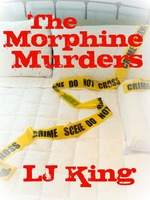
First Edition Design Publishing Releases The Morphine Murders by LJ King #FED_ebooks #Author #Writer

First Edition Design Publishing

First Edition Design Publishing has released LJ King’s debut novel The Morphine Murders.

The Morphine Murder’s protagonist Raina Prentiss jeopardizes her relationship, her job, a friendship, and maybe her life in LJ King’s breakout murder mystery. Prentiss goes full force into a double murder investigation without a badge, superpowers, or a vampire boyfriend.

First Edition Design eBook Publishing (aggregator) formats, converts and submits your book to over thousands of eBook distribution points worldwide and to the top internet retailers including but not limited to - Apple, Amazon, Barnes & Noble, Sony, Kobo, Google, EBSCO and Diesel. We format and convert your book to the different needs of each distribution point, including a custom ePub file. We will assign a custom ISBN for your eBook / POD publication, as well as register and submit your title to the Library of Congress (POD)

Author LJ King

Raina Prentiss never imagined that she would investigate a homicide beyond the comfort of her couch, armed with a remote, but that’s exactly what happens when she inadvertently finds circumstantial evidence connecting her boss to not one, but two local murders. With the reluctant approval of her police lieutenant boyfriend, Danny, she launches Mission Bottle to obtain her boss’ DNA. She recruits her co-worker, Tyler, to divert their boss’ attention while Raina sneaks around and swipes his water bottle. But a simple waft of Tyler’s scent, or the heat from his body, transports her back to the feeling of the feather-light pressure of his mouth on hers, teasing her, taunting her, during the passionate kiss she found herself entwined in a few weeks prior. With no DNA found at the crime scenes to match to their sample, Raina together with Tyler, and Danny and his detectives, continue to investigate. Because of her easy access to her boss, Raina is convinced that she is the key to obtaining proof and solving the case. Determination blinds the risks incurred by hunting a killer, as Raina uses inside information from Danny to plan her next mission. 

LJ King’s 252 page suspense filled thriller The Morphine Murders is available in hardcover, softcover and ebook formats at all on-line booksellers.  

When New York author LJ King isn’t defending her position that she is not an eccentric recluse but a focused writer, she is out of her office at the beach, playing tennis, gardening, and doing things with people.

For more about The Morphine Murders and LJ King visit www.ljking.net

First Edition Design Publishing  is the world’s largest eBook and POD (Print On Demand) distributor. Ranked first in the industry, First Edition Design Publishing converts, formats and submits Fiction, Non-Fiction, Academic and Children’s Books to Amazon, Apple, Barnes and Noble, Sony, Google, Kobo, Diesel, 3M, Ingram, Baker and Taylor, Nielsen, EBSCO, and scores of additional on-line retailers, libraries, schools, colleges and universities. The company also has a POD  division, which creates printed books and makes them available worldwide through their distribution network. The company is a licensed and approved Aggregator and holds licenses with both Apple and Microsoft. First Edition Design Publishing is the world’s largest eBook and POD (Print On Demand) distributor. Ranked first in the industry, First Edition Design Publishing converts, formats and submits Fiction, Non-Fiction, Academic and Children’s Books to Amazon, Apple, Barnes and Noble, Sony, Google, Kobo, Diesel, 3M, Ingram, Baker and Taylor, Nielsen, EBSCO, and scores of additional on-line retailers, libraries, schools, colleges and universities. The company also has a POD division, which creates printed books and makes them available worldwide through their distribution network. The company is a licensed and approved Aggregator and holds licenses with both Apple and Microsoft.

  www.firsteditiondesignpublishing.com

First Edition Design Publishing is the world’s largest eBook and POD (Print On Demand) distributor. Ranked first in the industry, First Edition Design Publishing converts, formats and submits Fiction, Non-Fiction, Academic and Children’s Books to Amazon, Apple, Barnes and Noble, Sony, Google, Kobo, Diesel, 3M, Ingram, Baker and Taylor, Nielsen, EBSCO, and scores of additional on-line retailers, libraries, schools, colleges and universities. The company also has a POD division, which creates printed books and makes them available worldwide through their distribution network. The company is a licensed and approved Aggregator and holds licenses with both Apple and Microsoft.

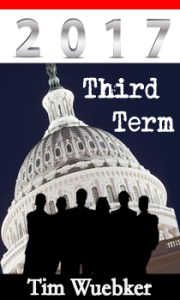
2017: Third Term — A Timely Political Thriller #ebook #FED_ebooks

First Edition Design Publishing
2017: Third Term — A Timely Political Thriller

Tim Wuebker teaches in greater Kansas City. He has worked with over 2,000 students, ages 14-62, from every continent, facilitated 11 kinds of college English classes, and taught six kinds of high school math. Wuebker runs marathons and has now penned a political thriller…2017: Third Term.

2017: Third Term tells the story of America’s future through the lens of a single family, the Thatchers. Jack Thatcher is an ex-marine–discharged for saving the wrong lives. Heather steals away to the woods to have her birth control implants illegally removed. Breanna and Mark may lose their college scholarships for defending themselves. Their father, Tom, works in what soon may be an illegal–a second job, which he is “hoarding in a time of scarcity.” Their mother, Julie, is being watched.

They think they are ordinary people. They are about to find how wrong they are.

As their options narrow, the Thatchers realize America has always been country where individuals can shape events. And no matter how restrictive a society becomes, there is always a freedom movement… You just have to be prepared to sacrifice everything.

2017: Third Term, ISBN 9781622870189, published by First Edition Design Publishing, is available in eBook format through Amazon Kindle, BN.com Nook and all on-line booksellers.

First Edition Design eBook Publishing

First Edition Design Publishing, is the world’s largest eBook distributor. Ranked first in the industry, they convert, format and submit eBooks to Amazon, Apple, Barnes and Noble, Sony, Google, Kobo, Diesel, 3M, Ingram, Baker and Taylor, Nielsen, EBSCO, scores of additional on-line retailers and libraries, schools, colleges and universities. The company also has a POD (Print On Demanddivision, which creates printed books and makes them available worldwide through their distribution networkThe Company is a licensed and approved eBook Aggregator, Apple Developer and Microsoft Solution Provider.

First Edition Design Publishing