50 years from now, how do you want to be known as a writer?
Each great author has a unique way of getting their stories across, a method for which they are known and loved. Edgar Allan Poe used a lot of description. Ernest Hemingway used many short sentences. William Shakespeare used strange, rhythmic diction. You can have a distinct professional reputation, too – you just have to create your writing style!
The style you create is a compilation of who you are as a writer, and only you can determine how it reads for your audience. Others will look back at your work and appreciate the specific way your writing speaks for itself.
Not sure what your style is yet? Don’t worry; it takes time and practice to discover it, but that’s just all part of the fun!
The two best things you can do to discover your style are reading and writing.
Reading
As you read, you are constantly absorbing the techniques of the greats, which can point you in the right direction toward discovering your own. Here are some tips to finding your writing style as you read:
Pay attention to the catchy sentences that get your attention and make you want to read more. Is there a certain style the author utilizes to make reading an enjoyable adventure? How can you make a sentence like that one in your own work? You may not be fond of using big words, for example, but if you read a sentence packed with huge words, and that happens to add a comical effect, you may want to try expanding your vocabulary in the future.
Notice the sentence styles you dislike. Have you ever read a story that seemed like a complete waste of your time? Determine why that was. Maybe it used too many words to describe one thing. Maybe its dialogue wasn’t engaging enough. Make notes on what writing styles and techniques you find ineffective or boring so you can avoid them in your own writing.
Keep a notepad handy while you read, so you can note the methods that do and don’t work when forming a story. Jot down anything from punchy sentences you love, to interesting diction you want to try out in your own tales.
Your specific writing signature will differ from anyone else’s, no matter how much you mirror past writers. Whatever your writing ends up looking like, it is yours, and only you can determine what best shapes it moving forward. Explore the styles of other authors to determine what you want your writing to become – or what you definitely want to avoid – but don’t be afraid to add your own special twist to set yourself apart from the rest.
Writing
Time to start crafting your words into a masterpiece! Take note of the way you write, and what your finished product says about you as an author. Here are some tips to finding your writing style through practice:
Get into a comfortable environment that allows you to express your ideas well. Personally, I have found listening to music helps motivate me to write, and relaxing jazz is especially effective when I need to clear my thoughts and structure my words. Whether you write better sitting under a tree with a notepad, or in bed with a neck warmer, do whatever helps you get those creative juices flowing and your pen moving across the paper.
Write what you like, so it isn’t a chore. If you enjoy science fiction, then writing about an astronaut that crash-lands on Jupiter is probably going to keep you excited and engaged as you work. Creating a story you’re passionate about makes it much easier to keep writing, and less likely to lose steam.
Keep a journal to help you find your voice. You can start with simple things such as writing how your day went. A diary is an effective way to get your ideas onto paper, and you can analyze the finished entries to help you find your strengths as a writer.
Try out random, out-of-context sentences. For example, “As I looked at my exam results, I knew it was going to be a long day.” They don’t have to make sense or go anywhere other than in your notebook, but they help you experiment with putting words together and making them sound great. You might even get some workable story ideas out of it!
Experiment with new things. All writers have niche genres, and whether you’ve found yours or not, you can always go dabble in more. Try your hand at poetry, a mystery, or whatever else you think you might enjoy. You may even discover you’ve got a hidden talent for sketch comedy writing that you never even knew you had.
Writing is more than putting words together; it’s about crafting the perfect sentences to form a masterpiece.
6 Sentence Structures to Try in Your Writing
Creating an outstanding writing style starts with outstanding sentences. Among the many literary devices you can apply, here are six effective sentence structures you can use to refine your writing.
1. Long and Short Sentence Variation: Both long and short sentences have a purpose in your writing. Long sentences create rich detail, while short sentences get right to the point. By using both types of sentences in your work, you create an interesting, varied piece that readers can’t pull away from.
Example: “As the ink bled into my parchment, I savored the joy of writing and created the last sentence, finally finishing my novel. It was a great last sentence.”
Analysis: The first sentence adds depth and describes the excitement of writing, something the reader can feel. The second sentence is like a punchline that ends the story nicely without having to say too much. A short closing sentence is something impactful that a reader will remember.
2. Items in a Series: Organizing ideas in a series with punctuation offers a detailed sentence that isn’t too wordy.
Example: “Becoming a writer is not easy; it takes immense creativity, constant perseverance, and hard work.”
Analysis: The use of commas and the semicolon gives the ideas room to breathe while still crafting an informative sentence.
3. Varying Effects: If you want to show the powerful applications of something, this structure lays out a large scale of results, from just sort of interesting to fascinating.
Example: “From drafting an essay to creating a best-selling book, the applications for writing are all around us.”
Analysis: Instead of explaining all the things that writing can do, this sentence only demonstrates a couple of specific examples. This leaves the rest up to imagination, yet demonstrates how many possibilities there are under one subject’s overarching umbrella.
4. Parallelism: This technique involves using a similar construction in multiple sentences, or similar sentence parts. For example, repeating words or phrases with minor differences.
Example: “Writing enhances your brain. Writing creates new dimensions. Writing turns the raw material of the world into a symphony. It all starts with writing.”
Analysis: All four sentences begin or end with the word “writing,” which shows the extensive applications this one occupation can have.
5. Avoiding Unnecessary Repetition: This is a simple tactic that makes your writing significantly more exciting. You may need to occasionally repeat a word (whether for parallelism or a comedic purpose) but do what you can to change up your verbiage and use a synonym instead.
Bad Example: “My essay was finally finished, and as I emailed the essay to my professor, I knew he would love my essay.”
Good Example: “My essay was finally finished, and as I emailed the masterpiece to my teacher, I knew he would love it.”
Analysis: Reusing the word “essay” makes the sentence boring and needlessly repetitive. When we change “essay” into different words like “masterpiece,” we establish other elements in the story such as the speaker’s attitude and pride toward what he wrote.
6. Cause and Effect: This is a simple method to fit an entire story into a sentence. You can give the reader the result, then easily clarify how you got there.
Example: “In order to write, you must learn the basics.”
Analysis: Using a conditional, or if-then statement, is a smart way to change the sentence around a bit. You could say something like, “You must learn the basics in order to write,” but turning it into two clauses makes it easier to read and follow.
Make Your Writing Yours
These six sentence styles and strategies may work for you, or they may not. Regardless, you should always make your writing your writing. Your personal style is what makes it appeal to the reader. If you dislike using parallelism, but love short sentences, then go with the latter. And if you keep trying things out as you continue writing, you can fine-tune that signature fingerprint you want to leave on your sentences, one nobody else could produce.
Ernest Hemmingway said, “There is nothing to writing. All you do is sit at a typewriter and bleed.” Writing is personal, and once you find a style worth developing, your readers will fall in love with your unforgettable words.
Freedom is a contradictory word, don’t you think? The official definition of freedom is the power or right to act, speak, or think as one wants without hindrance or restraint. However, follow that to its extreme and chaos reigns.
But that’s the dream of every author, right? To be free to write on our own schedule, without the hindrance of other obligations. We want our book sales or family life or work schedule to provide us this freedom so we may be the best author we can be. But what happens when we get exactly what we want?
The patooties are heading back to school for the first time in seventeen months, and I am nose-to-nose with this concept of freedom, experiencing its contradictions in all its forms:
Fear of the unknown
Excitement for an actual work day
Trepidation about what to do with uninterrupted hours (or, let’s be real here, minutes)
Uncertainty about the right path forward
Elation about having a few quiet hours in the house to write and to work
Doubt I can meet my writing goals and deadlines again, as it has been so very long….
I don’t feel very free.
With the world finding a new normal, are you experiencing something similar? Whether it be back-to-school, back-to-in-office-work, or simply the end of summer approaching, it’s not surprising if we find ourselves wrestling with conflicting emotions about the next season of our life.
Ronald Reagan says we need order to have freedom.
“There can be no freedom without order, and there is no order without virtue. ”
The musical Hamilton says our freedom can never be taken away.
“Raise a glass to freedom, Something they can never take away.”
Turns out, feeling free is different from freedom. Breaking it down further, I believe that in order to feel free and experience true freedom, we must first break free…
From Expectations
Expectations are a sticky bog. Whether they be our own expectations for ourselves, others’ expectations for us, or even our expectations of others, when we start making decisions based on expectations, and our attitude and mood are affected by expectations, we lose our freedom. We are no longer able to feel free.
What expectations are you or others placing on your creative life?
A golden first draft
To make a story fit into a specific genre
To meet every deadline (self-imposed or contractual), regardless of what is going on in your personal life
More sales
Five star reviews
This book must do better than the last book
This book must be better than the last book
Reader feedback, suggestions, wish list
Must engage your community on social media
Write X amount of words or write for X amount of time every day
Can you feel the pressure building? Just writing that list made my breathing go shallow.
Now take a moment and imagine…how would it feel to let all of that go?
What impact would it have on your creativity if you approached it with zero expectations, if you allowed yourself to simply enjoy the moments in which you have to write?
I bet it’d be pretty freeing.
From Old Habits
I don’t know about you, but I have developed some…let’s frame it as not helpful…habits over the past year.
Now is a good time to assess what lifestyle changes we’ve accepted that may no longer be beneficial to what we actually want for ourselves.
What do you want? What habits are holding you back from getting there?
As with all change, baby steps that are achievable, measurable, and realistic are key. Can you commit to taking a brainstorm walk once a week? How about going to bed 30 minutes earlier? Or meal plan once a week?
Being free to be our best creative selves starts with self-care. Self-care is not selfish. It is essential.
There is freedom in understanding what it is we want for ourselves. Now’s the time to take the steps away from unhelpful habits and move toward affirming rituals that lead us further down the path we’ve chosen.
From Upheaval
…or rather, the anxiety that upheaval can cause.
And, as I’m sure you well know, anxiety is a huge drag on creativity. 2020 was a huge upheaval year. 2021 continues to be a huge upheaval year. Throw in any personal or family changes and, well…anxiety is a fairly common emotion that’s been floating around.
Our brains are wired to avoid change. Why? Change means we’re introducing something unknown into our safe zone, triggering our brains to think we’re no longer safe.
When we begin to understand the scientific why of our reactions to change or new information, we gain the ability to better handle the anxiety that comes hand-in-hand with upheaval. Knowing that anxiety is normal when something new is introduced into our life makes it easier to breathe through it, to know that this too will pass.
It is okay if your creativity suffers during a time of upheaval. It is normal.
So break free from the guilt surrounding not being able to be your most creative self during a time of upheaval. Let it go, give yourself grace, and I bet you’ll quickly find yourself feeling free.
Breaking Free
I wish I had a magic button or a code word that could open a heart and mind to accepting freedom without hesitation or restraint. But I don’t.
What I do have is persistence and faith. Persistence to keep trying, to keep doing a little better each day in letting go of expectations, accepting change, and breathing through anxiety. Faith that despite the uncertainty of the immediate future, I will choose to do what’s best for me, my creativity, and my family and friends.
Easier said than done, I know. So here are some practical tips on how to move into a new season with acceptance, grace, and hopefully, some creative productivity.
Find a quiet time in the mornings to meditate, pray, or journal about your creative vision for this new season. Even five minutes will allow you a more centered start to your day.
Reach out, talk to a friend. Connection with our trusted circle of loved ones is healing, and allows for us to navigate change with a cheer squad in the background.
Accept that your creative work is important and necessary.
Finding the right motivation for writers can be hard, especially when every blank page feels like an accusation. Whether this is your first creative project or if you’ve had years of practice, procrastination and writer’s block will rear their ugly heads when you most need to be productive, while words of encouragement may grow scarce.
You know the feeling. You’ll do anything to distract yourself from the gnawing discomfort of what you should be doing. Suddenly, it seems like the perfect time to take a coffee break, make a shopping list, or clean out your linen closet, and maybe even master the art of how to fold a fitted sheet.
How can you hit your word count when the gears just aren’t clicking? How can you finally write that great American novel, or at least create enough of an income stream to quit your obligatory day job? The good news is you can self-motivate, even when it feels like you’ll never reach that next breakthrough — here’s how.
Why You Struggle to Write
You’ve always loved writing, so why is it so hard to put the words on the page sometimes? Writer’s block often boils down to three key things:
1. You lack a clear objective. “I want to start a blog,” isn’t going to cut the mustard. You need a general topic and a memorable domain name. You’ll also need to generate ideas for content, but this part is super easy. A host of online tools exist to help you. If you’re writing a book, what chapter are you working on? Pro tip: outlining clarifies your objective for each day’s work.
2. You’re distracted. Even if you have the best ideas to work on and you’re ready to go, distractions are time thieves. When you can’t think of what to say next, and your phone is sitting next to you, why not check that Facebook notification? But the next thing you know, you’ve scrolled away 30 minutes of production time. Lock your phone in a drawer, shut your office door, turn off the television — whatever you need to do to eliminate those distractions!
3. The payoff takes time. Writing is a work of the heart, but other than a personal feeling of satisfaction, you might not receive an immediate reward for hitting your word count. This hits you especially hard when you haven’t received a dime for your work yet. After all, you still need to eat and pay the rent, which means you might already be tired from your day job when you sit down to scribble. Though the competition remains fierce, you have to put the work in well before you see any payoff and turn your writing dreams into reality.
Tips for Staying Motivated
What can you do when the words won’t flow? Give these tips a try to supercharge your motivation and make meaningful progress toward your writing goals.
Set a schedule. This tip works particularly well if you’re in the beginning stages of your writing career, and you haven’t yet quit your day job. However, it’s imperative even for full-time writers. Set aside a specific time each day to write, then stick to it. For example, if you dream of writing a novel, pencil in 30 minutes three days per week to work on your book. Honor that obligation, even if you end up staring at the screen for a half-hour doing nothing. Eventually, boredom will drive you to type at least a few words.
Establish SMART goals. Sometimes, you overwhelm yourself with lofty goals like, “I’ll finish a novel in a month.” You can set SMART goals by establishing a reachable daily word count. There’s no magic number. If you’re working full-time, writing 250 words, or one page, per day, might not seem like much. But at the end of a year, you’ve completed a book!
Create a sacred space. If you’re currently writing at the kitchen table while the kids do their homework or your dog begs for treats, it’s no wonder you’re distracted. Even if you don’t have the room for a separate home office, create a special corner where you can don earbuds and shut out the world for a while each day.
But switch it up sometimes. Hey, the great part about the writing life is you can do it anytime, from anywhere. Feel free to head outside for inspiration on a sunny day. Just be sure to protect your equipment and your eyes from the sun’s glare.
Eliminate distractions. If you have to keep your cellphone with you — for instance, if you’re on call — turn off distracting notifications from all other apps. If you need to work in a common area in your home or in public, don noise-canceling headphones. Tell family members or roommates that when the earbuds are in, you’re off-limits (unless the house is burning down).
Ask questions. When you’re stuck on what to say, think about your audience. What would they want to know more about? Why does a particular character act the way they do? What motivates them?
Ask for help. Writers are typically solitary beasts, but when you get stuck, other people can help dissolve the glue. If you’re writing nonfiction, research what the competition has said on the topic. If you’re working on fiction, have a loved one help you brainstorm — sometimes, the silliest ideas turn out to be the best ones. How else do you explain the success of Sharknado?
Join groups. You might dig your solitude, but writing groups offer a world of ideas you can borrow. Plus, you don’t have to interact in real time. You can converse via discussion threads.
Make it a competition. If you have a friend who also writes, design a contest to see who can hit their word count first. Riding solo in the game? Set a timer and see if you can beat it!
Plan some rewards. This tip is super important if you’re not getting paid for your work yet. Reward yourself for each success, no matter how small. Did you write the page per day you promised? Relax with a bubble bath or treat yourself to that outfit you’ve been eyeing up. Recognizing your own successes, no matter how small, keeps you motivated for more.
Keep your eyes on the prize. Finally, remember that you’re a writer. Sit down and describe what your dream will look like when you achieve it. Do you want to write the next Agatha Christie-esque thriller? Do you want to make readers laugh and relate to your work? Do you want to capture some elusive truth in a coming-of-age tale that will top the best sellers lists? Pen out your goals in detail, and read them again whenever you feel the urge to procrastinate. It’s good to stop and remember why you’re working.
It’s possible to achieve your writing dreams. After all, if others have made it, you can too. When you’re feeling less than motivated, make these tips a priority and stay persistent. If you push yourself towards your word count and your goals, you’ll see your work come together, piece by piece, until one day, you’ve done it.
Everybody loves their heroes, some people even love their villains. But it’s a rare author that actively loves and spends equal time on their side characters. Sure, some of them are fun to write, but they’re not who the story is about, which is why so many of them are simply slapped on and ill-thought out. Today, I’m going to help you combat that by giving you three mistakes to avoid when creating your side characters.
Mistake 1 — Weighing Side Characters Incorrectly
Not all side characters are created equal. While some craft teachers talk about archetypes, I prefer to look at side characters in terms of their effect and influence on the story.
Here are the three main types of side characters:
Cameos are brief and fleeting, usually nameless or with a generic label “guard, receptionist, girl with the teddy”. They leave no mark on the story and are forgettable. Think the woman in the red dress in the Matrix, or Marvel comic writer Stan Lee’s appearances in the Marvel films.
Minor characters are still fleeting, they still don’t leave much of a mark on the story save for transactional exchanges like a barman or a shop owner. Think Mr. Filch in Harry Potter.
Major characters are usually scarce, only a handful of them in most stories. They have their own subplots and character arcs, they should represent the book’s theme too. Think Ron and Hermione in Harry Potter.
Too often, writers try to give minor characters character arcs, or they don’t give enough attention to a character that’s supposed to have an arc or subplot. Understanding the different types of side characters should enable you to give the right amount of page time and depth to each character.
Mistake 2 — Thinking You Need Comprehensive Character Arcs
Character arcs are easy for protagonists, you get the entire book to explore it. But side characters don’t get as much page time as protagonists. So how do you show the depth of arc you need without the side character taking over?
Well, you can’t. At least, not exactly anyway.
What you can do is create the illusion of an arc.
You’ll need to show the “what” of what they want (and the fact they don’t have it) at the start of the story. For example, early on in the Harry Potter series, we see Hermione wanting to be academically brilliant and pass all her exams. After that, you need to show a struggle to achieve the goal somewhere in the middle of your story. And, if we’re talking Harry Potter, then Hermione gets her own subplot devoted to this where she uses the Time-Turner to take more lessons than is scientifically possible. Near the end of your book, you’ll have to show the resolution i.e., Hermione passes all her exams and does well, or by the end of the series she realizes it’s not really as important as she once thought.
The beauty of a side character arc is that you can flex it up and down. Want to show a little more depth? Add another scene or two with the character grappling to change. Need to cut down your word count? Then reduce the number of scenes focusing on side character arcs.
The trick to making a side character arc work well is to connect it to the protagonist and, if possible, the theme. In Hermione’s case, her academic brilliance both impedes her friendships with Ron and Harry but also helps them at various points when she has useful bits of information about spells or wizardry.
Mistake 3 — Not Having a Reason for Existing Outside the Protagonist
To create more depth in your side characters and to make them seem realistic, use the three “whys” method.
Each side character should have:
· A protagonist why
· A life why
· A scene why
The Protagonist Why
Even though you want your side characters to look like they’re full and comprehensive, ultimately, in story terms, they exist to either help or hinder your protagonist. That’s their “protagonist why”. Are they in the story to make the protagonist stop and think? To help them reflect? To protect them? Teach them? Or perhaps put obstacles and barriers in their way? You need to know what their “protagonist why” is.
The Life Why
Protagonist aside, to help create the illusion of depth, your major side characters should have something they want outside the protagonist. Do they need to come out to their family? Are they trying to get a big important job? Maybe they want to win an award. Whatever their own “life why,” if you can make it serve the story by reflecting the theme or perhaps allowing the side character’s goal to interfere with the protagonist’s all the better. For example, in the above Harry Potter example, Hermione’s “life why” is to do well academically. It interferes with her friendships in both positive and negative ways.
Scene Why
Have you ever read a scene where half a dozen characters enter, two or three of them have a conversation, and then all six leave again? I can’t tell you the number of manuscripts I’ve read where that happens. When you have a group of characters in a scene, each character must do one or all of the following:
Do something
Say something
Bring information
Cause a problem
Or fix a problem
I’m sure there are other things a character could do in a scene, but the point is, they must be doing something. If they’re not engaged in dialogue, tension creation, tension easing, or action of some kind, then they’re surplus to requirements and need to be removed. Too many instances of “surplus to requirements” and you have to question whether you need the character at all.
f you can avoid these three mistakes you will craft stronger characters. Knowing the importance of a cameo versus a major character will help you manage your cast more effectively, focusing on those characters that need the attention for the sake of your story. Remember, with side characters, it’s only the illusion of an arc you’re creating, not a comprehensive one like a protagonist. Last, try to ensure each major side character has three “whys”. Do those things and you’ll avoid the most commonly occurring mistakes with side characters and build better stories.
As a writer of fiction, you want readers to open your book and become so absorbed they can’t put it down. It helps to be aware that so much of what happens when a reader picks up a book takes place in the subconscious mind. Readers don’t realize that it’s happening, and many writers don’t pay attention to it either.
One of those largely subconscious mechanisms is story pacing.
Story pacing is often ignored as an aspect of learning how to craft a really great story. A lot of writers don’t give it much thought, yet it’s a critically important writing technique and quite exciting to learn about.
In this post, we’ll cover story pacing in detail, and I’ll provide some crucial areas for you to work on in your books—to open up some doors you didn’t even know existed.
Story Pacing Opened My Eyes
One of the primary ways we learn how to craft story is from reading a ton of books, especially in our target genre. I’ve been an avid reader of suspense fiction for as long as I can remember, and it’s been a huge boost to my writing abilities.
So when I started writing thrillers, I felt fairly confident about my skills. I knew I had an exciting storyline, with intriguing plot points supported by well-developed characters and plenty of action.
That’s why I was so surprised when my mentor took a look at one of my stories and said: “It’s not a thriller.”
He told me I had all the right stuff for a thriller, but the pacing was off. After he showed me the same techniques that I’ll share with you in this article, I was able to give the story a better sense of urgency, shaping it into a solid thriller.
With the help of this post, you can do the same with your stories.
What is Story Pacing?
You may be thinking that story pacing is simply the tempo at which your story unfolds. True enough, on the surface. But the deeper reality is that pacing is the art of keeping readers engaged in your story and not letting them out. It’s what pulls them through to the end.
Here’s another way to think about it. In a ThrillerFest panel discussion on the topic of pacing, Lee Child said:
“Every book you’ve ever read has a timeline; it starts somewhere and finishes somewhere. Pacing is how you manage that timeline.”
He goes on to talk about how he writes the slow parts fast and the fast parts slow. Meaning he operates like a photo editor reporting on a tidal wave. The editor shows the wave coming in at a tremendous pace and then slows down the tape as it crashes into the seawall to intensify the impact and examine it in greater detail.
As writers, we have the ability to speed and slow the rate at which our readers consume a story. You can learn those techniques and master the art of pacing by structuring your story according to genre.
Pacing is Inextricably Connected With Genre
Being clear about genre is really critical to the reader’s enjoyment of your story.
To make my point, I’ll tell you about this little trick my husband likes to pull on me. Sometimes when we stop at a gas station, he’ll disappear inside and come out with a large cup and offer me the straw. Though I never know what to expect, I can’t help but form some kind of preconceived anticipation.
So maybe I’m thinking root beer or Dr. Pepper. I take a drink and—Yuck! That’s awful! What is it? And he might say it’s Squirt. Well, I like Squirt, but since it’s not what my taste buds were expecting, it disappointed.
It’s the same with genre.
Readers start a story with certain expectations, they want a particular type of reading experience. That’s why genres exist. To help readers make good choices about what they want to read.
Pacing is dependent on genre and genre springs from pacing. Like the chicken and the egg, you can’t really separate them. The genre you choose to write will dictate the story pacing and the way you pace your book will determine the genre.
If a reader picks up a thriller and the story doesn’t have fast pacing like a thriller should, they’ll put the book down or finish it in disgust and never go back to that writer’s work. Same with a cozy mystery or a slow-burn psychological suspense.
And the reader won’t even consciously register what was wrong with it. They’ll just know it disappointed.
Pacing in Mysteries, Thrillers, and Suspense
Let’s think of a story’s pacing like a theme park ride. When you visit a theme park, you know the kind of rides you want to experience. The ferris wheel is fun and so is the Tilt-a-Whirl, but they move at different paces. Story pacing is like that, too.
Use this analogy to take a closer look at how the pacing differs in thrillers, suspense stories, and mysteries. Each genre is a joy to read, but the experience each provides is unique.
Thrillers
Thrillers are roller coaster rides. You get in and strap down and then the coaster pulls slowly out of the station and starts chugging up that first hill. This is like character development, grounding the reader in the setting, and building the suspense.
By the time your reader is solidly inside the viewpoint character’s head and has learned to care about that character, we’ve reached the top of that first big drop and we plummet ahead on a wild ride of twists and turns with an occasional breather while the story builds to another thrilling drop.
Thrillers are made of fast-paced scenes.
Mysteries
Mysteries are more like the funhouse. They’re designed to surprise, challenge, and amuse with puzzles to solve and riddles to unravel. They’re more interactive than a thrill ride, inviting readers to participate in working out the clues.
We may have to work our way through a revolving tunnel or cross a crazy obstacle course. And there may be spurts of fast-paced activity, but the overall tone of the ride doesn’t have the frenetic qualities of a roller coaster.
Mysteries move at a moderate pace.
Suspense
We might liken suspense stories to the spooky rides where you ride on a track through a series of dark and mysterious passages, accompanied by scary music and lots of atmosphere.
Some of these rides are slow, drawing out the suspense, giving you time to worry and wonder about what’s coming next. Other rides move more quickly, giving you less time to recover from the unexpected each time you turn the corner.
Suspense stories vary in pace and run the gamut.
Pacing Influences the Reader’s Experience
As with most aspects of good fiction writing, intentional story pacing provides a quality reading experience. Proper pacing allows us to control what the reader thinks and feels. We do that in obvious ways, not so obvious ways, and some really subconscious ways. As I mentioned before, a lot of pacing is effectively a subconscious control system.
We’re going to look at the nuts and bolts of pacing, but unless you realize their purpose and understand the end goal, you won’t get full value from using these tools.
The way the page looks—sentence and paragraph structure, punctuation, amount of white space—sends signals to the reader about how to consume the story. Page appearance is important in pacing a book correctly.
So, before we dig into the specifics, we need to cover an absolutely key component of successful pacing.
Form Follows Content
If you’re wondering how to structure your sentences and paragraphs, look at your content. What’s going on in the story?
What is the character thinking or feeling in that moment? What should the reader be experiencing? These are what will tell you how long or short to make your sentences, paragraphs, and scenes.
In general, longer sentences promote slow-burn suspense while shorter sentences can create a frantic feeling of panic. But the number one rule to remember in story pacing is this: form must follow content.
This means that what’s happening in the story should be reflected in the way it looks on the page.
If there’s a fight scene, or some kind of fast-paced action going on, the sentences and paragraphs should be short, clipped, and surrounded by white space. If your character is arriving in a new setting and taking it in, these descriptive passages will be slower, with longer sentences and paragraphs.
Flashbacks also slow the pace as you pull the reader from the active voice of the story into a more introspective vein.
Ask yourself what’s happening, and make your form fit your content.
Some people, when they hear the term pacing, think it means fast. And in suspense fiction, that’s often what readers want. But there’s nothing wrong with an occasional slow-paced scene if that’s what the content calls for.
Good pacing is about choosing the appropriate speed to advance your reader through the plot. And that’s dictated by the genre, tone, and events of the story. “ Story pacing is about choosing the appropriate speed to advance your reader through the plot. And that’s dictated by the genre, tone, and events of the story. Tweet thisTweet
Feel free to throw out the rules of grammar if they get in the way of pacing and presenting the story. Fiction writing doesn’t always require full, grammatically correct sentences. Those rules exist to serve the story, and the story exists to serve the reader. Our job, as writers, is to serve the reader in the best way we know how. And sometimes that means breaking the rules.
Now let’s dive into the specific techniques used in pacing. We’ll look at four big ideas:
Sentence structure
Paragraph structure
Scene and chapter structure
Cliffhangers
Sentence Structure
The way you structure a scene’s sentences sends a message to the reader, usually on a subconscious level, about how fast to read. And the content of the scene will dictate the form.
Longer sentences, with lots of detail, tend to slow the pace and that’s perfect, if that’s what the content requires. Short, staccato sentences—even sentence fragments or single-word sentences with lots of white space in between—convey a fast pace. Machine gun dialogue—those terse conversations say, during a car chase—does the same thing. It speeds the pace.
Often, when there is physical movement in the story, the sentences will be shorter and when things are stationary, they’ll be longer. But that’s a generalization. Always base form on content. That’s really the only rule. Your job is to tell a story, and all the little pieces you use to do so should follow that story.
How pacing works in sentence structure
The energy of a sentence is in its kernel, subject + verb:
The woman screamed.
Sometimes you’ll need to include an object and indirect object:
The woman screamed obscenities at the burglar.
But keep in mind that any clauses you add will drain some of the energy:
The woman screamed obscenities at the burglar, cursing him for tracking mud on her Persian carpet, berating him for breaking the window.
Remember, that’s okay if it’s called for by the content. What’s going on, and how do you want the reader to feel about it? Also, be aware of rhythm. In your sentence lengths and structure, you’re setting up a cadence which conveys a certain kind of tone.
The best way to learn the structures, rhythms, and cadences of well-written scenes is to read a lot and seriously study those who have mastered your genre’s story pacing.
Action is content. If you’re writing an action scene, you can often get away with less detail and shorter sentences. Content calls for them.
But two people sitting and talking doesn’t usually qualify as action. For moments like this, to keep the reader tucked into the story, you need to use more rich, sensory details that spark emotions and opinions. Which means longer sentences.
This doesn’t mean that if the pace of the story is fast you need to leave details out. Remember, you must tell the story—everything the reader needs to get the full experience. But if the pace is fast, you must deliver the information in a more clear, concise fashion.
No matter what the pace, you’ve got to get the reader inside the viewpoint character’s head, experiencing the story through that main character—their emotions, opinions, sensory input, and perception of what’s happening in the story.
Are you picking up on the major theme of pacing? Content drives everything. “ Content drives the pace of your story—content drives everything. Tweet thisTweet
Paragraph Structure
When a reader opens a book and sees a lot of black on the page—long blocks of text—that sends a message that it should be consumed at a leisurely pace. Short paragraphs with lots of white space around them signals a fast-moving page-turner.
It encourages fast reading.
The way you structure sentences and paragraphs will influence your reader’s breathing and physical state to some extent. Even when not reading out loud, we tend to breathe in conjunction with the words on the page, and faster breathing leads to a faster heart rate.
Lots of short, punchy paragraphs literally make your book a page-turner because your reader’s eye devours them and quickly moves on. Yet, in some cases, a long, run-on sentence can leave your reader breathless, since there’s no place to pause and take a breath.
Normally-paced text varies in paragraph length. It might go from a four-line paragraph to a three-line paragraph, then five lines followed by two, and so on. About ninety percent of most books, except for climactic scenes, run along in this sort of pattern. It’s interesting to the eye and doesn’t contain lengthy, intimidating paragraphs.
This will vary by genre. Literary works will tend toward longer paragraphs, while genres such as action adventure and thrillers contain only sixty to sixty-five percent “normal” story pacing. This utilizes a lot more white space and shorter sentences and paragraphs.
Use the power of the paragraph. Especially with faster-paced fiction. Hit the return key as often as necessary. Set short, punchy sentences apart for greater impact when the situation calls for it. This is a powerful technique.
How pacing works in paragraph structure
To further explore how paragraph structure affects reader experience, let’s take an excerpt from the thriller-paced short story Kowalski’s In Love by James Rollins. In this first example, I took the liberty of restructuring the paragraphs to reflect normal pacing:
Now, see how it appeared in the published version:
Do you see how the shorter paragraphs facilitate a faster pace? Notice how they give more impact to the short sentences, which stand alone in their own paragraphs.
Scene and Chapter Structure
When you write, your scenes and chapters should drive the story forward and accomplish story objectives. Where you break them should not be random, but based on content.
You should be aware, however, that readers can bog down if the chapters are too long. Most readers are comfortable with chapter lengths between 2,000 and 2,500 words. Shawn Coyne, editor and author of The Story Grid, calls these “potato chip” chapters because they’re short enough to encourage readers to indulge in just one more before turning out the light.
And then, just one more…
It’s also useful to vary the lengths of your sentences, paragraphs, and scenes to avoid falling into a monotonous pattern. It’s important to realize that readers have an instinctive sense of story pacing, and when the pacing is congruent with the content, it feels right. If something is out of sync, they’ll sense that, too.
For example, years ago, when I read Connie Willis’s WWII time travel book, Blackout, I grew increasingly uncomfortable as I neared the end. Something was wrong. The pacing was off, and I realized my instincts were on target as the book came to an abrupt end—in the middle of the story.
The publishers had decided the book was too long and their solution was to chop it into two parts without any warning to the reader. I, along with thousands of other readers, was not pleased.
You want to do all you can to give readers confidence in your storytelling abilities. When they feel like they’re in good hands, readers will settle into a story and stick with it. Putting in the effort to get the pacing right will pay dividends in gaining reader trust.
Cliffhangers
Remember, the function of pacing is to pull the reader through the book to the very end. Cliffhangers are a vital part of that process and consist of scene and chapter endings and the openings that follow.
Cliffhangers don’t just occur at the end of a chapter where you decide to stop writing. They happen when you make the effort to build something compelling into that ending. Effective cliffhangers keep readers from putting the book down, bridge the gaps between chapters and scenes, and provide momentum.
Like links in a chain, the cliffhanger doesn’t stand alone. It connects to the next opening and incorporates techniques used in deep POV to ground the reader in the new setting and character, creating a seamless progression through the story.
Lots of factors enter into your reader’s experience with your book. Some of them are out of your control. Is she tired? Hungry? Just a had a fight with her husband? There’s nothing you can do about any of those things.
But you should do your best to take control of the things you can. Like the way your story looks on the page. This has a tremendous influence on your reader, though most of it happens on a subconscious level.
To get a better idea of what I mean, let’s look at an example from Dean Koontz’s thriller The Whispering Room:
Do you see how these terse, tight paragraphs of dialogue convey tension and move quickly like machine gun fire? This makes for a fast pace and the form follows what’s happening in the scene, a rapid back-and-forth conflict.
Now let’s examine another example, this one from Bloodline by James Rollins:
The concise sentences and paragraphs communicate tension to the reader and encourage a rapid reading, eating up the page, leading to faster page flips. They are direct and sparse, hiding nothing of the bleakness of the scene.
Here’s a contrasting example from Jeffery Deaver’s novel The Blue Nowhere:
Deaver could easily have broken this block into multiple paragraphs. Why didn’t he?
I think he did it this way because the long, unbroken paragraph mimics the droning on and on of the little girl. It also reflects the viewpoint character’s blasé attitude about murder, burying it in a pile of words as if it’s something of little significance, highlighting its trivial aspect as just part of a game.
Remember to think about what’s happening in the story and how you can use all your skills to communicate that to the reader. It’s not just the words you use, but how you arrange them on the page that affects the way your reader will experience the story.
Improving Your Story Pacing Skills
The first step in mastering pacing is awareness. Once you become aware of the subconscious signals you’re sending your readers, you can practice and improve.
However, the best way to control the pace of a story is from your own subconscious, the back brain, the creative part. Not from the critical front brain. So how does that happen?
It’s important to keep learning, studying, practicing, and polishing your skills as a writer. But to make those skills really useful, they need to be internalized and become a natural part of your writing process.
Musicians practice scales and fingering exercises. Basketball players run drills on passing, dribbling, and shooting. Dancers spend hours at the barre, practicing the basic moves. They do these things so that the techniques are available to them in concert, in the middle of a championship game, or on the stage.
We make muscle memory by repeating the proper movements until they become automatic.
For writers, this involves reading first for pleasure. And then, when you’ve found a book that grabbed you and pulled you all the way to the end, go back and study it.
Analyze and practice until you’ve internalized the skill and it becomes second nature. The first step is awareness, then comes practice. Do these things on a regular basis and eventually, the techniques and information will pass from the front of your brain into the back of your brain and become automatic.
How about you? Did you learn something new you can apply right now to your writing? Tell us about it in the comments.
Many of our favorite characters are so beloved because their authors took the time to write a backstory that is as well crafted as it is memorable. Yet if handled poorly, backstories can become the most tedious parts of the book.
Good backstory is like talking with a fascinating person who has led an amazing life or gone through an extraordinary experience. You find yourself on the edge of your seat, wanting to find out more. Bad backstory is like being trapped with the most boring person at a party who insists on telling you about their entire life, down to the most tedious detail, in a monotonous voice and without even asking if you’re interested in it.
How Authors Approach Backstory
Developing background is an important part of creating characters for a novel. You can’t hope to write your characters accurately if you don’t know where they’re from, who their family is, and what major events in their lives have brought them to where they currently are in the novel’s timeline.
It can be tempting to include all of this within the main story, even for the minor characters, as a way for the author to show their work and get to the action of the novel. Other authors include it when each new character is first introduced in hopes that it will make the reader understand them better.
Authors who do this assume that because backstory is important and they’ve worked so hard on developing it, the reader will need to know it in its entirety. Unfortunately for them, this isn’t always the case.
There is also a common trend among storytellers is to use a tragic backstory in order to make villains sympathetic even when they don’t need to be. After all, a murderer can’t be excused for their crimes just because they were bullied as a child, for example, and it becomes especially problematic when addressing sensitive topics to establish a heartrending backstory.
Why Backstory is Important
It’s not as if a book can’t or shouldn’t include backstory, even an elaborate one. It’s just that if it is done poorly or laid on too thickly, it can bring about any of the following negative effects:
Interrupt or upstage the main narrative
Slow down the pace
Introduce irrelevance to the plot
Make a character either unsympathetic or sympathetic, contrary to their purpose in the story
Yet when executed correctly, backstory can make a character multi-dimensional, pave the way for a good plot reveal, or even open the door for a prequel or side story to help begin a series. Just as it is for people in real life, characters’ backstories will affect how they act in the present. Somebody who has experienced trauma in the past, for example, is much more likely to show symptoms of PTSD or have difficulty forming long-term relationships.
How to Include Backstory
So, you’ve worked out your characters’ backgrounds, right down to how many times they had to take a driving test. That’s an important part of the storytelling process, but how do you weave it into the story? Should you include it at all?
Let’s say that you’re writing a contemporary novel with a protagonist who works in marketing. Their backstory is that they previously dropped out of medical school. Depending on the main object of plot, this could be an important part of the novel or it could be completely inconsequential.
If the backstory isn’t relevant to the plotline, then there is no need to bring it up. Or, it could simply be mentioned in a throwaway line to add a little context wherever needed. Yet there are many ways to fit this backstory into the main one.
Perhaps the protagonist’s story arc focuses on overcoming their feelings of shame and guilt as a result of their past failures. This will make the character highly relatable to readers, as we all have regrets. Are they desperate to land a big client to pay off their student debt? This will explain their present motives to succeed at the office. Will their medical skills prove useful at some point? This makes the backstory relevant to the current story.
Once you’ve determined whether or not to include the backstory, and how much, you can introduce it to the plot when it is relevant. Nothing turns a reader off more than slogging through a long info dump at the beginning of the book, which ends up reading more like a Wikipedia page than a novel. You probably wouldn’t want to explain the protagonist’s past failures or influential experiences in the first scene of the book, or even within the first few chapters. You first want to establish the character, the present setting, and the main plot before bringing it up.
To work in our marketer’s backstory, say that a few chapters in, when they are on the subway home after a stressful day at work, they see an exhausted nurse. This causes them to contemplate how differently their life would have been if they had completed medical school. There are many possibilities this scenario could open up. Perhaps they realize how good they have it after all, fret over their outstanding student debt from a partial education they aren’t using, or ponder how they wouldn’t have met their love interest if they hadn’t gone to work at the marketing firm.
Alternatively, many authors hold back on revealing the character’s past until close to the end in order to create a plot twist. This does give a chance to reveal the backstory in full, or to utilize a flashback, but it can also be revealed as a short, brief line that suddenly changes everything the reader or other characters previously thought they knew about the main one. While you can explain the backstory in full at this point, it is often best to still leave at least a little mystery to it, especially if you are writing a series and wish to entice readers to buy the next book.
Even if you have written out backstories that won’t fit into the novel, don’t throw them out entirely. These could still be used as a prequel or side story, perhaps even a freebie for readers who sign up for your mailing list. J.K. Rowling includes many backstories for minor characters in the Harry Potter series on her website. They aren’t essential for understanding or enjoying the books, but they are nice little treats for hard-core fans.
Questions to Ask About Backstory
Before you lay on the info dump, ask yourself these questions about your characters’ backstories:
Does it make the story or characters more interesting to include them?
Are they relevant to understanding the story or character arcs?
Can any of the backstories make an interesting plot on its own?
Are any of the backstories more interesting than the main plot?
Does it explain a character’s actions?
Will any of them make for a satisfying twist?
Where does it make sense to introduce the backstory?
Backstory can be difficult for authors to nail down, and a headache to fit into the plot convincingly. But when done right, it can make the whole story better and more complex, your characters more believable, and can provide you with endless plot possibilities.
Have you ever watched a magician make his assistant levitate just by waving his hands?
Here’s what happens. Two dancers come onto the stage to set the exotic atmosphere. Once we’re in the mood, the magician’s assistant comes out and lies on a board supported by two chairs.
The magician puts the assistant into a trance. The dancers cover the assistant with the blanket on the board. They remove the chairs and the magician begins waving his hands.
Magically, the assistant rises. The magician passes a hoop around the assistant so we can see clearly that there are no ropes or wires lifting the board.
Amazing!
The audience claps and the magician does another trick.
Impressing is a strategy.
Wouldn’t it be great if your readers would be so riveted to your writing that nothing could stop them from reading every word?
What writer doesn’t want that?
Impressing is important, we’re told. If you can’t grab attention, you won’t get a chance to make an impact.
Consider the magician. They’re making an impression all the time, aren’t they? And they do it so well, they don’t even have to share their hidden message.
And what might that message be?
It’s okay to believe in magic.
Be careful not to overlook this fact. The greatest magicians plan to show us that we should believe in magic. If they just told us, then we’d dismiss it. If they didn’t plan for this, their shows wouldn’t be as good.
When the assistant rises and we can’t see why, we’re convinced (even if only for a moment). The magician isn’t forcing us to believe. They’re just presenting a picture and leaving it to us to interpret what we saw.
You impress with a headline or a startling statement to begin your blog post, your essay, or your book. Once you’ve got people’s attention, you’ve got one shot to make your message clear.
That’s where expression comes in.
Expression is a goal.
What impact do you want your writing to make?
The time to ask that question is before you write the first word.
Knowing what you want to accomplish helps you draw a map to get you there. What road will you lead the reader down? What sights will the reader see along the way? What signposts will give hints for what is to come?
The words you choose will depend on the point you want to make. Consider what the reader might be thinking when they find your piece. What are they feeling? What do they believe? What do you want them to think or feel after they read?
To make your message clear, narrow your focus.
Narrowing means you pick one problem and provide a solution for it. It means you tell one kind of story for one kind of reader. To do more is to spread yourself thin and dilute your impact.
When you have one main point, it’s like a tour guide that directs you as you write. It’s the ruthless editor that helps you cut out everything that doesn’t make your point. It’s the magnifying glass that excludes everything that doesn’t add to your message.
I grew up drinking sweet tea. The first time or two I made it myself was a test. I might add too much sugar or too much water. Or maybe too many tea bags. When it doesn’t taste right, you might suffer through a glass or two, but you can’t bring yourself to drink a whole gallon.
Your writing is a lot like sweet tea. If you want your readers to enjoy your writing while they drink it in, suit it to their taste. Be willing to test—and fail. Analyze what happened, adjust your focus, and try again. In time and with practice, you’ll find the right recipe.
You need both to make an impact.
To influence people, you have to draw them to you.
It’s not enough to open the door. You’ve got to have something appealing inside. If you bore them after you grab their attention, they’ll walk out on you.
TV producers are experts at this. They tantalize you with the juiciest clips while you’re watching something else. If they succeed, then they have to make watching so good you’ll go on a binge.
Think about your favorite shows. What got you hooked? What makes them so good you want to tell all your friends about them?
Here are a few:
Open loops – They show you a problem but withhold the solution until you watch. Characters you can identify with – When the hero seems like you, you think of them as a friend. You see yourself in their shoes. You may even find yourself rooting for them or talking to the screen to tell them what to do.
They sell hope – Have you had a bad day and want to laugh? Do you want to be as confident or skilled as your favorite character? A few minutes escape can be just what the doctor ordered.
What can you add to this list?
Then ask yourself, “How can I use these techniques in my own writing?”
If you need help, take out one of your favorite author’s books. Read for an hour. Then grab a cup of coffee (or your favorite beverage) and write down the ways they capture your attention.
Then grab a pen and implement those techniques into your own writing.
Start with one strategy and implement it every day for a week. Then add another the next week. Soon you’ll become your ideal reader’s favorite writer!
Much like the world of publishing, book promotion is constantly changing and with it, so are the services offered by book promotion companies. What may have worked just a few years ago doesn’t have quite the same impact today. I know from experience that the surge of books we see every day in the marketplace has a real effect on how various programs work. Today’s book promotion services are less about what you’re marketing in the moment and more about the foundation you’re creating.
So, what’s working in book promotion now? Surprisingly, it’s not at all what you would expect. Let’s take a look:
Email Newsletters: While it may seem really basic, unlike social media, email newsletters are an effective way to make a direct connection to your readers. We think of social media as the main way to reach our audience but in reality, it’s not as direct as we’d like it to be. And sending an email newsletter is actually a lot easier than say, managing a bunch of social media platforms. (Here’s a guide for getting started.)
Your Reader Fan Bases: Book publishing is rapidly growing and with around 4,500 books being published daily, it is crucial to build supportive reader fan bases. In the past, we’ve relied on the blogger market to help promote books but with such fierce competition, it is getting harder and harder to get attention. What remains steadfast though is your readers. Building excited and engaged reader fan bases is a fantastic way to build momentum for your book and letting readers help you with your book promotion by posting reviews and sharing your book release on their social stream. (Want to build fans and superfans? This article shows you how.)
Going Local: Many authors approach book promotion with the goal of reaching a national audience through big media. What shouldn’t be overlooked though is local media. Local media loves their local authors and can be a great launching pad for long-term success. It isn’t that you aren’t worthy of the national spotlight, but national media is harder than ever to get. Also, many bigger media outlets use scouts who research local stories that are gaining momentum, so making waves in your local market can lead to national exposure.
In addition to local media, you may also consider doing local events, whether at a library, bookstore or gift fair. And don’t forget non-bookstore markets like boutiques, coffee shops, and other area businesses that might be interested in your topic. (Here’s some more great advice on positioning yourself when it comes to media.)
Expanding Your Goodreads Presence: Goodreads is growing by leaps and bounds and with each month that passes, it gets more robust. Now more than ever, it’s imperative to get set up on Goodreads and start networking with genre-specific groups. More than any other social networking site, Goodreads is geared toward and caters to readers. Start by being a reader. Being more involved in networking and socializing and less on being the pushy marketer will garner you much more attention and will sell you more books in the long run.
Smart eBook Pricing: Digital clutter is changing the trends of ebook pricing. While price discounts and specials are good, that isn’t smart book pricing. As an example, book pricing at launch can be slightly lower than what your regular pricing might be, as even a dollar discount can give your book a helpful bump. But eBook pricing should still be weighed against what the market will bear. I also advise against pricing an eBook over $9.99, especially if you’re just starting out. As a new author, remember that readers are taking a chance on you and might be more inclined to purchase if your book’s price feels more like an impulse buy.
Amazon Book Page: It’s easy to get outwardly focused on book promotion and forget about the all-important landing page we are sending our readers to – Amazon! Your book page on Amazon should have a clear description with white space and no paragraphs crammed on top of each other. I also recommend using your Author Central Page to enhance your book page. With Author Central, you can add reviews, an author interview, or book experts. Think of your book page as a sample of your personality with information to help the reader decide to buy your book. It can also be a terrific way to drive more reader engagement on your page.
Amazon Advertising: I had some challenges with Amazon ads (also referred to as AMS ads) when they revamped their platform and the associated advertisement algorithm, but I’m happy to report that the platform has found its footing and the ads are improving. As a guideline, you’ll want to have 400 keywords at a minimum. Start your ads at $10 a day in budget and no more than .50 cents per click until you get a sense of how the various keywords are doing.
AMS ads are great to do at campaign launch, starting them a week before the book launches if it’s on pre-order. You can also use them to promote pricing strategies, lowering the book price for a few days to coincide with an eBook promotion.
Keeping Your Social Media Footprint Small: When you try to be *everywhere* on social media, it’s hard to be engaged on all the sites, all the time. And in an age of fake followers and fake accounts, engagement matters. Even if their numbers are small, the user with the most engagement far outperforms the ones with millions of followers. This doesn’t mean less work though – you’ll still need to put the effort into the site you decide to be on. Engaging readers on one social media platform in a consistent and fun/informative/helpful way is a far better book promotion strategy than trying to be everywhere. As I always say: it’s not about being everywhere, but everywhere that matters. (For more ideas on integrating social media into your marketing, try this.)
Knowing Your Audience: Many authors I speak with have no idea who their actual reader market is. When I ask them, they’ll often say: everyone. You know who markets to everyone? McDonald’s, Apple, Amazon, Microsoft, etc. But they didn’t start out focused on everyone. Amazon, for example, started out as a book site, reaching readers. It wasn’t until they built a base of readers that they began expanding out into other things. Knowing your audience is not only important when you’re writing your book, but absolutely crucial when you’re trying to market it. Zeroing in on your core reader, specifically, is key to any successful book promotion campaign. (Need help finding your readership? Try this article.)
While book promotion can seem like a daunting feat, it doesn’t have to be. By focusing your efforts into smart strategies that are tailored to your book and your audience, a successful marketing campaign can be just around the corner!
I am in a swarm of family and work this summer and even forgot to do my post on Wednesday, which dear Therese forgave. I still had no time to write a new post, thanks to conferences and family and a new book out, but here is an offering–my very first post at Writer Unboxed, dated April 23, 2008.
Almost every word is still the same. Different dogs, longer walks, but still the same actions.
——————–
“If you are seeking creative ideas, go out walking. Angels whisper to a man when he goes for a walk.” ~Raymond Inmon
I am a great believer in walking. Not speed walking or to win some contest; not to conquer or prove anything (although competition, too, can be good for the soul). Just plain old walking. Walking to shake out the tight spots in a body. Walking to fire up the imagination, to cure the blues, to nourish the spirit.
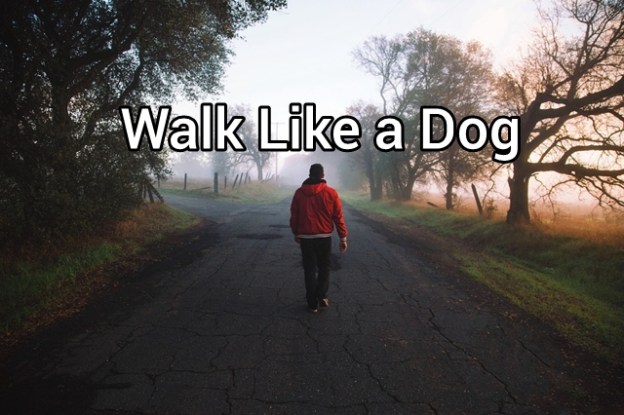
I especially believe in writers walking. Sitting at a keyboard for unending hours is hardly a healthy act for the body, and sitting in a single room, all by yourself with only a cup of coffee and your iPod for company hardly does a thing for refilling the well. Walking takes no special clothing, and almost everyone can do it. You don’t have to walk fast to get the benefit, or even go anywhere special. Walk out your front door and walk along your street or lane or alley or field. Walk like a dog, imbued with curiosity and pleasure in the moment itself: right now, walking!
Every day around 8:30, my chow mix patters into my office and sits down with a heavy sigh. I ignore him at first, usually, since My Writing Is Important and dogs can be walked at any point during the day. Jack disagrees. After ten minutes, he creeps closer to my chair and breathes on my side. Just that hot, hopeful breath, unbelievably annoying. Still, I can often ignore it a little longer.
At which point, he will raise his glittery gold-red paw and put it lightly on my leg. Please? Which he knows I cannot resist.
So I gather up leashes and harnesses and treats and poo bags and off we go, into the neighborhood, on a single 1.5 mile loop around the suburban park system between houses. Every day, the same walk, though we sometimes switch direction. Every day, the dogs—there is a terrier mix, too—can barely restrain their joy at getting out the door, into the world. The world! The great big amazing world! They snuffle the same bushes with fresh curiosity every day, stick their noses in the same prairie dog holes hoping this time to snare some tidbit of baby rodent. They prance along the same routes to lift their legs, offering their comments on the neighborhood dog blog.
It takes roughly a half hour. While the dogs are doing dog things, my writer brain is inevitably unknotting some little issue with the work, whether it is a sentence or a plot, a character issue or a connection. Some days I am tired and don’t want to think at all; often it is those days, when I’m yawning while the dogs snuffle over the juniper bush, that I notice something I haven’t seen. A landscape drawn in colored chalk, perhaps by a knot of teenagers who cheerily waved at me not too long ago at dusk, hoping their friendliness would distract me from the scent of burning cannibis in the air. Or perhaps I notice the border collie on the corner is sticking his nose over the fence and it reminds me of a dog I once loved, who would be a perfect addition to the character who is so flat. If I am walking like my dogs, I see the grove of aspens anew each day, and the sky, and the mountains, changing every hour.
Walking every morning this way shakes out my limbs, gets some sunshine on my face, opens the shutters of my brain and lets a freshening wind blow through. I collect images—that old leaf, that smell of pine needles, spicy and wet, the curtains hanging askew in an upstairs bedroom—and music, of birds, of traffic, of the echoey, lost sound of children playing in the distance, out of sight. When I return to the keyboard, the usual stiffness of a long-time writer is shaken out. My spine is straighter, my oxygen-enriched brain a much more efficient organ, and the work much better, and I’ve worked out some knot of tension in my body, and in the work.
Do you like to walk? Is there a time of day you like best?











 First Edition Design Publishing - a hybrid publisher