Writing Prompt: Take Your Character Shopping

character shopping

I stood in a long line last week while a single checker bumbled through multiple orders, finally requiring a manager to come take over. I’m a notorious snoop (I mean, people-researcher), so I began furtively sizing up the purchases of those around me while I waited. And what I found was a fantastic writing prompt.

One woman had at least a hundred dollars in makeup and a paring knife. Another woman had a huge bag of cat food, a tower of canned beans, and a head of lettuce. Two people in the line were placing bets on how long the line would take.

Stories seemed to be writing themselves right in front of me.

Writing Prompt: The Shopping Trip

How can you use a store as a backdrop for a new short story or a chapter in your work in progress?

As I’ve prepped writing prompts for my writers this week, I realized that what we buy reveals quite a bit about who we are. Plus, any kind of store provides potential for conflict, since people from all walks of life collide with different expectations for their shopping experiences.

John Updike published a story called “A&P” in 1961 about a young grocery clerk named Sammy whose day and life is interrupted by three girls in bathing suits who come in to buy a jar of herring snacks. Their nonconformity disrupts the sleepy grocery store and its patrons, and Sammy imagines their life in his mind, while the manager chides them for being inappropriately dressed. At the end, Sammy makes a bold decision, but the girls don’t see it or appreciate it.

Updike used a commonplace setting to put characters in trouble on several levels. You can use your shopping experiences to build fiction too.

3 Ways to Use a Shopping Trip for Writing Prompt Inspiration

Wondering how to leverage a shopping trip in your stories? Try these three strategies:

1. Use the store as a setting.

Look around the next time you shop. A gas station convenience store provides a much different set of props than a upscale department store. Where are the potential sources of conflict?

Is there only one lemon left in the produce section? Are the aisles overcrowded with cases of water bottles down the middle? Could the overstuffed racks of clothes be easily tipped over?

Any of these details could trigger a story.

2. Use the expectations of shopping as a conflict.

A store provides great material for fiction because everyone who goes to a store wants something. As Kurt Vonnegut famously said,

What is your character after? A discreet murder weapon? The perfect dress? A ham for the annual family reunion that has suddenly disappeared from the meat counter?

Whatever your character wants at the store, keep it out of reach due to availability, another customer, or some other obstacle.

3. Use a character’s purchases as an inciting incident.

Shopping requires decisions, another key for great fiction. What items are on your character’s shopping list? Bananas or apples? Bug poison or cleaning fluid? Shovel or ax? Paper or plastic?

Use these goals to kick off the inciting incident of the story. When a character begins making choices, watch out!

Your Shopping Is Research

Shopping lends itself to story ideas, so the next time you are out, take a minute to soak in the atmosphere, the shoppers, and the potential for conflict. Keep an eye out for your next story!

What did you see on your last shopping trip that would be great in fiction? Share in the comments.

By Sue Weems
Source: thewritepractice

Visit us at First Edition Design Publishing
How to Be More Creative in Your Writing

creative

Here’s an age-old question: is creative writing an art or a craft?

Artistically minded writers will say that writing is most definitely an art while those who who think more analytically will claim writing is a skill, a trade, and a business.

My answer is that writing can be either an art or a craft, and usually it’s both. You can approach writing armed with learned skills and an ability to string words together in a sensible manner, or you can approach writing as a purely creative endeavor and call it your art or your passion.

Both approaches work, and either one can lead to good, strong writing. However, the best writing is a hybrid. It’s both an art and a craft, a marriage between skill and creativity in writing.

Creativity in Writing

You read almost every day. Words appear on your computer screen, your television, on roadside signs, and product packaging. They’re everywhere, and they all make sense.

But every once in a while, you come across writing that simply dazzles you. Have you ever responded emotionally to the way a writer uses language? Have you ever put down a novel and remarked at how impressed you were with the author’s ability to create realistic characters or a riveting plot? Have you ever read a poem and felt transported to another time or place?

That’s the magic of creativity in writing. It captivates the imagination. It’s transcendent.

How to Be More Creative: Tips and Resources for Writers

There’s an old, outdated belief that creativity is talent; it’s inherent. Some of us are born right-brained (creative) and others left-brained (mechanical, analytical). That’s only partially true. Writing can be learned as a skill, but so can creativity. Sure, some people have a more natural inclination toward creative thinking. But anyone can foster and nurture creativity.

So, how do you foster creativity in writing? Below are some tips and resources to get you started. Whether you’re creative by nature and want to enhance your creativity or think you lack creative skills and want to build on them so you can produce better writing, these resources will point you in the right direction.

  1. Marelisa Fabrega’s How to Be More Creative — A Handbook for Alchemists is packed with tools for fostering creative and innovative thinking. It’s one of my favorite creativity resources!
  2. Don’t want to spring for the e-book? You will after you peruse the idea-packed creativity section on Marelisa’s blog.
  3. Find out how asking questions and encouraging curiosity can lead to creative writing ideas.
  4. Head over to the Creativity Portal, where you’ll find tons (and by tons, I mean TONS) of creativity articles, resources, and project ideas.
  5. Nothing gets a writer’s creativity flowing like poetry. If you think poetry is relegated to tweens, academics, and literary elites, think again. Poetry can be raw and brazen, and it will open your mind to new creative insight and strengthen your language skills. Read it, watch it, listen to it, and then try some poetry writing exercises.

Where do you go to turn up the volume on creativity in your writing? Do you have a favorite book or website, a quiet place in the woods or a quaint coffee shop in the city that you like to visit? Do you have any favorite creativity resources? Share your tips and ideas for how to be more creative by leaving a comment.

By Melissa Donovan
Source: writingforward

Visit us at First Edition Design Publishing
The Semifinals Have Begun! Vote in Round Two of the Goodreads Choice Awards

Vote now in the Semifinal Round! »

It’s time for round two!

We’ve tallied more than 1.2 million of your votes from the Opening Round of the Goodreads Choice Awards and sifted through more than 19,000 write-in nominations. Now, your top five write-in candidates in each of the 20 award categories are represented in this Semifinal Round.

Who garnered enough write-in votes to make it into the competition? In the Horror category, it’s a King family affair as Joe Hill’s Strange Weather joins his father and brother’s co-written book Sleeping Beauties. Meanwhile, in Romance, author Penny Reid has two different series now represented in the category.

This is no small matter! Your write-ins represent some serious competition. For example, 2015’s Fiction winner, Go Set a Watchman, was a write-in nominee. And last year, actress Anna Kendrick‘s Scrappy Little Nobody placed second in the Humor category.

This Semifinal Round lasts until Sunday, November 12; your votes now determine the finalists. Share your picks on social media with the hashtag #GoodreadsChoice to help your books break through to the next round!

Semifinal Round (November 7 until November 12)
In this round, choose a book from 20 nominees in each category. These books are the 15 nominees from the Opening Round plus the top five write-ins.

Final Round (November 14 until November 27)
It’s the final countdown! After the Semifinal Round has whittled down the competition, you’ll vote for one of the 10 top nominees in each category.

The winners are announced on December 5

So, to recap, get to voting!
By Hayley
Source: goodreads.com

Visit us at First Edition Design Publishing

3 Wacky Writing Prompts to Spark Your Silly Stories

When your alarm went off today did you hit the snooze button? Did you wake up wishing, “I hope The Write Practice has some silly writing prompts today”? Have you been dreading getting out of bed because you didn’t have a fun writing prompt?

3 wacky

Now you can get out of bed and look forward to today! Run to your writing chair and write for fifteen minutes with these silly writing prompts.

4 Silly Steps to Create Your Wacky Writing Prompt

Follow the steps below to write your unusual story:

Step one

Choose one of the three silly writing prompts listed below.

  1. Drop a raw egg on the floor.
  2. Put your cat in a full bathtub and give it a bath.
  3. The lid flies off of the ketchup as you shake it.
  4. Use all three.

Step two

Add one of these animals to your story.

  1. A bird.
  2. A dog.
  3. A mouse.
  4. Use all three animals.

Step three

Find the first sentence of your story.

The first sentence of your story will be taken from the third book from the left on your bookcase, or from the third book on your Kindle.

Step four

Please add one of these items to your story.

  1. An empty coffee mug.
  2. A hairbrush.
  3. A pot of burnt peas.
  4. Use all three.

Step five

This step is the easiest, and maybe also the hardest.

Write.

Tips to Remember as You Write

Your story will have a beginning, a middle, and an end. Somebody wants something, and your story will help them get it.

Why did the egg fall? Do they have any more eggs? What will happen to the cat getting a bath? Will the cat escape? Who is shaking the ketchup bottle? Were they alone when they were eating?

The world is full of stories. A writing prompt is like a salad bar. If two people go through the salad bar, their salads will never look the same. We all have the same ingredients to use, but we are different people, with different histories and experiences.

What will you write about today? Where will these writing prompts take you? Show me your salad. Write your story. Have fun.

By Pamela Hodges
Source: thewritepractice.com

Visit us at First Edition Design Publishing
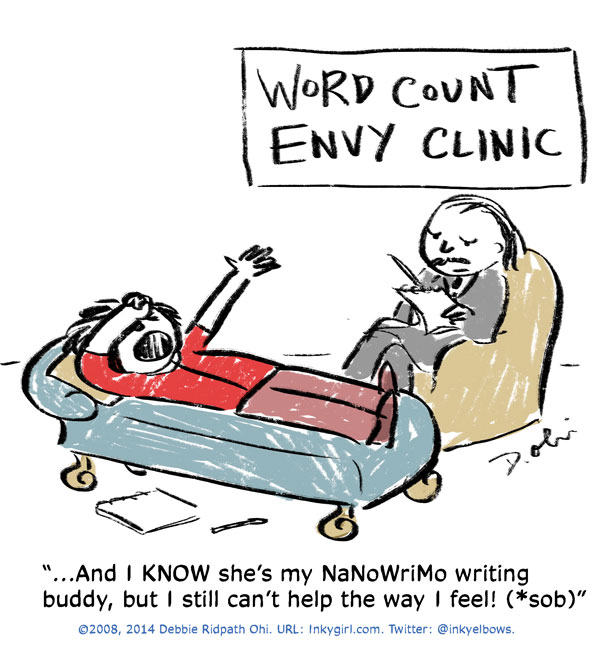
A #Nanowrimo comic: Wordcount Envy Clinic

OHI0153-NaNo-WordcountEnvyClinic-v2-600

Source: inkygirl.com

Visit us at First Edition Design Publishing
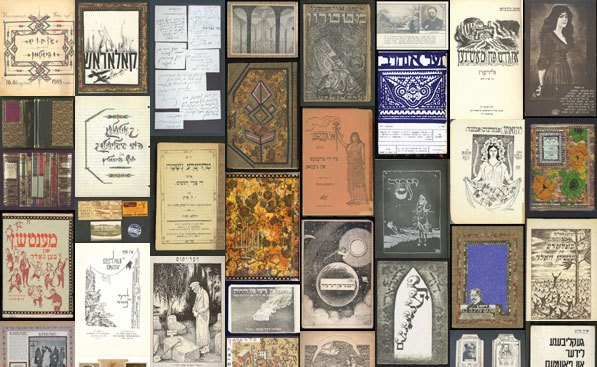
The last Yiddish bookstore in New York City

last

With so many Jewish-Americans living in New York City, and with Yiddish being a language that’s still very much alive, one would think there would be at least a few Yiddish bookstores dotting the metropolitan area. But there’s only one—CYCO (pronounced “SEE-koh”) Publishing House, located in Long Island City, Queens, an area that, while not necessarily part of a Jewish neighborhood, is pretty close to one (Williamsburg, Brooklyn).

Big Apple real estate being what it is today means it’s nearly impossible for independent book stores (or even a Barnes & Noble) to survive. Add to that equation an even narrower focus—a Yiddish bookstore—and its solitary existence begins to make more sense. Though it’s no less dispiriting.

CYCO is the publishing arm of the Central Yiddish Cultural Organization, a group created in 1937 as a forum for Yiddish writers to meet and share their work. This work was largely ignored by most publishing houses, so CYCO members did what writers in the same boat do today—they self-published, and in 1948 opened the first CYCO bookstore in 1948 on Manhattan’s Upper East Side. It would eventually move to several locations over the years before settling in its current Queens home.

The bookstore is now on the seventh floor of a loft building by the Queens Midtown Tunnel; the address is 51-02 21st Street in Long Island City. It’s managed by Hy Wolfe, a native Yiddish speaker from Brownsville, Brooklyn.

According to an article in The New York Times:
“The store has laughably few sales. It is open by appointment only and those hours vary considerably. In one recent year it had 50 sales appointments and took in $11,220, which barely covered Mr. Wolfe’s annual salary.

CYCO_collage

The shoppers include Yiddish students, Russian immigrants, collectors and Hasidim. They can find books not only by Yiddish writers but also classics like Ernest Hemingway’s “The Old Man and the Sea” in Yiddish (“Der Alter un Der Yam“).”

CYCO’s website has information on how you can help keep its doors open (even if the doors are only open by appointment); an online list of Yiddish books and CDs (you don’t have to live in New York to buy a Yiddish book); a history of Yiddish; and links on everything from Yiddish periodicals to Jewish genealogy.

By Heather Quinlan
Source: slushpile.net

Visit us at First Edition Design Publishing

The Best Young Adult Books of November

A lake transformed by the storms of a half-human girl, a hospital where one patient’s silence sparks an intricate mystery, and a deadly world where the last humans must unite for survival…

Welcome to the world of irresistible young adult fiction! Every month, our team takes a look at what books are being published—and how early readers are responding to them. We use this information to curate a list of soon-to-be-beloved favorites, from contemporary tales set in the suburbs to fantasy epics in realms of mystery and mischief.

For November, we’ve got three buzzy debuts as well as a highly anticipated dystopian series from bestselling author Sherrilyn Kenyon. Add the books that catch your eye to your Want to Read shelf and let us know what you’re reading and recommending in the comments.


Kat hates talking to people, and Meg hates being alone. When a year-long science project throws them together, they bond over their mutual love of online gaming.


After a horrific virus nearly wipes out the human race, a small band of teens with unusual abilities takes the planet back from a heartless alien race.


The daughter of the lake, Anda is only half human. She lurks in storms, terrifying sailors and sinking ships, until a haunted young man comes to her for help.


In the wake of her ex-boyfriend’s tragic death, Jessa packs up his things…and begins to question both the relationship and the boy she thought she knew.


The fashion trend of the future: recoding your DNA. Gene-hacking prodigy Cat dives into a world of killer technology to prevent a global catastrophe.


Alternating between “then” and “now” chapters, Hadley’s heartbreaking story of a forbidden love, a fragile family, and a dark, terrible secret slowly unfolds.
By Hayley
Source: goodreads

Visit us at First Edition Design Publishing
Single Quotations – American English Literary style

qu

When do writers use single quotation marks?

  • In NON-Fiction AP style – that is, if you’re writing a newspaper article and the editor puts a title of a book or other such piece of work in the headline
  • In languages other than AMERICAN English – like, Queen’s or British-style
  • In quotes within quotes


Pay Attention, Authors!

If you’re writing an American English piece of literature no matter the style or genre or length, you only use a single quote mark when one of your characters is quoting something while speaking. Seriously. That’s it.

Please, I beg you, Horatio—nevermore use a single quotation mark by its little itty bitty self. There may be an exception, but just…really, don’t do it. Okay?

If you’re using “air” quotes – double; if you’re using internal and feel like you have to use a mark – double; if you’re going for emphasis, gently, once in a very great while – italics.

Example:

Maude uncurled her long legs from the chair and pushed upward. “Honestly, Rupert, if I’d wanted to hear another method of movement, I would have called Helen. She’s always telling us to ‘get a wiggle on,’ or some such nonsense.”

Rupert guffawed. “Ha! Just the other day she told me to move my ‘blooming arse.’ Said she’d heard it in a movie.”


“Ye-es,” Maude drawled. “My Fair Lady. Elisa tries to show how refined she’s become until she attends a race and is about to lose a bet. She ‘shocks’ some of the ladies with her course language, though the ‘gentlemen’ get quite a kick.”

By Lisa Lickel
Source: authorculture.blogspot

Visit us at First Edition Design Publishing

Does Anybody Know What a Bestseller Is?

bestseller

Bestseller lists have long been powerful marketing tools for the industry. In short, they sell books. But they have proliferated, with more lists that group books according to different metrics, and industry insiders are wondering whether they wield as much power as they used to. When nearly any title can be called a bestseller, does becoming a bestseller still matter?

. . . .

Historically, bestseller lists were broken down along two major lines: format and category. The largest groupings were nonfiction and fiction. Those groups were then broken down by the three major print formats: hardcover, trade paperback, and mass market paperback. The introduction of the fourth format—e-books—disrupted the way bestseller lists are compiled, as it did many other parts of the industry. Because e-books are predominantly sold online and not in stores, their sales can’t be tracked in the same way that print sales are: by collecting data from physical retailers.

Further complicating the bestseller list landscape was Amazon’s introduction of multiple bestseller lists. The e-tailer, which tracks sales of its titles in real time, publishes a wealth of lists, broken down by format and also by multiple subcategories. There are “overall” print and Kindle bestsellers on the site, but also numerous subcategories like “Crafts, Hobbies & Home,” “Humor & Entertainment,” and “Law.”

. . . .

The New York Times famously pulls data for its lists from a select and secret sample of retailers, and Amazon, while reporting its print sales, does not, for the most part, disclose sales of e-books. The lists that are arguably the most transparent, like PW’s, rely on NPD BookScan’s point-of-sale data, which tracks 80%–85% of print sales in the country but doesn’t include data on e-book sales. Other news outlets, such as the Wall Street Journal and USA Today, run their own lists, and organizations like the American Booksellers Association produces multiple lists, including an overall list of bestsellers in ABA bookstores and regional lists.

The sheer number of lists and Amazon’s decision not to widely share its e-book sales figures (despite the fact that BookScan has for years asked the company to take part in its sales aggregation program) means that there is not a true national bestseller list that can definitively identify what the top-selling books are across all formats in a particular week.

. . . .

Ironically for booksellers, titles dubbed bestsellers aren’t necessarily popular with customers.

Link to the rest at Publishers Weekly

First and foremost, as the OP indicates, bestseller lists are marketing tools, particularly for traditional publishers and meatspace bookstores.

But what good is a marketing tool if you can’t control it?

It’s an open secret that traditional bestseller lists like the Times and WSJ lists can be and are gamed to create artificial bestsellers.

Is there a downside for engaging in such gaming? Who is going to punish fakers and how is a respected independent authority going to know for certain that a book that made a bestseller list was not, in fact, a bestseller?

In this respect, the NYT’s well-known secrecy about how its bestseller lists are created is, for PG, an indication that the lists aren’t to be trusted. Transparency would permit an interested observer to examine the NYT methods for errors and biases. If we’re to trust the NYT lists, how about an audit by an independent outside accounting firm?

An independent audit will never happen because the NYT likes its black box. Numbers of unknown quantity and quality go in one end of the box and ratings come out the other. It’s the definition of obscurantism.

Why is a newspaper even in the business of compiling a bestseller list? Why does the NYT exclude some of the biggest-selling books because they’re “perennial sellers”? (see the NYT methodology below) Does that mean a book can be on the NYT bestseller list for three months, then drop off the list because it’s become “perennial” even though its sales have continued at the same or higher levels?

Further, PG isn’t certain what a bestseller is. Is it #1 in a category? #1 overall? Is it a book that makes it into the top 25 bestsellers on somebody’s list?

If a book is #1 for a day or an hour, is it a bestseller?

While this is not legal advice, PG suggests it would be difficult to charge and convict a publisher or an author for false advertising for using the terms, “bestseller” or “bestselling novel” or something similar.

Here’s the NYT’s current disclosure of its methodology for compiling its lists. PG found lots of wiggle room and many gray areas, but perhaps he’s overly suspicious.

A version of this Best Sellers report appears in the November 12, 2017 issue of The New York Times Book Review. Rankings on weekly lists reflect sales for the week ending October 28, 2017.

Rankings reflect unit sales reported on a confidential basis by vendors offering a wide range of general interest titles. Every week, thousands of diverse selling locations report their actual sales on hundreds of thousands of individual titles. The panel of reporting retailers is comprehensive and reflects sales in stores of all sizes and demographics across the United States.

The book selling universe is comprised of well-established vendors as well as emerging ones. The sales venues for print books include many hundreds of independent book retailers; national, regional and local chains; scores of online and multimedia entertainment retailers; supermarkets, university, gift and big-box department stores; and newsstands.

E-book rankings reflect sales from leading online vendors of e-books in a variety of popular e-reader formats and are included in our combined fiction, combined nonfiction, advice, children’s series and monthly lists. Titles are included regardless of whether they are published in both print and electronic formats or just one format. In general, publisher credits for e-books are listed under the corporate publishing name instead of by publisher’s division or imprint, unless by special request.

The appearance of a ranked title reflects the fact that sales data from reporting vendors has been provided to The Times and has satisfied commonly accepted industry standards of universal identification (such as ISBN13 and EISBN13 codes). All identities, anecdotal, contextual, and other information about the retail sales of any title, as well as overall sales data, are provided with the expectation and assurance of confidentiality by every vendor and are protected by Non-Disclosure Agreements.

Sales are defined as completed transactions by individuals during the period on or after the official publication date of a title. Institutional, special interest, group or bulk purchases, if and when they are included, are at the discretion of The New York Times Best-Seller List Desk editors based on standards for inclusion that encompass proprietary vetting and audit protocols, corroborative reporting and other statistical determinations. When included, such bulk purchases appear with a dagger (†).

Publishers and vendors of all ranked titles must conform in a timely fashion to The New York Times Best-Seller Lists requirement to allow for examination and independent corroboration of their reported sales for that week. Sales are statistically weighted to represent and accurately reflect all outlets proportionally nationwide. An asterisk (*) indicates that a book’s sales are barely distinguishable from those of the book above.

Among the categories not actively tracked at this time are: perennial sellers, required classroom reading, textbooks, reference and test preparation guides, e-books available exclusively from a single vendor, journals, workbooks, calorie counters, shopping guides, periodicals and crossword puzzles.

The New York Times Best Sellers are compiled and archived by The Best-Seller Lists Desk of The New York Times News Department, and are separate from the Culture, Advertising and Business sides of The New York Times Company.

Source: thepassivevoice

Visit us at First Edition Design Publishing

3 Reasons Why You Shouldn’t Quit NaNoWriMo

You’ve probably been told: It’s National Novel Writing Month, or “NaNoWriMo!”

3 reasons

Whether you’re already participating, or watching on the sidelines, you probably know that the goal of this movement is to get writers to draft a 50,000-word novel in just 30 days. In case you hate math, that’s a devilish 1,666 words per day.

3 Reasons Why You Shoudn’t Quit NaNoWriMo

Writing a novel in a month is a wonderful idea.

But it’s hard for a multitude of reasons, and the temptation to give up and just “do it over time” can be really appealing, especially as we approach Day 8 of the journey.

I know it’s hard.

But quitting, or choosing to simply abstain, is the worst thing you can do right now if you have a passion for writing.

Here are three reasons why.

1. Quitting Builds Muscle Memory

Quitting provides a shot of instant gratification. It eases the burden and seems to be the solution to a long-term problem.

But giving up builds muscle memory. It is an active decision requiring only passive action. These passive choices get very comfortable over time, and our muscles—both physical and mental—get very used to it!

Think about quitting a diet or an exercise regimen. Both choices require the lack of an action.

Yet continuing the diet (choosing to shop for, cook, and consume healthier meals) requires conscious choices, rebuilding the muscles in your mind, stomach, and body.

The same is true of exercising. Muscles are broken down and rebuilt over a long period of time, due to conscious choices. But if you choose not to exercise, the muscles still learn, and getting back to the gym only gets harder over time.

Whether you quit NaNoWriMo or not, you are teaching your muscles. Make sure you’re building muscles you want to live with!

Don’t quit. Because the “I’ll-Do-It-Later” muscle will never write a novel, never build an email list, never pursue guest posts and podcast interviews, never do readings or appearances, and never go all-in on the dream of writing and sharing that gift with the world.

2. Abstaining Feeds the Critic, Not the Artist

Have you ever read someone’s story and thought, I could do better?

But then we sit down and try, and realize that it’s not as easy as we thought.

This is the duality of Critic vs. Artist. When we sit by and observe, we are not investing in our Artistic selves. Rather, we are giving the Critic his day, allow him to safely watch and judge others, over and over.

Here’s a great diagnostic for whether or not you are giving in to the Critic: Do you frequently say cynical or pessimistic things about other people’s work? Do you see the negative in everything?

If the answer to either of those is “Yes,” then you’re probably spending too much time on the sidelines.

So stay in the game, or get in while the month is young. Jump into NaNoWriMo today if you’re not already. Recommit if you’ve started to falter.

And don’t worry about reaching the 50,000-word goal! What is your goal? What is your dream? Don’t care about what everyone else will think of you—they aren’t living your dream.

Besides: Critics worry what everyone else thinks. Artists focus on telling a great story.

3. Your Choices Reveal Your Character

Many will quit or abstain from NaNoWriMo because “I can’t get to 50,000 words,” or “Novels aren’t my thing.”

This reveals a great deal about one’s character, because excuses are an easy escape route.

When people let arbitrary rules dominate their artistic lives, they doom themselves to wishing and chasing rather than sharing and community-building.

Perhaps your art is poetry. Why not commit to writing thirty poems, one a day?

What if your medium is flash fiction? How about three pieces per day, totaling ninety in just one month? You could publish that, no problem.

Or perhaps you’re the nonfiction coach, eager to launch a blog about something that fascinates you. Write and publish a post a day. Gather momentum. Share it everywhere. See what happens.

We can’t let the “rules” of NaNoWriMo become excuses to quit or disinvite ourselves from risky, rewarding opportunity.

Real artists, those who are wild about telling stories and sharing them with people, don’t let excuses hold them back. They bend excuses to their will and transform them into challenges. And challenges are thrilling because they always make us better.

Don’t let excuses be your escape ramp. Don’t flee from the truth that your artistic future is truly in your hands, and your hands alone.

Don’t worry about NaNoWriMo’s 50,000 words. Find your 50,000 words, whatever they may be.

Remember the Point of NaNoWriMo

According to NaNoWriMo’s Mission Statement, the goal of the event is to “provide the structure, community, and encouragement to help people find their voices, achieve creative goals, and build new worlds—on and off the page.”

It’s not about publishing a bestselling masterpiece.

It’s not about taking advantage of your “one shot” at greatness.

It’s not about impressing your friends or writing community.

It’s about creating. It’s about community, encouragement, building, and finding our voices, within a word-requirement that will test our resolve to fulfill our calling.

NaNoWriMo even acknowledges that this isn’t just about writing—it’s about YOU, and who you are “off the page.”

Something magical happens when we commit to our passion, hustle, and sacrifice for the goal of telling powerful stories that transform us into better people.

It’s something life-changing, too: We mature, and transform into the men and women we long to become.

Remember: NaNoWriMo isn’t about the word count, or the final product.

It’s about your soul.

By David Safford

Source: thewritepractice

Visit us at First Edition Design Publishing