Tag Archives: writing tips

This Surprising Reading Level Analysis Will Change the Way You Write

First Edition Design eBook Publishing

Publisher – Aggregator – Master Distributor

Great article from Shane Snow from over  at The FreeLancer

Ernest Hemingway is regarded as one of the world’s greatest writers. After running some nerdy reading level stats, I now respect him even more.

The other day, a friend and I were talking about becoming better writers by looking at the “reading levels” of our work. Scholars have formulas for automatically estimating reading level using syllables, sentence length, and other proxies for vocabulary and concept complexity. After the chat, just for fun, I ran a chapter from my book through the most common one, the Flesch-Kincaid index:

I learned, to my dismay, that I’ve been writing for 8th graders.

Curiosity piqued, I decided to see how I compared to the first famous writer that popped in my head: Hemingway. So I ran a reading level calculation on The Old Man and the Sea. That’s when I was really surprised:

Apparently, my man Ernest, the Pulitzer- and Nobel Prize-winning novelist whose work shaped 20th-century fiction, wrote for elementary-schoolers.


Read the rest at The FreeLancer

First Edition Design eBook and POD Publishing

 Visit us at First Edition Design Publishing

Point of View in Writing

Print On Demand First Edition Design Publishing

Publishers – Aggregators – Master Distributors

As an editor, point of view problems are among the top mistakes I see inexperienced writers make, and they instantly erode credibility and reader trust.

Point of View in Writing

All stories are written from a point of view. However, when point of view goes wrong—and believe me, it goes wrong often—you threaten whatever trust you have with your reader and fracture their suspension of disbelief.

However, point of view is simple to master if you use common sense.

This post will define point of view, go over each of the major POVs, explain a few of the POV rules, and then point out the major pitfalls writers make when dealing with that point of view.

Read more at The Write Practice


First Edition Design eBook and POD Publishing

 Visit us at First Edition Design Publishing

On Writing: Interruptions, Blessings, & Minions

First Edition Design Publishing

Publisher – Aggregator – Master Distributor


From the pages of Seekerville with guest Laura McNeill.

An author’s life is a delicate balance. Writing time is precious, and many times, difficult to come by. It’s especially true when you have children, a spouse, a full-time job, the laundry, and (for me) graduate school.

As the single mom of two boys, I’m often in the midst of writing, revising, or doing homework when I hear “Hey, mom?”

My younger child, who’s ten, will ask about an upcoming play date, a lost toy, or if I can help find the popcorn when he needs a snack. My older son, who’s 17, often wants the car keys, has a question about his upcoming college courses, or needs advice on installing anti-virus software on his computer.

I was thinking about balancing writing and interruptions while in church this morning. Interestingly, our pastor’s message hit home.  His message was “Made to Serve,” the fifth of a five-part series on popular summer movies. This week’s film, Pixar’s The Minions, tells the story of the adorable and precocious yellow creatures who seek the dastardliest villain on earth to obey.

Using the movie as a humorous example, our pastor’s point was this: We are created to serve. We are God’s workmanship, created in Jesus Christ to do good works – Ephesians 2:10. He spoke about Jesus setting an example for all of us—after all, the Son of God was never too busy to perform miracles. Jesus paused in the middle of a wedding celebration to serve the bride and groom, turning water into wine. And Mark 10: 48-49 tells us, Jesus stopped and said, “Call him,” taking time to cure Bartemaeus’ blindness on the way out of Jericho.

So, how do we, as authors, write and serve? Here are my thoughts about writing, goals, interruptions, and life:

– See more at: http://seekerville.blogspot.com/2015/07/on-writing-interruptions-blessings.html#sthash.dBfNI8us.dpuf


First Edition Design eBook and POD Publishing

 Visit us at First Edition Design Publishing

HOW TO FINISH YOUR DAMN BOOK

Ebook Publishing Design Edition First Graphic Aggregators Ebooks Publishers Distribution POD Designing Approved Aggregator How Services Academic Distributor Chapter Submission Professional Firsteditiondesignpublishing.com published book market

Publisher – Aggregator – Master Distributor

... and not enough of this.

At the beginning of this year I wrote a post for that treasure trove of writing and publishing information, Writing.ie, about why you should finish your damn book. You can read that post here. It proved really popular. So popular that it seems to me like a lot of you are in the same place I was until last summer: wanting nothing more than to have finished your book, but finding yourself doing everything but writing it.

It’s all well and good for me to tell you why you should finish your book (nutshell: a finished book is the one thing everyone who ever got published/successfully self-published has in common) but how do you do it? How do you overcome procrastination? How do you finish your damn book?

I only know what worked for me, but maybe you’ll find something in there that works for you. Let’s see…

Read the rest at Catherine Ryan Howard


First Edition Design eBook and POD Publishing

 Visit us at First Edition Design Publishing

Seven Words of Writing Wisdom

Ebook Publishing Design Edition First Graphic Aggregators Ebooks Publishers Distribution POD Designing Approved Aggregator How Services Academic Distributor Chapter Submission Professional Firsteditiondesignpublishing.com published book market

Publisher – Aggregator – Master Distributor
Serving Publishers & Independent Authors

Friday, October 31, 2014
From Glynna Kaye @ The Seekers


Seven Words of Writing Wisdom


Words of writing wisdom…they were everywhere at the September 2014 American Christian Writers Conference in Saint Louis!

.

Wherever I turned—from the opening address, to the keynote speaker, to workshops, to chats with fellow writers, all the way to the closing remarks—I found “writerly” wisdom to gather and tuck away for later contemplation.

.

Since this is Seekerville’s SEVENTH birthday (!), I’ve chosen seven “words” of writing wisdom gleaned from various ACFW 2014 venues to share with you today.

– See more at: http://seekerville.blogspot.com/2014/10/seven-words-of-writing-wisdom.html#sthash.A0TkKLUo.dpuf


First Edition Design Publishing is the world’s largest eBook and POD (Print On Demand) distributor. Ranked first in the industry, First Edition Design Publishing converts, formats and submits Fiction, Non-Fiction, Academic and Children’s Books to Amazon, Apple, Barnes and Noble, Sony, Google, Kobo, Diesel, 3M, Ingram, Baker and Taylor, Nielsen, EBSCO, and scores of additional on-line retailers, libraries, schools, colleges and universities. The company also has a POD division, which creates printed books and makes them available worldwide through their distribution network. The company is a licensed and approved Aggregator and holds licenses with both Apple and Microsoft.

Visit: www.firsteditiondesignpublishing.com

The Bait

First Edition Design eBook Publishing

Originally posted WEDNESDAY, SEPTEMBER 3, 2014

By the good folks at AuthorCulture

There’s a reason it’s called a “hook”. We bait our hook with the best story in us, cast it into the great ocean of readers, and then hope to get a bite. I have daily access to nearly 80,000 books (I work at a library). Since the day I heard that writer describe the “tossing” process, I’ve developed the habit of reading the first sentence of many, many books over the course of a work day. The stories that make me want to turn the page all seem to have one thing in common. They create a question that I must know the answer to. Our local writer’s group has hosted a noted western writer as guest speaker several times. His discussion about the publishing process left an indelible impression on me. He spoke of visiting his publisher in New York where he hung around the offices after a meeting. The staff had had a very long day, yet they ordered pizza and then kicked back to go through the slush pile, a huge backlog of unsolicited manuscripts. He said he watched as they “tossed” one manuscript after another. If the first sentence or two didn’t grab them, well, “that’s all she wrote”, so to speak.

Does this make you want to read on? “It dropped out of the sky at 3:41 p.m. central daylight time on Friday, May 10, 1963, into a field in southeastern Oklahoma eight miles west of Tishomingo.”  What, pray tell, dropped out of the sky? That’s the first sentence from Five Days in May by Ninie Hammon.

“I remember…I was supposed to be sad that day.” Why? That’s from Dan Walsh’s The Discovery.

“The screech of brakes split the silence just before the Buick smashed through the guardrail and tumbled down the steep embankment.” Nicola Beaumont’s Silent Witness makes me wonder who wrecked and whether they made it or not.

All three examples caused me to nibble and download to my Kindle.

So, what question are you creating in the minds of your readers with the first sentence or two of your WIP? I’d love for you to post some of your first sentences. Here’s mine:

“Bailey’s not going to like this. Dizziness swirled my brain to jelly the moment I realized I’d have to tell her.”

Go!


POSTED BY JODY AT 7:00 AM

First Edition Design eBook Publishing


Visit: www.firsteditiondesignpublishing.com

25 Word Lists for Writers

Ebook Publishing Design Edition First Graphic Aggregators Ebooks Publishers Distribution POD Designing Approved Aggregator How Services Academic Distributor Chapter Submission Professional Firsteditiondesignpublishing.com published book market

Publisher – Aggregator – Master Distributor
Serving Publishers & Independent Authors

Reposted from:

Beyond Paper Editing

Editors’ tips for writers

Thursday, 10 July 2014

by Corina Koch MacLeod
@CKmacleodwriter

I like lists—especially word lists. They help me to make sense of the world. Below is a round-up of useful word lists for writers. Use them to check for and address potential problems in your writing.

Needless Words

We all do it—use words that clutter up our writing. If you know what those words are, you can hunt them down and obliterate them.

10 Words to Cut From Your Writing at Entrepreneur

Needless Words at Tech Tools for Writers. This word list is nicely packaged in a macro that you run in Microsoft Word.* Talk about a timesaver.

*See this 30-second video for how to add a macro to Word.

Craft Words

There are parts of the writing craft that many writers struggle with at some point in their writing journey—telling too much instead of showing, for example. Some clever word wranglers have taken the time to create word lists that can help you to attend to common writer missteps:

TellingWords at Tech Tools for Writers—identifies words that may indicate instances of telling

-ly Words at Tech Tools for Writers—highlights adverbs often used in dialogue, which may indicate that you’re telling instead of showing. Often, he said and she said will suffice.

Historical Words

If you’re writing historical fiction, it makes sense to familiarize yourself with vocabulary from the time period in which you’re writing. These word lists will take you back in time.

100 Words that Define the First World War at the Oxford English Dictionary

Flapper Speak: Dictionary of Words from the 1920s and 1930s, by Margaret Chai Maloney

Glossary of 80s Terms at In the 80s

Genre Words

Some genres of writing have their own vocabularies. Learn the words genre readers will expect to read.

A Glossary of Science Fiction Jargon, by Eric S. Raymond

Sensual Words for Romance Writers, by Annette Blair

Gangster Glossary at Night of Mystery

Hard Boiled Slang Dictionary at Classic Crime Fiction

English Dialect Word Lists

For tips on writing with dialects, refer to How to Write Authentic Dialects, by Arlene Prunkl. These word lists will take you the rest of the way, eh!

A List of Quaint Southernisms at Alpha Dictionary

Glossary of English and British Words at Project Britain

Glossary of Canadian English at Wikipedia.org

Words from Other Languages

If you’re writing a book set in a another place, or if a character’s cultural background is of importance to the story, seasoning your story with the occasional foreign word or phrase is de rigeur.

French Phrases Used in English at the Phrase Finder German Loan Words in English at About.com

Russian Words Used in English at Daily Writing Tips

Spanish Words Become Our Own at About.com

The Yiddish Handbook: 40 Words You Should Know at Daily Writing Tips

Confusable Words

It’s easy to confuse words that look or sound similar, or that mean something other than what you think they mean. These lists will help you to sort out some of the more common confusables.

Misused Words by Daily Writing Tips

Commonly Confused Words by Oxford Dictionaries

10 Words that Don’t Mean What You Think They Do at Daily Writing Tips

Misspelled Words

Your word processor’s spell check can catch most of your misspellings, but not all of them. Here are some words that sneak through spell check or trip up writers.

Common Misspellings

Words Often Misspelled Because of Double Letters

There are many more lists that I can add to this round-up. If you have a favourite word list, tell us about it in the comments below.


First Edition Design eBook Publishing

Visit: www.firsteditiondesignpublishing.com

Are Writers Born Or Made?

Ebook Publishing Design Edition First Graphic Aggregators Ebooks Publishers Distribution POD Designing Approved Aggregator How Services Academic Distributor Chapter Submission Professional Firsteditiondesignpublishing.com published book market

Publisher – Aggregator – Master Distributor

by JOANNA PENN on AUGUST 9, 2013, from The Creative Penn!

When we start writing,  it can be daunting to read the amazing books by our author heroes and wonder how we can ever be that good.

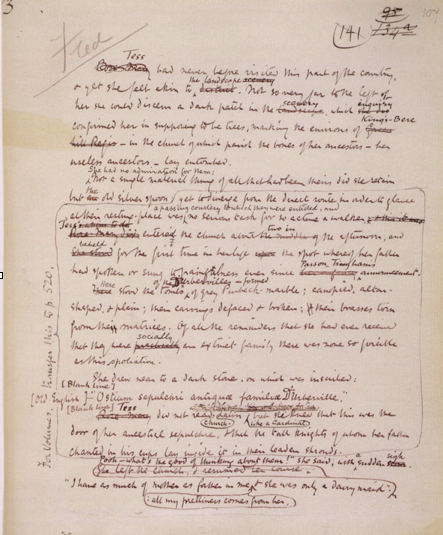
Thomas Hardy's Tess

Thomas Hardy’s edited manuscript of ‘Tess of the D’Urbevilles, one of England’s greatest writers

Surely, for them, the words just flowed perfectly from brain to page with effortless grace?

But I have seen Thomas Hardy’s manuscript of Tess in the British Library. Check out that editing! Even the greats went through the same creative process as we do. Today’s guest article from Chris Allen explores this further.

Many writers dream of writing from a young age, but are we born with a literary gift, or is it a skill honed over many years?

It’s easy to regard the celebrated thriller authors of our time – Ian Fleming, Sir Arthur Conan Doyle, Frederick Forsyth, John Le Carré et al – as being superhuman at their craft and having innate talent. We see the countless reprints with the special edition covers, but we don’t see the knock-backs, the evolution of their writing style, and the hard slog they too went through on the road to success.

My first attempts at writing were woeful.

Never what you’d call a disciplined student – school always seemed to get in the way of life – once I decided writing was my calling, I had a fanciful notion that ‘it’, whatever it was, would come naturally. It didn’t.

Discovering Ian Fleming’s The Man With The Golden Gun in the school library as a young teen was the moment that the fanciful notion became a quest.  Hoping to achieve what Bond’s creator had done – building a world of international espionage, heart-stopping action, complex characters and intrigue, I opted to take the experience angle, therein avoiding study, to write my own brand of thrillers. All of which prompts the question:

How do well-intentioned, aspiring writers tread the path to becoming great storytellers?

Chatting recently with a couple of popular Australian authors, namely Greg Barron (author of Savage Tide & Rotten Gods) and Luke Preston (author of Dark City Blue), who with myself and Tony Park are co-founding members of the Action Thriller Writers Association of Australia (ThrillerEdge.com), I wanted to find out how they had honed their abilities. Was it a walk in the park for them? Or was it, like most of us, decades of learning?

Words are Addictive

Luke Preston’s stories have been proclaimed “Noir on No-Doz.” He first put pen to paper around the age of sixteen and the pen hasn’t left his hand since. For Luke, “Writing is not about achievement. It’s about survival. The words are an addiction for which the only cure is getting the words on the page.”

Greg Barron, recently described as “a political thriller writer at the very top of his game,” embarked on his path to publication while in his mid-thirties, and the journey so far has taken more than a decade.

Greg says, “Not only am I not a natural, but I’m a slow learner. There was a moment when I realised that great writing requires both clarity and imaginative embellishment in equal measure. That was about seven years after I started writing. My first drafts are clunky and terrible. Reading them over for the first time is depressing.” Despite that, Greg’s teachers identified early on that he was skilled at putting words together and told him to do something with it.

Meanwhile, never a great student, actually learning to write wasn’t something I did (or ever wanted to do) in a formal sense. Although, having done a fair bit of writing throughout my professional career – in military, law enforcement and government, where the descriptions were necessarily short and sharp, and the facts accessed quickly – this helped in honing my style.

What is Talent, Anyway?

The most important things in life are only achieved with practice, patience and commitment. To some, including me, writing is no different: the concept of natural talent has been profoundly absent in most aspects of my life, instead having to work for everything, which, in itself, is not a bad state of affairs.

There were, for example, at least six full versions of the manuscript that eventually became my first novel, Defender. That process, along with the proofreading, editing, and re-editing, is the only real creative writing development I’ve done.

Luke Preston grew up in the decade that invented Atari and home video, commenting, “Any kid with a pen in his hand instead of a joystick is probably going to be considered talented.” But Luke was a storyteller from early on, and determined each word would be better than the last.

Greg recognizes now that determination was the key ingredient necessary to complement those early assessments of his writing potential, saying, “I don’t think it was evident that I would have the dogged persistence necessary to write a good book, as I had a mind that jumped around all over the place.”

It Takes One Million Words

Teachers, playwrights, university lecturers and agents can act as inspiration during a writer’s apprenticeship, helping to spur burgeoning talent along. Another fool-proof trick is to read widely, but remember to keep your own literary heroes close as a daily reminder of the great heights we writers reach for.

Luke Preston observes that “the hardest part of writing is learning how to write like you.” He says, “I’m not sure there’s such a thing as a natural writer. To me it’s like saying that somebody was born a natural plumber. Storytelling is a craft and a trade. It takes ten years and one million words to build a good writer and when you’re not good, you’re bad.”

As an unabashed Fleming and Conan Doyle fan (some would hazard to say nut), it’s been a tortuous journey in terms of my desire to emulate their creative strengths. By way of an origin point for my inspiration, a copy of Casino Royale, Fleming’s first novel, has permanent residence on my writing desk.

That said, success on their scale has never been my yardstick. I’m drawn to the way Fleming and Conan Doyle created iconic characters based upon their own life experiences. By putting myself at the core of the principal character, while drawing on other interesting characters, both real and fictional, I make my protagonist a hybrid of all those things.

Luke Preston has benchmark writers whose books live on his desk. He says, “When I’m tired, hungover, fed up or just downright lazy, I dip into those books that remind me of the calibre or work I’m up against.”

While Luke currently has copies of Less than Zero by Bret Easton Ellis and L.A. Confidential by James Ellory next to him, Greg Barron would love to write as vividly as Wilbur Smith, with the beautiful prose of F Scott Fitzgerald, and the detail of Leon Uris. He says, modestly, “In reality, I’ll fall short on all three counts!”

Be Your Best Writer

As creative capitalists, we are each on our own path, some days trudging through treacle, others where we take rare moments of literary flight, so this notion of reaching the apex of a writing career is debatable. More likely is the realization of an idea of us as writers, as it was first dreamed and imagined those many years ago.

Writing words has been a profession for Greg, in terms of his habits and attitudes, long before being published. Today, he has a vision of himself, “at my desk, attempting to do my best every day, falling short most of the time, but persisting.”

Luke Preston strives to be the best writer he can be. He says, “If I had tried to write like anybody else it just wouldn’t have worked. A writer is an accumulation of their experiences, childhood, fears, desires and favourite colours.”

To me, being a successful writer meant reaching that time of life when one could look contemplatively out of a window, recalling people, places and life experiences, while wrestling with how those things might be presented on the page. To some extent, that’s happening, although I’m yet to wear a dinner jacket or drink martinis while doing it!

Between us, we may have published five books and written millions of words over many decades, but success remains an abstract concept.

As Preston says, “I’m not convinced that overnight success exists in the business of words. I’d wager that the writer who believes they were, secretly has a couple of unreadable manuscripts hidden away in their bottom drawer.”

Do you think writers are born or can we learn over time? Please do leave your comments below.

About the Author

chrisallenBefore penning his Alex Morgan espionage series, Chris Allen served as a Paratrooper with three Commonwealth armies; undertook humanitarian aid in East Timor; protected Sydney’s iconic Opera House sails post 9/11; and as Sheriff of New South Wales, held one of Australia’s oldest law enforcement appointments.

Chris’s first novel in the Intrepid series, Defender, was self-published before being re-released by Momentum Books with his second novel, Hunter, at the end of 2012. Both novels rocketed to the top of the charts on iTunes and Amazon with Hunter becoming a bestseller and there is a US film / TV franchise based on his novels in development. His third title, Avenger, will be published next year.

You can read the full transcripts of each author’s interview over at the intrepidallen.com/blog.

Defender: Intrepid 1 is on Amazon.com: http://amzn.to/15jGQr4
Hunter: Intrepid 2 is on Amazon.com: http://amzn.to/12lQIhV

Visit: www.firsteditiondesignpublishing.com

Ebook Publishing Design Edition First Graphic Aggregators Ebooks Publishers Distribution POD Designing Approved Aggregator How Services Academic Distributor Chapter Submission Professional Firsteditiondesignpublishing.com published book market

John Grisham Writing Tips #FED_ebooks #author #writer #indieauthor #teacher

First Edition Design Publishing

Writing Tips From John Grisham


About First Edition Design Publishing:

Ebook Publishing Design Edition First Graphic Aggregators Ebooks Publishers Distribution POD Designing Approved Aggregator How Services Academic Distributor Chapter Submission Professional Firsteditiondesignpublishing.com published book market First Edition Design Publishing is the world’s largest eBook and POD (Print On Demand) book distributor. Ranked first in the industry, First Edition Design Publishing converts and formats manuscripts for every type of platform (e-reader). They submit Fiction, Non-Fiction, Academic and Children’s Books to Amazon, Apple, Barnes and Noble, Sony, Google, Kobo, Diesel, 3M, Ingram, Baker and Taylor, Nielsen, EBSCO, and over 100,000 additional on-line locations including retailers, libraries, schools, colleges and universities. The company’s POD division creates printed books and makes them available worldwide through their distribution network. First Edition Design Publishing is a licensed and approved Aggregator and holds licenses with Apple and Microsoft.

Visit: www.firsteditiondesignpublishing.com
Ebook Publishing Design Edition First Graphic Aggregators Ebooks Publishers Distribution POD Designing Approved Aggregator How Services Academic Distributor Chapter Submission Professional Firsteditiondesignpublishing.com published book market

First Edition Design eBook Publisher Aggregator Master Distrbutor