The 3 Secrets to Addictive Fiction

In today’s unbelievably competitive industry, how can you make your fiction the best?

Addict your reader.

Make reading your stories and novels an addictive experience. The reader who is addicted to your writing will plunge into your fiction and then fight to stay there forever.

But how can you addict your reader to your stories?

Use the secrets that all great authors have used throughout the ages to give the reader exactly what they want. There are literally thousands of these secrets, but in my work as an independent editor I have prioritized them and categorized them into the simplest possible arrangement—three basic categories.

I teach fiction through its three aspects:

1. character
2. plot
3. prose

However, beyond than that, I teach the secrets to making these three aspects addictive:

1. unforgettable character
2. inescapable plot
3. mesmerizing prose


Secret #1 Unforgettable Character

The most fundamental truism of fiction is that all great plot grows out of character.

You can design any type of plot you like. However, if it’s not grounded in the character of your protagonist, it will be nothing but a mish-mash of events from which the reader can disengage at any time and walk away.

On the other hand, you can design almost no plot at all, and if it’s grown entirely from the character of your protagonist, the reader will not only be addicted to your work, they’ll convince all their friends and relatives to become addicted as well.

Ask yourself:

How did James Bond become a cultural icon, although his plots are repetitive and he must frequently be rescued by a young woman he’s just met? What made Agatha Christie a phenomenon of her genre, although her mysteries so often hinge on her villains’ implausible acting skills and even authorial cheating? Why do we still love Cathy and Heathcliff, although Wuthering Heights is so bizarrely organized and consists almost entirely of a laundry list of inhuman behavior?

Because Bond, Miss Marple, Hercule Poirot, Cathy and Heathcliff are the unforgettable characters from which their plots grow.

This means that character is where we always start.

So how do we make this character unforgettable? That work is based upon the character’s conflicting internal needs. These needs must be internal or they won’t be powerful enough to fuel an entire novel. They must conflict, or there won’t be any climax to this story. And they can be explored most effectively through the three basic human needs: love, survival and justice.

There’s a lot to discuss about a protagonist’s conflicting internal needs. And I’ll teach you all about them in my 2nd guest post for Write to Done: The 2 Steps to Creating Unforgettable Character.

Secret #2 Inescapable Plot

Now what is this unforgettable character going to do?

A story—short fiction or novel—is, at its most fundamental, simply an opportunity for the reader to spend time with your unforgettable character. To make friends with them. To bond. To allow this character to become a part of their life.

This means you must design a plot that gives the freest possible reins to the protagonist’s character—exploring it, exposing it, delving into it to reveal its most intriguing and hidden facets.

The paperback genre industry of the early 20th century can teach us everything we need to know about how to design plot. Those authors cranked out their genre novels regularly and reliably, treating fiction as a day job to which they showed up and worked five days a week, 45-50 weeks of the year.

What do readers get out of genre fiction?

A plot that hooks them quickly, takes them for a thrilling whirl, then throws them off a cliff.

This is rooted in our human addiction to things that come in threes: the simplest construct that exists that also retains a crucial layer of complexity.

And this is why I teach three-act structure: Hook, Development, Climax.

Within these three acts, we can refine our design based upon the importance of climax. Each act has a unique purpose, to which we can devote a full half of that act. And each act also needs a climax, to which we can devote the other full half of that act. That’s how important climax is.

Once we have these six structural pieces, we can refine our design even further by breaking each piece into six more pieces. In this way, we can quickly and easily design a plot of 36 pieces along a specific pattern.

I call this holographic design.

The reader has already unconsciously adopted this pattern through the reading of their first great story. It’s what they expect. Because it’s great storytelling. And, through proper design, it’s what we can regularly, reliably give them.

But how do we turn this simple design into a rollercoaster ride, one that will keep the reader addicted on every single page? There’s a counter-intuitive trick to this that gives your plot the essential contrast that throws your entire design into three-dimensional relief, gripping your reader, meeting their unconscious expectations, and making your plot inescapable.

I’ll teach you all about this in detail in my 3rd guest post for Write to Done: The 4 Steps to Designing Inescapable Plot.

Secret #3 Mesmerizing Prose

Finally there is the writing of this character-grown plot.

How do you turn a brilliant, well-developed idea into a novel of some 70,000-100,000 words—a novel that the reader can’t forget, can’t escape, can hardly put down even for a minute? Because 70,000-100,000 are a whole lot of words. And the reader has a life to live.

How do you write a novel that’s mesmerizing? One to which the reader is addicted?

You’ll hear a lot in the writing community these days about how to make time to write, how to write faster and more efficiently, how to get your manuscript finished. This advice is mostly about time management, on the assumption that your life is not set up for endless hours in front of the keyboard. However, focusing upon time management misses a crucial element of writing: you write because you love to.

Truly, if writing is not the one thing you love to do above all else, then go find out what is and do that. Life is too short for wasting on doing things you don’t love.

And if writing is the one thing you love to do above all else, then you don’t need time management. You need stamina. You need to stay in touch with your passion. You need, especially, to know what you’re doing.

Only through a combination of your passion and an understanding of your work can you make your time at the keyboard as productive as humanly possible. Only in this way can you produce manuscripts full of life, while also devoting yourself to the life that is your own.

Your first goal, of course, is to get a draft written. But there are tricks to the efficient writing of a first draft. And there are certainly techniques to editing that draft into polished prose.

I’ve developed a set of guidelines that I use for writing quick first drafts and then turning my clients’ drafts into powerful professional prose. And I often teach my clients these guidelines. Of course, I never teach them all—those are my trade secrets. But I learned them all from the published works of great authors. And you can too.

All you have to do is study in-depth hundreds novels line-by-line and practice for thousands of hours in order to discover what makes writing clear, strong, and vivid. Mesmerizing.

To which authors and stories are you addicted? Why?

By Victoria Mixon
Source: writetodone.com

Visit us at First Edition Design Publishing

The Winning Edge That Moves Any Writer to Center Stage

Are you a writer who yearns for a shot at the big time?

Do you dream of being in the spotlight – adored by a crowd of raving fans?

Are you looking for that one magic bullet that will make these dreams come true?

Friend, you’ve come to the right place.

But My Dream Seems So Out of Reach

It’s not an impossible dream. After all, aren’t others doing what you want to do?

So how did they start doing it? Does fortune favor the few and overlook the rest of us?

A friend gave me Julia Cameron’s book The Artist’s Way for Christmas. Since I’m a writer, I got lots of books for Christmas. A few weeks ago, I started reading it and this quote leaped off the page, grabbed my attention, and wouldn’t let go.

All too often, it is audacity and not talent that moves an artist to center stage.

Think about that for a minute.

Let that sink in deeply.

Audacity.

That’s the secret sauce!

I often wondered how someone like Bruce Springsteen became so popular. I mean, his voice is not the greatest by far. It does have emotion infused into it, though. And the things he sings about are things many people resonate with.

Beyond all that, he had the audacity to believe he would make it big one day.

Why You’re Not Audacious

You might be saying to yourself, “That’s a great idea. I love it. But how do I do it? How can I be audacious? Where do I start? And how do I know if I’m being audacious or just stupid?”

Excellent question.

First, let’s see what’s holding you back.

You don’t know what to do.

When something goes wrong with my car, I’m like a traveler without a map. I have my suspicions as to what the problem is, but until I get in there and fix it, I really don’t know.

Since I’m not mechanically inclined, it’s less expensive to let someone who knows what they’re doing fix it.

That doesn’t mean I can’t learn how the car works.

You know what to do, but you aren’t doing it.

You know if you want to live a healthy life, you need to exercise. But since you don’t like running or lifting weights, you don’t do anything.

You know that if you want to get the word out about your work, you’ve got to write on popular blogs. But you’re afraid they won’t say yes, so you hold back. You could take courses which teach you exactly how to get attention for your work or become a better writer, like Bryan’s Writer’s Toolbox, but then what excuse would we have?

We can plan forever to take the world by storm, but until we do something about it, the world will remain unchanged.

You don’t do enough of what you need to do.

I understand this challenge. I work a full-time job that keeps me away from home as much as 75 hours a week. I write every day but I can’t always finish what I start in the same day. That’s discouraging, so I look at it as building something bigger rather than an all-or-nothing must-do task.

Getting attention is a huge task. It can seem like eating an elephant the way a snake eats a rat. You want to swallow it whole but there is no way in the universe your jaws will open that wide.

After you read this post, you’ll know 7 powerful strategies that will radically multiply your effectiveness as an audacious writer.

Ready to dive in?

Act as if your crazy ideas are possible.

The world of imagination has no limits.

I spent a lot of time with my imagination growing up. I could kill evil wizards with only my human powers. I could enter the deepest caves and find all the biggest treasures in  the universe, despite the efforts of a million enemies I had to fight along the way. I could rescue the most beautiful girl I could imagine and she’d be forever grateful.

The real world wasn’t quite so exciting.

But what if it was?

What if you could vividly imagine yourself winning the big award, getting the national byline, and writing this year’s breakout bestseller?

If you’ll take 30 minutes every day to think deeply about this, you’ll be amazed at the difference it makes.

Your mind is a lot like a director making a blockbuster movie. Much of what you can see there is possible in reality. The more detail you can see, feel, and experience, the more likely you’ll be able to make it real where it matters.

Maybe your ideas aren’t that crazy after all.

Talk about your ideas with people you trust.

When my wife and I were dating, we talked for an hour and a half about what our wedding would look like.

We were just doing it for fun. We had only been dating for three months. And honestly, it was too early to tell if we’d really go through with it.

But ten minutes turned into twenty, and then an hour. We talked about how the church would look, what her dress would look like, and how many groomsmen and bridesmaids we’d have. We even picked who we would ask to sing and what songs they would sing.

9 months later, we got married. And every detail matched what we talked about.

Find a friend you can trust and share your dreams. Go in deep about how it will all work, what you want to accomplish, and what problems you’ll face – and overcome. Leave no detail unspoken about.

I guarantee this technique will make your dream come true. Any dream.

Do ten times more than you think you should.

Love to write?

Post every day if you can. At least fill your journal with words every morning and every night.

Share your blog post on social media ten times this month.

Make ten pitches to the biggest blogs in your niche.

Come up with ten ideas for blog posts, books, or courses.

Write ten minutes  longer than you planned to tonight.

When you do more of  what you know you should, great things can happen. People will pay attention. Your books will sell. And you’ll be a far better writer by doing more of it.

Focus more on audacity than talent.

Talent will come by doing.

Growth comes by being audacious.

Go ahead and take that risk that thrills you, scares you, and makes you wake up at night with a cold sweat. Chase that big idea that can change people’s lives for the better. Dare to say what needs to be said – and accept the consequences.

Some may criticize you for it. Every strong stand brings out the haters. Don’t worry too much about it.

Others will cheer.

That’s who you’re writing for – the people who want and need to hear your message. This is your calling. If you don’t follow it, those people will miss out forever.

Can you live with that?

I hope not.

Shout out your truth – and do it proudly.

Be willing to fail until you succeed.

Am I saying you should just act crazy and not worry about the outcome?

Not exactly.

What I am saying is you should show the world the real you. Not the fake you that hides her genius or tones it down for fear of looking like a braggart. Not the fake you that you parade in front of others so they’ll leave you alone. Show us your authentic self – full of passion, ready to love others, and with a world of value to offer.

That you.

Show us the person you are when you’re hanging out with friends and throw off your inhibitions. Tell us your best stories, your most powerful lessons, and your deepest insights.

If you fail being yourself, so what? Learn from it. Refine your message a bit. Chances are you just haven’t found your ideal audience yet.

Keep on trucking.  You’re here for a reason. Don’t rest until you find it.

Then you’ll succeed beyond your wildest dreams.

Treat other artists as peers.

Are you afraid to approach someone who’s had more success than you?

Don’t be.

You’ll find many of them are surprised at the level of success they’ve attained. Some will gladly share what they know with you if you ask.

The key to getting any successful person to talk with you is to approach them as a peer. Your talent has value, so act like it. You’re not a pauper asking for crumbs under the king’s table. Be bold and make your request quickly, confidently, and with full assurance that you’ve got a decent shot at getting a yes.

Maybe you will!

Trust your calling.

I’ve said this again and again. You have a reason for being here.

Maybe you don’t feel like you do.

That’s because you haven’t discovered it yet. No human being is a waste. Sure, we can make bad choices and waste our humanity, but it doesn’t have to be that way.

You’ve got something valuable to share. Somebody needs what you have to give.

Don’t withhold your gift just because it’s not for everybody.

Write from your heart. Be vulnerable. Connect your story with someone else’s by sharing it. Your calling is your responsibility, your obligation to those you’re made to serve.

So serve it up with joy and reckless abandon. The right people will find you at the right time.

I guarantee it.

Now Go Be Audacious

What will you do this week that you know you should but still fills you with fear?

Pick one of these strategies and commit to do it all week. Ask a friend to hold you accountable. Become a better writer, audacious and unstoppable.

Share your commitment in the comments if you dare. We’d love to hear your story and cheer you on!

By Frank McKinley
Source: positivewriter.com

Visit us at First Edition Design Publishing

 

How to Write Mythology for Fantasy and Science Fiction

Most writers probably don’t appreciate enough how much of an impact mythology has on our modern-day storytelling. No matter what genre you write in, mythology has played some role in shaping it, even if you don’t realise it.

It stems all the way back to ancient times before written language was even invented when myths formed the first stories told around campfires. Each of the basic story types listed in Christopher Booker’s The Seven Basic Plots can trace their origin back to ancient myths somehow. Homer’s Odyssey is a literal ‘voyage and return’ story. Most of the Arthurian legends center on a knight going out on a quest then returning to Camelot for their reward. In a sense, we are still adapting and building upon the stories invented by our ancestors.

But mythology does much more than just inspiring stories. It also gives books more substance and expands the fictional worlds of speculative fiction.

Why mythology in stories is important

Myths have inspired much more than just stories. They have influenced everything from the names we give to planets to the morals we pass down to children.

It makes sense that since mythology makes up an important part of our real-world culture, it should also be an important part of world-building or fiction writing as well. Adding in a fictional mythology makes a created world more believable and makes a fictional story in a real-world setting more realistic.

Other genres won’t rely upon it quite as much, especially contemporary fiction, but it can be useful there too. Ancient stories which stand the test of time can provide writing prompts or inspiration. Modern-day adaptations of old fairy tales or folk legends may have been done a lot, but there is still a lot of original ideas you can get from them, particularly if you choose a story that isn’t quite as well known. The Golem and the Djinni did this well by taking two completely unrelated and lesser-seen mythological creatures and placing them together in late 19th-century New York.

It is probably even more important in science-fiction than it is in fantasy. A story taking place across multiple planets means there will be even more cultures with their own mythologies to explore, and even more which have shaped and influenced the world and the species which inhabit it. If an alien race seems bland or unrealistic, it might well be because they don’t have any mythology or sense of history.

Good and bad examples

Terry Brook’s Shannara series is an example of mythology handled poorly. The world in this series has an interesting backstory; it is not a make-believe fantasy world but a post-apocalyptic future of our own world in which society has devolved to pre-modern life.

Yet the author doesn’t go nearly as far enough as he could have done with this concept. It could have had modern day stories become a part of the post-apocalyptic mythology, altered slightly to show how stories change as they are re-told over generations.

The Lord of the Rings would be a good example, probably because Tolkien extensively studied mythology and understood how it worked. In fact, he wrote his Middle Earth stories to give England its own mythology to rival the Greek or Roman myths. Not only are his works heavily inspired by many different works of mythology, they have their own sets of legends to expand upon the world, which makes Middle Earth feel incredibly old. There are already historical events so old that they have become myth. There are statues lying half-crumbled in the ground. The characters sing songs and tell each other stories of their own race’s folklore. It is all part of what makes Middle Earth seem so real and inviting, and a major reason why his books are so beloved and influential decades after they were written.

How to work mythology into your writing

In speculative fiction, mythology doesn’t need to be on the forefront of your make-believed world, but it should be at least partially important in some way.

There are many creative ways that you can work it in:

  • An old legend might hold a clue to the main character’s quest or motivate the hero when they need it.
  • Finding out that a myth is actually true.
  • Solving the mystery of an old story.
  • Discovering ancient ruins.
  • Characters telling stories from their homelands to each other.

Stories set in the far future can greatly benefit from having their own mythology, perhaps even using modern-day stories or real-life figures distorted over time to become legends. This can really help to give the futuristic setting a sense of place and time and make the futuristic setting more believable.

Even in contemporary fiction, mythology can be used to great effect. Your main character’s favorite fairy tale or the story they loved most in childhood can say a lot about them and might have influenced their personality or moral character. Or your character’s own favorite story can give them inspiration when they need it, just as they do to us in real life.

No matter what genre you are writing, the way you exposit these myths will be important. If it is a widely known myth such as Hercules or King Arthur then the readers will need little if any explanation, since they are already such an integral part of our culture that most people at least know the basics about them. If you choose a story or figure which isn’t quite as well known then you will need some exposition, so long as it doesn’t go overboard.

Writing your own mythology

If you are writing a speculative fiction story, one of the best parts of worldbuilding isn’t just crafting the world of your story but also inventing an entirely new set of myths and legends for however many races or cultures exist in the world of your book. Essentially, you can write stories within stories.

But it is difficult, especially when you are putting so much time and energy into constructing the main story, so many authors skip it and leave their fictional world feeling empty.

This doesn’t mean that you have to spend hours on it or devote pages of exposition to explaining these myths. But the more attention you do give to worldbuilding, the more realistic and tangible your fictional world will feel, especially if you have given attention to its mythology.

Expositing fictional myths should be done like the example given above – only when it is needed without going overboard. An entire chapter of characters sitting around a campfire and telling stories can provide an important moment of character and relationship building, but the stories they tell should become relevant at some point later in the story.

But how exactly do you write mythology in a world which is already fantastical? Just as with most other parts of world-building, taking clues from real world mythologies is an excellent starting point.

This goes far beyond copy-pasting the Greek or Roman myths and changing the names around. It means looking at the types of stories and characters that make up mythology and their significance in the real world.

To make up your own myths, ask yourselves these questions:

  • What is the creation myth?
  • Is there a pantheon of Gods or just one?
  • Who are the key figures and inspirational heroes in these stories?
  • What are your world’s constellations?
  • What do they think causes phenomena such as the Aurora Beorialis?
  • What role does magic play in these myths?
  • Are there any people who still worship the mythological pantheon, the way neo-pagans do?

Don’t take your clues only from the most popular myths. Look into less common mythologies or stories which aren’t talked about as often outside of their own cultures, such as Aboriginal mythology or the Finnish Kalevala. Fantasy races such as elves and dwarves stem from European mythology, but races inspired by other continent’s myths would be entirely different, and much more original and creative.

Again, like real myths, fictional myths might play by different rules. Our own myths often include magic or direct divine intervention which don’t exist in reality, so your fictional myths might also bend the rules of the universe you are creating. You could even turn this into a plot point, such as characters discovering that the magic in their old stories isn’t fictional like they previously thought.

Writing mythology into a story, especially a work of speculative fiction, may be a headache, but it will be one of the most valuable pieces of worldbuilding and characterization in your entire story. You may well become just as fascinated with writing your fictional world’s mythology as you are with creating the world and story itself, or find yourself with a set of mythology you never previously knew about for inspiration.

By Jessica Wood
Source: refiction.com

Visit us at First Edition Design Publishing
How to Write When You Work Full Time

I love that today’s theme comes from a newsletter subscriber who responded when I asked for ideas to address on the podcast or in articles. So this is a real writer with a real struggle—a reality for many writers.

This person wants to know:

How to write when you work full time?

That’s a tough one. It’s hard to have any kind of hobby or side hustle when you work full-time. When you put in the hours at work and come home exhausted, how can you possibly devote your depleted brain and energy to a creative project?

Don’t Ignore the Ache

I stayed home to raise our four children and we chose to home educate, so while I didn’t work full-time in a traditional sense, I had my hands full most hours of the day. Writing was extremely challenging during those years.

My dream was to have an entire day at my disposal, no interruptions, no diapers to change, no activities to organize. But that wasn’t the overall lifestyle we’d chosen. I thought if I couldn’t have the day to write—and if, in fact, my reality felt like I had NO time to write—why bother?

But I couldn’t ignore the ache. I ached to write.

Some days I felt hopeless. Some days I felt sorry for myself and didn’t bother even trying. Most days I wanted that all-or-nothing writing life.

So a lot of days I didn’t write. After all, I didn’t feel like I had the energy; or if I started, I’d only be interrupted. Why try?

But that ache wore on.

Address the Ache

I couldn’t go on like that. I had to address the ache. I suspect that’s where a lot of writers are—maybe the person who sent in this idea for a podcast.

You’re feeling the ache, that soul-ulcer chewing away at your creative impulse. You’re losing hope.

How do you write when you work full time?

Assuming you can’t quit, I hope you’re feeling something else rise up in you—something louder and stronger than the ache.

Voice It

It’s a voice, a determination within. A resolve.

You have something inside of you that must be voiced.

A barbaric yawp you’re ready to sound over the roofs of the world.

I. Must. Write.

That’s it.

You must write.

Yes, there’s writing in you, ready for the page. You can’t wait any longer.

There’s a writer in you, ready to yawp, and you know it. You can’t wait for the perfect conditions. You can’t wait until you inherit some distant relative’s fortune so you can quit your job.

No more waiting.

You must sound your yawp over the roofs of the world.

You must write.

Today.

Look for slivers of time and the occasional chunk of time here or there. Settle for less than the dream of a cabin in the woods. Whatever you can, grab it and write a few lines.

Where Will You Write?

Let me tell you a story.

Joseph Michael developed a Scrivener training course while he was working full time at another job. Scrivener is writing software, also an app, that many authors use because with it, you can manage longer, larger, more complex projects more easily than you can using Word or Google docs.

But Scrivener is a little confusing to most newbies; at least it was for me. So I grabbed his training course years ago when it was on sale and started watching, hoping to avoid bumbling around, losing important pieces of projects. I felt frustrated because I didn’t understand the system, so I walked through his short training lectures and made sense of Scrivener.

Years later, because of the success of his Scrivener course, Joseph Michael came out with some additional training on how to build courses—a course about courses. I didn’t buy the course about courses, but I signed up for a free introductory webinar, where he told how he recorded that early version of the Scrivener course.

He said he’d drive to work. On his lunch break, he’d head to the parking garage and record some of the Scrivener lessons—right there in the front seat of his car, wedged behind the steering wheel. In short sessions, hidden away in the parking garage of his workplace, he grabbed the only free time he had to himself and, over time, created the course.

He did that for as long as it took, lesson after lesson.

Would it have been more efficient if he’d recorded them all at once in one week in a studio?

Sure.

Did he have the time and money to invest in creating or renting a studio at that time?

No.

He realized he had a few minutes at lunch time, and instead of feeling sorry for himself or waiting for perfect conditions, he fit in those tiny recording sessions and trusted they would stack up over time. And they did.

Just as paragraphs will add up for any writer who realizes he or she has a few minutes at lunch in the parking garage.

I hope that picture of a man driven to create something, using the open time slot he found in his schedule, inspires you to find your own slot of time to do your work, to write—to yawp! Even if it takes ten times longer than you’d like, eventually you’ll get it done.

Find Your Quiet Writing Space

In an interview on The Creative Nonfiction Podcast with Brendan O’Meara, Andre Dubus III said years ago, when his kids were little, he was working on a novel. They had a tiny apartment, he was teaching at four or five campuses as an adjunct writing professor, remodeling houses as a carpenter, and sleeping only four or five hours a night.

Determined to write that novel, he’d wake up at five in the morning, drive to a graveyard not far from his house, park there, and write. He wrote longhand in an notebook.

After about 17 minutes, he had to stop and drive to work as a teacher and carpenter. On the way back, he’d stop at the graveyard once more and write for another 17 minutes. Longhand. In a notebook.

That’s it. All he could find was a total of 34 minutes of writing time per day, split into two 17-minute sessions.

He decided not to wish for ideal circumstances and wait. Instead, he decided to write. And day after day, he drove to the graveyard and wrote.

“After three years,” he said, “I had 22 notebooks, filled.”

In those twice-a-day 17-minute writing sessions, he crafted the beginning, middle, and end of a novel that would become The House of Sand and Fog, the novel that put him on the map.

“So at the height of our young, struggling family life, I was able to write an entire novel,” he said. “Anyone can do it. You don’t need all day.”

Audit Your Schedule: Where, When, How Long, How Often

Audit your current schedule. Find a time, no matter how tiny, you can commit to becoming your writing session.

Figure out where you’re going to write, when you’re going to write, how long and how often.

Where? Find your parking lot or your graveyard. Maybe it’s a back porch or a cafe or a library.

When? Carve out your lunch hour to create or write before heading off to work all day.

How long? Will it be 30 minutes on that lunch break? Seventeen minutes before you head to work? Can you find an hour slot in the evening when you’re currently watching a TV show?

How often or how frequently will you pull it off? Will you write every day of the work week? Or are your weekends more free and every Saturday you can commit to a writing session?

Find where you’re going to write, when you’re going to write, how long and how often.

Then do it.

To write when you work full time, you embrace the limitations and stop looking at the time not available and find time that is available.

Do an audit of your weekly schedule, find some bits and snatches—if you’re lucky, you’ll find a chunk of time here and there.

Devote those time slots to writing.

Two-Month Experiment

Try it for two months. When you first begin, it’ll feel like the entire universe is conspiring to keep you from getting to the library with your notebook and pen.

Eventually, though, the universe will adjust. And most Saturdays when you get to your cubicle in the back, over by the biographies, where it’s quiet, you’ll be able to write. Whether it’s ten minutes, two hours, or an entire morning, you’ll write.

Do that as often as possible, and you will be a writer. You will chip away at your work in progress. You will sound your yawp over the roofs of the world.

You must write. No more waiting.

There’s a writer in you ready to yawp, and you know it. So don’t wait. You must write.

Source:annkroeker.com

Visit us at First Edition Design Publishing
How to Write in a Conversational Style That Will Connect with Your Readers

The other day, I was checking my email when I came across a suspicious looking message. It began with the line, “Dear Sir/Madam”.

The first paragraph read,

Please pardon me if I intrude into your privacy, and may I humbly solicit your confidence in this transaction. I came to know about you in my private search for a reliable and reputable foreigner to handle this confidential transaction.

Wow, that writing sounds like something straight out of a Dickens novel. I quickly clicked delete, suspecting that this was a phishing scam.

You’ve probably received emails like this too. And maybe you’ve also chuckled at their standoffish, overly formal tone. It seems to be a trademark of these types of spam emails.

However, not too long ago, no one would have laughed at that style of writing. It’s the style most people would have used if they wanted to come across as polite and professional.

In fact, your English teacher probably taught you a similar academic style when you were in school. Flowery language. Long paragraphs. Precise grammar. No contractions.

And then came the Internet. Over time, everyone from bloggers to big corporations realized that a conversational style of writing is a much more powerful way to engage and connect with your audience.

Formal writing hides your personality and can make your audience doubt your sincerity. It sometimes comes across as pretentious and is also plain difficult to read.

If you want to connect with your readers and get them to trust you, talk to them as you would to a good friend.

Kurt Vonnegut once observed,

The writing style which is most natural for you is bound to echo the speech you heard when a child…I myself find that I trust my own writing most, and others seem to trust it most, too, when I sound most like a person from Indianapolis, which is what I am.

The good news is that writing in a conversational style can be a lot of fun. The bad news is that sometimes it can be difficult to unlearn the style you were taught in school.

That’s why in today’s post I’m sharing with you my 8-step checklist to conversational writing.

It’s the same checklist I use to make sure my writing sounds like I’m having a conversation with a friend at the local coffee shop, not like I’m delivering a college lecture or trying to scam my readers out of their life savings.

You can use this checklist when you’re writing a blog post, an email, copy for your website, or, really, anytime you want your writing to resonate with your readers.

The 8-Step Checklist to Writing Conversationally

1. Write to a single reader

The first step to making your writing sound more conversational is to imagine you are writing to a single reader, a close friend, not to a crowd of people.

Compare, for example, the difference between these two sentences:

  1. “For those of you who are interested, you can learn more details here.”
  2. “If you’re interested in learning more, you can get all of the details here.”

It’s only a subtle change, but the second sentence sounds much more personal and friendly than the first one.

I learned this tip from John Steinbeck who advised,

I have found that sometimes it helps to pick out one person—a real person you know, or an imagined person and write to that one.

And, yes, that means to never open an email with the words “Dear Sir/Madam”. 😉

Bonus tip:  Think really hard about who your audience is. What are their hopes and fears? What do they struggle with? What kind of jokes or cultural references would make them laugh? After all, you’d probably talk differently if you were having a friendly conversation with a group of retirees at a resort than with a group of young startup founders at a conference.

2. Use the words “You”, “We”, and “I”

Since you’re addressing your reader as an individual, you should use the personal pronoun “you” as much as possible and also refer to yourself as “I”.

Usually, it’s obvious where you can use these personal pronouns. But sometimes it’s a little more difficult to spot.

Here’s an example. Let’s say you wrote a sentence like this, “Often people find it difficult to move forward in situations like these.”

You could make this statement more compelling by bringing the reader right into the sentence: “Often you might find it difficult to move forward in situations like these.”

Words like “might” or “probably” can help you qualify the statement so you don’t come across as preachy or lecturing.

In fact, depending on the context of the paragraph, you might want to include yourself along with the reader in the sentence: “Sometimes we might find it difficult to move forward in situations like these.”

This makes you sound even more like a friend to your reader.

3. Eliminate passive sentences

Passive sentences are one of those tell-tale signs of academic and technical writing. If your high school grammar is a little rusty, you can read a quick review of passive sentences here.

Essentially, in a passive sentence, the subject receives the action rather than performing it.

For example, politicians and business executives like to use the passive voice when they want to avoid claiming responsibility for a mistake. They might write, “Mistakes were made.”

It’s a neat little trick because this sentence avoids taking responsibility by failing to tell us who made the mistakes.

Note that you can’t fix a passive sentence by tacking the subject onto the end. “Mistakes were made by all of us” is still passive.

So how to fix it?

Just write, “We all made mistakes.” Now the sentence is active.

If you have a WordPress blog, I highly recommend installing the Yoast SEO plugin. It will point out your passive sentences when you write your posts. If you’re not writing on a WordPress blog, you can use the Hemingway App.

4. Use as many contractions as you can

If you’ve ever wondered what English would sound like if we talked without contractions, check out the film adaptation of True Grit starring Jeff Bridges (Amazon affiliate link). The movie is set in the Old West, and most of the time the characters avoid using contractions when they speak.

It sounds unusual to say the very least. Just imagine if you tried to go a whole day without using a contraction when you spoke. Yup, it would probably be quite difficult.

So if we want our writing to sound like everyday speech and not as if we’re stuck in the Old West, we should use words like “you’re” and “I’m”.

Even if you’re already using contractions in your writing, it’s a good exercise to run through your article one more time to see if there are any more you can add.

5. Engage your readers with rhetorical questions

Imagine you’re talking with a friend. You probably look for cues that they’re listening to what you’re saying. Maybe they nod their head or murmur an approving “mmhmmm”. You might even try to get an immediate response from them by asking a question like, “Don’t you agree?”

When used correctly, questions are a fantastic way to draw your readers into your writing too.

First, don’t go overboard when you use them or your reader might feel like they’ve been hauled into an interrogation. Second, try to avoid lazy, open-ended questions. For example, if you’re writing a recipe post and ask, “Who likes spaghetti and meatballs?”, your reader can sarcastically answer, “I don’t.”

Instead, ask rhetorical questions that have an obvious ‘yes’ or ‘no’ answer. Here’s an example: “Wouldn’t you love it if you got home after a long day at work and there was a warm, home-cooked meal waiting for you?”

One of my favorite ways to turn a sentence into a question is to just add “right?” onto the end. For example: “No one likes waiting in line for hours at the DMV, right?”

6. Keep your sentences and paragraphs short

Long blocks of text are intimidating to read, especially if you’re reading on a mobile device. I try to write paragraphs that are no more than three to four sentences long.

And, hey, that’s usually the way we talk too. Ever heard someone who just talks and talks, never letting you get a word in edgewise, and never taking a breath? It’s exhausting listening to a person like that.

Look through your writing to see if there are any long-winded sentences that you can shorten or divide into two sentences. Are there any long paragraphs that you can separate into multiple paragraphs?

In conversational writing, it’s okay to break grammar rules occasionally. Sometimes sentence fragments can give your writing an added punch.

7. Choose your words carefully

As an extension of tip #6, try to make your sentences as simple and clear as possible by carefully choosing your words.

For example, instead of padding your sentences with extra words like “by examination of the following situations we see that…” you could just write, “The following situations show…”

In his Six Rules for Writing, George Orwell observes,

Never use a long word where a short one will do. If it is possible to cut a word out, always cut it out…Never use a foreign phrase, a scientific word or a jargon word if you can think of an everyday English equivalent.

Additionally, depending on your audience, you can use popular slang to make your writing sound “on fleek”. Yeah, you do need to be careful with that one. It might make your readers roll their eyes.

Remember that the goal is to mimic your voice, not a random teenager’s. Think about what phrases or slang expressions you use when talking with friends or that your audience uses.

Bonus Tip: You can use the Yoast SEO pluginthe Hemingway App, or Readable.io to check your writing’s readability score. A readability score tells you roughly what level of education someone would need in order to read your piece of text easily. A lower level will be more conversational compared to a higher level that would be understood only by graduate students.

Read my post here for more tips: How to Edit Your Writing: An Effective 7-Step Process

8. Become a storyteller

When we talk with our friends, we share stories about our personal lives. Even something as mundane as missing a subway connection can become a story that makes us laugh together.

Sharing personal stories in our writing helps us connect with our readers and show them there’s a human behind the screen. In the digital age, human connections are more valued than ever. That’s why sites like Humans of New York are so popular.

When you use stories in your own writing, make sure that you hone in on a theme that elevates your story from being just about you. A universal and uplifting theme will make it relevant to your readers as well. Show them how the story can apply to their own lives.

I’ve written more about how to tell powerful stories here: 8 Tips from The Memoir Project That Will Make You a Powerful Storyteller

And I recently wrote this post about how you can use stories to illustrate complex and abstract concepts in your writing: The Two Magic Words That Will Strengthen Your Writing

The Takeaway: Inject Personality Into Your Writing

The novelist Elmore Leonard once noted,

If it sounds like writing, I rewrite it.

That’s a good rule of thumb to follow as you edit your article to try to make it sound more conversational. I recommend reading it out loud since you’ll quickly be able to see if there are any sentences that sound unnatural and stilted.

Are you using words that you’d never use if you were talking to your friends? Are there any places where you can include a bit of humor or a story? A funny gif?

Or maybe you can drop some pop cultural references?

For example, all of your friends might know you stayed up late watching the Olympics last week  — why not let your readers know that too? (Well, actually, the men’s curling gold medal match was on way too late even for this night owl, and I had to DVR it to watch the next day. 😉 ).

The bottom line: have fun with it, let your personality shine through, and try to sound like your readers’ best friend.

By
Source: nicolebianchi.com

Visit us at First Edition Design Publishing

The Two Scenes in Your Novel That Will Need the Most Rewriting

Novels are tricky. There’s so much to juggle that no-one gets it quite right the first time round … and most authors end up doing wholesale rewrites, rather than just making a few editorial tweaks.

I’ve come to accept that rewriting is just part of the process of creating a novel. Each time I start work on a new book, I want to be a more efficient writer – and while I have found some things easier, I still end up doing a lot of rewriting and reworking.

Maybe it’s the same way for you.

Whether you’re working on your first draft of your first novel, or you’ve completed a bunch of novels already, there are two scenes that you’re likely to spend a lot of time rewriting:

  • The opening of your novel
  • The climax of your novel

However hard you worked in the first draft, and however much you planned, these are just really difficult scenes to pull off well.

But the good news is – even if your first draft doesn’t quite hang together in these key areas, rewrites can fix anything!

Why Your Opening Scene (Probably) Needs Rewriting

The first scene of your novel needs to do a lot of heavy lifting. It has to get the story going – no mean feat! – and it has to establish your main character(s). At the same time, it needs to set the tone for what’s to come and it has to “hook” your reader.

Plus, unless you draft your book patchwork-quilt style, working on scenes here and there and stitching them all together at the end, the opening scene is probably the very first thing you wrote when you began your first draft. Chances are, your ideas have shifted a bit (or a lot!) since then.

The first scene of my novel Lycopolis went through about a dozen rewrites. I had several completely different versions of that scene – in the very first draft, for instance, I went with an omniscient perspective dipping in and out of all my different characters’ viewpoints. It soon became clear that this wasn’t going to mesh well with the limited close third-person perspective I ended up using for the rest of the novel!

If the current draft of your opening scene isn’t quite working, you might want to ask yourself:

  • Have I started this novel at the right moment? Would it be better to skip the preamble and jump straight into the action? (Or, conversely, do you need to backtrack and start a little earlier?)
  • Does this scene introduce my main character(s)? If not, is there a good reason – or would it be better to start with them?
  • Is there a “hook” in this scene … something that would capture readers’ interest and keep them turning the pages? (It doesn’t need to be something huge and dramatic, unless your genre requires that!)
  • Does this scene fit well with the rest of my novel? You could write a brilliant first three pages for a competition or an agent … but if they seem to belong to a different book altogether, they’re not going to get you far!

Why the Climax of Your Novel (Probably) Needs Rewriting

The climax of the novel is the high point of tension/action where everything comes together. Your protagonist, after the greatest trial yet, finally wins what they were after all along. (Or, in a less happier novel, your protagonist finally fails irrevocably.)

The climax, like the opening, needs to do a huge amount of work. It has to pull together lots of different threads from your novel, and potentially quite a few different characters. In many novels, your hero has to face what seem like insurmountable odds … and s/he needs to triumph regardless. But that triumph must be earned, and convincing.

Invariably, I find that the first time I draft this scene in my novels, it falls a little flat. The action isn’t dramatic enough. The very real possibility of danger isn’t potent enough. The characters don’t struggle enough. With each rewrite, the climax involves more tension, danger and drama.

Occasionally, after the first draft, I find I’ve changed my mind about how it should all end. This happened with my second novel, Oblivion, which took a long time (my kids were both born along the way!) and where I realised that I wanted the novel to end quite differently from how I’d originally planned.

If the climax of your novel isn’t quite coming together, you might want to ask yourself:

  • Is my protagonist struggling (and even suffering) as much as they should here? How could I make this harder for them?
  • What price does my protagonist pay for success? If they haven’t already sacrificed something to get to this point, maybe that should happen during the climax.
  • Have I tied up various loose ends from the novel? (It might well be fine to address some of these after the climax, in the final pages of the novel – but be careful it doesn’t end up dragging on too long.)
  • Does the victory come because of the protagonist’s actions? Be careful if not: if someone else steps in to save the day, or if the protagonist wins through a stroke of luck or an act of God, the climax might feel unsatisfying to you readers.

If you find yourself rewriting your opening scene and the climax of your novel multiple times, don’t be surprised or dismayed – it’s perfectly normal to end up reworking these a lot. Other scenes in your novel might need much less attention, because they’re neither so complex nor so crucial.

With my own novels, I’ve definitely had times when I felt like I would never get these scenes finished to my satisfaction. Eventually I did! If you’re at that stage right now, hang on in there – take a break or get someone else’s input if you can, and then get back to the rewrites. Good luck!

By Ali
Source: aliventures.com

Visit us at First Edition Design Publishing
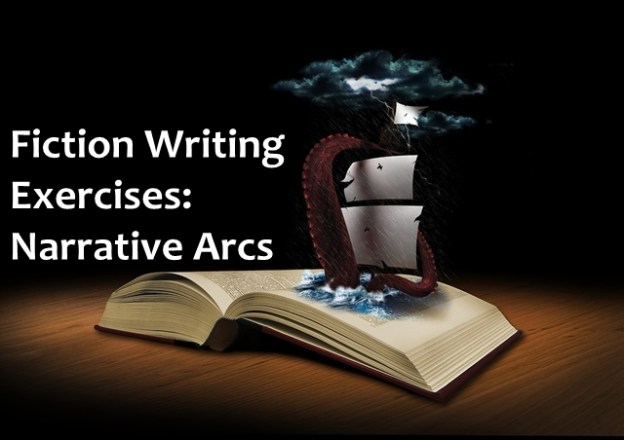
Fiction Writing Exercises: Narrative Arcs

Today’s fiction writing exercise is an excerpt from my book, Story Drills: Fiction Writing Exercises. This one focuses on story structure and examines narrative arcs within stories and across multiple scenes and installments of a story. Enjoy!
Narrative Arcs

An arc has a beginning, a middle, and an end. The events within an arc result in some kind of change for the story world, characters, or direction of the plot.

In serial or episodic storytelling, a story arc is an ongoing story line that spans multiple installments. An arc might last through several episodes of a television show or several issues of a comic book. In literature, an arc might stretch across multiple books in a series.

A narrative arc (or dramatic arc) is similar to a story arc, except it doesn’t have to occur across multiple installments of episodic storytelling. A narrative arc is any arc within a story, including the central plot and any subplots. Narrative arcs can occur within a single scene or span across a sequence of scenes.

Characters also experience arcs when they undergo a progression of transformation.

That’s a lot of different types of arcs. To make matters more confusing, the terms for story arcs, narrative arcs, and dramatic arcs are often used interchangeably.

Study:

You can use any type of story for this exercise: books, comics, TV shows, or films. Find a series that you’ve enjoyed, and examine a small sample of installments. For example, you can look at five episodes from a TV show or three novels from a series. Make sure you’re using serials, which use ongoing stories across multiple installments, rather than episodic installments, which are separate but loosely connected.

Make a list of three to five story arcs found across the installments you examined. Do the arcs intertwine? Are they occurring simultaneously, or are they consecutive? How does each arc relate to the central plot?
Practice:

Create a set of three story arcs that would span multiple novels in a series. If you’re already working on a series, feel free to create arcs within your project.

For example, start by writing quick summaries of at least five novels in a series (about one paragraph each, highlighting the central plot of each installment). Then come up with the three arcs, each of which would span multiple novels.

As an alternative, you can develop ideas for a television or comic book series.
Questions:

What is the difference between a story arc and a dramatic arc? Why are story arcs effective in serial storytelling? How is a character arc different from a narrative arc? What types of arcs are most important in storytelling?

By Melissa Donovan
Source: writingforward.com

Visit us at First Edition Design Publishing

 

How to Identify your Book’s Target Audience in 3 Easy Steps

“I’ve written a book with a capable heroine main character that my little sister would like… with a villain my crazy uncle would relate to… with a sci-fi setting my science teacher would get lost in… with a love interest my bff would ship… so who is my book actually for? Everyone? Or just one of these people??”

Oh yeah. We’ve all been here. Our books- like ogres- have layers. And that means they’re beautiful, complex works of art with aspects that many different people would like.

Although all those people may like your book, you can’t cast such a wide net. You need to fish with one niche lure and target that exact “perfect buyer.” So how do you do it? How do you figure out who your perfect buyer is/identify your book’s target audience?


Easy, friend. You simply follow these three steps:


  • Compare your book to similar books
  • Create your perfect buyer avatar
  • Be where your people are (and sell, baby!)


What does all this sparkly stuff mean? Let’s find out.


1. Compare Your Book to Similar Books

Now when I say “compare your book to similar books” I don’t mean the terrible thing we all do where we read an amazing book written by a best-selling author with years of experience, compare it to our own work of fiction, then immediately use our books for kindling.


Nah, bruh. That’s straight up unhealthy. What I mean is, dissect your book and make connections from your story to other popular novels out there. See how your work is similar to another popular work or series out there.


So for example, let’s say that your main character is a she-elf who lives in a magical forest. Let’s say her best bud is a morphing dragon and the two travel the world in search of lost treasure. What other books would this story most relate to?

Perhaps you thought of:


The Hobbit


The Lord of the Rings


Or even Eragon


That means the readers who loved those books would also enjoy your novel!


Now what if your novel has more complex elements than this? What if your book is a morph of two genres? Like a sci-fi/fantasy or a contemporary/fantasy mix? Again, always consider similarities between your book and another popular series out there. Even if your story relates to books in various genres, you are still narrowing in on a smaller audience than you might think.


So take a moment to write down two to three books that are similar to yoursno matter how small the similarity! What’s the point? The readership for these books are your readership too!


So what do you do with this information? Find forums, Facebook groups, Twitter hashtags and otherwise celebrating these books and join them! Discover why these books are so celebrated amongst your potential audience. Likewise, read one or two of these books yourself so you know what your reader expects from your story too.


So now that we’ve cast a smaller net and figured out a readership that is similar to your own, it’s time to think even smaller. Yep, I’m talking about one perfect reader.


2. Create your Ideal Reader Avatar

Your ideal reader is out there. But before you hunt for them, you must create them. What in the heck do I mean by that?


Consider right now who your ideal buyer would be: What do they do for fun? What are their favorite books? What social networks do they use? How old are they? What do they drink at Starbucks? What brands do they wear?


(Does any of this info really matter Rae??)


Believe it or not it does, precocious petunia. See, by figuring out these seemingly insignificant details about your perfect reader, you’re also figuring out who your real-life ideal buyer is too– someone who would looooove your book as much as they love playing RPGs or watching Black Panther on loop. You write for this *ONE* particular person, and you are going to sell to this sort of person as well.


More importantly, once you have that ideal reader avatar figured out, you can start honing in on where to find them and how to market YOUR BOOK to them in a way that will interest them. So how do you mold your ideal reader from the raw clay of imagination?? You take this free download and fill it in accordingly, friend!:

There are no right or wrong answers here. This worksheet asks the questions that matter to you as a teen-bean writer. Answer the questions based on what YOU want most in a perfect potential reader– not what you think matters most, or what you think your potential reader might be like. The more details you add, the more you’ll start to figure out who your real-life ideal reader is, where they can be found, and how you can sell your book to them!


Yeah, this avatar may be imaginary and yeah you may never find an exact living replica of this avatar, but you will start to figure out who your target audience is, what they generally look like, do for fun, and most importantly- what they READ!


3. Hang Where They Hang and Sell your Book, Baby!

Where are your readers gathering? What social networks are they on? If your audience is more teen based, then you’ll want to forgo networks like Facebook or Pinterest. Pay more attention to networks like Twitter, YouTube, Snapchat and Instagram instead. There are marvelous ways to connect with potential readers on these sites and pitch your book in creative ways.


But don’t limit yourself to just an online presence. Check out local cafes, bookstores and any other relevant shops your ideal reader might be at and ask to hang posters promoting your book. Or take it a step further and ask to display some of your books (signed) in their storefront. I know many small bookstores will support local authors so be sure to emphasize that you are a local, self-published author.


Take it a step further by joining book fairs, cons that your ideal reader would be at and get a booth for yourself. And don’t limit yourself to just book fairs. This is where figuring out your ideal reader’s other interests come in handy. If your ideal reader also loves Pokemon, Mega Man and Spiderman, then try to get a booth at comic con and sell your books there too. Or simply bring business cards with you to these cons, a few free books to hand out and get to know potential readers face to face in this super awesome environment! Heck, even farmer’s markets are a fantastic (and fairly cheap) way to set up a booth and get the word out there to your ideal potential reader, if that’s where they’d be found!

By Rae Elliott
Source: barelyharebooks.com

Visit us at First Edition Design Publishing


How to Stay Motivated When You’re Not Making Progress

Writer’s block is real. Every writer, at one point or another, has experienced this debilitating inability to make any real progress in his or her work.

Note: This is a guest post by Jordan Conrad, he’s the founder and publisher of WritingExplained.org. With free articles on English usage and basic grammar, Writing Explained is an essential resource for editors, freelancers, and authors alike. Connect with Jordan on Twitter at @Writing_Class.

Like a 17th century galleon in the equatorial doldrums, we endure a bout of creative stillness, when productivity starves to death in a windless mental seascape where nothing is visible on any horizon.

Well, maybe that’s a little melodramatic. Nevertheless, a lack of progress can be discouraging for anyone, and sometimes it’s difficult to maintain the motivation needed to complete a long project.

If you’re not feeling motivated, it’s not a reflection of your abilities as a writer. Creativity can seem to ebb and flow according to its own schedule, and we all have to find a way to cope with the slow periods in anticipation of the next big spark.

What to Do When Progress Eludes You

Let’s take a look at a few ways to deal with writer’s block. Whenever I feel less than inspired, I start here.

I hope you can use these same strategies to stay motivated in your own writing when it seems as if you aren’t making any progress.

Strategies for Staying Motivated

Take it one day at a time.

Try to write every day, even if it’s only a small amount. It doesn’t have to be your best work—you can always go back and revise it later.

Sometimes it only takes one tiny, unexpected breakthrough to get back on track. These breakthroughs will come much easier if you’re actively writing.

Remember that progress is a relative term.

You don’t have to write an entire book in a single day. Progress can be measured in small amounts.

Even if you only write a few words or sentences, you are still making progress. Those are sentences that you hadn’t written at the beginning of the day, so even if it’s only a little bit, you’re that much closer to being finished.

Set manageable goals.

Too often, writers get bogged down by word counts and page numbers. If you wanted to be at 3,000 words and you’re only at 750, those last 2,250 probably aren’t all going to come at once.

Likewise, the page number indicator at the bottom of your word processor window can sometimes do more harm than good. If your page count is far behind where you expected, it might be better not to look at it—or to find a way to turn it off.

You can’t finish an entire project in one sitting, so set small goals for yourself. You’ll get a confidence boost when you achieve them, and that little boost can keep you motivated to reach your next goal.

Try writing 500 words instead of 5,000, or a single page instead of ten.

Try working on something else for a while.

This works best if you, like many writers (including this author), always have multiple projects running at the same time.

Stuck on one project? There are probably five or ten more that could use your attention. Pick one you’re excited about and work on that one for a while. That should get your creative juices flowing again, and you might be able to transfer that excitement back over to the one that has you at a standstill.

The new project doesn’t even have to be in the same medium. Are you also a photographer, a musician, or a maker in addition to being a writer? Take a break from writing and shoot some portraits, or learn a new song, or 3D print something.

Take a break and do something fun.

Your brain is like a muscle—if you strain it for too long, you will use up your cognitive resources. It’s important to take breaks every so often to give your mind a chance to recharge and rebalance.

Try doing something you enjoy, even if it’s not productive. If you enjoy video games, devote half an hour to one of your favorites to reward yourself.

Breaks can quickly become distractions, though, so set strict time limits and stick to them.

You can combine this technique with setting manageable goals to build a contingent reward system that will keep you motivated. Alternate periods of productivity with enjoyable activities, so that you make progress without wearing yourself out. Like a carrot on a stick, contingent rewards can help you boost your productivity without burning out and getting discouraged.

End Note

There are times in every writer’s life where progress seems to come only in short fits and spurts, and projects come grinding to an unexpected halt. This is part of the natural creative cycle for many writers, and it’s usually just a matter of time before the juices start flowing again.

Still, a lack of progress is never enjoyable, and there are strategies you can use to stay motivated when your work isn’t going how you planned.

The above are all strategies I use personally, but there are many more out there. Don’t be discouraged if progress eludes you—if you’re patient for long enough and keep these tips in mind, it’s only a matter of time before you’re up and writing again.

By Bryan Hutchinson
Source: positivewriter.com

Visit us at First Edition Design Publishing
How to Sell Books in Your Local Community

Often times when writers dream of becoming bestselling authors, we picture worldwide success, with our novels translated into dozens of different languages and adapted into major motion pictures. One of the most important things to keep in mind, though, is that learning how to sell books is a process that starts small and, usually, starts locally.

Your Book Marketing Depends on You

Learning how to sell books is an extremely important skill as an author.

If you are a traditionally published author, you may have a team of people who will help you with marketing, but even then, it is mostly up to you to sell your work. If you are a self-published author, it is completely left to you.

Selling locally is a great way to start because it gives you an in-person advantage. You can be far more personal with people than you can ever be online, which gives a greater sense of who you are and what your books are like.

4 Ways to Sell Books in Your Community

Not sure how to sell books to the people in your local community? Here are four things you can do to get started.

1. Set up an event at your local bookstore

As scary as it can be, you have to take the first step when it comes to promoting yourself. If you wait around for someone else to invite you to an event or ask you to do a signing, you may be waiting around forever.

Take the initiative to send an e-mail or walk into your local bookstore and ask if they would consider hosting a book signing or a presentation/Q&A.

Whatever event you have in mind, make sure you have a clear idea of what it will be so you can properly pitch it. Remember to always be polite and offer the suggestion in a way that will show the bookstore how it will benefit them, as well.

Especially if it is an indie bookstore, talk about how you can promote the location and urge your readers to purchase books through them. The event should be mutually beneficial.

2. Create promotional material

There are a variety of websites you can use to create catchy posters and business cards for a relatively inexpensive price. If you are not comfortable with doing the graphic design yourself, consider asking an artistic friend for some help (make sure you pay them for their time, return the favor however you can, or at least take them out for a cup of coffee afterwards).

Once you have said posters, go to your local library and coffee shop and ask if it would be all right to hang them on their community boards. Wherever you can, put one up.

It might be a good idea to include a QR code on the post that goes to your blog or someplace where readers can easily purchase your book.

Business cards are a must, as well. Make sure they have your name, headshot, and links to your website and social media pages. Whenever you meet someone new in your community, give them a business card. It’s a great and easy way to keep in touch with new friends and let them know about your books.

3. Go to events in your community

One of the best ways to get your community connected with your book is for you to connect with your community.

Whenever there is a local, bookish event, try to attend it (and take your business cards with you!). Authors love to chat with other writers and going to a signing or release party is a great way to start networking.

Others who are attending the event are likely to be big readers, too. Talk to them! Ask them what kinds of books they like, if they’re long-time or recent fans of the author hosting the event, and so on. Once you get into a conversation, you can mention your own book and maybe even swap contact information.

Events at bookstores are not the only ones you should attend, either. Go to classes at your local library or an open mic at a coffee shop. You never know who you’ll end up talking to or who might be interested in buying your book.

4. Write an elevator pitch

These are a must for any book. Any person advising you on how to sell books will eventually tell you to write an elevator pitch.

Simply put, an elevator pitch is, as the name suggests, a pitch for your book that you can relay in the time it would take to ride an elevator with someone. It should be short and snappy, no more than a few lines.

Not sure how to get started writing your elevator pitch? Condensing your book into a one- or two-line premise is a great place to start.

After you’ve written your pitch, rehearse it until you can repeat it in your sleep. This way, when you chat with a fellow reader/writer at an author signing and they ask the inevitable question, “What’s your book about?” you won’t have to stammer and desperately search for the right words.

Writing a glowing description of your book can take days and endless revisions. You don’t have to think of it on the spot.

With an in-person pitch, though, you have to think on your feet. If you’re like me and you don’t like coming up with something on the fly, it would be a good idea to write and revise an elevator pitch you can easily memorize and repeat with a smile.

For an example of what this should look like, here is a pitch I wrote recently for one of my novels:

Lila, an immortal witch, falls for Melody, a mortal witch hunter. The two end up on the run when the demon Angelique decides Lila would be the perfect addition to her team in the upcoming apocalyptic war against humanity.

The pitch should introduce your main character(s) and the antagonist/conflict.

How to Sell Books in Person

Selling books locally is a lot different from networking online, but it comes with several advantages. People are more likely to buy your product if they feel like they have connected with you on a personal level. Plus, getting to know your readers (or potential readers) is such an important part of being an author.

And remember, it isn’t a big deal if you don’t make a sale right away. Sometimes you make a friend first, and maybe later that friend will become a customer, and a long-time fan.

How do you promote your work in your community? Do you have any other tips for how to sell books in your local community, or strategies that have worked for you? Let us know in the comments.

By The Magic Violinist
Source: thewritepractice.com

Visit us at First Edition Design Publishing