Tag Archives: writer

How To Organize Your Non-fiction Book

Ebook Publishing Design Edition First Graphic Aggregators Ebooks Publishers Distribution POD Designing Approved Aggregator How Services Academic Distributor Chapter Submission Professional Firsteditiondesignpublishing.com published book market

Publisher – Aggregator – Master Distributor

From TheFutureOfInk.com

by 

Organization can prove a challenging task for creative people whose desks often tend to be a jumble of papers, sticky notes and books and whose filing cabinets  contain more random acts of filing than anything else.

How To Organize Your Non-fiction Book

(Their computer files are often just as disorganized.) I know I have this problem.

When I settle down to write a non-fiction book, however, I have to force myself to get organized. This is especially true if I want to do it quickly, like when I have a deadline or I take on a challenge such as National Nonfiction Writing Month, also known as the Write Nonfiction in November Challenge.

Non-fiction books can entail a fair amount of research and detail. Keeping all of this material arranged in a systematic way is important, especially if you don’t want to stop writing to find what you need. Sometimes you need that informationto write!

Organization becomes essential if you want to write a book in a month (or less), or if you simply want to get it done as efficiently and quickly as possible.

6 Organizational Tools

Luckily, there’s an organizational tool for just about every writer’s style. Here’s a list of six organizational tools.One might fit your needs:

Read the rest of this article on The Future of Ink:http://thefutureofink.com/organize-your-non-fiction-book/?utm_source=feedburner&utm_medium=feed&utm_campaign=Feed%3A+tfoi+%28The+Future+of+Ink%29


First Edition Design Publishing

Visit: www.firsteditiondesignpublishing.com

Writer’s Resource List

First Edition Design Publishing
Great post from LISA LICKEL at AuthorCulture

WEDNESDAY, SEPTEMBER 10, 2014

Ever wonder where to quickly find some bit of information on the web? You’re in the middle of a great sentence, and–Bam! you realize you need to know when the moon was full? Or which branch of government runs the Witness Protection Agency? Here you go. My latest updated resource list. Feel free to share some of your own, too. This list of one of a number of things I offer on my website in the Tips and Resources page. http://www.lisalickel.com.

OnLine Resources

First Edition Design eBook Publishing

Visit: www.firsteditiondesignpublishing.com

How Do You Build An Audience Before You Have A Product? A Guide

First Edition Design eBook Publishing


Another great post from over at Bad Redhead Media

AUGUST 17, 2014 BY

I asked my Facebook friends last week what confused them the most about author marketing and social media. So for the next several weeks, myself and several esteemed guests will be answering those questions for you! Thank you to all who answered. Here’s the first question:

How do you build an audience before you have a product? MJ Kelley @themjkelley 

Many aspiring authors or bloggers ask this question a lot, and really I see this as a question of confidence more than anything — what do I have to talk about? Why should people tune into my blog or social media channels if I don’t have anything for sale yet? Is this an ‘author platform’ issue?

Let’s deconstruct.

PRE-MARKETING

Many authors start off blogging, so let’s begin there (and if you’re not blogging, you should be!). Your blog is your your home, your place for folks to come in, take off their shoes, have a drink, hang awhile. Get to know YOU, and you get to know THEM. In other words, start building a relationship now (not to mention, it boosts your SEO and SMO, but that’s a whole other post).

Did you hear me mention anything about product, or selling? No, and it’s not because you don’t have anything to sell (because you do — you’re selling you, whether you realize it or not). You are utilizing relationship marketing skills as opposed to more old-school transactional (sales-focused) skills — building relationships for future sales and customer satisfaction. You’re also genuinely and authentically being yourself — letting people know you, and they are letting you know them. This is invaluable foundation building time for whatever it is that you will be ‘selling’ in the future — a product (book), a business, or a service.

I suggest you begin your pre-marketing at least six months to one year prior to the release of your book. Even earlier is fine. Why? Because you are building relationships with your demographic, people who read your genre, people with whom you share a common bond.

WHERE

Where do you pre-market your non-product? I know, it seems kind of ridiculous but… remember, we ‘brand’ the author, not the book. So since we’re marketing YOU, let’s make you easily visible. Twitter, Facebook (you must have a personal account where people ‘friend’ you to manage everything else over there — even if you never use it — so grin and bear it), a Facebook page (required for any product or service), Google+ (you may think it’s silly but Google is the largest search engine in the world, and they own Google+ so…), plus either Pinterest or SnapChat or Instagram or YouTube — pick one.

You may think these new visual apps are silly but frankly, who cares? This isn’t about you or me — it’s about your buyers — your readers. If you are a YA author, you best be on SnapChat because that is where your demographic is. Most importantly, remember that social media is about building relationships, not ‘selling.’ Not having a product to sell is actually an excellent way for you to focus on being a person, not an automaton who constantly spouts ‘Buy my book!’ links, which is a turn-off anyway.

BOOK RELEASE

Once your book is ready to go, you’ve built this base of people who have taken an interest in you, Jo Author. So now, when you tweet or post that your book is ready to go and is anyone interested in beta-reading or reviewing, you will have people READY TO GO. We’ve all seen the desperate, ‘Will anyone, anyone, review my book? Please?’ tweets go by and feel kind of sad for the lonely, misguided soul because clearly, they have done ZERO pre-marketing. Not only that, but by asking anyone and everyone to review their book, they aren’t focusing on their demographic, risking poor reviews by having say, a sci-fi fan review their romance book. Not a good fit. I’ve seen it happen and it’s not pretty.

Here’s why that’s a mistake: it comes across as disingenuous. What’s in it for the reader to purchase and read your book if you’ve never approached them before? Nothing. It’s all about you, the author. But what if that person has known you for six months already, is part of a private reading group or inner circle you’ve created, has signed up for the newsletter you’ve set up after you read this post (hint, hint —Mailchimp is easy to use and totally free), knows that your kitten died, you know that their Uncle Mort just turned 90 and danced on the table at his party even with his arthritic knees, etc. That makes them special to you, and you to them.

That’s what relationship-building is all about!

CHANGE YOUR PARADIGM

Ask not how to build your audience before you have a product, but how can you build relationships leading up to the release of your product. And remember this: your product will change with each book release — but you, the author, will not. Don’t open a new Twitter account or Facebook page with every book — it’s a waste of your time and effort. Focus your marketing efforts on what we’ve discussed here today — say it with me one more time — building relationships! — and you will build a readership that will last through many years, not only one book release.

First Edition Design Publishing

Visit: www.firsteditiondesignpublishing.com

8 UNEXPECTED LESSONS FROM WORKING WITH A LITERARY AGENT

Ebook Publishing Design Edition First Graphic Aggregators Ebooks Publishers Distribution POD Designing Approved Aggregator How Services Academic Distributor Chapter Submission Professional Firsteditiondesignpublishing.com published book market

Publisher – Aggregator – Master Distributor

Another great guest post at Writer’s Digest
| Brian A. Klems

With self-publishing becoming more widely accepted and Amazon waging wars with publishers, more and more I get the sense from aspiring authors that they don’t think landing an agent means as much as it used to.

They believe “traditional” publishing is going the way of VCRs and none of the old rites of passage apply anymore. That’s fine if you think that, but, in my experience, it simply isn’t true.

I signed on with my agent, Stacey Glick of Dystel & Goderich Literary Management, in September of 2010 for my first (unpublished) young adult, suspense novel and it has solidified some valuable lessons.

******************************

MyLastKissBethanyNeal_headshot copyGuest post by Bethany Neal, who writes young-adult novels with a little dark side and a lot of kissing from her Ann Arbor, Michigan home. She graduated from Bowling Green State University and is obsessed with (but not limited to): nail polish, ginormous rings, pigs, pickles, and dessert.

My Last Kiss is her first novel. You can connect with her online atwww.bethanyneal.com.
*****************************

Searching for an Agent

The beginning of this journey started with little more than a polished draft of my manuscript. I started simply by researching agents through Literary Marketplace, which is a massive tome that sits behind the reference counter at most public libraries.

Some of this research was review because I had previously queried a paranormal YA trilogy that ended in 32 rejections.

Having revived my search, I made a shortlist of reputable agencies looking for YA. I browsed their sites and found agents within each agency looking for my specific flavor of YA. I write a little on the dark side—somebody is almost always dead—and I write a lot of kissing. Not everyone wants to represent that, and that’s fine.

I think the most important part in the agent search is reading every agent’s bio and only querying those you feel a connection with and who are interested in not just your genre but also your style. My agent, for instance, at the time was looking for darker YA projects with a strong voice. That’s my writing in a nutshell.

[Get Query Help: Click here for The 10 Dos and Don’ts of Writing a Query Letter]

Landing an Agent

I had two full manuscripts and one partial out with various interested agents when I got the email.

The email that said Stacey read my manuscript and wanted to set up a time to discuss it. I’d been rejected by 14 other agents already, so I wasn’t even sure what that meant. Then I got the call.

Thus began a string of very important lessons for my writing career.

1. Look before you leap.

My agent told me what she liked about my writing and the story and answered every single one of my questions.

I was so out of my mind excited that she wanted to represent me. So I told her I didn’t need to wait to hear back from the other two agents interested and I wanted—needed her as my agent.

This is my one regret in my agent search. I should have given myself a day to regain sanity and speak with the other two agents. I don’t regret signing with my agent because she’s been an enormous support throughout the years, but it’s something I know I should’ve done for peace of mind.

Take that day to pause before you jump on the first agent who smiles at your manuscript.

2. Prepare to move.

Almost immediately, my agent was requesting more information.

Stacey asked me to send her an author bio and a synopsis for the other novel I’d written, then emailed me an agency agreement that stated DGLM exclusively had the right to sell my novel for one year.

Right out of the gate there were deadlines. This one at least was a soft deadline, but it stoked a sense of urgency.

We went back and forth on revisions for a few months and ended up pushing back the submittal date so she could feature my novel in DGLM’s Upcoming Projects newsletter to generate interest with editors.

[Understanding Book Contracts: Learn what’s negotiable and what’s not.]

3. Anticipate nice, bad news.

After about a month being out on submittal, she sent me an email chocked full of the most positive, helpful, optimistic rejections I’ve ever gotten in my life. It was the best of a worst-case scenario I could have hope for.

I made revisions based on feedback and we made a round two submittal, but the basic consensus was to move on.

Luckily, I’d been writing away during all this waiting and close to finishing a draft of my new project that editors were eager to read because they remembered liking my first novel. That new project is titled MY LAST KISS and was published by FSG/Macmillan on June 10, 2014.

I didn’t expect to feel encouraged by rejections, but aligning with an agent allowed me to receive bad news in a way that turned out positive.

4. You’ll idolize your agent a bit.

It’s strange waiting with bated breath for someone’s email while also kind of loving and worshipping them even though you’ve never physically met them. I don’t think I could ever do online dating because it was weird. I’ve since met (and loved even more) Stacey in person.

I wasn’t anticipating, though, how many emotions I would wrap up in whether or not I heard from her.

5. You will hurry up and wait.

There is a lot going on, but the process from signing with an agent to publishing is a pretty drawn out experience.

I had no idea how long every step would take. It took us five months to get my first novel revised and ready to get out on submittal. It took another couple months worth of waiting to hear back from editors. And there’s more waiting once you get published. You can make good use of the time spent waiting though. For me it became an opportunity for uninterrupted writing time, which is invaluable.

[Learn important writing lessons from these first-time novelists.]

6. Expectations will drive you mad.

The biggest, dirtiest little secret about getting an agent (and being published) that no one tells you: Expectations, albeit mostly self-imposed, will drive you mad.

You start worrying about what will sell. Don’t. It will lead you down a dark, dark path—like Van Gogh, cut-your-ear-off dark.

Do yourself a favor and don’t go there because it’s extremely difficult to climb out of that pit of author-ly sorrow. You can’t predict the market and what will or won’t sell. The sooner you accept that, the saner you will be.

7. Agents breathe fresh life into your work.

An incredibly positive, unexpected bonus to finding my agent is how insightful and willing she is to collaborate on revisions.

Stacey will send me an email with literally one sentence asking something about my manuscript and it will enlighten me to the exact issue I’d been trying to fix for eight months. Having access to an expert with a keen eye is invaluable.

8. An agent is a partner in your journey.

On the warm and fuzzy side, how much she believes in me and my writing is something I couldn’t have anticipated.

Being an author still feels like this soap bubble that might burst at any moment. Even after having my first novel published, that insecurity hasn’t gone away. If I didn’t have my agent to give me pep talks and reassure me of my talent when the chips are down, I don’t know where I’d be.

Being a writer is hard work. Getting published is even harder work. Having an agent can give you a much needed hand. Just know that there are some surprising twists and turns along the way.

First Edition Design Publishing is the world’s largest eBook and POD (Print On Demand) distributor. Ranked first in the industry, First Edition Design Publishing converts, formats and submits Fiction, Non-Fiction, Academic and Children’s Books to Amazon, Apple, Barnes and Noble, Sony, Google, Kobo, Diesel, 3M, Ingram, Baker and Taylor, Nielsen, EBSCO, and scores of additional on-line retailers, libraries, schools, colleges and universities. The company also has a POD division, which creates printed books and makes them available worldwide through their distribution network. The company is a licensed and approved Aggregator and holds licenses with both Apple and Microsoft.

Visit: www.firsteditiondesignpublishing.com

5 Things You Should Know about Working with Beta Readers

First Edition Design Publishing

Another great post from Beyond Paper Editing

Friday, 18 July 2014

by Corina Koch MacLeod and Carla Douglas
@CKMacleodwriter @CarlaJDouglas

If you’re a self-publishing author, you’ve likely either read or been told that you need to hire an editor. But a professional edit costs money, and while self-publishing gurus will recommend that it’s money well spent, not every author has the wherewithall for such an investment.

Strange words coming from two editors, right?

If a professional edit isn’t currently in your budget, what do you do? Answer: find a beta reader! While beta readers are not editors — they likely won’t have the training, years of study, practice, or the inclination to snuggle up with The Chicago Manual of Style, just for fun — we do think that they can be helpful additions to your publishing team.


Profile of a Beta Reader

The point of acquiring beta readers is to garner information that will help you write a better book. So ideally, at least one of your beta readers should be the kind of person who’d be most likely to buy your book. Why? Their response to your book will help you gauge which parts of the book will work for your audience, and which parts may not.

We also recommend that you find a beta reader who knows more about writing craft than you do. (As editors, you knew we’d say that, right?) Think about it. One of the best ways to get better at anything is to get feedback from someone who’s more skilled and knowledgeable than you are. And if you can find a beta reader who has read lots of books in your genre and has a clear understanding of how your genre works, you’ve struck gold.


Where to Find Beta Readers

One way to find beta readers is to work your social media platforms. If you’ve been spending time to develop a positive online presence and a reputation for being helpful, an unforced opportunity to ask for help may present itself.

If you’re still building your author platform, consider joining a site like Scribofile, where you can offer feedback on other people’s writing to amass “karma points,” which you can then spend on acquiring feedback for your work.Wattpad is another option for finding beta readers. You can upload your book and write a compelling blurb that inspires people to read and respond to your book.

Local writing or critique groups may be an option for face-to-face feedback. Go to meetup.com to see if there are “crit” groups in your area.


Working With Beta Readers


Now that you’ve found your beta readers, consider the rules of engagement that will help you to create a healthy working relationship. Authors don’t usually pay beta readers, so any interaction needs to be positive and affirming. Presumably, this won’t be your last book, and treating your beta readers right will leave them open to helping you out next time, too.


Don’t Give Them a Draft


Your beta reader is still a reader — a reader who might tell other readers about your book. It’s important to treat your beta readers right, and that begins with what you ask them to read. Don’t give them your first draft. In fact, be sure that what you give them is the very best writing you can produce on your own. Write your draft and set it aside for at least a week. Go back to it and rewrite it if you need to. Then set it aside for another week — again. Revise, revise, revise, until it isn’t remotely possible for you to do any better.


Your Manuscript, Their Way


Before you send your manuscript to your beta readers, ask them what format they’d like it in. Beta readers might want to print your manuscript or read it on a Kindle. If they prefer the latter option, send them instructions for how to get your manuscript on an e-reader. Do whatever you can to remove any obstacles that will prevent your beta reader from carving out time to read your book.


Give Them Guidance


Let your beta reader know what kind of feedback you’d like from them. Develop a checklist with questions you’d like answers to. Do you want readers to comment on the strength of a character, or the organization of a concept? If you create a specific list of questions around content, beta readers won’t spend their time punctuating sentences. Adapt your revision checklist to meet the needs of each book your write.


Don’t Take it Personally


Remember, it takes a great deal of time to read and respond to a book. And your beta readers will have opinions that might sting a little. Be gracious for any feedback a beta reader gives you, even if you don’t agree with it. Ask yourself, “Will addressing this comment make for a better book?” If so, take their advice and apply it to your next revision. If not, whatever you do, don’t defend yourself. Your beta reader already knows your position (you’ve done as you’ve seen fit, as evidenced by your manuscript) but they don’t agree. Thank them for their comments and move on.


Return the Favour


Remember, you’re not paying your beta readers to read your book. They’re offering feedback because they want to help or they’re interested in your book’s premise or topic. If your beta reader asks you to be a beta reader in future, seriously consider returning the favour. And when it comes time to publish your book, give them a mention in your acknowledgements. Everyone likes to see their name in “print.”

Beta readers can play an important part in helping you create a better book — particularly at the revision stage of writing. After you’ve revised your book, based on their feedback, and once again made your book the best it can be, you’re ready for an editor (you knew we’d say that, right?).

Ebook Publishing Design Edition First Graphic Aggregators Ebooks Publishers Distribution POD Designing Approved Aggregator How Services Academic Distributor Chapter Submission Professional Firsteditiondesignpublishing.com published book market

Visit: www.firsteditiondesignpublishing.com

Ask the editor: Breaking the “write what you know” rule

Posted: April 7th, 2014 by Alan Rinzler @

-


Q: I have a terrific story to tell, but it didn’t actually happen to me. Is it possible to write with authenticity about something you haven’t experienced firsthand?

A: Many great books are written by authors who seem to have nothing in common with their character’s experiences. Different gender, culture, time in history, geographic location.

Stephen Crane wrote The Red Badge of Courage, an amazing description of a bloody hand-to-hand combat and death during the infamous Civil War battle of Chancellorsville without ever having any experience in the military or violent conflict of any sort. The entire Civil War, in fact, occurred before he was born.

Henry James wrote Portrait of a Lady, though he was certainly nothing at all like Isabelle Archer, the spirited young American girl who inherits a lot of money and has a hard time dealing with the consequences.

Tom Robbins, despite bogus rumors to the contrary, doesn’t have hooves, or smell like a goat and dance about playing pipes in the hills of Greece, as happens in his excellent book Jitterbug Perfume, which features the goat god Pan.

Writing vicariously

Most of all, you need authentic passion for the story. Then, you need to plunge into the homework. Your research must be impeccable, every detail dead-on accurate. If you’re recreating an historical epoch, you should read profusely about it, and interview experts or participants if possible. If your story is from the perspective of someone completely different from you, find models and study them as closely as possible — in person, face-to-face.

You may find that your early drafts take you in unexpected directions. Stay flexible and true to the new world you’re creating.

Four writers on how they did it

I’ve worked with many authors who’ve written about something they haven’t experienced directly. Here are four writers and their responses to questions I sent each of them about how they did it.

Jillian Thomadsen is the author of the novel Infiltrate about an idealistic young Fixed Income Analyst at a major investment bank who tries to shift internal policies towards more altruistic long-term goals but finds herself increasingly drawn into a culture of greed and corruption.

Neville Frankel is the author of Bloodlines, a novel about how the struggle against apartheid nearly destroys a Jewish family in South Africa which engages in violent terrorism during the early years of Nelson Mandela’s African National Congress.

Kimberley Pettinger is the author of The Quantum Affair, a novel about a strong woman’s struggle for freedom and power in a high tech company with a revolutionary new computer.

David Tomlinson is the author of American Prayer, a novel about the 1995 Oklahoma City Bombing in the context of race relations, religious faith, and local politics.

What sparked the passion that motivated you to write this book?

Jillian Thomadsen:

I was reading an article about the Occupy movement, and it seemed like an effort in futility.  How was sleeping in a park going to cause change? I started to think that one angry person working inside an investment bank could do more than hundreds of protesters chanting outside.  And from that moment, the idea of a person who infiltrates and takes down a company she despises started to take shape.

I wanted to write about income disparity, the quintessential American Dream, and the current economic climate in the wake of the Great Recession of 2008.  A Wall Street investment bank seemed like a fitting backdrop for telling this story and I knew it was an environment where people pushed ethical boundaries in pursuit of their personal ambitions for money and power.

Neville Frankel:

I had returned for the first time 38 years after my family had fled South Africa before the end of apartheid when a man I’d never met before threw his arms about me and whispered in my ear, “Welcome home, brother.” I was overwhelmed by the unexpected sense of having come home. That was the  moment when I realized I’d never really left my homeland behind, and had unresolved issues that needed to be addressed.

I was so struck by the fact that the young South African people I met in their early twenties really had no historical perspective on what had happened in their country before Nelson Mandela was elected President. This despite the fact that every one of them had been deeply affected by apartheid, whether they were the children of victims or perpetrators. I thought that a novel about their country’s revolution told through the eyes of fictional characters – blacks, whites, Jews – could be a great way to provide that perspective.

Kimberly Pettinger:

I had a hard-earned eight-week sabbatical at the company where I worked. But I’d just had my second child and was sleep deprived most of the time, so there was no way I was going for a vacation to Paris or anywhere else for that matter.  I was frustrated that my life was rather dull and my career had plateaued.

I’ve always been intrigued with females in positions of power. Who were they? How did they get to the top? What struggles did they have?  In the corporate environment, females – especially technical leaders – are rare and exceptional.  I was also interested in playing out the idea of the next generation of computing which would likely accelerate a major shift in society. And I liked the idea of balancing the corporate intrigue with a love story.

David Tomlinson:

Running on the treadmill in my home office, I was looking out the window, listening to music, watching the sunlight hit the street, and had this image of a guy running along the railroad tracks, lit up by this same light. That guy turned out to be one of main characters in a new story, a Choctaw Indian named Dean Goodnight, who works for the Oklahoma County Public Defender.

I wanted to write a literary novel about the Oklahoma City bombing: an ambitious, political, heartfelt book set in the place where I grew up. And I hoped that people could see and understand and wind up caring about complex, difficult, prickly, larger-than-life characters who at first glance can be tough to love.

What kind of homework did you do to write about what you didn’t know firsthand or hadn’t experienced yourself?

Jill Thomadsen:

I kept abreast of news articles and stories about the 2008 financial crisis, the bursting of the US housing bubble caused by collapsing mortgage lending standards. I asked myself if could it happen all over again, but this time with unregulated and fraudulent student loans.  Since this never happened, and it isn’t a disguised memoir or anything I’ve observed or experienced directly, I allowed myself some creative license as well.

Neville Frankel:

I had to read books on history and  politics, South African fiction, the reports on the Truth and Reconciliation hearings. I also made three trips to various parts of South Africa, some remote, to speak with many, many people about their experiences under apartheid and to write accurately about the geography and natural beauty of the country.

Kimberly Pettinger:

My experience working within a large multi-national corporation and the inner workings of that machine allowed me to write about it authentically.  The one component I didn’t have access to was the underworld of computing.  I did some research online and just imagined what it would be like for one of my characters.

David Tomlinson:

I read a dozen or so books on basketball, race relations, faith, local politics, and the justice system, taking copious notes, reworking my outline the entire time. I interviewed an old college roommate, a Choctaw Indian, who used to investigate capital cases for the public defender’s office, who gave me insight in Dean Goodnight’s life and day job. You, Alan, suggested that I read Phil Jackson’s “Sacred Hoops”, which is fantastic. And my daughter started playing basketball around this time so I spent some extra time watching the coach interact with his players and soaking up the sounds and textures of the gym.

One of the characters in this story is a physical therapist named Aura, a black woman, who winds up having to care for a paralyzed, bigoted patient named Cecil. My wife is a physician, and so if I had questions about medication, terminology, or complications due to Cecil’s condition, she pointed me in the right direction.

It took four years to complete the novel. I felt myself having so much empathy and understanding for my characters, while living the arc of this story from each particular character’s point of view. So in a way, by the time I was finished, I actually had experienced it all.

_____________

What about you?

Have you written a story about a character with whom you had little in common? We’d love to hear more about it.

What was the original source of your passion to write the story? What kind of homework did you do? What was the most difficult part of writing your book?

We welcome any problems, successes, experience or advice on breaking the rule to write only “what you know”.

First Edition Design eBook Publishing

Visit us: www.firsteditiondesignpublishing.com

Be Generous with Detail

First Edition Design eBook Publishers

Posted at Editors Only on Monday, March 31, 2014

Present information that you’ve gathered to stimulate reader interest.

By Peter P. Jacobi

Successful paragraphs/passages/segments/parcels in articles require heavy-duty work. To write them so that potential readers care enough to actually read what you’ve prepared demands prior thought and preparation. It calls for information gathering. It begs for details.

I’ve chosen several excerpts for you to peruse, so to arouse consideration about what, besides good writing, it took to realize them.

Dateline: Moore, Oklahoma

From The New York Times, May 27, 2013, a story by Michael Shear:

“…Mr. Obama took a brief walk through the remains of what once was a thriving suburb south of Oklahoma City. American flags, flapping in the stiff winds of the warm spring day, were among the rubble.

“But the piles also contained reminders of the lives torn apart by winds that topped 200 miles per hour as the twister cut a roughly 20-mile path of destruction through town.

“There were 2012 yearbooks from the Plaza Towers School and a workbook titled ‘Jamal’s Surprise.’ There were several waterlogged encyclopedias and a pink baby doll stroller. In another pile was a purple plastic toy camcorder and a child’s pink parka. Every few feet, crumpled cars blocked the way, and twisted metal littered yards that once had lawns. The only trees remaining had no bark and no leaves.”

The writer spotted particulars in the rubble that made devastation specific, that addressed lives interrupted and possibly lost, that spelled tragedy, that carefully put the President into another consoler-in-chief moment. To pass along such an experience, a reporter must search for the details that travel readily and clearly from a distant scene to the printed page and the reader’s eyes, mind, and heart. Shear did so, not by overplaying his hand as collector of facts but by selecting from his notes sufficient details to frame a circumscribed picture of human grief, one scoped large enough for a far-off reader to grasp and understand what had happened in Moore but not so large as to emotionally overwhelm him or her. The power of details.

Family Time

A column in National Geographic Traveler, prepared for the June/July 2013 issue by Laura Willard, is a short one about “Kids Go ‘Round the World in Balboa Park.” She recommends:

“1. Jump on a century-old carousel, with original European hand-carved animals, for a five-minute whirl. 2. See how your face changes as you age, and peer through a microscope at real human cells at the Reuben H. Fleet Science Center…. 8. Enjoy a free concert from one of the largest outdoor pipe organs in the world at the Spreckels Organ Pavilion on Sundays.”

Willard’s list of ten activities that a family can enjoy at inviting Balboa Park has been thoughtfully collected and then ever-so-briefly but specifically offered to the magazine’s travel-enthused readers. If San Diego is a possible destination, those readers who choose to go there now have ten things to do while spending time with family (or alone) in that famous preserve. The writing took very little time, I’d guess, but the information took care and time to gather. Without that information, of course, there is no column worth reading. The power of details.

Dateline: Dhaka, Bangaladesh

From USA Today, May 17–19, 2013, a story by Calum MacLeod focused first on 20-year-old Sheuli Akhter, a garment worker:

“Her mother, Ranjana, was found recently sobbing near the rubble of the Rana Plaza factory where her daughter worked, days after the eight-story complex collapsed and killed 1,127 people. Viewing dozens of corpses a day, Ranjana … still hoped her daughter had somehow survived and would join her for the 10-hour bus journey back to their village.

“The victims retrieved daily from the debris were crushed and unrecognizable in the South Asian heat.

“‘I am looking for her body, but they are all decomposed now. It’s getting harder to identify,’ says Ranjama, tears falling from her eyes.”

MacLeod located a mother still seeking but coming to realize that her daughter is among the victims. He used that mother-daughter tragedy as a humanizing detail to get at the message he sought to impart to his readers, which comes in the paragraph that followed:

“The scale of the mismanagement and breadth of the human tragedies in Bangladesh powerfully illustrated to the world in an instant what years of abuse, inhumane conditions and unthinkable danger could not: The workers in Third World countries take enormous risks and desperate measures to earn a living in Bangladeshi-owned companies that produce clothing for Western retailers.

“At the end of this global production line stand millions of American shoppers whose favorite companies and brands … use Bangladesh as a launching pad for the goods consumers crave.”

The human detail tells, shows, and sells the point that the reporter is striving to make: we’re helping to sustain a system that causes the sort of tragedy we’re suddenly sad about, so what are we — individually and collectively — ready to do, if anything, to bring about change? The power of detail.

Return Engagement

The New Yorker‘s eminent music critic, Alex Ross, wrote in the June 10, 2013, issue of the magazine about the return-from-injury appearance of conductor James Levine with the Metropolitan Opera Orchestra. Here is his opening paragraph:

“At the beginning of the Prelude to Wagner’s ‘Lohengrin,’ an A-major triad, evoking the Holy Grail, swells gently in the violins, oboes, and flutes, with four solo violinists playing silvery harmonics. For the orchestra, it is a scarily exposed moment: the violins must maintain purity of intonation in a high register, while the winds must materialize before the audience’s ears, with no audible splutter of attack. The musicians of the Metropolitan Opera, performing the Prelude at the outset of a concert on May 19th at Carnegie Hall, had no trouble meeting those requirements. But the sonority had an uncommon aura — something of the magical quality that Charles Baudelaire, in his 1861 essay on Wagner, described as a ‘wide diffusion of light,’ an ‘immensity with no other décor but itself.’ Moreover, the chord seemed to be in motion, like a crystal turning in space as light shone through it. Wagner, whose 200th birthday arrived three days later, could not have asked for a lovelier gift, in whatever region of the hereafter he may be found.”

Ross ascribed that moment in performance to conductor Levine, back after a two-year absence. “Perhaps,” he noted, “the musicians would have sounded the same if another conductor had been on the podium, but I doubt that the playing would have had such extreme concentration, such meditative intensity.”

This critic, of course, brings to all his assignments ears attuned to every note, bar, accent, solo responsibility, and ensemble development. That’s an inherent and trained part of talent he contributes to his job of evaluating music, and he can follow through, fortunately, with intelligent writing that makes the case. But look at the knowledge that peeks through, thanks to material he chose to construct his paragraph and what follows: of score, of instrumental capabilities, of Wagner, of “Lohengrin,” of James Levine, of the Met Orchestra. Some of that knowledge has become a given for Ross; he has it at his beck and call. But his research must have included going back to the score and also hunting up historic details about Wagner and “Lohengrin” (the Baudelaire quote, for instance). Ross obviously knew what he needed to prove his argument. The power of detail.

I have at least five more examples that I wanted to use in this month’s column, but I’ve run out of space. Detail is a subject worth recycling. I will again. In the meantime, don’t stint on detail. Be generous. Don’t overwhelm, but be generous. Be wisely selective, but be generous.

Peter P. Jacobi is a Professor Emeritus at Indiana University. He is a writing and editing consultant for numerous associations and magazines, speech coach, and workshop leader for various institutions and corporations. He can be reached at 812-334-0063.

Visit: www.firsteditiondesignpublishing.com

Where Should You Begin Your Story? – An Excerpt from Structuring Your Novel

First Edition Design Publishing

Another great writing post by K.M. Weiland | @KMWeiland

From her Blog “Wordplay: Helping Writers Become Authors”

Just for fun, today I’d thought I’d give you a sneak peek of my upcoming bookStructuring Your Novel: Essential Keys for Writing an Outstanding Story. The book, available September 1, 2013, x-rays our notion of storycraft to get past the outer aesthetics right on down to the muscular and skeletal systems that make our books work. Once we grasp the mechanics of structure, we’re able to take so much of the guesswork out of crafting a strong story from start to finish.
Today, I’d like to share an excerpt from Chapter 2, which talks about one of the trickiest questions any author is faced with: Where to begin the story?


***
Authors are much more likely to begin their stories too soon, rather too late. We feel the pressure of making sure readers are well-informed. They have to understand what’s going on to care about it, right? To some extent, yes, of course they do. But the problem with all this info right at the beginning is that it distracts from what readers find most interesting: the character reacting to his current plight.

What is the first dramatic event?

The question you need to ask yourself is, “What is the first dramatic event in the plot?” Finding this event will help you figure out the first domino in your story’s line of dominoes. In some stories that first domino can take place years before the story proper and therefore will be better told as a part of the backstory. But, nine times out of ten, this will be your best choice for a beginning scene.

What is your first major plot point?

Another thing to keep in mind is the placement of your First Plot Point, which should occur around the 25% mark (we’ll discuss this in more depth in Chapter 6). If you begin your story too soon or too late, you’ll jar the balance of your book and force your major plot points at the 25%, 50%, and 75% marks off schedule.
(We’ll be discussing these plot points and their placements at length later on, but, for now, let me just emphasize that these placements at the quarter marks in the story are general guidelines. Unlike movies, which operate on a much tighter structural timeline, novels have the room to allow long series of scenes to build one into the other to create the plot points as a whole—and thus can occur over long sections, even chapters, rather than smack on the money at the quarter marks.)
Consider your First Plot Point, which will be the first major turning point for your characters and, as a result, often the Inciting or Key Event (which we’ll also discuss in Chapter 6). The setup that occurs prior to these scenes should take no more than a quarter of the book. Anymore than that and you’ll know you’ve begun your story too early and need to do some cutting.

What are the three essentials?

The most important thing to keep in mind is the most obvious: No deadweight. The beginning doesn’t have to be race-’em-chase-’em, particularly since you need to take the time to introduce and set up characters. But it does have to be tight. Otherwise, your readers are gone.
How do you grip readers with can’t-look-away action, while still taking the time to establish character? How do you decide upon the perfect moment to open the scene? How do you balance just the right amount of information to keep from confusing readers, while at same time raising the kind of intriguing questions that make them want to read on? When we come down to it, there are only three integral components necessary to create a successful opening: character, action, and setting.
Barnes and Noble editorial director Liz Scheier offered an anecdote that sums up the necessity of these three elements:

 A professor of mine once posed it to me this way, thumping the podium for emphasis: “It’s not ‘World War II began’! It’s ‘Hitler. Invaded. Poland.’”

Scheier’s professor not only made a sturdy case for the active voice, he also offered a powerful beginning. Let’s take a closer look.

Love Letters to Strangers #FED_ebooks #writer #writing

First Edition Design Publishing

Love Letters to Strangers

Ebook Publishing Design Edition First Graphic Aggregators Ebooks Publishers Distribution POD Designing Approved Aggregator How Services Academic Distributor Chapter Submission Professional Firsteditiondesignpublishing.com published book market

Hannah Brencher

Hannah Brencher’s mother always wrote her letters. So when she felt herself bottom into depression after college, she did what felt natural — she wrote love letters and left them for strangers to find. The act has become a global initiative, The World Needs More Love Letters, which rushes handwritten letters to those in need of a boost.

For more — go to the video:  http://on.ted.com/Brencher

About First Edition Design Publishing:

Ebook Publishing Design Edition First Graphic Aggregators Ebooks Publishers Distribution POD Designing Approved Aggregator How Services Academic Distributor Chapter Submission Professional Firsteditiondesignpublishing.com published book market First Edition Design Publishing is the world’s largest eBook and POD (Print On Demand) book distributor. Ranked first in the industry, First Edition Design Publishing converts and formats manuscripts for every type of platform (e-reader). They submit Fiction, Non-Fiction, Academic and Children’s Books to Amazon, Apple, Barnes and Noble, Sony, Google, Kobo, Diesel, 3M, Ingram, Baker and Taylor, Nielsen, EBSCO, and over 100,000 additional on-line locations including retailers, libraries, schools, colleges and universities. The company’s POD division creates printed books and makes them available worldwide through their distribution network. First Edition Design Publishing is a licensed and approved Aggregator and holds licenses with Apple and Microsoft.

Visit: www.firsteditiondesignpublishing.com

Ebook Publishing Design Edition First Graphic Aggregators Ebooks Publishers Distribution POD Designing Approved Aggregator How Services Academic Distributor Chapter Submission Professional Firsteditiondesignpublishing.com published book market

First Edition Design eBook Publisher Aggregator Master Distrbutor

Best Bad Writing Contest — The Winner Is #FED_ebooks #author #indieauthor #writer

For three decades, the deeply silly Bulwer-Lytton Fiction Contest has challenged entrants to write the opening sentence to terribly bad books.

 The books aren’t real, but the best (bad) openers typically cram a whole lot of story into one convoluted phrase.

This year, a Texan won the romance category. Karen Hamilton of Seabrook wrote:

“I’ll never get over him,” she said to herself, and the truth of that statement settled into her brain the way glitter settles onto a plastic landscape in a Christmas snow globe when she accepted the fact that she was trapped in bed between her half-ton boyfriend and the wall when he rolled onto her nightgown and passed out, leaving her no way to climb out.

Ebook Publishing Design Edition First Graphic Aggregators Ebooks Publishers Distribution POD Designing Approved Aggregator How Services Academic Distributor Chapter Submission Professional Firsteditiondesignpublishing.com published book market Hamilton, a custom residential designer, entered the contest on a lark.

“One of my friends put a link on Facebook, and I thought, ‘Well, heck, why not?’ ”

Her winning sentence, she added, is in no way based on personal experience.

“No, I’ve never had a half-ton boyfriend,” she said Wednesday.

Instead, the phrase that kept running through her head – “I’ll never get over him” – became the seed of a long-winded pun.

Hamilton, 55, has earned accolades for her wordplay before, taking second place three years running at the O. Henry Pun-Off in Austin.

But these sorts of honors don’t come with a windfall of cash. When asked what she won for her winning sentence, Hamilton said: “Bragging rights and, apparently, an article in the Chronicle.”

The contest categories include adventure, children’s literature, crime, fantasy, historical fiction, purple prose, romance, science fiction, vile puns and western.

The overall winner was Cathy Bryant of Manchester, England, while another Texan – Bill Hartmann of Dallas – took runner-up in the crime category with:

“Chester and Harry, you don’t have the stomach for this, but Dick and I do,” the leggy blonde said in a throaty voice as she headed back in to finger – and hopefully nail – the brains and muscle of the strong-arm syndicate, the heel that gutted her niece.

The contest, sponsored by San Jose State University’s English department, takes its name from Edward George Earle Bulwer-Lytton, who wrote a doozy of an opener for his 1830 novel “Paul Clifford:”

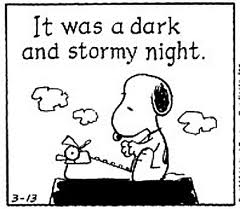
It was a dark and stormy night; the rain fell in torrents-except at occasional intervals, when it was checked by a violent gust of wind which swept up the streets (for it is in London that our scene lies), rattling along the housetops, and fiercely agitating the scanty flame of the lamps that struggled against the darkness.

As the contest website points out, even Snoopy saw fit to plagiarize the first few words.

Source: http://www.chron.com By: Maggie Galehouse

 
About First Edition Design Publishing:

Ebook Publishing Design Edition First Graphic Aggregators Ebooks Publishers Distribution POD Designing Approved Aggregator How Services Academic Distributor Chapter Submission Professional Firsteditiondesignpublishing.com published book market First Edition Design Publishing is the world’s largest eBook and POD (Print On Demand) book distributor. Ranked first in the industry, First Edition Design Publishing converts and formats manuscripts for every type of platform (e-reader). They submit Fiction, Non-Fiction, Academic and Children’s Books to Amazon, Apple, Barnes and Noble, Sony, Google, Kobo, Diesel, 3M, Ingram, Baker and Taylor, Nielsen, EBSCO, and over 100,000 additional on-line locations including retailers, libraries, schools, colleges and universities. The company’s POD division creates printed books and makes them available worldwide through their distribution network. First Edition Design Publishing is a licensed and approved Aggregator and holds licenses with Apple and Microsoft.

Visit: www.firsteditiondesignpublishing.com

Ebook Publishing Design Edition First Graphic Aggregators Ebooks Publishers Distribution POD Designing Approved Aggregator How Services Academic Distributor Chapter Submission Professional Firsteditiondesignpublishing.com published book market

First Edition Design eBook Publisher Aggregator Master Distrbutor