Tag Archives: writer

Story Ideas: How to Beat Shiny-New-Idea Syndrome and Actually Finish Your Projects

Authors often get asked where they get their story ideas. It’s one of the most common questions my student writers wish they could ask their writing heroes. They think, “If I could just find a way to come up with the next best-selling story idea like [insert famous author], then I’ll make it as a writer!”

But they misunderstand one critical truth: the magic isn’t in the ideas. It’s in the execution.

We need the ideas to get started, but many writers don’t have a system for capturing the ideas around them daily, and they don’t develop ideas consistently in practice.

We all have files full of unfinished projects and story ideas spread across notebooks and online platforms. Why do ideas lose their luster the moment we start writing them?

The Problem with Chasing Story Ideas

I had a student who was a few days away from his deadline for his final fiction project and he came to see me.

“I found a better idea and want to change my project,” he said.

“How much have you written on this new idea?” I asked.

“Well, you see, it’s about this guy …”

I interrupted him. “No, how much have you written on it. How many words?”

He shifted uncomfortably. “None, yet.”

I shook my head. “Write it down in a sentence in your journal, and finish the original project first.”

He sputtered a bit about how great this new story idea was compared to the thousands of words he’d written on his current project.

I had to give him the talk I give many students and myself when we feel stuck and get caught up chasing a new shiny idea instead of getting in the chair and grinding out the work.

“Ideas are nothing until you execute them. Your desire to chase something else is resistance. You are close to finishing the longest piece of fiction you’ve ever written. Finish it.

“The idea will still be there. You’re afraid the current work won’t be as good as it seemed in your head, when it was a shiny new idea like the one you’re courting now.

“But the magic isn’t in the idea. It’s in the way you execute it, which means you need a first draft. Then we’ll revise it into the work you want it to be.”

It wasn’t the answer he wanted to hear, but he ultimately finished the original project.

A System for Managing Story Ideas

A system can minimize shiny-new-idea syndrome, because you will have a plan for what to do when a new idea appears in the midst of your current project.

I always have a notebook with me, but sometimes I capture story ideas online. I used to bookmark interesting articles, until I had so many stored that I never looked at them. Since then, I’ve transitioned online links to Evernote with tags to easily search my ideas.

I know writers who love to use Pinterest to keep character boards, settings, and history research in a visually organized way. Others love spreadsheets. Some keep idea boards in their writing spaces.

Find the method that you are most likely to use, and it will save you time as you collect and use your ideas. Then, when you are in the middle of trying to finish a project, you know exactly where to put that idea that keeps interrupting your work.

Revisiting Notebooks for Idea-Mining

Whether you keep your ideas on paper or online, build time into your writing year to revisit your stash.

I used to dump all my notebooks in a jumble in a big bin when they were finished. Now, I put dates on the bindings and keep them in two boxes in my huge bin. Each summer, I make time to scan through the notebooks in one of the boxes, pulling one or two notebooks that have especially promising ideas to develop. Sometimes I just read through them and put them all back.

Online, I tag story ideas in Evernote by genre or fiction element (character, setting, conflict, interesting problem, etc.). When I’m looking for a fresh story idea, I can open Evernote and scan through a tag’s contents quickly.

The Most Important Step

As I shared with my student who was chasing a new idea, the most important thing to do is simply pick an idea and follow it through to completion, one idea at a time, over and over again. A system can minimize those distractions, because you can tell your inner squirrel that the idea is safely lodged in your notebook and will be revisited when it’s time.

Of course there may be times when abandoning a project is necessary, but don’t let your reason be “Oooo, look at this shiny new idea!”

Where do you like to record your story ideas? Share in the comments.
By Sue Weems
Source: thewritepractice.com

Visit us at First Edition Design Publishing


Encouraging Words for Writers: 3 Essential Reminders for Struggling Writers

There are a lot of things that stop us from writing. Fear of failure, discouragement, and exhaustion are my big three. Sometimes, what we need to push through those barriers is a reminder of who we are and why we do what we do. We need someone to come alongside us and speak encouraging words for writers.

We need to be told again the stories that have led us to the place we are now.

3 Encouraging Reminders for Writers

On the wall of my office, I have a collage of quotes and pictures that have inspired me. Each quote represents a story from my past. I read over them whenever I need a boost of encouragement (which is at least once a day).

These encouraging words for writers are a wonderful source of strength for me. Many of the quotes on the wall are from friends and family who had the right words for me at the exact right time.

Here are three I lean on regularly to get me through rough patches.

1. “Work the process.”

My mentor said this to me at a moment when I was completely lost.

Things at work were falling apart. Several projects had started to break down at the same time, another staff member had verbally attacked me in a staff meeting, and I was being accused of something I didn’t do. On top of that, the organization I worked for was in financial trouble and I wasn’t sure we were going to turn things around.

I called my mentor to ask for help because I had no idea what to do next. We sat in an empty hallway in the basement of the building. It was late and everyone had gone home. Leaning against the painted cinderblock wall, I explained to him in detail everything that was going wrong and all the extravagant plans and drastic measures I had designed in my head that would turn things around.

After hearing me out, he said, “Work the process.” I asked him to explain.

“Don’t do anything extravagant. Don’t take drastic action. There are processes in place. Work the process.”

Often as a writer, I work myself into a dark place. I begin to feel like my writing is worthless. I grow discouraged and lose focus. I find a thousand things to do instead of writing the next chapter.

When I get in that head space, I remind myself to “work the process.”

There is a process to my writing. I write after my family has gone to sleep. I sit at my kitchen table with my laptop, a drink, and a notepad, I skim the last chapter I wrote, I look at my outline, and then I write the next chapter.

When life is hard and I don’t feel like writing, the process keeps me focused and moving in the right direction.

It’s not extravagant. It’s not drastic. It is mundane and routine; and when things get hard, that’s exactly what we need.

2. “No one is going to die on the table.”

I wasn’t prepared for the pre-med course load I took on my sophomore year of college.

My freshman year, I’d been a music major. Since the classes were mostly about performing, I’d been able to wing it with a minimal amount of preparation. Instead of working hard in the practice rooms each day, I learned to play racquetball and became a regular on the basketball court.

Predictably, my disdain for practice made it clear to me and my teachers that I wasn’t going to cut it as a musician, so I decided to pursue one of my other interests, science. While I loved the classes, I was not prepared for the amount of studying that was required.

By the time I got to my midterms, I was way behind in multiple classes.

The night before three tests, a group of friends who were in class with me came over to study. We blew through our biology and chemistry notes in our first three hours together and I felt good about my prospects in the morning.

A little before midnight, we began studying for physics. I hated physics. Sitting at my small round kitchen table, my friends rattled off formulas, made up problems for one another, and answered practice questions with ease. I, on the other hand, was completely lost.

After an hour and a half of trying to “get it,” I excused myself from the study session, claiming I needed to get something from my bedroom. Hiding in my closet so no one could hear me, I began to cry. I called my dad and explained through tears what was happening. I was sure I was going to fail the test and it was too late for me to do anything about it.

After calming me down, he said several things to me that night that have stayed with me. One of which was, “Listen, if you fail tomorrow, no one is going to die on the table.”

Dad was a surgeon who primarily saw high-risk patients. When someone got to him, it was life-or-death. If he messed up or came to work unprepared, someone might literally die on the table.

The words he gave me that night were a fantastic reality check that I’ve used again and again. They’ve helped me take risks and push through fear. When my fear of failure begins to slow me down, I remember sitting in my closet and getting a good dose of perspective from my dad.

Through the years, fear has stayed with me. It is the greatest enemy of writing. Many nights I will sit down to write a chapter and hear fear in my ear whispering, “You’ve got nothing. You’re not a real writer. Stop kidding yourself. You’re going to fail.”

When that voice comes around, I remind myself of the stakes. If I write a terrible chapter, no one is going to die on the table. I’ll just erase it and try again tomorrow.

Having a refreshed perspective helps me move through fear and write.

3. “The tension is good.”

It was after midnight. My friend and I were alone on the second floor of a bar. On the table in front of us were stacks of meeting notes and ideas we’d sketched out together over the years. We were drinking coffee, talking about a non-profit we were both serving, and dreaming up ways to solve all the organization’s problems.

There were some amazing things happening in the organization. We were seeing real breakthroughs in the community we served and people were being helped.

At the same time, we could feel the organization hadn’t reached its full potential. We knew what it could be, but we weren’t sure how to get it there.

We thought that maybe, if we tweaked this one process, or increased our effort in this one area, or redirected resources to this other direction that we would see a breakthrough.

Caught in the tension between the good we were doing and the good we wanted to do, I began to complain. I whined about wanting the future to arrive already, and how I didn’t want to have to wait for changes to take hold.

After I finished another pointless rant, I remember my friend smiling at me and saying, “Don’t rush it. The tension is good.”

He was right. If we had made the changes right away that I wanted to make, we would have failed. Things that looked like a good idea at that moment were actually terrible ideas. Moving slow and making careful and strategic changes helped us see different paths and solutions that weren’t immediately apparent.

As a writer, I often find myself with a problem I can’t fix easily. For me, it usually has to do with plot. I’ll work myself into a hole in my story that I can’t get out of.

Weighed down by exhaustion, my gut tells me to just ignore it, hope readers won’t notice, and rush to the end. I tell myself, “Just publish it and move to the next one.”

Unfortunately, I’ve learned the hard way that readers always notice.

The phrase “the tension is good” has served over and over again to remind me that some problems need to sit. They can’t be solved right away. Instead, they need to be thought through because marinating in the tension will produce a better result.

Encouragement for the Journey

Those are three of the memories that bring me inspiration and encouragement. When I’m stumped in my writing, overwhelmed, afraid, or all three at once, these encouraging words for writers remind me that I will make my way through.

No, my writing isn’t perfect. But the process works. No one is going to die on the table. And the tension is good.

When you hit a rough patch, what encouraging words for writers do you lean on? Let us know in the comments.

By Jeff Elkins
Source: thewritepractice.com

Visit us at First Edition Design Publishing

Writers’ groups are really made for writers

“Marketing is a long and arduous process that I wish I would have known more about in the beginning…” opens today’s Publisher’s Weekly article about the professional benefits of joining a writers’ group. The quote came from Deeann Callis Graham, whose book, “Head On,” addresses the issue of areata, an autoimmune disease that causes baldness in men and women. Indeed, many writers embark on their craft in with the idea that a knight in shining armor attached to a publishing house will do the marketing, when in reality, it is largely you, the author, hustling for publicity, and putting your name and face and work out there for all the world to critique. Perhaps if many did know about the marketing process there would be even fewer writers.

But I digress. The PW piece likens writers’ groups to a kind of group therapy, where members strive to raise each writer’s spirit and technique, while offering constructive advice in a safe place. According to Graham, “Our group of seven are personally invested in our individual and shared successes, and we inspire each other to reach our writing and marketing goals.”

In addition, having a strong writers’ network, though it may not comprise Stephen King or Toni Morrison, nevertheless makes writers – especially first-timers – feel less alone while navigating the wild, wild world of publishing. Members learn from others’ successes and mistakes, and grow their network beyond a notoriously solitary writer’s world.

Graham self-published “Head On,” which a PW review called “heartwarming” and “a powerful compilation of profiles with a sincere and encouraging message.” Graham believes she would not have gotten this far without her group of creative cheerleaders. So if you need a kick in the rear to get going, or you’ve already in the middle of a manuscript you think has potential, consider sharing it with a group of your peers first, not only to learn about writing, but about the industry. Groups can be found at Meetups, indie bookstores (yes, they still exist), or, if push comes to shove, perhaps by starting your own.

By Heather Quinlan

Source: slushpile.netslushpile.net

Visit us at First Edition Design Publishing


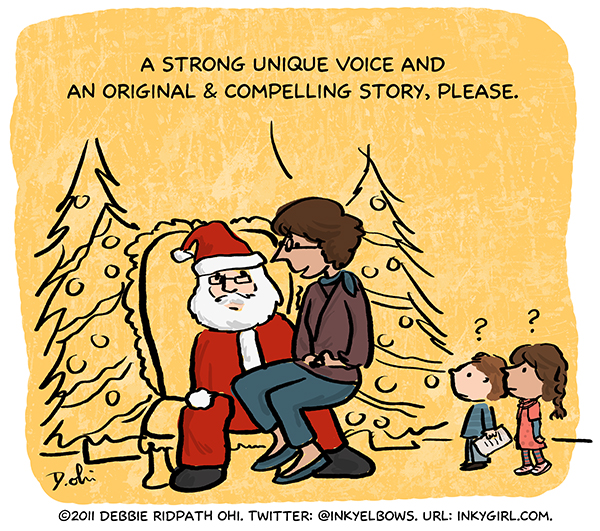
Comic: The Writer and Santa

OHI0090-WRI-WriterSanta-v4-flat-600

Source: inkygirl.com

Visit us at First Edition Design Publishing

Ready for More Social Media Clean-Up? Here’s How To Go About It (Part 2)

Did you do Part 1 of the social media clean-up yet? If not (and come ON already, why not? It’s not like you have writing or work to do. I mean), get on with it already. If so, yay you! I covered key updates on Twitter, Facebook, and Pinterest.

Here’s your next assignment, should you choose to accept it (sorry, had to):

  • updating Instagram,
  • LinkedIn,
  • your blog/website and
  • Amazon author bio (if you have a book out).

Let’s do this thingy.

Social Media: Instagram

Many writers and bloggers either aren’t Instagram at all, are on it and post photos of their cats (*raises hand*), aren’t sure what to post so don’t post anything, or are caught up in nothing but selfie culture (ugh).

We can do better, writer friends! Instagram is no different than any other social media channel — be strategic. Use your keywords as a basis for your personal branding. Share what makes you, you.

Key ways to update your Instagram now:

  • Is your bio complete and updated? You have 150 characters only, so make the most of them. More than anywhere else, this is especially key here as it’s the only place on Instagram where you can have an active hyperlink (links do not work in individual posts unless you are paying to advertise). What do you want to link to? I suggest your most recent release, however, some writers prefer to link to their website. Your call.
  • TIP: You can update this hyperlink frequently (if you want to), based on your sales objective. Here’s mine as an example (follows appreciated):

Ready for More Social Media Clean-Up? Here’s How To Go About It (Part 2) by @BadRedheadMedia

  • Have a giveaway or an event? Change the link on your bio.
  • Have you transitioned to a Business Profile yet? It’s free and allows you far more options! This post walks you through every step. Why bother? Paid advertising. It also links to your Facebook Author Page — if you pay for advertising on your Facebook Page, the ad also shows up on your Instagram (and vice versa).
  • Find readers using hashtags in Search. This is NEW.
  • Use pertinent hashtags in your posts to attract readers.

Social Media: LinkedIn

  • Is your bio complete and updated? This is trickier on LinkedIn — there’s a lot to fill out. Here are some key tips from Grammarly on exactly how to do that.
  • Do you need to be there at all? I get this question a lot. Well, think about this: who’s your demographic? Do they work? Probably. Are they digital readers? Probably. Boom. That’s why you should be there. It’s also a great way to connect with others in the writing and publishing community.
  • Here’s a great read on how to make the most of your bio and connections (so you don’t have to just take my word for it). Plus, if you have a side business, you can create a ‘company profile’ attached for your personal profile (e.g., my LI profile is under Rachel Thompson, and I have a BadRedhead Media Company Profile).
  • Utilize LinkedIn Pulse (their blogging section). Why? Visibility! Either take posts you’ve already written or write original content. Either way, you are helping your SEO.

Not Social Media, But Still Super Important: Your Website About Section (aka, Bio)

Little bit different format here, so stay with me. What is the point of your Author Bio? It’s not really to list all of your accomplishments like on a resume (or Tinder for you young’uns); it’s to help the reader decide whether you’re interesting enough (sad, but true) for them to pay attention to and possibly buy books from. Here are a few expert tips on writing the best bio possible from Hubspot:

  1. Always write in third person (I know it sounds weird, but think about this: people will share your bio when you do things like blog tours, guest articles, and events — so having your bio in first person will be even weirder in those situations.) TIP: Create a media kit people can download for these occasions OR give permission for people to copy/paste your information.
  2. Remember: It’s not really about you. It’s about your reader. What will they gain from reading your blog posts, articles, and books?
  3. Establish credibility — truthfully. Everything is searchable, so be absolutely truthful with everything you share in regard to your credentials (not that you shouldn’t have been before, but you know). If you share that you’ve written for Forbes, link to the article. If you cannot provide that link, do not list it in your bio.
  4. Explain what you do. Most writers will say: I’m an author. Most bloggers will say: I’m a blogger. Yea, we got that. Do this instead: What will reading your books DO for people? What will they feel? What will they learn? What problem will it solve? Food for thought.
  5. Add a CTA (Call to Action). Your bio can be an appropriate place to add a simple Q&A pitch, e.g., “Want to learn more about rocking your book marketing? Buy BadRedhead Media’s 30-Day Book Marketing Challenge here (add link).”

Finally, and most importantly, be sure your book covers, banners, visuals, and links are all updated, and do this on a regular basis. TIP: go back through your old blog posts and update your book links, book covers, etc. I’m doing that now myself since I’ve republished all my books and the old links are dead.

Amazon Author Bio

Many authors upload their books to Amazon and think, okay, cool, done. Not so fast. You need to go to Amazon Author Central and create your Author Bio. Here’s a link to Author Central and info how to do the basic set-up.

Whenever you publish (or re-publish) a book, you must claim it through author central for it to show up under your author name on Amazon (this also counts toward books you’ve contributed to, e.g., anthologies). This helps expand your backlist, makes your bio page more robust, and it’s totally legit. You did the work, so take the credit.

Other items you can (and should) add:

  • Your blog RSS feed
  • Events (e.g., speaking engagements or signings)
  • Up to eight photos — feature new books, upcoming promos or giveaways, even awards you’ve won. Remember, though: whichever photo you place in the first spot will be the one featured on your page (so if it’s an award and not your face, that’s what readers will see). **Update these photos frequently if you are using them for promos/giveaways which will be short-lived.
  • Videos – book trailers, typically, though you can share a YouTube video or FB Live video as well (or a speaking event if it fits your theme).

An important final note: all this work is for your Amazon country of origin only, meaning you need to repeat this process for international pages. You can’t do every country, but you can create additional pages in the UK, France, Germany, and Japan. Here are the links to all those Author Central sites:

I don’t personally speak French, German, and Japanese (I don’t know about you), so I hire someone who can help me. You can also use Google Translate and hope for the best.

And that’s it for now. Do the work, keep writing, and you’ll be set for 2018!

Source: badredheadmedia.com

Visit us at First Edition Design Publishing

5 Reasons Goodreads is a Book Marketing Staple

Goodreads has mixed reviews at best when I chat book marketing strategies with authors at conferences, but I really want 2018 to be about maximizing on YOU, on using what makes you unique to sell more books, and Goodreads is a great platform for achieving that goal.

And while Goodreads has gotten a bad rap for being where books go to get slaughtered by reviews, that’s honestly not fair.

Good books and engaged authors get great reviews on Goodreads. See how that works?

So it’s time to buck up and start using Goodreads to your advantage!

Be an engaged author on Goodreads. I promise you, a good book paired with genuine engagement on…


And here are 5 tips to get you motivated:

It’s Not Typical Social Media

Social media is generally one of the biggest book marketing hurdles for authors that I talk to.

They either don’t have time to juggle all the platforms they signed up for, or they’re completely confused about where to start and how to keep it going.

So I suggest they focus on Goodreads.

I never recommend being on social media just to check it off your list.

If you’re not good at it, or you don’t put in the time but send people there via your website or email marketing, you’re risking doing more harm than good.

Goodreads is for readers and authors, so if you’re suffering from an aversion to social media, let Goodreads be where you focus your attention.

High Quality, High Volume Users

Another great benefit is the volume of high quality, targeted users.

Goodreads has 65 million members and counting, and guess what? They all love books!

Honestly, as authors, we couldn’t ask for a better opportunity.

Maybe your ad dollars and content on other social sites may be getting lost in the shuffle. Reach avid readers on Goodreads, guaranteed.

Groups That Get Real Engagement

Targeted reader groups are gold when it comes to book marketing and engagement,.

Talk about a captivated audience!

But here’s a dose of reality. I’ve dabbled in groups on other social sites, both personally and for my authors, and they are tough going.

Starting from scratch is never easy, and sometimes it’s really not necessary.

The reader groups on Goodreads are established, active, and users trust them. Use this to your advantage.

You Can Find the Right Readers

An extension of your group activity should be a focus on your genre as well.

And your goal shouldn’t be to sell your book but to prove you’re also a fan of your own genres (you are right?), this kind of book marketing is more about networking, and it will take you far, I assure you.

If you become “one of the diehards” in your genre groups on Goodreads you can almost guarantee your fellow groupies will support you by checking out your next release.

Participate in a genuine way. You will be genuinely rewarded.

It Can Be a Great Alternative to a Website

If you don’t have a website, or you don’t have one that you can update easily or frequently, Goodreads can be a great alternative.

You have a great section for a bio, you can create and announce events, run giveaways, host author Q&As.

You can even host your blog on Goodreads. And to make “blog” seem less scary, just think if it as regular fan and follower updates on your work, your writing schedule, giveaway promotions and release announcements. See? Fun stuff!

The Takeaway

Goodreads can be daunting, but it’s gotten a bad rap with authors and that really needs to stop.  If you need help with this magnificent tool or any other book marketing tool, contact me!

Besides, if you wanted everything to be easy you wouldn’t have decided to become a published author in the first place – because this book marketing stuff isn’t for the faint of heart – but the more you jump in feet first with these strategies, the easier they become to execute.

If you’re an author already on the Goodreads train, I’d love to hear how you’ve incorporated it into your book marketing in ways you’ve really benefit from!

Source: amarketingexpert.com

Visit us at First Edition Design Publishing

Creative Writing Prompts for the Young at Heart

Today’s post includes a selection of prompts from my book 1200 Creative Writing Prompts. Enjoy!

Stories and poems for children are among the most magical and delightful written works in the literary canon.

Children’s literature has a universal appeal; the phenomenal international popularity of the Harry Potter books and movies is a testament to the power of children’s stories.

But there are plenty of other works that affirm the longevity of children’s literature: nursery rhymes, fairy tales, and classics such as Where the Wild Things Are, Goodnight Moon, and everything Dr. Seuss ever wrote.

Most of us writers first fell in love with the written word when we were children. Stories carried us on fantastical adventures. Words danced and soared through our imaginations. Many of us never grew out of the poems and stories we first cherished. We continue to enjoy them, and we pass them on to our children, grandchildren, nieces, and nephews.

Today’s writing prompts celebrate children’s literature and pay tribute to the young and the young at heart.

Writing Prompts

These writing prompts are filled with childlike wonder. Use them to write a poem, a story, or anything else that comes to mind.

  1. Children’s stories sometimes try to help kids solve difficult problems. Write a story about children overcoming nightmares, getting potty trained, wetting the bed, losing a pet or grandparent, or attending the first day of school.
  2. At the height of human technological development, a special child is born who can communicate telepathically with computers and other mechanical and electronic devices.
  3. Write a poem using the following image: a child sitting alone on a bench in a schoolyard.
  4. After learning his or her parents are struggling to make ends meet, a child prodigy decides to fix the family’s finances.
  5. Write a story about a child and his or her imaginary friend.
  6. A child living on a farm or ranch can hear the thoughts of animals—both the livestock and the local wildlife.
  7. Write a poem using the following image: a child giving another child a piggyback ride.
  8. While digging in the garden, a child finds a magic ring that makes any wish come true.
  9. It’s important for children to learn the alphabet. Write an ABC book. You can write a separate vignette for each letter, write a story linking them all together, or write a nonsense rhyme for each one.

Some Tips for Using These Writing Prompts:

  • Children’s writing uses simple language and made-up words.
  • Nothing speaks to children like bright, vivid images and lively characters.
  • Use rhyme and other musical devices and choose words that are fun to say.

Do you still read children’s poems and stories? Do you remember the ones you loved best as a child? Have you ever tried writing for kids? Do these creative writing prompts inspire you? Share your thoughts in the comments, and keep writing!

By Melissa Donovan
Source: writingforward.com

Visit us at First Edition Design Publishing

On Writer Buddies & Ignoring Them

“Generally, art partly completes what nature cannot bring to a finish, and partly imitates her.” -Aristotle, Physics, Pt. 2& 8

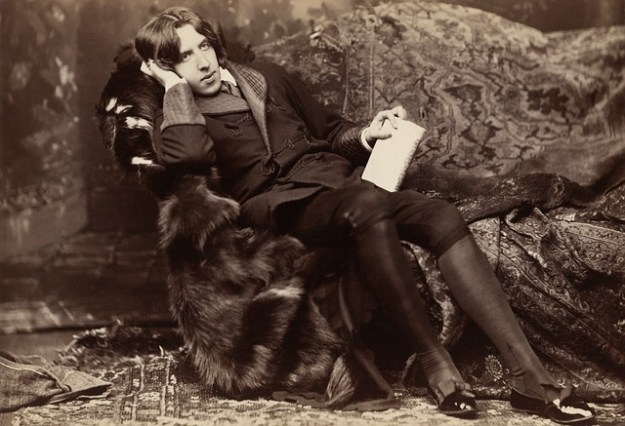
“Life imitates art far more than art imitates life.” -Oscar Wilde, The Decay of Lying.

Although the critical theorist in me would love to join a spirited debate between two old dead guys, for the sake of brevity let’s just agree that life and art are inextricable. Then as artists we can apply those truths we’ve found in life to the benefit of our work (which will then improve our life, likely resulting in the further improvement of our work, but that’s only if imitation…wait, I said I WASN’T going to join the debate).

th

In life, we have multidisciplinary evidence that it’s impossible to succeed or thrive without human contact; the same is true of art. You cannot succeed as a writer without allies and friendships. Yet the work of a writer (and I imagine most artists) is rather secluded. I can’t tell you how many times I have laughed at myself when writing a scene thinking “How would a non-socially awkward person respond in this moment… oh well, I have beta readers and normal people for that.”
There is this romantic image in the writer’s mind of a cabin in a forest somewhere which contains little besides a laptop, maybe a caffeine source, and a table near a pot belly stove. The haze of said cabin is a place from which triumphant writers emerge with completed manuscripts after the course of a week. Now, I have been to that cabin; my friend’s mom owns it and sometimes we go there for tea and the pleasant company of ignoring each other for a while. Ah…the cabin. ::sigh:: But that romantic image is not where books get made.
Isolation is the suffocating pit of self-doubt where dreams go to die. Don’t get me wrong, I understand and agree that there is a definite time to buckle your pants and close the door so you can get the work done. Managing distractions and interruptions is a skill that must be a sharp pair of scissors in a writer’s toolkit. Don’t get me started on smartphones and the “attention economy” (seriously though, google that, but not right now, you’re reading something). Some parts of the writing process are isolated and focused.  But others require external input and criticism; writers know this. I personally recommend this cool new thing the kids are doing called single-tasking (It’s pretty fringe, you’ve probably never heard of it). It’s this new wave habit where you turn of the smartphone and TV, ignore all the people that you love, and do one thing at a time. The writers that practice it, finish their books. Food for pigeons.
oscar-wild-60553_640
I’m still new at this (obviously, you should see my under-construction newbie website. Or maybe not, ha!), but there were two things that took my writing game to the next level in 2017. The first was tracking my hours. That habit showed me the limits on my “focus” time. Before tracking, I often vacillated between “I have no time to write” and “I am taking so much time to write away from my family, oh the guilt! But data doesn’t lie, and I have been averaging about 15 hours a week for 11 months because I started tracking. My two cents: Track. Analyze. See where it takes you. The second and even more helpful change I made this year was connecting with fellow writers. I’ll be honest with you; it was intimidating at first. I started out thinking, “Who am I to comment, ask for feedback, or share ideas?” Not to mention, we all have asked that dreaded question, “Am I really a writer?” I’ll let you in on an industry secret; you are. And more to the point at hand, we’ve all asked it of ourselves. That question is not so far in my rearview mirror that I have forgotten its impact. It matters; ask it; answer it.  There will come a moment when you realize how silly it is that you ever had to ask. But whether or not we admit it we’ve all asked ourselves that question. For some of us we were in junior high, but we still asked it.
Honestly, for me, connecting with authors is still intimidating. I’m writing a guest post for Author Culture today for cry-babying out loud, how cool is that? My first book is only half finished, but without the dual pedals of focused work and writer buddies, on my book-cycle (oh man that’s a terrible metaphor), my WIP would still be an intangible dream.
This writing journey, whether it’s to Canterbury, Random House, or Amazon is made better by companyae (Ha! Middle English non-conventional spelling for the win!).
I cannot stress this enough. Do the work. Write. And connect. With. Other. Writers.
Good. Now, actually show them your work. Otherwise you will likely end up arguing with Aristotle or something…
…and we all know how that ended.
Source: authorculture.blogspot.com

Visit us at First Edition Design Publishing

4 Movie Quotes Every Writer Needs

There are few things in the world as weird as being a writer. We pour ourselves into our work, giving it everything we have, pushing through rejection, overcoming one barrier after another, hoping our work will be noticed. In this strange and taxing pursuit, it’s important that we hold onto some truths that can keep us centered, inspirational quotes for writers that will remind us why we write.

Sometimes, the best place to find those truths is in movies.

Four Movie Moments for Writers

There are lots of movie moments that I hold in my head because they inspire me. Here are four movies and their inspirational quotes for writers that I’ve leaned on this week:

Quote #1

Are you crying? Are you crying? There’s no crying, there’s no crying in baseball!

—Jimmy Dugan in A League of Their Own

Following a bad play, the coach of the Rockford Peaches, Jimmy Dugan (played by Tom Hanks), yells at one of his players. As he walks away, the player begins to cry. Jimmy turns on the player and delivers this iconic quote.

There lots of things about writing that makes me want to cry. This week, for example, one of my books was given a very honest three-star review that exposed all of the book’s flaws.

It wasn’t that I didn’t know the flaws were there. I knew they were there. I had just hoped no one else would see them. When the critic laid them bare for the world, I wanted to cry.

What I love about the Jimmy Dugan quote is that there is profound truth behind it. Tears may feel good in the moment, but wallowing in them can blind us to truths we need to hear. In writing, just like in baseball, we need to accept our mistakes, learn from them, and get back out on the field and play the next inning.

We can be sad for a moment, but there is work to be done and we are the ones that need to do it.

Maybe it’s not a critic making you want to cry. Maybe you lost NaNoWriMo this year? Or maybe you are dissatisfied with your own work? Or maybe life is making it difficult to find the time to crank out the words.

Whatever the stressor is, just remember the words of Jimmy Dugan. Stiffen your upper lip, look in the mirror, and say, “Are you crying? There’s no crying. There’s no crying in writing!”

Quote #2

In this life, you don’t have to prove nothin’ to nobody but yourself.

—Fortune in Rudy

In the movie Rudy, Fortune (Charles Dutton) is a wise groundskeeper and mentor to the movie’s protagonist. In one scene, Fortune finds Rudy (Sean Astin) skipping football practice. When Fortune asks Rudy why he wants to quit, Rudy explains that he quit because he wasn’t going to be able to play in the upcoming game and therefore wasn’t going to be able to prove the world that he had made it.

Fortune responds by reminding Rudy that he has zero talent and shouldn’t even be playing the game. Then he delivers the amazing line, “In this life, you don’t have to prove nothin’ to nobody but yourself.”

I’ve published four novels and close to a hundred short stories, and still, I see the achievements of others and wonder when I’m going to become a “real writer.” I envy the money other writers make, the acclaim they get, and the attention from our peers. I envy the speed at which they publish, the advertisements they run, and the podcast interviews they do.

In these moments, I find myself in Rudy’s shoes, feeling like I should quit because the recognition I desire feels unattainable.

It’s in those moments when I need Fortune’s quote the most. I need to be reminded that I don’t do this for the praise of the crowd. The crowd is fickle and their attention is fleeting. Pursuing it is like chasing a snowflake. Even if we catch it, it disappears as quickly as it came.

We can’t work hoping for affirmation from the crowd. We need to do our work and do it well, knowing the only person we need to prove anything to is ourselves.

Quote #3

Do you really want to get him? You see what I’m saying. What are you prepared to do? And then, what are you prepared to do?

—Jim Malone in The Untouchables

In the movie The Untouchables, Jim Malone (Sean Connery) is a streetwise beat cop in Chicago. He is approached by Treasury Officer Elliot Ness (Kevin Costner) and asked to join Ness’s team that is going to hunt the notorious gangster Al Capone. Malone pulls Ness into a church where they can talk quietly.

Sitting in the pews, Malone asks Ness this iconic question: “What are you prepared to do?” When Ness responds, “Everything within the law,” Malone shoots back, “And then what are you prepared to do?”

While we aren’t hunting down mob bosses, we shouldn’t kid ourselves about the difficulty of the task before us. Creating art that is noticed and makes a lasting impact is hard. Few succeed. Even fewer are remembered.

It demands hard work and sacrifice. There will be late nights and early mornings no one will applaud you for. There will be pages and stories and characters you pour yourself into that no one will appreciate. And if you succeed and someone reads your stuff, there will be criticism and rejection.

This is no easy task ahead of us.

We need to remind ourselves of this so that when things get hard, we aren’t surprised. With each barrier we face, we need to keep Malone’s voice in the back of our mind.

We need the old, grizzled voice of wisdom challenging us, refusing to let us be naive. We need the questions, “What are you prepared to do? And then what are you prepared to do?” routinely put to us so that we don’t forget that, though the road is difficult, the journey is worth the sacrifice.

Quote #4

You think we need one more? You think we need one more. Alright, we’ll get one more.

—Danny Ocean in Ocean’s Eleven

In the movie Ocean’s Eleven, after assembling ten members of their team, Danny Ocean (George Clooney) and Rusty Ryan (Brad Pitt) are sitting in a bar watching TV. As a boxing match plays on the screen in front of them, Danny asks Rusty, “You think we need one more?” I love this quote because it reminds me that getting the right team around us is critical to our success.

It is tempting to think of writing as a solitary thing: you and your keyboard alone in an empty room. That image couldn’t be farther from the truth.

While writing does require a lot of isolated work, it can’t be done without a team of people around us. No one makes art alone. We need other writers to bounce ideas off of and give us honest feedback. We need team members to work alongside as we strive together to get our work noticed.

Just this week I listened to an online course presented by Joe Bunting and Ruthanne Reid. Three years ago, I met them when I joined the Becoming Writer community. The impact they have had on my work by encouraging me, giving me feedback, and teaching me what it means to be a writer is priceless. I wouldn’t be the writer I am today without them.

I’m glad that when I started this crazy journey, I had Danny Ocean in the back of my mind asking, “Do you think we need one more?” The answer is yes.

The good news is, if you don’t have a group of writers you are working alongside, you can find them right here by joining the Becoming Writer group.

Your Writing Inspiration

Becoming and being a writer is a strange journey. We need to keep ourselves grounded with things that inspire us.

I’ve shared with you four of my inspirational quotes for writers. Now you share a few of yours with the rest of us in the comments. Give us the quote and tell us what about it inspires you.

What inspirational quotes do you lean on to keep you centered as a writer? Let us know in the comments.

By Jeff Elkins
Source: thewritepractice.com

Visit us at First Edition Design Publishing

7 Lies Writers Believe (and the Truths You Need to Know Instead)

First Edition Design eBook Publishing

The writing world is filled with land mines—lies that, when you step on them, blow you right off your creative feet.

I’ve stepped on all of these in my writing career, and every author-friend I know has set them off, too. That tells me they’re pretty common.

Lies Writers Struggle With

I want to help arm you against these painful, dangerous explosions, so I present to you seven lies that writers believe—and the truths that can help you get back on your feet.

Fair warning: this will be a very quote-heavy article. Why? Because I don’t want you to just take my word for it. I want you to see that all creative minds have to navigate these mines—including the best authors in the world.

Lie #1: If you haven’t made it/gotten an agent/become famous by now, you never will.

This is a rough one. When we finally get the courage to start writing (and *gasp* tell people that we are), a funny thing happens: for some reason, others forget everything they know about how skill training works, and they insist we should have “arrived” already.

Baloney. Does anything work that way? Even people with genius taste buds need to learn how to cook. Being “discovered overnight” is an enchanting fantasy, but it’s a dangerous myth.

Here’s the truth: just like getting in shape, climbing a mountain, or memorizing a symphony, writing takes time to master. 

Sam Sykes said once that no matter who you are as an author, you pay your dues at one end or another. To put it another way: it takes many years to be an overnight success. Maybe you haven’t “made it” yet. That doesn’t mean you never will.

“An overnight success is ten years in the making.”
― Tom Clancy, Dead or Alive

“Timing, perseverance, and ten years of trying will eventually make you look like an overnight success.”
― Biz Stone

“It takes 20 years to make an overnight success.”
—Eddie Cantor

“Actually, I’m an overnight success, but it took twenty years.”
—Monty Hall

If you haven’t made it/gotten an agent/become famous by now, you aren’t out of time yet. Keep writing. Keep reading. Don’t quit.

Read the rest of the truth at The Write Practice

First Edition Design eBook and POD Publishing

 Visit us at First Edition Design Publishing