
Tag Archives: writing goals

Encouraging Words for Writers: 3 Essential Reminders for Struggling Writers

There are a lot of things that stop us from writing. Fear of failure, discouragement, and exhaustion are my big three. Sometimes, what we need to push through those barriers is a reminder of who we are and why we do what we do. We need someone to come alongside us and speak encouraging words for writers.

We need to be told again the stories that have led us to the place we are now.

3 Encouraging Reminders for Writers

On the wall of my office, I have a collage of quotes and pictures that have inspired me. Each quote represents a story from my past. I read over them whenever I need a boost of encouragement (which is at least once a day).

These encouraging words for writers are a wonderful source of strength for me. Many of the quotes on the wall are from friends and family who had the right words for me at the exact right time.

Here are three I lean on regularly to get me through rough patches.

1. “Work the process.”

My mentor said this to me at a moment when I was completely lost.

Things at work were falling apart. Several projects had started to break down at the same time, another staff member had verbally attacked me in a staff meeting, and I was being accused of something I didn’t do. On top of that, the organization I worked for was in financial trouble and I wasn’t sure we were going to turn things around.

I called my mentor to ask for help because I had no idea what to do next. We sat in an empty hallway in the basement of the building. It was late and everyone had gone home. Leaning against the painted cinderblock wall, I explained to him in detail everything that was going wrong and all the extravagant plans and drastic measures I had designed in my head that would turn things around.

After hearing me out, he said, “Work the process.” I asked him to explain.

“Don’t do anything extravagant. Don’t take drastic action. There are processes in place. Work the process.”

Often as a writer, I work myself into a dark place. I begin to feel like my writing is worthless. I grow discouraged and lose focus. I find a thousand things to do instead of writing the next chapter.

When I get in that head space, I remind myself to “work the process.”

There is a process to my writing. I write after my family has gone to sleep. I sit at my kitchen table with my laptop, a drink, and a notepad, I skim the last chapter I wrote, I look at my outline, and then I write the next chapter.

When life is hard and I don’t feel like writing, the process keeps me focused and moving in the right direction.

It’s not extravagant. It’s not drastic. It is mundane and routine; and when things get hard, that’s exactly what we need.

2. “No one is going to die on the table.”

I wasn’t prepared for the pre-med course load I took on my sophomore year of college.

My freshman year, I’d been a music major. Since the classes were mostly about performing, I’d been able to wing it with a minimal amount of preparation. Instead of working hard in the practice rooms each day, I learned to play racquetball and became a regular on the basketball court.

Predictably, my disdain for practice made it clear to me and my teachers that I wasn’t going to cut it as a musician, so I decided to pursue one of my other interests, science. While I loved the classes, I was not prepared for the amount of studying that was required.

By the time I got to my midterms, I was way behind in multiple classes.

The night before three tests, a group of friends who were in class with me came over to study. We blew through our biology and chemistry notes in our first three hours together and I felt good about my prospects in the morning.

A little before midnight, we began studying for physics. I hated physics. Sitting at my small round kitchen table, my friends rattled off formulas, made up problems for one another, and answered practice questions with ease. I, on the other hand, was completely lost.

After an hour and a half of trying to “get it,” I excused myself from the study session, claiming I needed to get something from my bedroom. Hiding in my closet so no one could hear me, I began to cry. I called my dad and explained through tears what was happening. I was sure I was going to fail the test and it was too late for me to do anything about it.

After calming me down, he said several things to me that night that have stayed with me. One of which was, “Listen, if you fail tomorrow, no one is going to die on the table.”

Dad was a surgeon who primarily saw high-risk patients. When someone got to him, it was life-or-death. If he messed up or came to work unprepared, someone might literally die on the table.

The words he gave me that night were a fantastic reality check that I’ve used again and again. They’ve helped me take risks and push through fear. When my fear of failure begins to slow me down, I remember sitting in my closet and getting a good dose of perspective from my dad.

Through the years, fear has stayed with me. It is the greatest enemy of writing. Many nights I will sit down to write a chapter and hear fear in my ear whispering, “You’ve got nothing. You’re not a real writer. Stop kidding yourself. You’re going to fail.”

When that voice comes around, I remind myself of the stakes. If I write a terrible chapter, no one is going to die on the table. I’ll just erase it and try again tomorrow.

Having a refreshed perspective helps me move through fear and write.

3. “The tension is good.”

It was after midnight. My friend and I were alone on the second floor of a bar. On the table in front of us were stacks of meeting notes and ideas we’d sketched out together over the years. We were drinking coffee, talking about a non-profit we were both serving, and dreaming up ways to solve all the organization’s problems.

There were some amazing things happening in the organization. We were seeing real breakthroughs in the community we served and people were being helped.

At the same time, we could feel the organization hadn’t reached its full potential. We knew what it could be, but we weren’t sure how to get it there.

We thought that maybe, if we tweaked this one process, or increased our effort in this one area, or redirected resources to this other direction that we would see a breakthrough.

Caught in the tension between the good we were doing and the good we wanted to do, I began to complain. I whined about wanting the future to arrive already, and how I didn’t want to have to wait for changes to take hold.

After I finished another pointless rant, I remember my friend smiling at me and saying, “Don’t rush it. The tension is good.”

He was right. If we had made the changes right away that I wanted to make, we would have failed. Things that looked like a good idea at that moment were actually terrible ideas. Moving slow and making careful and strategic changes helped us see different paths and solutions that weren’t immediately apparent.

As a writer, I often find myself with a problem I can’t fix easily. For me, it usually has to do with plot. I’ll work myself into a hole in my story that I can’t get out of.

Weighed down by exhaustion, my gut tells me to just ignore it, hope readers won’t notice, and rush to the end. I tell myself, “Just publish it and move to the next one.”

Unfortunately, I’ve learned the hard way that readers always notice.

The phrase “the tension is good” has served over and over again to remind me that some problems need to sit. They can’t be solved right away. Instead, they need to be thought through because marinating in the tension will produce a better result.

Encouragement for the Journey

Those are three of the memories that bring me inspiration and encouragement. When I’m stumped in my writing, overwhelmed, afraid, or all three at once, these encouraging words for writers remind me that I will make my way through.

No, my writing isn’t perfect. But the process works. No one is going to die on the table. And the tension is good.

When you hit a rough patch, what encouraging words for writers do you lean on? Let us know in the comments.

By Jeff Elkins
Source: thewritepractice.com

Visit us at First Edition Design Publishing
Healing From Shame: How to Overcome the Insidious Cause of Writer’s Block

Every time we sit down to write, our mood and state of mind affect our words. We infuse, to some extent, everything we write with our unique “voice.” Our emotions come through on the page.

When we’re struggling to eke out even a few words and make sense of our writing, it shows in our work. Our characters are flat. Our scenes are dull and passive. Our plot is thin and weak. Nothing we try fixes the problems. Or, maybe words don’t come at all.

We may declare that we have a case of writer’s block, particularly if we’ve wrestled with the vexation for weeks or months. But, there may be a stronger and more insidious obstacle: shame.

What Is Shame?

The kind of shame that can affect your writing is invasive, corrosive, powerful, and debilitating.

Shame is beyond embarrassment and sadness, although both may be present. It’s beyond writer’s doubt. It tells us we are defective and unworthy of joy, happiness, and reaching our goals. It’s the gnawing feeling in our solar plexus that we’re not okay, and anything we do is not okay. We feel as though we are a mistake rather than acknowledging that we made a mistake.

Shame can exacerbate or bring on depression and anxiety. I have lived with depression and anxiety my whole adult life, and I realize they can render me emotionally raw or destitute. These conditions magnify and intensify when I’m wrestling with my imagination. Combined, they mix a recipe that can shut me down for days.

Writers and Shame

When we feel helpless and vulnerable, our writing can take on a tentative and cautious tone. We may be afraid to write with honesty, thinking we’re too exposed or that our writing could harm others. That struggle to write can feel like writer’s block.

We don’t lack imagination. Rather, we lack self-compassion that allows our imagination to shine through.

Having self-empathy helps us see ourselves as we truly are and acknowledge that everyone is imperfect and makes mistakes.

Conversely, we may say on the page what we can’t openly verbalize. Creative writing, whether fiction or nonfiction, can provide an outlet for pent-up emotions. Passion-charged words act as release valves for the writer and have a ring of authenticity and strength.

But, we must take care not to get stuck in an emotion which then drives all our writing.

Perhaps every scene is punctuated with anger, frustration, sadness, or desperation. Even tender, nurturing, quiet scenes somehow sound angry. Or, maybe, every scene sounds flat and emotionless because we’re avoiding confrontation with strong emotions within us.

It may be time to check our emotional state. This goes deeper than simple writer’s block. We can’t manage what we don’t know exists.

What Can We Do About Shame?

There are four powerful strategies for addressing shame.

1. Take steps to recognize shame

We first must acknowledge that the presence of shame is a possibility. We recognize the shame by looking at painful experiences in our lives, how we’ve coped with them, and the ways they continue to affect us.

Shame can show up in our lives as overeating, sleeplessness, outbursts, smoking, drinking too much, or using illicit drugs.

It may shut us down, or we may become super busy as we attempt to mask painful feelings.

It may wreak havoc on our relationships.

By bringing shame to the forefront, we can begin to deal with it.

2. Realize you are okay

Second, accept that there’s nothing wrong with you.

If you experienced an act perpetrated against you, know that you’re not at fault. You are dealing with the aftermath of emotional devastation.

Most of our life experiences are beyond our control.

Distraction activities may make us feel worse than before we engaged in them.

If you acted in a way that harmed someone else, know that you did the best you could at the time and try to find a way onto the path of self-forgiveness. Beating ourselves up compounds the pain. You may have to contend with the consequences of your actions, but you now can view the episode from the vantage point of humility.

It’s crucial that you know, really accept, that you are a precious, worthy human being.

3. Talk about it

Third, enlist the intervention of a professional or a trusted, supportive, nurturing person — psychologist, counselor, mental health therapist, minister, rabbi, priest, spiritual director, or trusted friend or relative. We must confront the shame in a process that works for us, but we don’t have to do it alone. Check resources in your community for the type of counseling you need.

I regularly meet with a psychologist to sort through the pain of trauma and the resultant emotions. I have, in the past, consulted with a spiritual director as well. They help me gain clarity and a sense of empowerment. They act as mirrors for me and see what I can’t — I’m too close to my own stuff.

4. Write about it

Fourth, writing about the experience helps get it out of our head and in front of us where we can examine it without judgment.

You already have a set of tools and techniques in your writing arsenal. These strategies come in handy for journaling.

Ask questions to get started. What am I feeling right now? What do I want to do about it? If I choose to act now, what are the possible outcomes? How can I work through this? These questions will generate others.

Our journal can be as simple or as elaborate as we like. I have a favorite brand of leather-bound, lined journal that has 384 cream-colored pages, each graced with a fleur-de-lis at the bottom. I journal daily and have hand written over 7200 pages since September 8, 2002. I note the date and time of each entry. I use different colors of ink to enliven my writing and add an extra dimension of focus.

You can also journal in a word processing document on your computer or use one of several online journaling programs and apps.

Journaling helps me name the problem, identify the components and my emotions, and release strong feelings. It helps ground and center me, and is an excellent complement to my therapy sessions. I often discuss a journal entry in therapy, and I just as often journal what we discussed in a session.

Consider your threshold for safety when journaling. Protect it and keep it as private as you need to. Show or discuss it with other people according to your comfort level.

Freedom Beyond Shame

Working through the layers of shame can be rewarding and powerful, though neither simple nor easy. The time spent can open avenues and vistas beyond imagination.

Approaching shame with an attitude of healing, rather than trying to fix what happened, will support you and help sustain your efforts. As you overcome shame, you’ll overcome the associated writer’s block, too. Your stories — and your life — will be all the richer for it.

All the best to you as you explore the shame in your life. You and your writing are worth it.

What are some techniques you have for working through strong emotions that act like writer’s block and threaten your writing? Let us know in the comments.

Source: thewritepractice.com

Visit us at First Edition Design Publishing
Setting of a Story: 3 Ways Going Outside Can Improve Your Writing

Our job as writers is to transport our readers into our stories. A high-octane plot and three-dimensional characters are obviously necessary to accomplish this goal, but so is an immersive setting of a story.

The setting of a story is often overlooked when describing a scene. We all want to move on to the next plot twist and wasting important space on what trees look like will just bore the readers, right?

Wrong.

To draw readers fully into a scene, we need setting. We want them to forget they’re reading and make them experience everything our characters are experiencing.

Sometimes, you can get away with building the setting of a story straight from your imagination. Sometimes, you can’t.

The Argument for Going Outdoors

I’m what you would call an “outdoorsy person.” I love being outside in any weather, at any time of day. Nature inspires me, clears my head, and gets me out of my desk chair for a little while.

You don’t have to be a nature person to get the benefits of absorbing your surroundings. And you don’t have to live in the middle of the woods to write about the outdoors. Even sitting on your porch or taking a quick jaunt around the block can infuse you with new energy and enthusiasm.

3 Ways to Be More Present

Okay, you’re outside, standing on a hill, looking at the sunset. Now what?

We’re constantly surrounded by everything we need to build a great setting of a story, but we often ignore all that in our rush to the next thing.

Pay attention to your surroundings. Immerse yourself in your own experiences, and you’ll be able to draw on them later.

NOTE: I’ve used a rural setting as an example, but this applies to urban settings as well.

Here are three things to think about while outdoors:

1. Your Senses

You already know the importance of using all five senses to improve your writing, but it can be hard to notice anything deeper than the obvious.

Let’s take our sunset example from earlier. It’s obviously gorgeous, and you can probably describe the colors of the sunset quite well.

Look deeper.

Close your eyes. Can you hear someone crunching through the woods in the distance? Songbirds? Traffic? The woman walking her dog across the field: Is she slumped from cold or fanning herself from heat? Young, old, talking on her cell phone? Is she attentive to her dog or zoned out? What does the air smell like? What does the ground feel like?

Pay attention to the less obvious and you’ll draw in your readers.

Remember: You don’t have to use all five senses in every description. Select the most useful senses for the scene.

PRO TIP: Try observing the same setting at different times of day or during different seasons.

2. Similes and Metaphors

Similes and metaphors add layers to your prose, allowing the reader to experience a deeper understanding of the setting. They also allow you to enhance character description and plot, establish mood and tone, and can cut down on overly verbose descriptions.

When you’re observing your surroundings, don’t just note the sensory details around you, but think about comparisons.

Right now, I’ve got a pile of snow outside my house that’s mid-melt and looks like a Smurfs hat. See, I didn’t have to describe the shape and curve of this particular pile of snow in order for you to get my meaning.

Back to the sunset on the hill. You’ve noticed the sunset is purple and yellow. That’s all well and good, but boring. What do those colors remind you of? For me, it’s a bruise, which enhances other aspects of my story, as my main character has just been betrayed by a friend.

The sunset swirled with varying shades of purple and yellow, spreading like an angry bruise across the horizon.

The “bruising sunset” is a bit overdone anymore, but you get the point.

Don’t just go with the obvious (aka, cliché) similes and metaphors. Think deeper. Get creative. Have some fun with it.

3. Spying

We don’t all have access to that hill at sunset, and we don’t all want to write about nature. (Though plenty of nature resides in cities as well.) If you or your characters prefer a more urban environment, pay attention to the people around you.

Yes, I’m giving you permission to spy.

I once encountered a middle-aged man decked out like a hippie browsing outside an antique store. Long gray hair, bellbottoms, bandana, smelled awful. He was so out of place, I just had to linger near him for a moment. He was chatting on an iPhone about his investments while thumbing through art prints. The whole situation stunned me.

To this day, he is still the most fascinating person I’ve ever seen. I possibly would’ve noticed him without consciously spying, but I wouldn’t have moved closer to hear his conversation.

No matter what you’re doing, pay attention to the people around you. What are they doing? How do they walk? Noting mannerisms can add layers to your characters. Are they talking to someone? What are they saying? Snippets of conversation can spawn an entire chapter idea, and introduce you to better dialogue.

Try not to be creepy, though.

Immerse Yourself

The setting of a story is just as important as other aspects of your writing. In order to establish an immersive setting for your readers and not rely on overused descriptions, you need to go outside and experience your surroundings. Observe. Take note.

Be present in your setting and your readers will be, too.

Any other tips to immerse yourself in outdoor settings? Let me know in the comments.

By Sarah Gribble
Source: thewritepractice.com

Visit us at First Edition Design Publishing
Poetry Prompts for Ranting and Raving

It’s easy to think of poetry as soft, flowery, and convoluted. It’s the stuff of Shakespeare, greeting cards, and children’s books. It’s precious, sweet, and erudite.

But some of the most exciting modern poetry defies all those stereotypes, and you need look no further than the slam poetry and spoken word communities to see how poetry can be infused with rage, passion, and humor.

These poets have mastered the art of ranting and raving with passion via performance poetry. It’s no wonder that during live recordings of some of their most impassioned poems, the crowd can be heard hooting and hollering.

Today’s poetry prompts encourage you to write a poem that unleashes your passion.

Poetry Prompts

You can use these poetry prompts to write any kind of poem you want. But for some reason, poems that rant and rave work exceptionally well in performance poetry. These pieces have luster on the page, but they explode when read aloud, so I recommend working on a poem that is meant to be performed. There is a list of links to some excellent recordings of performance poetry at the end of this post.

How to use these poetry prompts:

Choose one of the lists below and write a poem using all of the words in the list. You can also write a poem mixing and matching words from these lists or using all of the words from all of the lists.

Social Consciousness Personal Affronts Road Rage & Pet Peeves
humanity
corruption
eager
hunger
fair
power
greed
redemption
freedom
insult
betrayal
violated
lost
rude
bully
robbed
forgotten
liar
curse
line
impatience
thoughtless
chatter
hurry
spam
stop
gesture

Explore Performance Poetry

Need some ideas to help you get started with these poetry prompts? Below are links to a few examples of performed poems that are beautifully executed — well written and brilliantly performed. Once you follow the link, you’ll need to click the pod icon to listen to the performances.

WARNING: some of these poems may contain offensive language. But they show the breadth of subject matter that a performance poem can tackle. Some are full of anger, others are imbibed with grace, and a couple are sprinkled with humor. Enjoy!

All these poems and many more can be found on IndieFeed Performance Poetry, one of my favorite podcasts that is unfortunately no longer active; but the archives remain online for all to enjoy. I highly recommend checking it out (you can also access it via iTunes).

By Melissa Donovan

Source: writingforward.com

Visit us at First Edition Design Publishing

3 Types of Conflict and Why You Need to Use Them

Conflict is necessary for all stories. It doesn’t matter what kind of story it is — novel, short story, mystery, romance, thriller, children’s, adult — it will always need conflict. In order to keep the plot interesting and exciting, some type of conflict must be there. It gives your characters obstacles they have to overcome before they can reach their goals.

But how do you create conflict for your characters?

3 Types of Conflict

Conflict can come in innumerable shapes and sizes, but they can ultimately be broken down into one of three categories. Are you using these three types of conflict in your stories?

1. Conflict between your characters

Characters can argue, disagree, disobey the others’ wishes, keep secrets from each other, betray each other, and do many other things that would cause two or more people to butt heads. The most common kind of conflict between characters is when the protagonist and their enemy end up in the same room together.

That’s not to say friends and family can’t fight, though. In fact, conflict between allies can make a difficult situation a thousand times more interesting.

2. Conflict between your characters and the outside world

When events outside of your characters’ control occur — unexpected illness, a sudden loss of money, a death in the family, an injury, global events, etc. — characters are forced to react. Whether they deal with their situation in a poor or healthy way is up to you, the writer, but nevertheless, it reveals a truth about your characters and feeds the fire of your plot.

3. Conflict between your characters and themselves

This is quite possibly my favorite type of conflict, mostly because it can be the most frustrating for your characters. When there are problems your characters have no power over, they can place their anger on an outside person or object. But when the problems your characters face come from themselves, they can only turn their anger inward.

This can be difficult to write, but if it is portrayed well, it is extremely rewarding.

Internal conflict can result from your characters losing faith in their religion, deciding whether or not to break or bend the rules for “the greater good,” wrestling with addiction, doing what’s right versus doing what’s easy, feeling out of control, and more.

Experiment With All Three Types

Stories can have any one of these possible types of conflict, or they can have all of them. What matters most is that there is plenty of it and that it is carried out in the most interesting way possible.

Avoid clichés, play with characters’ relationships with each other, put your characters in the most difficult situations possible, and think about how they will handle these obstacles in a way that is true to their personalities.

What’s your favorite type of conflict? Let us know in the comments.

By The Magic Violinist
Source : thewritepractice.com

Visit us at First Edition Design Publishing

How to Construe and Convey Tone in Poetry

In literature, tone is the mood, attitude, or emotional sensibility of a written work. In poetry, tone expresses the narrator’s disposition toward the poem’s subject, the reader, or the narrative itself.

We might describe a poem’s tone as irreverent, relaxed, sarcastic, solemn, jubilant, or desperate. Tone can be any emotion or state of mind, and a single poem can include a combination of tones.

When we’re speaking, our tone is expressed through inflection. We use pitch and stress to communicate the attitude behind the words we’re saying. If I say, “Get out of here!” the tone of my voice will let you know whether I’m literally telling you to leave the room or whether I’m figuratively saying, “You’ve got to be kidding.”

In writing, we must approach tone with care, because it is often and easily misinterpreted. For example, sarcasm is commonly misread in text messaging and on social media. Someone types a sarcastic statement in jest, but the recipient takes it literally and may get offended or confused. Some people mark sarcastic remarks with to ensure clarity for this reason.

If communicating tone is so difficult, how can we interpret and communicate it effectively in poetry?

Tone in Poetry

Tone is conveyed through every aspect of a poem: imagery, connotation, even rhythm.

Consider two poems about death. One poem might use an image of a sunset while another uses dried flowers. The image of a sunset is warm, restful, even relaxing. But the dried flowers are brittle and lifeless. The image that the poet chooses will determine whether the poem’s tone is comforting or despairing.

Connotation is similarly crucial in poetry. Think about the difference between the word bum and the word pauper. Although these two words might be used to describe the same person or situation, they have strikingly different connotations. In a poem about poverty, the word choice will tint the meaning and reveal the poem’s attitude about the poor.

A poem’s rhythm can also contribute to its tone. As mentioned, when we speak, our inflections help listeners determine the attitude behind the words we’re saying. Rhythm is used similarly in poetry to affect tone. Short snappy lines could make a poem feel frantic or excited. Lengthy lines with a lot of long vowels can give a poem a relaxed or haughty tone.

These are just a few examples of elements that convey tone in poetry. Can you identify any other literary devices that are common in poetry and explain how they might be used to convey tone?

Studying Tone in Poetry

Consider the confident, sassy attitude of Maya Angelou’s “Phenomenal Woman” contrasted with the sorrowful yet playful tone of “anyone lived in a pretty how town” by E.E. Cummings. Or contrast the tone of Robert Frost’s “The Road Not Taken” with the tone of Emily Dickinson’s “Because I Could Not Stop for Death.” How do these poems differ in tone? How did the poets convey tone? And how does the tone of each poem affect the reader?

Select two poems from the literary canon and for each one, choose one to three words that describe its tone. Then look for the elements within each poem that convey its tone (metaphor, imagery, etc.) and note those as well, pulling lines, phrases, and words from the poem to support your interpretation. Finally, write a short essay of about one page comparing and contrasting the tones of the two poems and explaining how each poem communicates its tone.

How Do You Tone?

When you review your work, do you check for tone? Have you ever made revisions because the language in a poem wasn’t conveying the right tone? Share your thoughts on tone in poetry by leaving a comment, and keep writing poems!

By Melissa Donovan

Source: writingforward.com

Visit us at First Edition Design Publishing

 

Fiction Writing Exercises: Step Out of Your Shoes

I recently shared a writing exercise that encouraged you to get into a character’s head. Today’s exercise asks you to go a step further and explore characters and ideas that are your polar opposites.

One of the most exciting and challenging aspects of being a writer is creating characters. It is an opportunity to step outside of your own reality and take on a completely different persona. Unless you’re an actor, an undercover agent, or just plain crazy, you don’t get many chances in life to do that.

Writing also lets us explore ideas and share our thoughts, opinions, and feelings on a wide range of topics. To Kill a Mockingbird addressed racism, The Da Vinci Code critically explored religious doctrine, and The Hunger Games examined troublesome aspects of our society, particularly glam culture, class systems, war, and violence among teenagers.

As a fiction writer, there will be times when you need to get into the head of a character who is your polar opposite. You’ll need to have a deep comprehension of ideologies that are not aligned with your own. If you can’t do that, then your story will lack believability.

Today’s fiction writing exercises give you practice in stepping out of your shoes so you can walk in someone else’s.

Realistic Characters

For characters to truly resonate with readers, they must be vibrant and stir the audience’s emotions. Readers need to become attached to the characters, feel sympathy, compassion, even love (or hate) for them. It’s not easy to fabricate people (or other beings) that don’t really exist, have never existed, yet make them seem real. But it can be done.

So how do writers achieve this great feat?

Much credence has been given to the old adage write what you know. Base a character on a friend or family member or yourself. But what fun is that? If you’re an accountant by day, do you really want to play an accountant in your fantasy world too? Probably not. And when you create a character, that’s pretty much what you’re doing, playing a role. You must get into the character’s mind, live the life, absorb the environment in which the character lives. You have to be your character, even if you have absolutely nothing in common with that character.

Fiction Writing Exercises

Each fiction writing exercise below encourages you to get into a mindset that opposes your own way of thinking or existing. Try one exercise or try them all — just make sure to have fun.

Exercise #1: Write a personal essay from the perspective of someone who is your polar opposite.

If you grew up in the big city, write as a country dweller. If you grew up on a farm or lived in a small town all your life, write about an army brat who was raised living in dozens of towns, going to different schools each year. Are you a stay-at-home, married parent? Write as a swinging single making it big in the big apple. If you’re a successful businessperson, write as a prison inmate who grew up on the wrong side of the tracks.

You can also write as your ideological opposite. If you’re Buddhist, write from the perspective of a Christian. If you’re Christian, write from the perspective of an atheist. Are you a political junkie? Write from the viewpoint of the political party you oppose.

For the essay, focus on something you have never experienced or that you disagree with. If you are from the city and you’re writing about the country, write a descriptive essay about a farm setting. If you’re a liberal writing as a conservative, choose an issue and write an essay arguing for the conservative position on that issue.

The idea is to get outside of your comfort zone and explore a different way of life or mode of thinking than the one you know. You can then use this exercise to develop a character who is wildly different from you.

Excercise #2: Write a scene with two characters who are opposites.

Create two characters: one who is just like you (write yourself into the scene if you want) and one who is not like you at all. Write a scene that explores their differences. Here are some suggestions:

  • An old-fashioned rancher and a highly successful, modern urban businesswoman are seated next to each other on a plane.
  • A Democratic state politician and a Republican lobbyist get stuck in an elevator together.
  • Someone who is devoutly religious gets into a deep conversation with an atheist at a party.

There is only one rule here: Both characters must be sympathetic. In other words, you cannot make the character who is your opposite into any kind of villain or antagonist, and neither character will change his or her views or lifestyle by the end of the scene. Your goal is to gain understanding, not make a statement.

Exercise #3: Live your dreams and realize your nightmares.

A lot of people are terrified of public speaking. They may or may not have the desire to get up and talk to a crowd, but it doesn’t matter because their fear prevents them from doing so. And we all have dreams — some are goals that we can or will pursue, but other dreams are far-off fantasies that we know will never come to fruition.

For this exercise, you’ll write a short story or scene in first person. In the scene, you’ll do something that you’ve never done — something you may never do in reality but can certainly tackle in a piece of fiction.

Here are some examples:

  • Greatest fear: Either write a scene where you overcome your greatest fear and face the thing that terrifies you, or write as a character who does not have this fear and therefore faces it with ease. For example, if you have a fear of flying, write as an airplane pilot.
  • Dreams and goals: Have you ever wanted to travel somewhere but haven’t gotten around to it? Do you hope to someday find the love of your life or become a star in your career field? Are you working toward your dreams and goals? Write as a character who is living the life you hope to live someday.
  • Fantasy: Do you have a crush on a celebrity? Have you ever wished you possessed magical powers? Ever wondered what it would be like to live in the far-off future or the distant past? Write as a character living out your fantasies.

The idea here is to do something in writing that you’ve never done in real life. It can be something you might still someday achieve or it could be something impossible or unlikely.

Fiction Writing Exercises for Fun and Focus

Fiction writing exercises like these will help you when you’re writing about characters who are not like you in significant ways. These exercises will also expand the types of characters you feel comfortable bringing into your stories.

If any of these exercises stick and you get really into it, write several pages, or try doing the exercise again with different characters. You might unveil a new side of yourself that you didn’t know you had. You might find it completely uncomfortable and decide to go back to writing what you know, but at least you will have tried something new.

Remember, fiction writing exercises are supposed to be fun, but their purpose is to challenge you to try new things and think in new ways, so be sure to truly step out of your shoes and go beyond your comfort zone.

Feel free to post comments about your character. Who or what will you become? What shoes are you going to step into when you step out of your own?

By Melissa Donovan

Source: writingforward.com

Visit us at First Edition Design Publishing
How to Revise Your Story Like a Pro

It’s suddenly 2018. Have you set an awesome writing goal for yourself this year?

I have, and I’m incredibly excited about it!

For some of us, that goal involves writing something brand new.

But for most of us, our 2018 writing goals probably involve rewriting a work in progress. It’s a draft, roughly complete or unfinished, that never seems to be “done,” no matter how much we tinker with it.

There’s a reason we get stuck in these perpetual works in progress. And if we don’t figure out how to overcome it, we might find ourselves in the same sticky mess 365 days from now.

The Myth of Revision

In secondary school, we are taught the writing process: Plan, Draft, Revise, Proofread, Publish.

As a secondary teacher, I face the most resistance from my students in that third step: Revision.

The first reason why is that we simply don’t want to do it. Revision isn’t nearly as enjoyable as creation, or as easy as correcting surface errors. Plus, it can be overwhelming, leaving us wondering if we even know how to revise a story.

But the second reason why we resist is the word itself, “Revision.” It’s a misleading term. It doesn’t really exist.

What we really have to do when we revise is rewrite.

And no one wants to rewrite, because rewriting is painful.

Demo Day

To properly revise, we have to identify that our existing creation is deeply flawed.

And while it may have been beautiful once before, it is negatively affecting the story around it.

Much like the Demo Day scenes in our favorite HGTV shows, we can’t simply work around the flaws. They’re affect everything else too directly, and have to be taken out with a sledgehammer.

Yet we don’t want to do it. We feel like we’re hurting the ones we love, or “our babies.”

Revision can literally feel like betrayal and death, because we have to accept that our creation, something that we have lovingly cultivated, must be destroyed.

Is it possible to keep parts of our old creation and rebuild around it?

Yes, but it’s surprising (and depressing) how seldom this works. Odds are, if a chapter, paragraph, or sentence isn’t working, it has to go.

Ouch.

Saving Our “Children”

Here’s the good news: Our creations don’t literally have to die.

Instead, they should get added to a “storage” document. When I was writing my novel, The Bean of Life, I was swinging my editorial sledgehammer like Chip and Joanna after drinking a case of Red Bull (my wife watches a lot of Fixer Upper).

Yet every one of my beautiful creations, my little narrative children, was carefully cut and pasted into my “TBoL Storage” document. For each stored bit, I labeled it with a bookmarked heading so I could easily find it if needed.

And you know what? I used it. There were many times I went back into that document and rescued a sentence or phrase that still had a role to play in the story.

But to be honest, I don’t remember 95% of those bits in that storage document (which is 50,000 words long). I’ve forgotten them, mostly because they were ultimately forgettable.

So here’s a tip for how to revise your story: do yourself the loving favor of protecting your creations. Never hit the “Delete” button (unless it’s just a typo). Always cut-and-paste your creations into storage, where they will be safe.

Enlightened Rewriting

To truly revise our work in progress and bring it to a state of “done,” we must rewrite it — often from a blank page one.

This doesn’t sound fun, and it will certainly be a lot of work.

But this new creation won’t feel anything like the first time. A first draft is like hacking our way through dense, dangerous jungle. This draft will be like climbing the stairs of an ancient temple where an enlightened monk awaits us at the top.

Here’s why you need to rewrite on a blank page: A crowded page is a prison; a blank page is freedom.

Trying to work within the confines of our old ideas and rigid prose does not provide the creation freedom that we need.

We need space. We need opportunity.

Maybe a blank page is something you find intimidating. No problem. Keep an important piece of description, or a line of dialogue, to spark your creativity. Give yourself a launch pad.

But remove the shackles of yesterday’s ideas.

It’s a new year, a time for new ideas. And it’s time for a major breakthrough on that perpetual work in progress.

Rewrite With Confidence!

Every old draft is a massive lesson that teaches us about our stories. The fact that we didn’t “get it right” doesn’t make us failures — it makes us artists. Art is failure of a very persistent nature. Some of the best pieces of art in the world were regarded as failures by their creators and contemporaries, and now are revered and copied.

So (re)write this year with confidence!

If your goal is to build the habits and mindset of a successful storyteller, this is a crucial step to take. We have to be able to put old ideas aside, learn from them, and take risky steps forward. Otherwise we will be stuck in a prison of the past, forever fearing the touch of the creative sledgehammer and its wonderful power.

What do you think? Can you revise, even on a crowded page, filled with old ideas that might not be working? Or do you prefer the freedom of an empty page of unlimited possibility?

What steps do you take to revise your stories? Let the community know in the comments!

By David Safford
Source: thewritepractice.com

Visit us at First Edition Design Publishing
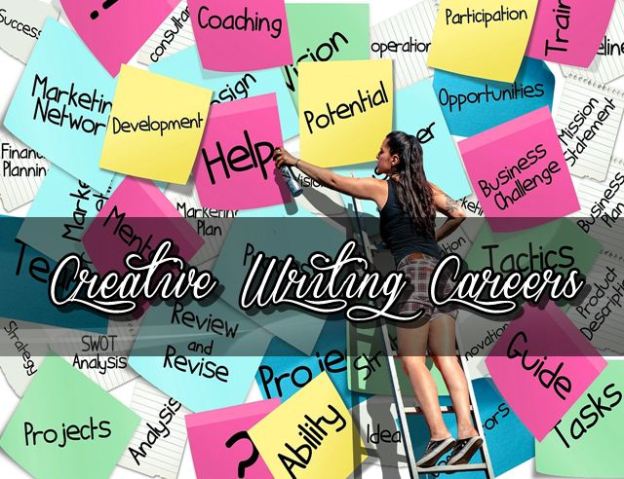
20 Creative Writing Careers

If creative writing is your passion, then you’d probably enjoy a career in which you could spend all day (or at least most of the day) pursuing that passion.

But creative writing is an artistic pursuit, and we all know that a career in the arts isn’t easy to come by.

It takes hard work, drive, dedication, a whole lot of spirit, and often, a willingness to take big financial risks — as in not having much money while you’re waiting for your big break.

When we think of people who make a living through writing, novelists and journalists come to mind immediately. But what other jobs are out there for folks who want to make creative writing the work that puts food on the table?

The Creative Writing Career List

Here’s a list of twenty creative writing careers that you can consider for your future. I’m not making any promises. You have to go out and find these jobs yourself, but they do exist. You just have to look for them and then land them.

  1. Greeting Card Author
  2. Comic Book Writer
  3. Novelist
  4. Creativity Coach
  5. Writing Coach
  6. Advertising (Creative)
  7. Screenwriter
  8. Songwriter (Lyricist)
  9. Freelance Short Fiction Writer
  10. Creative Writing Instructor
  11. Legacy Writer (write people’s bios and family histories)
  12. Ghostwriter
  13. Travel Writer (if you travel)
  14. Article Writer (write, submit, repeat)
  15. Columnist
  16. Video Game Writer (includes storytelling/fiction!)
  17. Personal Poet (write personalized poems for weddings, funerals, childbirths, etc.)
  18. Playwright
  19. Blogger (don’t tell me you don’t have a blog yet!)
  20. Creative Writing Consultant

I’m not saying you’re going to make a lot of money with some of these creative writing careers. You might have to earn your creating writing income part-time or on the side. But if you do what you love, the money (i.e. the success) just might follow. You’ll never know unless you try, right?

Do you have any creative writing careers to add to this list? Share your suggestions by leaving a comment.

By Melissa Donovan
Source: writingforward.com

Visit us at First Edition Design Publishing
 

Surviving the Newbie Blues

When I was a fledgling writer (and I do mean fledgling), I heard the adage that good writers read–a lot. And being a literary know-it-all with my six weeks of experience backing me up, I scoffed. “Read? Who has time to read? It’s all I can do to write a paragraph without being interrupted by three teenagers or dinner preparations or any one of many other distractions that each and every writer in the world faces.” Poor me. Little did I know back then that I’d condemned myself to Newbieland for as long as it took me to truly understand what writing is all about.

Writing is not romantic, easy, nor is it a profession for the faint-hearted. No one writes alone in a vine-covered garret or the tower of a crystal palace with servants to take care of the mundane things of life–like earning a living if your writing career doesn’t bring in several thousand dollars the first month or so. (That was sarcasm.) Instead, writers spend precious stolen moments honing their craft until life settles down. Maybe that’s when your spouse comes home to watch the kids, or the pizza delivery guy shows up and everyone’s too busy eating their deep-crust pepperoni with extra cheese pizza to pester you, or when the kids go to bed. Maybe it’s early morning or late evening, noon hours, coffee breaks, weekends, and may be, just maybe, it’s not until your retirement years.

My point is that just because I was trying my hand at writing didn’t mean the world would kindly step aside for me to work my genius and crank out bestseller after bestseller. That idea was quashed fairly quickly there in Newbieland where I resided until I’d learned a few hard lessons, including:

1.)  The writing field is jam-packed with talented, ambitious people who more often than not–no, make that always–knew a heck of a lot more than I did. Being a newbie was on one hand thrilling; on the other, terrifying, and I admit I often had the Newbie Blues.

2.)  Nobody has enough time to write. Nobody. Even the successful writers (and you know who you are, Successful Writers, although I imagine you’re not reading this) who consistently hit the bestseller lists probably have trouble with life getting in the way of their craft. Writing is no different than anything else we want to do in life. We need to make time and space for it.

3.)  It doesn’t come easy. Being a new writer means you know enough to know you don’t know enough about being a writer. (Please read that again until it makes sense.) A good share of the time I spent living in Newbieland was spent learning everything I could about writing, and yes, that included …

4.)  Reading! Yes, lots and lots of reading. In a moment I’ll list some of the books that have helped me tremendously, but first I want to tell you that reading anything helps to make you better at writing. It finally dawned on me that I wasn’t going to go anywhere with my raw talent. Just as if I had a great serve in tennis, I wasn’t going to hit Wimbledon right off the bat (or racket, as the case may be), I had to get rid of my bad habits and groom the good ones that others had learned before me. And to do that I had to read their advice in books on that topic or simply read the fiction books they’d written. Speaking for myself, I’ve learned more from reading the books of successful and great fiction writers than I could figured out for myself if I’d worked at it until the day I dropped dead. And by then it would be too late, and I wouldn’t give a rip, anyway. There’s just so much to know and to assimilate into your writing until it’s a habit, that not taking the advice of good authors is just plain silly.

Of course there are many other ways to learn. Critique partners, writing groups, conferences, and classes are just some of them. I concentrated on the reading aspect simply because it’s something you can do for little or no cost, and it’s a pleasant experience. No longer do I think it’s outrageous to think writers need to read everything they can get their hands on. I’ve moved out of Newbieland and I’m looking for a niche in Mightjustmakeitland. It’s still a long shot, but I’ll never get there if I don’t try. I hope I see you along the way.

Before I forget … trying reading Bird by Bird (Anne Lamott), Writing for the Soul (Jerry B. Jenkins), or On Writing (Stephen King). There are thousands of other books out there, most of which are no doubt very good, but I’ve read these three over and over. I also read the novels by Jerry and Stephen and Anne’s other non-fiction books. I learn something from each author and each of their books whether they’re trying to teach me or not. They’re that good.

Source: authorculture.blogspot.com

Visit us at First Edition Design Publishing