Tag Archives: writing goals

How to Achieve Goals: 5 Ways to Stay Motivated and Actually Accomplish Your Goals

The end of the year/beginning of the next one is always exciting. It’s a time to reflect on your accomplishments and prepare for the next ones. But often times, the newness and anticipation of New Year’s resolutions lasts for just a few months before fading away, checklists long forgotten in a dusty drawer. Here’s how to achieve goals and actually maintain your motivation throughout the new year.

acheive goal

5 Ways to Stay Motivated and Achieve Goals

If you want to stay strong throughout the entirety of 2018, here are five tips to help you achieve just that.

1. Set goals for the month rather than the year

That’s not to say year-long goals aren’t important, but “smaller” goals that are easily finished in a short amount of time will give you that rush of positive energy everyone needs in order to keep up the good work.

Think about your long-term hopes and dreams for yourself, such as writing a novel, and break them down into more manageable chunks that you can spread out over twelve months, like writing 10,000 words per month.

2. Write a checklist

Who doesn’t love checking off boxes when a task is completed? Make your list of goals something large, aesthetically pleasing, and visible.

It must be placed where you’ll see it often to remind yourself what still needs to be done and what you have already finished. And if you don’t enjoy looking at it, you won’t necessarily enjoy doing anything off the list, either. Keep it positive!

3. Create consequences

First decide if you are the kind of person who works better under the threat of punishment or the promise of reward. Maybe you work well with both, in which case, even better because you have plenty of flexibility with which to work.

If negative consequences are the way to go, give yourself deadlines for each of your goals. Writers have to work under deadlines all the time, which is a great way to boost productivity when you know someone is counting on you to pull through. But if you are your own boss, you have to come up with your own punishment, too. If you don’t reach the deadline, maybe consider pulling the plug on the television for a while.

If rewards cause you to race to the keyboard with glee, set concrete promises for yourself, such as, “If I finish editing this short story by the end of the month, I will treat myself to a nice dinner and a movie.” When you have a specific incentive in mind, you will be that much more determined to finish what you started.

4. Switch up your setting

If I ever start to feel bored with my usual routine, I pick up my laptop and move somewhere new. This can be as drastic as sitting yourself down at a coffee shop or library or as simple as moving to a new room in the house.

A different view and a different seating orientation can do wonders for your enthusiasm for your work.

5. Envision your future

What kind of writer do you want to be? When you picture yourself ten years in the future, what do you see for yourself?

Don’t be afraid to dream big. Imagining your future can be exciting and terrifying all at once, but it always helps when it comes to deciding what your next move should be.

But if you do, be ready to put in the work. The amount of effort you put into a task will match the outcome.

How to Achieve Goals and Make Changes in the New Year

Don’t sell yourself short. If you want to be somewhere else a year from now, figure out what you need to do to make the change and do it.

One more tip for how to achieve goals? Ask for help, if you need it. Having a community standing behind you in support is one of the best ways to drum up the courage to achieve your goals in any way possible.

You’ve got this.

What are your goals for the New Year? Do you have other tips for how to achieve goals? Let us know in the comments.

By The Magic Violinist
Source: thewritepractice.com

Visit us at First Edition Design Publishing
Writing Tips: Show, Don’t Tell

The first time I heard the advice “show, don’t tell,” I was young and it confused me.

Show what? Isn’t writing all about telling a story?

At the time, I shrugged it off as some kind of mysterious double-talk, but the phrase kept popping up: show, don’t tell.

It rolled off my teachers’ tongues. I spotted it in books and articles on the craft of writing. A couple of times, it appeared in red on my papers with an arrow pointing to a specific sentence or paragraph. Then I took a poetry class and had a big aha moment where show, don’t tell became abundantly clear.

In poetry studies, we talk a lot about imagery. This poem has vivid imagery. What a great image! The images in the first stanza don’t go with the images in the second stanza. This kind of talk didn’t make sense to me either. Images in poems? We’re supposed to be writing, not drawing!

The irony, of course, is that my writing was packed with imagery; I was more prone to showing than telling. Nevertheless, the phrasing of these writing tips perplexed me.

Since then, I’ve worked with plenty of young and new writers who have expressed embarrassment at having to admit they’re not sure what show, don’t tell means.

Show, Don’t Tell

Show, don’t tell is often doled out as writing advice, and it frequently appears on lists of writing tips. It even has its own Wikipedia page! Along with the advice write what you know and know your audience, it’s one of those writing-related adages that deserves some explanation because it seems counter-intuitive and raises a bunch of questions.

Yet it’s actually a simple concept. Ironically, the best way to explain it is to show, rather than tell someone what it means, and I don’t think anybody’s done that better than Anton Checkhov:

Don’t tell me the moon is shining; show me the glint of light on broken glass. – Anton Chekhov (source: Goodreads)

Oh, I Get It

I once heard a lecturer give a talk about love, and he made a good point: it’s not enough to tell someone you love them; you have to show people that you love them through your actions.

We can apply the same concept to writing.

You can tell your readers that two characters met and were instantly attracted to each other, or you could show the characters meeting, making eye contact, and checking each other out. He gulps, she bats her eyelashes, and readers get the picture.

When you show, you’re using words to create a scene that readers instantly visualize. Instead of intellectually registering what you’re telling them, they fully imagine what you’re showing them.

We can turn Checkhov’s explanation into a writing exercise in which we show, don’t tell readers our ideas:

Tell Show
Kate was tired. Kate rubbed her eyes and willed herself to keep them open.
It was early spring. New buds were pushing through the frost.
Charlie was blind. Charlie wore dark glasses and was accompanied by a seeing-eye dog.
Sheena is a punk rocker. Sheena has three piercings in her face and wears her hair in a purple mohawk.
James was the captain. “At ease,” James called out before relaxing into the Captain’s chair.

Now you try it. Think of some simple ideas that you could show readers instead of telling them. Feel free to share them in the comments.

Are there any writing tips that you hear frequently but don’t quite grasp? Share your thoughts and questions by leaving a comment, and make sure when you’re writing,
you show, don’t tell.

By Melissa Donovan
Source: writingforward.com

Visit us at First Edition Design Publishing

3 Steps to Complete Your Writing Goals in the New Year


For the last two weeks I have received emails from over eight different companies offering to teach me how to have a wonderful and amazing year next year. Their premise is that I will have a wonderful year if I complete a goal. Since I am a writer, perhaps I should complete some writing goals.

com

The companies offer to give me practical advice to assist me. Some of them even offered to give me a certificate of completion when I finished their course. The least expensive offer was close to five hundred dollars.

Today, I will give you my three steps to complete a goal and have a great New Year. And, I won’t charge you five hundred dollars.

3 Steps to Complete Your Writing Goals

I will give you a preview of the three steps. Beware, the next three lines contain spoilers:

Step One: Decide what you want to do

Step Two: Write down what you want to do

Step Three: Do what you wrote down.

1. Decide what you want to do.

Step one may seem simple. The most important word in step one is DECIDE. Yes, make up your mind.

You are creative, right? A writer. You have so many story ideas, which one should you do first?

Pick one. Just one. Work on this idea until it is finished. Focus. Finish.

But first you have to make up your mind. You can never finish something if you don’t start. So for now, make up your mind.

(If you are not sure what you should decide to do, consider these writing goals.)

People cannot hit what they do not aim for.

― Roy T. Bennett

2. Write down what you want to do.

Step two is essential. Well, all three steps are essential. Don’t skip a step.

You have to write down what you want to do.

Don’t rely on your memory. When you wake up the next day and your six cats are meowing to be fed, if you haven’t written down what you want to do, you might never remember. You have bills to pay and cats to feed. If it is not written down, you might not remember what you want to accomplish.

How many pages will you write today, this week? Decide, then write it down. Find a friend who would be willing to receive weekly updates from you. Send them at the end of the week how much you have written.

If you have a goal, write it down. If you do not write it down, you do not have a goal — you have a wish.

― Steve Maraboli

Dr. Gail Matthews, a psychology professor at the Dominican University of California, after studying two hundred and sixty seven people, discovered you are more likely to complete goals if you write them down or share them with a friend. Seventy percent of the participants who sent weekly updates to a friend achieved their goal or got more than halfway there. But of the people who didn’t tell a friend or write down their goal, only 35 percent made it that far.

3. Do what you wrote down.

Step three is an action step. You do what you wrote down.

You can control your future if you always obey what is written down. Before you go to bed tonight, write down what you want your future self to do. Such as, “Write three pages today.” When you wake up you will see the note you wrote the night before, and you will do what it says.

Last night I had my husband decide what time he was going to get out of bed this morning. First he wrote, “I want to get out of bed at seven.” I had him change it to “I will get out of bed at seven.” Then he signed the statement and I signed it as a witness to his promise. He made up his mind: step one. He wrote it down: step two.

This morning at seven, he hit the snooze button. Dr. Matthews’s suggestion to tell your goal to a friend helped my husband this morning. I opened the blinds, turned on the shower, and ripped off all the covers on the bed. Then he did step three and got out of bed.

The Gift of Writing Goals

In twelve more sleeps it will be the first day of a new year. A day of hope; a day where we can begin again. We can have that feeling every day, but the first day of a new year feels like a gift.

So, as you start your new year, think of the three steps. You don’t have to buy a fancy course. You can write. You can complete your goal of writing a first draft, editing the novel you wrote in November, or writing the story of why you flew to Asia in 1983 with a one-way ticket to Bangkok.

Decide what you want to do, write it down, and do it. I believe in you.

Tell your story.

Do you have trouble completing your writing goals? What do you do to help you complete them? Let us know in the comments.

by Pamela Hodges
Source: thewritepractice.com

Visit us at First Edition Design Publishing

Five Things Your Characters Need

Many writers and readers will agree that the most important element of any story is its characters. There are certainly exceptions: some plot-driven stories are quite compelling and successful. However, readers form their deepest connections to stories through the characters by developing relationships with them and caring about what happens to them.

Naturally, we want our characters to be realistic. We want them to resonate, to come alive in readers’ imaginations. We work to give them distinct voices and personalities, extensive backstories, and vivid descriptions. We do all of this so readers will develop an emotional bond with our characters.

All of these aspects of characters make them seem more like real people. But there are five essential things that often get overlooked, and these are the critical ingredients of the characters’ function within a story.

1. Goals

What is the point of any story if the protagonist isn’t working toward a goal? It can be a simple goal, like getting into the best college or falling in love. It can be a meaningful goal, like making a deep and lasting personal transformation toward becoming a better person. It could be a momentous goal, like saving the planet.

Almost every story involves a goal at the heart of the plot. The main characters on the protagonist’s side are working toward this common goal, but things get interesting when they each have their own personal goals too.

Let’s imagine a story about a team of mercenaries on a mission to take down an enemy combatant. That’s the central plot, the common goal shared by the main characters. But what if the enemy once saved the life of one of these mercenaries back when they were serving together in the military? What if that mercenary feels an obligation to return the favor? Things get infinitely more interesting.

When characters have a combination of common goals and personal goals, there are more opportunities for conflict and challenges, and a story becomes more dynamic.

2. External Conflict

It’s only interesting to watch characters work toward a goal if achieving it is a struggle. The external conflict might be the cause of the goal (aliens are invading, so we must save the planet). But external conflict can also interfere with the goal (the protagonist wants a promotion, and her best friend wants the same promotion). External conflict can also change the goal (a high school graduate was about to study engineering at college, but now he must fight in the front lines of a war, and he wants to survive).

An external conflict is often the driving force of a plot. But characters can experience external conflicts independent of the plot. Consider a mystery story in which the plot’s external conflict is a serial killer on the loose in a big city. Meanwhile, the lead detective on the case is dealing with his own external conflict…his teenaged daughter is being stalked by a creepy kid at school, which is distracting the detective from the serial-killer case.

External conflicts make it difficult for the characters to achieve their goals, including the central goal of a story’s plot and the characters’ individual, personal goals.

3. Internal Struggle

An internal struggle pits personal values, goals, conflicts, or challenges against each other. A scientist developing a cure for a devastating disease stumbles upon a formula for a virus that would cause a pandemic. The company she works for is actively working to produce biological weapons. Her goal is to cure this disease, but her moral compass urges her to keep the formula secret, lest it be used as a biological weapon.

Internal struggles force characters to make difficult choices. They often must choose from bad or worse options, and the right choice almost always involves a meaningful sacrifice. Often the right or best option is unclear: there is no correct choice, only a personal choice. What if the scientist’s best friend is suffering from the disease she’s trying to cure? What if she has learned that as soon as the right biological weapon is available, her company will engage in biological warfare? Now the internal struggle intensifies — the character is forced to choose between her best friend’s health and the possible decimation of large swaths of the population.

Most protagonists engage in internal struggles, but other characters can struggle internally as well. Our story gets even more interesting if one of the scientist’s coworkers discovers that she’s hiding a formula from the company. This coworker is close friends with our scientist but is also loyal to the company. He struggles internally with with whether he should protect her secret or rat her out.

4. Strengths, Skills, and Assets

In order to survive the challenges that a story throws at its characters, they must possess strengths, skills, and assets. These can be personal strengths like fortitude or loyalty, or they can be skills and abilities, like hand-to-hand combat or hacking. Material assets, such as personal wealth, are also useful in many situations.

Characters must draw upon their strengths, skills, and assets to work toward their goals and overcome the external conflicts and internal struggles that they face.

Most authors are good at giving their characters strengths, skills, and assets, but sometimes they aren’t spread around enough. The protagonist will be an almost perfect human specimen while their teammates will contribute little to achieving the central goal. Characters’ strengths, skills, and assets shouldn’t make them superhuman, and each character should make a positive contribution to the cast’s efforts.

5. Flaws and Weaknesses

A character can’t truly be human (or human-like) without flaws and weaknesses. As the saying goes, nobody’s perfect. Characters must reflect this truth. But more importantly, characters’ flaws and weaknesses often provide essential story fodder in the form of setbacks. In a political thriller, a senatorial candidate’s weakness might be a secret from his past, which, if exposed, would destroy his career. In a romance, if the protagonist’s flaw is that she’s indecisive, she might let the love of her life get away because she can’t make up her mind.

Flaws and weaknesses interfere with the characters’ progress toward their goals and provide much-needed setbacks for the plot and subplots. We want to see our favorite characters succeed, but success is sweeter if it comes after a few failures, and failures are often caused by the characters’ own flaws and weaknesses.

Some authors struggle to give their characters flaws and weaknesses (especially the protagonists). It’s understandable. We can be protective of our characters, almost as if they were our children. We want them to be strong and successful. But weaknesses and flaws make characters relatable and give readers something to cheer for — we want to see the characters overcome these setbacks.

Connecting Characters with Story

Ideally, all these things (goals, internal struggles, external struggles, strengths, and weakness) will tie in with the central plot and be woven through the story’s subplots and themes.

Do all characters in every story need these five things? No. The protagonist certainly needs them. One of the other main characters might get a goal and a weakness but no internal struggle. Another might get an internal struggle and a goal but no notable external conflict. Every character is different, but wherever possible, providing characters with these elements will intensify and strengthen a story.

By Melissa Donovan
Source: writingforward.com

Visit us at First Edition Design Publishing

Are You Meeting Your Writing Goals? Try These Productivity Tips For Writers

First Edition Design Publishing
Publisher – Aggregator – Master Distributor

from JOANNA PENN at The Creative Penn

Time seems to fly by and our writing goals can sometimes fall behind in the craziness of the day to day.

manage day to dayBalancing writing with ‘real life’ and business tasks as well as family and other commitments can become a strain.

But we need to step back now and then, assess the situation and reset our behaviors in order to achieve our goals.

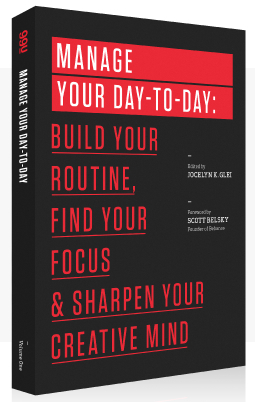
I’m not a productivity geek, but I do have processes and systems and I love to learn about new ways to optimize my workflow. I recently read ‘Manage Your Day To Day: Build Your Routine, Find Your Focus and Sharpen Your Creative Mind‘ from 99U, one of my favorite blogs.

It gave me plenty of pages of notes, but the significant changes for me are:

Do not check email or social before I have done my first creation block of the day

e.g. 1500 words on latest WIP. In order to achieve this, I have removed my email app from my mobile phone and am using Antisocial software to block access to those while still allowing me on the internet for research (which I often need as I write). I started doing this at the beginning of the year, but I fell off the wagon. Not firmly back on it.

Look strategically at personal and business goals and decide what I can get rid of and what I can streamline.

I’m still looking at this but I will be restructuring this site somehow, and making the process flow easier so I have more creation time. But don’t worry, it won’t be going anywhere!

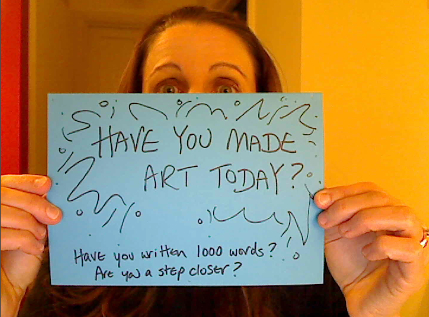
have you made artI asked my email list about their tips for productivity

Here are some of the responses I received back (some paraphrasing). Perhaps they will help you, or you can add yours in the comment section below.

[By the way, you can join the email list by signing up and ownloading the Author 2.0 Blueprint here]

Benjamin Tiller: I get my writing done first thing in the morning before work – with no TV, no phone, no wifi on the laptop. Word count goals have been great. I utilize the full screen feature in Scrivener to limit other distractions.

Annemarie Slee: Try www.workflowy.com. Easy for list making, but also very useful for outlining your ToC. You can set times and dates easily too.

Attention management, not time management

Grace Marshall: It might help to think of it as attention management rather than time management – gets you noticing and tracking the thing that you can actually manage – your attention, rather than time itself. And here’s how to beat writer’s procrastination.
Jon Jefferson: I use three things as a crutch to help me stay focused: The times I write, doing pre-writingto get all the extraneous out of my mind, and timed writing for set blocks of time to focus in.

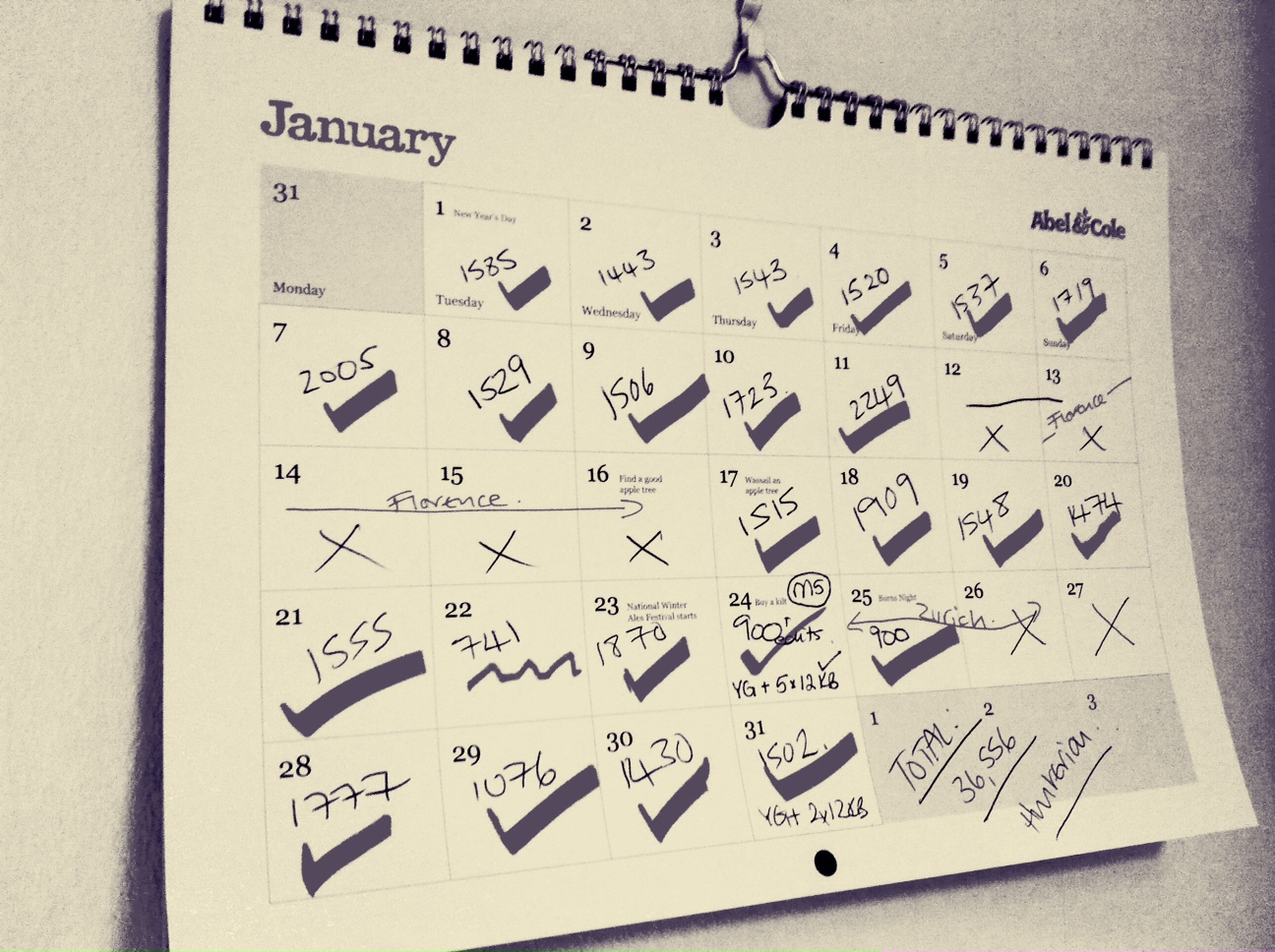
Word count chart

My daily word count chart

Jean Reinhardt: I found that when I was stuck on my YA book, I could write if I switched genres (to a short story, now a novella). This means I am writing two books at the same time, but switching genres works for me and keeps things flowing.

Find what works for you – even if it is in the bathroom!

Stacie Whitney: I’m a mother of a young child who gets up and wants attention as soon as she hears me come out of the bathroom in the morning.  So on that first morning to get my book written, I went into the bathroom with my computer, locked the door, and got to work.  I wrote the entire outline and two chapters before breakfast!
After a week of early morning bathroom writing sessions, I was somehow able to sneak into the living room, and the rest of the book was written (mainly) in early morning hours before the rest of my family was awake.Basically, my tip is to find whatever space and rhythm work best for you and DO that! And be willing to alter it if circumstances change.

Jason Lewis: the only way that I can write effectively is to completely lock myself away (metaphorically) from social media. The best way I’ve found so far is to take a long train journey; get the netbook out and just write like there’s no tomorrow. Racked up six thousand words the other day (my single most productive day by a long distance) on a five hour journey. The reason being I cannot get a signal on my phone and I refuse to pay to access the internet on the train.

Karlene Cameron: When I write, I keep the computer turned off. That does it for me.

Lyle Nicholson: Set a block of time, and then use it.  If it’s one hour or three hours, close your door, or your external senses and write.  Even if you don’t write, and you just doodle on a pad, or write silly things for the hour or three hours, use that as your creative process time. The mind is an amazing instrument, if you give it space and time, it will take you in marvelous directions.

Write by hand – away from the computer

writing coffeeCarlie Van Amerongan: I’ve just started doing my writing by hand. I used to do everything on the computer, and I would easily get distracted, by all the other things I could do on the computer… and no amount of willpower would help! Since I’ve started doing it this way, I’m much more productive, even if the rate of words to page is a little slower. I’m enjoying the process more, and I think in the end I get more words out. Far from a productivity tip, this is a brand new practice for me… but so far it seems to be working.

Kathleen Heady: I carry an old-fashioned legal pad with me, or a notebook would do, and when I have time throughout the day, I work on whatever my current writing project is — longhand. I substitute teach so I often have downtime to do this, but sometimes it is easier to pick up a pad of paper than go on the computer with all the distractions it offers. Then later I can type up my work when I am in a less creative mood.

Sally Chippendale: 1000 words per day and don’t start later than 10am. If you are blocked move straight on to the next scene. If you have children put their favorite tv show on and neglect them for an hour and a half. I make one decent coffee beforehand; that is my only set up requirement/custom that I allow myself. I printed out and pinned above my desk one long excel spreadsheet detailing each scene in one sentence, headings included  day, characters, action, reason. Then highlight each line when complete, for satisfaction value.

Tom Evans:
1. Breathe in through alternate nostrils five times (use a finger to close each nostril off in turn)
2. Doodle or mind map what you are about to write about
3. Then meditate or go for a walk before you start writing
4. Resist the temptation to edit while writing
5. Have a treat lined up for when you finish each session (e.g. a cup of tea and digestive biscuit)
Tom is an author, bookwright and creative catalyst. His latest book is called The Zone and is an exploration of how to get in and stay in it. More details here …  http://www.tomevans.co/books/the-zone/

Find a few good writing website/blogs and stick to them.

Don’t be distracted by a hundred updates inboxing you each day. This happened to me, for a few days I spent more time reading than writing.

Betty Halsey: disable the internet on my computer and leave my phone in a different room.

Francis Wade, author of Bill’s Im-Perfect Time Management Adventure: In our age, improving your time management skills continually is a must, and it’s best done by slowly adapting new habits, practices and rituals, rather than chasing down the latest gadget, shortcut or trick. Deliberate practice anyone?
There are clearly a lot of similarities, and yes, I know the irony of blogging about this topic and distracting you from writing at the same time!