Tag Archives: writing tips

3 Steps to Complete Your Writing Goals in the New Year


For the last two weeks I have received emails from over eight different companies offering to teach me how to have a wonderful and amazing year next year. Their premise is that I will have a wonderful year if I complete a goal. Since I am a writer, perhaps I should complete some writing goals.

com

The companies offer to give me practical advice to assist me. Some of them even offered to give me a certificate of completion when I finished their course. The least expensive offer was close to five hundred dollars.

Today, I will give you my three steps to complete a goal and have a great New Year. And, I won’t charge you five hundred dollars.

3 Steps to Complete Your Writing Goals

I will give you a preview of the three steps. Beware, the next three lines contain spoilers:

Step One: Decide what you want to do

Step Two: Write down what you want to do

Step Three: Do what you wrote down.

1. Decide what you want to do.

Step one may seem simple. The most important word in step one is DECIDE. Yes, make up your mind.

You are creative, right? A writer. You have so many story ideas, which one should you do first?

Pick one. Just one. Work on this idea until it is finished. Focus. Finish.

But first you have to make up your mind. You can never finish something if you don’t start. So for now, make up your mind.

(If you are not sure what you should decide to do, consider these writing goals.)

People cannot hit what they do not aim for.

― Roy T. Bennett

2. Write down what you want to do.

Step two is essential. Well, all three steps are essential. Don’t skip a step.

You have to write down what you want to do.

Don’t rely on your memory. When you wake up the next day and your six cats are meowing to be fed, if you haven’t written down what you want to do, you might never remember. You have bills to pay and cats to feed. If it is not written down, you might not remember what you want to accomplish.

How many pages will you write today, this week? Decide, then write it down. Find a friend who would be willing to receive weekly updates from you. Send them at the end of the week how much you have written.

If you have a goal, write it down. If you do not write it down, you do not have a goal — you have a wish.

― Steve Maraboli

Dr. Gail Matthews, a psychology professor at the Dominican University of California, after studying two hundred and sixty seven people, discovered you are more likely to complete goals if you write them down or share them with a friend. Seventy percent of the participants who sent weekly updates to a friend achieved their goal or got more than halfway there. But of the people who didn’t tell a friend or write down their goal, only 35 percent made it that far.

3. Do what you wrote down.

Step three is an action step. You do what you wrote down.

You can control your future if you always obey what is written down. Before you go to bed tonight, write down what you want your future self to do. Such as, “Write three pages today.” When you wake up you will see the note you wrote the night before, and you will do what it says.

Last night I had my husband decide what time he was going to get out of bed this morning. First he wrote, “I want to get out of bed at seven.” I had him change it to “I will get out of bed at seven.” Then he signed the statement and I signed it as a witness to his promise. He made up his mind: step one. He wrote it down: step two.

This morning at seven, he hit the snooze button. Dr. Matthews’s suggestion to tell your goal to a friend helped my husband this morning. I opened the blinds, turned on the shower, and ripped off all the covers on the bed. Then he did step three and got out of bed.

The Gift of Writing Goals

In twelve more sleeps it will be the first day of a new year. A day of hope; a day where we can begin again. We can have that feeling every day, but the first day of a new year feels like a gift.

So, as you start your new year, think of the three steps. You don’t have to buy a fancy course. You can write. You can complete your goal of writing a first draft, editing the novel you wrote in November, or writing the story of why you flew to Asia in 1983 with a one-way ticket to Bangkok.

Decide what you want to do, write it down, and do it. I believe in you.

Tell your story.

Do you have trouble completing your writing goals? What do you do to help you complete them? Let us know in the comments.

by Pamela Hodges
Source: thewritepractice.com

Visit us at First Edition Design Publishing

Finding Meaning in Poetry

We humans are programmed to find meaning in everything. We find patterns where none exist. We look for hidden messages in works of art. We yearn for meaning, especially when something doesn’t immediately make sense.

Of course, art is open to interpretation, and some of the best works of art have produced a fountain of ideas about what they mean. From the nonsensical children’s story Alice in Wonderland to the complex historical fantasy series A Song of Ice and Fire, we wonder what a story means, what it’s really about, at its core.

Poetry is no exception. When we come across an abstract or vague poem, we look for meaning in it. We might even impose meaning on it.

Finding Meaning in Abstract Poetry

The literary canon is home to countless poems with abstract meaning. One of my favorites is “anyone lived in a pretty how town” by E.E. Cummings.

anyone lived in a pretty how town
(with up so floating many bells down)
spring summer autumn winter
he sang his didn’t he danced his did.

Whenever I read this poem, I see a lot of imagery: bells; the changing of the seasons; people; the sun, stars, and moon.  Phrases like “up so floating many bells down” are enigmatic. Cummings takes great liberty with grammar and punctuation, using all lowercase letters and eliminating spaces in some lines, which intensifies the poem’s ambiguity.

But what does it all mean? I can’t be sure. This uncertainty imbibes the poem with a sense of wonder. Each time I read it, the meaning changes ever so slightly. It’s almost an ethereal experience to revisit the poem every couple of years to see what it will be like this time.

Maybe Cummings had a particular idea in mind when he wrote this poem, or maybe he wasn’t sure what he was trying to say. Maybe the poem has no meaning and it’s just a nonsensical romp through language and imagery. I don’t think any of that matters. What matters is the act of Cummings writing the poem and the experience a reader gets from reading it. With a poem like this, each reader probably has a different experience. That’s quite a gift — one poem that can mean different things to different people.

Vague Meaning in Poetry

A poem’s meaning can be vague without being abstract or nonsensical. Consider “The Road Not Taken” by Robert Frost:

Two roads diverged in a wood, and I—
I took the one less traveled by,
And that has made all the difference.

It’s one of the most famous poems in world, and the lines above are often quoted and interpreted to promote individualism: think for yourself; be your own person; forge your own path. But an earlier stanza says that both roads are equally traveled:

Because it was grassy and wanted wear;
Though as for that the passing there
Had worn them really about the same…

Did the poet really take the road less traveled? Were both roads equally traveled and only in later tellings of his adventures did one become less traveled than the other? Did the poet believe the roads were equally traveled until the journey was completed? Is the narrator unreliable?

Although the poem is often interpreted to promote individualism, we never learn whether taking the road less traveled turned out to be a good or bad decision. What was the outcome? The reader is left to draw her own conclusions.

Meaning Can Be Clear or Nonexistent

Plenty of poems make their meaning clear. Emily Dickinson’s “Because I Could Not Stop for Death” comes to mind:

Because I could not stop for Death –
He kindly stopped for me –
The Carriage held but just Ourselves –
And Immortality.

The poet then takes a carriage ride with Death, ending their tour at a gravesite. The poem is clearly a statement on mortality and an examination of the big question: what happens after we die? There’s nothing ambiguous or cryptic about this poem. It might prompt you to contemplate the inevitable, but it’s not likely to confuse you or take on new meaning each time you read it.

Meaning in Poetry Writing

Meaning isn’t only found in the act of reading (and re-reading) poetry. Sometimes we start writing a poem with one idea in mind, but by the time we reach the end of the first draft, another idea or theme has emerged, maybe even something surprising or profound. Other times, we might write a poem and realize years later that there are layers of meaning in it; perhaps our subconscious produced something we weren’t aware of at the time the poem was composed.

The very act of writing poetry opens us to the meaning of our experiences and ideas, especially if we’re willing to give up control when we write and let ideas and words flow freely.

Freewriting is an ideal practice for generating enigmatic raw writing material. Sometimes a freewrite produces nothing but junk. Other times a freewrite contains a few captivating phrases, an interesting rhyme, or an unusual idea. Occasionally, if we’re lucky (and do a lot of freewrites), something almost magical emerges: a piece of writing — perhaps abstract, or maybe vague, possibly clear — worth polishing and sharing with others.

Analyzing poetry is always a good exercise for the mind, and searching for meaning is certainly an important part of poetry analysis. We cannot always know if we’ve inferred the correct meaning of a poem — or at least the meaning the author intended — but perhaps that doesn’t matter. If ten people come away from a poem with ten different interpretations, do we think a poem has failed to communicate clearly, or has it done something remarkable — provided ten different experiences from one source?

How often do you find yourself searching for deeper meaning in the poems you read? When you write poetry, how important is it that there’s a deeper meaning? Do you ever write a poem and later discover hidden meaning within it?

By Melissa Donovan
Source: writingforward.com

Visit us at First Edition Design Publishing

Philosophical Journal Prompts

What is philosophy?

Let’s turn to Wikipedia for a simple, straightforward definition:

“Philosophy is the study of general and fundamental problems, such as those connected with existence, knowledge, values, reason, mind, and language…It is distinguished from other ways of addressing such problems by its critical, generally systematic approach and its reliance on rational argument.”

Today’s journal prompts encourage you to ponder and challenge your own beliefs and ethics. 

While these journal prompts will inspire you to think about your own ideas and ideals through critical thinking and discovery writing, they can also be applied to other writing projects. For example, use these prompts to write a poem or to answer questions from the perspectives of characters in a story that you’re writing.

Journal Prompts

Each of the journal prompts below asks a question. Answer one or answer them all.

  1. What are the origins of the universe? Throughout history, many stories have been told about the genesis of the universe. Some people rely on religion to answer this question; others look to science. What do you think?
  2. Do you believe in a supreme being or higher power? Are you atheist or agnostic? How did you arrive at your spiritual beliefs? Have you always held the same beliefs on this issue or has your perspective changed over time?
  3. Why are we here? Is there a purpose or meaning to life? If so, what is humanity’s role in the greater context of the universe? If there is a purpose to human life, does it stand to reason that there is also a purpose to animal and plant life?
  4. Fate or free will? Do you believe in destiny or do you believe that life’s outcome is strictly the result of choice and circumstance? What experiences or evidence has led you to your position on free will vs. fate?
  5. Do you believe in absolute good and evil? Are good and evil counterpoints that are constantly striving to balance each other out? Do good and evil both have to exist or can one eliminate the other permanently?
  6. Are your morals and ethics circumstantial or static? For example, if you believe it’s wrong to kill another person, is it always wrong or are there exceptions? Is it unethical to kill a mass murderer? What other moral beliefs do you hold and what are some exceptions that would cause you to put those morals aside?
  7. Dystopia is an imagined world in which humanity is living in the worst possible (or most unfavorable) conditions. One person’s dystopia is another person’s utopia: what would the world look like in your version of dystopia?
  8. Utopia is the opposite of dystopia. It is an imagined world in which humanity is living in the most ideal and favorable conditions. What does your utopia look like?
  9. What happens when we die? This is a question many people don’t like to think about even though it’s the only certainty in life and the one thing that happens to every single living thing. Do you believe in an afterlife? Is the jury still out? Where did you get your ideas about what happens at death?

You might be able to get several writing sessions out of each of these journal prompts. After all, some of the greatest thinkers throughout history have dedicated their lives to pondering and writing on these questions.

Did you find these journal prompts helpful or inspiring? How often do you use writing prompts? Share your thoughts by leaving a comment.

By Melissa Donovan
Source: writingforward.com

Visit us at First Edition Design Publishing


Five Things Your Characters Need

Many writers and readers will agree that the most important element of any story is its characters. There are certainly exceptions: some plot-driven stories are quite compelling and successful. However, readers form their deepest connections to stories through the characters by developing relationships with them and caring about what happens to them.

Naturally, we want our characters to be realistic. We want them to resonate, to come alive in readers’ imaginations. We work to give them distinct voices and personalities, extensive backstories, and vivid descriptions. We do all of this so readers will develop an emotional bond with our characters.

All of these aspects of characters make them seem more like real people. But there are five essential things that often get overlooked, and these are the critical ingredients of the characters’ function within a story.

1. Goals

What is the point of any story if the protagonist isn’t working toward a goal? It can be a simple goal, like getting into the best college or falling in love. It can be a meaningful goal, like making a deep and lasting personal transformation toward becoming a better person. It could be a momentous goal, like saving the planet.

Almost every story involves a goal at the heart of the plot. The main characters on the protagonist’s side are working toward this common goal, but things get interesting when they each have their own personal goals too.

Let’s imagine a story about a team of mercenaries on a mission to take down an enemy combatant. That’s the central plot, the common goal shared by the main characters. But what if the enemy once saved the life of one of these mercenaries back when they were serving together in the military? What if that mercenary feels an obligation to return the favor? Things get infinitely more interesting.

When characters have a combination of common goals and personal goals, there are more opportunities for conflict and challenges, and a story becomes more dynamic.

2. External Conflict

It’s only interesting to watch characters work toward a goal if achieving it is a struggle. The external conflict might be the cause of the goal (aliens are invading, so we must save the planet). But external conflict can also interfere with the goal (the protagonist wants a promotion, and her best friend wants the same promotion). External conflict can also change the goal (a high school graduate was about to study engineering at college, but now he must fight in the front lines of a war, and he wants to survive).

An external conflict is often the driving force of a plot. But characters can experience external conflicts independent of the plot. Consider a mystery story in which the plot’s external conflict is a serial killer on the loose in a big city. Meanwhile, the lead detective on the case is dealing with his own external conflict…his teenaged daughter is being stalked by a creepy kid at school, which is distracting the detective from the serial-killer case.

External conflicts make it difficult for the characters to achieve their goals, including the central goal of a story’s plot and the characters’ individual, personal goals.

3. Internal Struggle

An internal struggle pits personal values, goals, conflicts, or challenges against each other. A scientist developing a cure for a devastating disease stumbles upon a formula for a virus that would cause a pandemic. The company she works for is actively working to produce biological weapons. Her goal is to cure this disease, but her moral compass urges her to keep the formula secret, lest it be used as a biological weapon.

Internal struggles force characters to make difficult choices. They often must choose from bad or worse options, and the right choice almost always involves a meaningful sacrifice. Often the right or best option is unclear: there is no correct choice, only a personal choice. What if the scientist’s best friend is suffering from the disease she’s trying to cure? What if she has learned that as soon as the right biological weapon is available, her company will engage in biological warfare? Now the internal struggle intensifies — the character is forced to choose between her best friend’s health and the possible decimation of large swaths of the population.

Most protagonists engage in internal struggles, but other characters can struggle internally as well. Our story gets even more interesting if one of the scientist’s coworkers discovers that she’s hiding a formula from the company. This coworker is close friends with our scientist but is also loyal to the company. He struggles internally with with whether he should protect her secret or rat her out.

4. Strengths, Skills, and Assets

In order to survive the challenges that a story throws at its characters, they must possess strengths, skills, and assets. These can be personal strengths like fortitude or loyalty, or they can be skills and abilities, like hand-to-hand combat or hacking. Material assets, such as personal wealth, are also useful in many situations.

Characters must draw upon their strengths, skills, and assets to work toward their goals and overcome the external conflicts and internal struggles that they face.

Most authors are good at giving their characters strengths, skills, and assets, but sometimes they aren’t spread around enough. The protagonist will be an almost perfect human specimen while their teammates will contribute little to achieving the central goal. Characters’ strengths, skills, and assets shouldn’t make them superhuman, and each character should make a positive contribution to the cast’s efforts.

5. Flaws and Weaknesses

A character can’t truly be human (or human-like) without flaws and weaknesses. As the saying goes, nobody’s perfect. Characters must reflect this truth. But more importantly, characters’ flaws and weaknesses often provide essential story fodder in the form of setbacks. In a political thriller, a senatorial candidate’s weakness might be a secret from his past, which, if exposed, would destroy his career. In a romance, if the protagonist’s flaw is that she’s indecisive, she might let the love of her life get away because she can’t make up her mind.

Flaws and weaknesses interfere with the characters’ progress toward their goals and provide much-needed setbacks for the plot and subplots. We want to see our favorite characters succeed, but success is sweeter if it comes after a few failures, and failures are often caused by the characters’ own flaws and weaknesses.

Some authors struggle to give their characters flaws and weaknesses (especially the protagonists). It’s understandable. We can be protective of our characters, almost as if they were our children. We want them to be strong and successful. But weaknesses and flaws make characters relatable and give readers something to cheer for — we want to see the characters overcome these setbacks.

Connecting Characters with Story

Ideally, all these things (goals, internal struggles, external struggles, strengths, and weakness) will tie in with the central plot and be woven through the story’s subplots and themes.

Do all characters in every story need these five things? No. The protagonist certainly needs them. One of the other main characters might get a goal and a weakness but no internal struggle. Another might get an internal struggle and a goal but no notable external conflict. Every character is different, but wherever possible, providing characters with these elements will intensify and strengthen a story.

By Melissa Donovan
Source: writingforward.com

Visit us at First Edition Design Publishing

6 Things Writers Can Do This Holiday Season

Halloween is in the distant past (as is summer), Thanksgiving is behind us, and the Christmas season is in full swing. This is traditionally the time when the publishing business slows down, folks go on vacation, the holidays consume us, and not a lot gets done until after the new year.

I’m not sure if that still holds true or not. In this age of instant communication, maybe it’s just as easy to accept or reject a manuscript at home, on the train or bus, or even in the car (in the passenger seat, of course) as it is in the office. Needless to say, every publishing house, editor, agent, and writer does it differently. Many writers self-publish these days and can work around their holiday festivities with no worries about publishing houses slowing down during the last month of the year.

Aside from wondering if this holds true, I also want to mention how easy it is to put our writing on the back burner and take it easy for a while. If that works for you, and you don’t feel guilt or pressure, I say go for it. If, though, you’re like me and would rather know you’re on top of things in your little corner of this profession, you’ll continue doing what you always do.

You’ll people-watch. Malls are great places to watch others as they run from store to store, lugging around their latest purchases and cursing themselves for not leaving their winter coats in the car. You’ll see exasperated parents, cranky toddlers, whiny teenagers, bored middle-schoolers, frantic retail employees. You’ll see men and women who truly want to be there shopping their hearts out, and you’ll see others who gladly would give you a kidney on the spot if you would just get them out of there.

You’ll eavesdrop. Everyday conversations are interesting enough, but add in the stress and hustle-bustle of mall-shopping, and you’ve struck dialogue gold. Shopping is tough from the get-go; add in a heavy coat, bags of purchases whose handles, whether twine or plastic, are threatening to cut off the circulation to your hands at any moment, the food court and its horde of hungry humans, and the lines–let’s not forget the long lines–and you’ve got some juicy dialogue to steal.

You’ll take notes. Neither of the above activities will be worth a hill of beans if you don’t take notes. Dictate what you hear and see into your phone (and you’ll have the added advantage of looking like a spy), so all those gestures, words, and whining you’ve culled from your day of snooping won’t be forgotten.

You’ll continue journaling, writing devotionals, free-writing, or whatever you do with your computer when you’re not actually writing or editing (and Free Cell doesn’t count) your latest work-in-progress, if for no other reason than to keep your work fresh and in the forefront of your mind.

You’ll keep up with your blog posts, or at least warn your readers that you’ll be back in a couple of weeks. While I don’t personally have as much time to read blog posts during the holidays as I do during the rest of the year, I do look forward to a few of them and would wonder where they went if I wasn’t told in advance. It’s just common courtesy. You might also want to write some blog posts, tweets, etc., ahead of time and schedule them with Edgar or some other site that will do that for you. That allows you the freedom of not having to worry about missing important obligations.

And finally, I sincerely hope you’ll remember what this season is really all about and enjoy yourself, your family, the food, fun, and parties, the meaningful church activities, and all the traditions that surround you and your loved ones. No, we can’t forget we’re writers and losing a month out of the twelve we get each year will no doubt cause you to do some catching up come January. But a little forethought and a few minutes each day devoted to what you do best will go a long way in keeping those January blues at bay.

Maintaining an orderly work life is important, but that pales in comparison to the memories you’ll make with your family and loved ones. A little bit of planning will go a long way in giving yourself the freedom to truly enjoy the holidays and all they entail.

Source: authorculture.blogspot.com

Visit us at First Edition Design Publishing

On Writer Buddies & Ignoring Them

“Generally, art partly completes what nature cannot bring to a finish, and partly imitates her.” -Aristotle, Physics, Pt. 2& 8

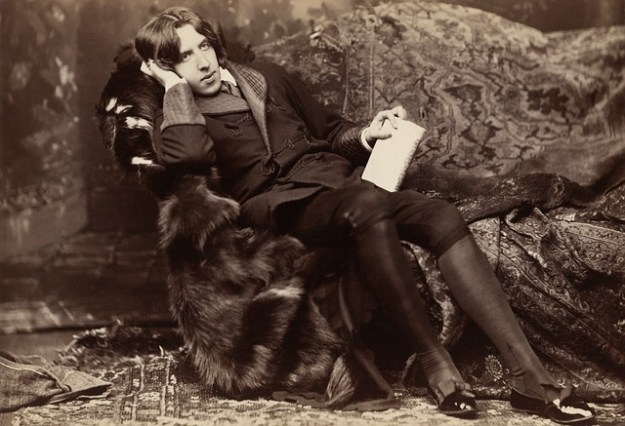
“Life imitates art far more than art imitates life.” -Oscar Wilde, The Decay of Lying.

Although the critical theorist in me would love to join a spirited debate between two old dead guys, for the sake of brevity let’s just agree that life and art are inextricable. Then as artists we can apply those truths we’ve found in life to the benefit of our work (which will then improve our life, likely resulting in the further improvement of our work, but that’s only if imitation…wait, I said I WASN’T going to join the debate).

th

In life, we have multidisciplinary evidence that it’s impossible to succeed or thrive without human contact; the same is true of art. You cannot succeed as a writer without allies and friendships. Yet the work of a writer (and I imagine most artists) is rather secluded. I can’t tell you how many times I have laughed at myself when writing a scene thinking “How would a non-socially awkward person respond in this moment… oh well, I have beta readers and normal people for that.”
There is this romantic image in the writer’s mind of a cabin in a forest somewhere which contains little besides a laptop, maybe a caffeine source, and a table near a pot belly stove. The haze of said cabin is a place from which triumphant writers emerge with completed manuscripts after the course of a week. Now, I have been to that cabin; my friend’s mom owns it and sometimes we go there for tea and the pleasant company of ignoring each other for a while. Ah…the cabin. ::sigh:: But that romantic image is not where books get made.
Isolation is the suffocating pit of self-doubt where dreams go to die. Don’t get me wrong, I understand and agree that there is a definite time to buckle your pants and close the door so you can get the work done. Managing distractions and interruptions is a skill that must be a sharp pair of scissors in a writer’s toolkit. Don’t get me started on smartphones and the “attention economy” (seriously though, google that, but not right now, you’re reading something). Some parts of the writing process are isolated and focused.  But others require external input and criticism; writers know this. I personally recommend this cool new thing the kids are doing called single-tasking (It’s pretty fringe, you’ve probably never heard of it). It’s this new wave habit where you turn of the smartphone and TV, ignore all the people that you love, and do one thing at a time. The writers that practice it, finish their books. Food for pigeons.
oscar-wild-60553_640
I’m still new at this (obviously, you should see my under-construction newbie website. Or maybe not, ha!), but there were two things that took my writing game to the next level in 2017. The first was tracking my hours. That habit showed me the limits on my “focus” time. Before tracking, I often vacillated between “I have no time to write” and “I am taking so much time to write away from my family, oh the guilt! But data doesn’t lie, and I have been averaging about 15 hours a week for 11 months because I started tracking. My two cents: Track. Analyze. See where it takes you. The second and even more helpful change I made this year was connecting with fellow writers. I’ll be honest with you; it was intimidating at first. I started out thinking, “Who am I to comment, ask for feedback, or share ideas?” Not to mention, we all have asked that dreaded question, “Am I really a writer?” I’ll let you in on an industry secret; you are. And more to the point at hand, we’ve all asked it of ourselves. That question is not so far in my rearview mirror that I have forgotten its impact. It matters; ask it; answer it.  There will come a moment when you realize how silly it is that you ever had to ask. But whether or not we admit it we’ve all asked ourselves that question. For some of us we were in junior high, but we still asked it.
Honestly, for me, connecting with authors is still intimidating. I’m writing a guest post for Author Culture today for cry-babying out loud, how cool is that? My first book is only half finished, but without the dual pedals of focused work and writer buddies, on my book-cycle (oh man that’s a terrible metaphor), my WIP would still be an intangible dream.
This writing journey, whether it’s to Canterbury, Random House, or Amazon is made better by companyae (Ha! Middle English non-conventional spelling for the win!).
I cannot stress this enough. Do the work. Write. And connect. With. Other. Writers.
Good. Now, actually show them your work. Otherwise you will likely end up arguing with Aristotle or something…
…and we all know how that ended.
Source: authorculture.blogspot.com

Visit us at First Edition Design Publishing

4 Movie Quotes Every Writer Needs

There are few things in the world as weird as being a writer. We pour ourselves into our work, giving it everything we have, pushing through rejection, overcoming one barrier after another, hoping our work will be noticed. In this strange and taxing pursuit, it’s important that we hold onto some truths that can keep us centered, inspirational quotes for writers that will remind us why we write.

Sometimes, the best place to find those truths is in movies.

Four Movie Moments for Writers

There are lots of movie moments that I hold in my head because they inspire me. Here are four movies and their inspirational quotes for writers that I’ve leaned on this week:

Quote #1

Are you crying? Are you crying? There’s no crying, there’s no crying in baseball!

—Jimmy Dugan in A League of Their Own

Following a bad play, the coach of the Rockford Peaches, Jimmy Dugan (played by Tom Hanks), yells at one of his players. As he walks away, the player begins to cry. Jimmy turns on the player and delivers this iconic quote.

There lots of things about writing that makes me want to cry. This week, for example, one of my books was given a very honest three-star review that exposed all of the book’s flaws.

It wasn’t that I didn’t know the flaws were there. I knew they were there. I had just hoped no one else would see them. When the critic laid them bare for the world, I wanted to cry.

What I love about the Jimmy Dugan quote is that there is profound truth behind it. Tears may feel good in the moment, but wallowing in them can blind us to truths we need to hear. In writing, just like in baseball, we need to accept our mistakes, learn from them, and get back out on the field and play the next inning.

We can be sad for a moment, but there is work to be done and we are the ones that need to do it.

Maybe it’s not a critic making you want to cry. Maybe you lost NaNoWriMo this year? Or maybe you are dissatisfied with your own work? Or maybe life is making it difficult to find the time to crank out the words.

Whatever the stressor is, just remember the words of Jimmy Dugan. Stiffen your upper lip, look in the mirror, and say, “Are you crying? There’s no crying. There’s no crying in writing!”

Quote #2

In this life, you don’t have to prove nothin’ to nobody but yourself.

—Fortune in Rudy

In the movie Rudy, Fortune (Charles Dutton) is a wise groundskeeper and mentor to the movie’s protagonist. In one scene, Fortune finds Rudy (Sean Astin) skipping football practice. When Fortune asks Rudy why he wants to quit, Rudy explains that he quit because he wasn’t going to be able to play in the upcoming game and therefore wasn’t going to be able to prove the world that he had made it.

Fortune responds by reminding Rudy that he has zero talent and shouldn’t even be playing the game. Then he delivers the amazing line, “In this life, you don’t have to prove nothin’ to nobody but yourself.”

I’ve published four novels and close to a hundred short stories, and still, I see the achievements of others and wonder when I’m going to become a “real writer.” I envy the money other writers make, the acclaim they get, and the attention from our peers. I envy the speed at which they publish, the advertisements they run, and the podcast interviews they do.

In these moments, I find myself in Rudy’s shoes, feeling like I should quit because the recognition I desire feels unattainable.

It’s in those moments when I need Fortune’s quote the most. I need to be reminded that I don’t do this for the praise of the crowd. The crowd is fickle and their attention is fleeting. Pursuing it is like chasing a snowflake. Even if we catch it, it disappears as quickly as it came.

We can’t work hoping for affirmation from the crowd. We need to do our work and do it well, knowing the only person we need to prove anything to is ourselves.

Quote #3

Do you really want to get him? You see what I’m saying. What are you prepared to do? And then, what are you prepared to do?

—Jim Malone in The Untouchables

In the movie The Untouchables, Jim Malone (Sean Connery) is a streetwise beat cop in Chicago. He is approached by Treasury Officer Elliot Ness (Kevin Costner) and asked to join Ness’s team that is going to hunt the notorious gangster Al Capone. Malone pulls Ness into a church where they can talk quietly.

Sitting in the pews, Malone asks Ness this iconic question: “What are you prepared to do?” When Ness responds, “Everything within the law,” Malone shoots back, “And then what are you prepared to do?”

While we aren’t hunting down mob bosses, we shouldn’t kid ourselves about the difficulty of the task before us. Creating art that is noticed and makes a lasting impact is hard. Few succeed. Even fewer are remembered.

It demands hard work and sacrifice. There will be late nights and early mornings no one will applaud you for. There will be pages and stories and characters you pour yourself into that no one will appreciate. And if you succeed and someone reads your stuff, there will be criticism and rejection.

This is no easy task ahead of us.

We need to remind ourselves of this so that when things get hard, we aren’t surprised. With each barrier we face, we need to keep Malone’s voice in the back of our mind.

We need the old, grizzled voice of wisdom challenging us, refusing to let us be naive. We need the questions, “What are you prepared to do? And then what are you prepared to do?” routinely put to us so that we don’t forget that, though the road is difficult, the journey is worth the sacrifice.

Quote #4

You think we need one more? You think we need one more. Alright, we’ll get one more.

—Danny Ocean in Ocean’s Eleven

In the movie Ocean’s Eleven, after assembling ten members of their team, Danny Ocean (George Clooney) and Rusty Ryan (Brad Pitt) are sitting in a bar watching TV. As a boxing match plays on the screen in front of them, Danny asks Rusty, “You think we need one more?” I love this quote because it reminds me that getting the right team around us is critical to our success.

It is tempting to think of writing as a solitary thing: you and your keyboard alone in an empty room. That image couldn’t be farther from the truth.

While writing does require a lot of isolated work, it can’t be done without a team of people around us. No one makes art alone. We need other writers to bounce ideas off of and give us honest feedback. We need team members to work alongside as we strive together to get our work noticed.

Just this week I listened to an online course presented by Joe Bunting and Ruthanne Reid. Three years ago, I met them when I joined the Becoming Writer community. The impact they have had on my work by encouraging me, giving me feedback, and teaching me what it means to be a writer is priceless. I wouldn’t be the writer I am today without them.

I’m glad that when I started this crazy journey, I had Danny Ocean in the back of my mind asking, “Do you think we need one more?” The answer is yes.

The good news is, if you don’t have a group of writers you are working alongside, you can find them right here by joining the Becoming Writer group.

Your Writing Inspiration

Becoming and being a writer is a strange journey. We need to keep ourselves grounded with things that inspire us.

I’ve shared with you four of my inspirational quotes for writers. Now you share a few of yours with the rest of us in the comments. Give us the quote and tell us what about it inspires you.

What inspirational quotes do you lean on to keep you centered as a writer? Let us know in the comments.

By Jeff Elkins
Source: thewritepractice.com

Visit us at First Edition Design Publishing

Tone in Writing: The Uplifting Tone Your Writing Needs to Reach Your Readers


Do you write a blog? Mentor other writers? Parent a tiny version of yourself?

Then you’re a coach!

While you may not work in a classroom or on the field, odds are you practice some form of teaching and coaching that impacts the lives of others. You might even be doing that right here at The Write Practice—if you’re in a writing group giving feedback and sharing your critique with other writers, you’re a writing coach.

And since you’re a writer, you might blog about it, consider blogging about it, or write books and other content designed to help people.

Being a know-it-all, I’ve always assumed I was a good teacher and coach. I’ve often taken that attitude into blog posts and book chapters, and then wondered why I received negative comments and feedback.

I’m learning a tough lesson about successful teaching and coaching: Tone is everything.

Because if we coach with the wrong tone in writing, we might not be coaching at all, but driving our readers away!

Don’t Be Mean, David!

Last year, I wrote a book for my subscribers called The 10 Reasons Quit Your Book.

The idea behind the book was to hit writers where it hurts: the lack of response to their work.

As a writer and teacher of creative writing for over ten years now, I have a pretty good idea why some stories work and other stories do not. I’m not perfect by any stretch, but I’ve failed enough times (and seen others fail) to know what makes a reader think, “Meh.”

I shared 10 Reasons Readers Quit Your Book with a fellow writer and judge of last year’s Winter Writing Contest. She enjoyed it and found its teaching useful, but shared a critique that really struck me.

“Your tone,” she wrote, “is rather negative, and this might deter readers.”

In other words, my tone in writing was mean.

And it would almost certainly turn readers off to my message, and to me.

Tone in Writing: The Coach’s Dilemma

I’ve found this to be a challenge with all kinds of “coaching.” How do we identify failure in our readers while encouraging their success?

It’s a tough balance. Most of our readers are probably failing at something that we are not (we may be struggling, but not nearly as much as our readers are).

But your success is the reason you’re writing the coaching post!

  • You’ve lost weight, but your reader is still struggling with diet/exercise.
  • You’ve made a million dollars, but your reader is still living check-to-check.
  • You’ve mastered story structure, but your reader doesn’t know why structure is so important.

See how this gap between master and student can lead to an alienating tone?

This is especially hard because online coaching isn’t relational. We often don’t know our readers personally. Instead, they’re often busy browsers with five minutes to absorb our words of wisdom. If every one of those words isn’t carefully designed to empower them on to victory, we will almost certainly alienate them, probably through a “negative” tone.

So how do we adopt a tone in writing that won’t alienate our readers? What tangible step can we take to achieve this?

The answer — and how simple it is — will amaze you.

3 Steps to Employ the Power of “You”

The secret to mastering a “welcoming” and “positive” tone is in our careful use of pronouns.

In education, teachers use “gradual release” to help students master a new subject. In short, it works like this:

  • I do (model)
  • We do (guided practice)
  • You do (independent practice)

In our coaching, we need to use the same structure, but with a few twists.

1. Start with first-person singular

First, always begin your coaching with first-person examples, using “I,” “me,” and “my.”

This is especially true when giving non-examples, or examples of failure.

One thing I did right with 10 Reasons was begin with an example of my own glaring failure. Then, throughout the book, I referred back to it as a reminder that I am far from perfect and have failed at the concepts before.

This is a great way to build trust with your reader before launching into the concept you wish to coach.

2. Teach the concept in first-person plural

Then, teach the content or concept using the first-person plural: “we” and “us.”

Put yourself alongside the student. Be with them and let them see themselves as on the winning team while learning.

There is a huge difference between a learner who is “below” and a learner who is “with.”

When a student is allowed to see the teacher fail, recover, and pass on this hard-earned knowledge, it makes a world of difference. That is why it’s wise to lead from a humble position, seasoning our role as Coach with the reality of our Humanity.

Then, and only then, can you deploy the trickiest of pronouns: “You.”

3. Use “you” positively

Be positive and patient with “you”

“You” is a powerful word. Unlike “we,” which subtly brings the reader into our midst, “you” keeps the reader separate and alone. It is the most dangerous pronoun, and we are wise to treat it with great care.

Unfortunately for me in 10 Reasons, I wasn’t so careful.

“Non-examples” are often fun stories to tell. They are examples of failure — easy to laugh at, difficult to empathize with. And in 10 Reasons, I often used the pronoun “you” in those non-examples!

In even the most vanilla of moments, associating “you” — who is our precious reader — with anything negative can have a powerful and discouraging impact.

And my tone in writing came off as negative, as a result. While my fellow judge pressed on through the book, I can’t count on a stranger to do the same.

So in my revision of 10 Reasons, I’m choosing to wait until the time is right before unleashing this tricky pronoun.

At the end of each chapter, I reveal the “Story Secret” that leads to success.

Only here, once the bad examples and negativity have passed, do I use “you.”

Your readers want to get better. They want to win. 

And they’ve come to you not just for content, but hope. Give it to them by casting them as the hero once you’ve finished the harsher points of teaching.

Trust me: This works! I’m about three chapters into my rewrite of 10 Reasons, and I’m noticing incredible differences in the overall flow and feel of the book.

Wait until the end, and wait until “you” can be positive.

We have to be patient with “you,” and only use it once the time is right. Otherwise its coaching power will turn negative and scare our valuable readers away.

Don’t Be Cynical

One final thought on tone must be mentioned, and it has to do with negative humor.

When giving non-examples, it’s often fun to use clever imagery and go for the laugh. Yet in coaching, readers aren’t reading our work for the humor (unless you’re Jon Acuff); they’re reading because they’re hurt, they’re failing, they’re struggling, they’re vulnerable — they’re any number of things that make them a little uneasy.

Put simply, they’re fragile.

So take a lighter approach to humor, especially when incorporating humor into non-examples; we might end up making fun of our readers’ failures without knowing it!

I’m also guilty of writing with a “tough love” tone, using bold words and blunt syntax, thinking of myself as a hard-talking football coach.

Yet most of my readers (creative writers) don’t want a football coach — they want a monk with publishing credentials!

Therefore, despite our zeal for great storytelling, we need to lead our readers with the gentle hand of a mentor, not the sour yell of a frustrated coach

.

What Do “You” Think?

So as this post on coaching comes to a close, let me ask you: What do you think? Are pronouns, especially “you,” really so powerful?

You may have already noticed, but I largely refrained from using the word “you” until now.

Up until this point, I’ve extensively given personal examples of failure and recovery. I’ve also delivered my core principles — primarily about pronouns and tone words — in the first-person plural.

“We” are mastering this together. This will help “us” reach “our” readers better.

Probably the most important thing a coach can realize is that learning never stops. I will always be a learner. The moment I finish writing this post, I will go back to my role as a learner, reading other great posts at The Write Practice.

It’s also wise to remember that our readers can offer us more than we think. I’ve often found something in the comments of my posts that challenges what I’ve written, or asks a question and exposes a flaw in the way I taught a concept. This is a good thing, a beautiful thing, for a coach to receive.

Humility is perhaps the powerful quality of a great coach, whether they’re a writing coach or a coach of any other kind. A great coach realizes that it is through failure that he or she learns, and humbly passes that on to his/her community. Great coaches are great teammates and learners, and don’t consider their wisdom something to be lorded over others.

So what do you think? Do you want to be a great coach and impact many lives around you?

I know I do. And I’m confident you do, too.

Have you ever had a coach, or coached someone in something you’re good at? How did they or you adopt a helpful tone? Let us know in the comments.

By David Safford

Source: thewritepractice.com

Visit us at First Edition Design Publishing


Getting Into Character: Fiction Writing Exercises

fiction writing

Writers are not actors, but sometimes we need to get into character.

To truly understand the nature of a character, a writer must step into that character’s shoes. You can use character sketches and descriptions while you’re creating a character, but the character will remain two dimensional until you can get into the character’s head and understand what makes them tick.

It’s harder than it sounds. Your first impulse might be to act like a puppet master, pulling the character’s strings and controlling every action and line of dialogue. But what you really need to do is scoot over and get in the passenger’s seat. Let your character do the driving and ride along as an observer. And that’s exactly what today’s fiction writing exercises will help you do.

Tips for Getting Into Character

Many artists and creative people talk about entering “the zone.” This is a state of mind in which you’re running on automatic pilot. Your right (creative) brain is fully engaged and your left (logical) brain is snoozing with one eye open. It is in this state that people often get lost in an activity, lose track of time, and produce some of their best creative work.

When you’re getting into character, it’s best to be in the zone. Tackle these fiction writing exercises when you’re calm and relaxed and willing to let your imagination override your logical thinking.

Fiction Writing Exercises for Getting Into Character

Exercise #1: Chat

Launch your word processing software and start a conversation with your character. Most of us have engaged in online chats or text messaging. This is the same idea. If chat is not a comfortable medium for you, then try composing emails back and forth between you and your character.

Before you start, you might want to come up with a list of questions to ask your character. Also, this is a great exercise to use when you get stuck in a story that doesn’t want to move forward. Simply chat with your characters to find out what’s holding them back from taking the next step.

Your chat might look something like this:

WRITER: You’re just sitting there, doing nothing. What’s your problem?

CHARACTER: I don’t know what to do.

WRITER: What are your options?

Exercise #2: Stand-in Situation

Take your character out of the story you’re writing and put the character in a difficult situation. Think of riveting scenes from books you’ve read or movies you’ve seen or use scenes from your own life.

A few quick ideas for scenes that will reveal how your character handles challenges:

  • Your character is late for an important meeting and trying to hail a taxi when there’s a sudden distraction. This could be an accident in the street, a beautiful man or woman walking by, or an emergency phone call from a desperate friend or family member. Does your character hop in the cab and head to the meeting or stop to help?
  • Your character’s arch-enemy is in grave peril and the only person around who can save him is your character. Does your character let the enemy die or save his life?
  • Your character has been grossly betrayed by a close friend or family member. Does your character forgive, seek revenge, or walk away?

Notice that all these scenarios test the character’s integrity. This is a great way to get a handle on what kinds of choices your character makes. Remember: people are not perfect and characters needn’t be either. The most interesting characters are easy to relate to, and that means they are flawed in some way.

Exercise #3: Monologue

Monologues are a great way to get inside your character’s head, especially if the story you’re writing will be in third person. This is your chance to let your character’s voice be heard.

Write a piece in first person from your character’s perspective. Choose a general theme for the monologue and start writing in the character’s voice. Some ideas for themes:

  • The character is relating a significant event from his or her past: the loss of a loved one, a major life transition, or one of those everyday moments that change everything or stay with you forever.
  • The character is faced with a serious challenge or decision and is discussing the options and what the effects of either choice might be.
  • The character is in the middle of an emotional crisis and is overcome by grief, rage, envy, or some other intense feelings.

In a monologue, you can include action cues, but try to write them into the dialogue. For instance, if the character starts crying, make that evident through the narrative. If you’re feeling really brave (or if you’re an actor at heart), try recording yourself reading and acting out the monologue. That will add another dimension and allow your character’s speech, intonation, and inflection to come through.

How to Use These Exercises

Try to pinpoint any areas where you’ve stepped in and taken over. Maybe your character said something that you normally or frequently say. Or perhaps the character did something that is out of character and reflects your behavior more than the character’s behavior. You can edit and revise until you feel your piece has truly captured your character’s attitude and personality.

Later, when you’re working on your story, you can revisit these fiction writing exercises to see if there are any clues about your character that you want to use. You may also use these exercises as you’re writing a story to help you get a better grasp on your characters.

As always, the most important thing when working through creative writing exercises is to have fun, and keep writing.

Source: writingforward.com

Visit us at First Edition Design Publishing

10 Tricks to Get Your Writing Flowing


For writers, as well as athletes, there’s nothing like being in the zone. Distractions fall away, time disappears, and your work seems to write itself.

Unfortunately for most writers, being in the zone is rare—instead of inspiration, we feel dread; instead of knowing, we feel lost; and instead of excitement, we feel anxiety.

But it doesn’t have to be like this. In fact, according to the research of Susan Perry, Ph.D., there are several concrete writing techniques and practices that can actually make finding inspiration and “getting into the zone” an everyday occurrence.


Check out the good people over at The Write Practice


 Visit us at First Edition Design Publishing