Dependent Personality Disorder: Psychological Disorders for Writers

Personality disorders are fascinating–many are comparatively rare and they all lead to some pretty unreasonable and difficult to understand behaviours…which kind of makes them ideal for writers! Personality disorders capture the extremeness that our complex mix of nature and nurture can create—encapsulating that on a page is a challenge, but also exciting. If you’re looking for an extreme character, they can be your antagonist, your protagonist’s parent (and the source of their wound) or if you’re feeling really game—your hero, personality disorders are a goldmine! No matter which character, they will lend a layer of difference and interest to your story.

It’s doing it authentically that’s the key.

Today we’re delving into Dependent Personality Disorder (DPD). DPD is characterised by a  pervasive  and excessive  need  to be  taken  care of  by others. This  leads to  submissive  and clinging behaviour  and  fears of  separation, beginning by  early  adulthood and  present  in a  variety  of contexts (imagine the anxious toddler who fears separation and you’re getting the idea). The following characteristics are what you’ll see in a person with DPD:

  1. Has difficulty  making  everyday decisions

These characters struggle to make everyday decisions without an excessive amount  of advice  and reassurance  from others (e.g.,  what  colour shirt  to  wear to  work  or whether  to  carry an  umbrella). They will tend to be submissive and let others (often a single person—generally a parent or a spouse) assume responsibility for most major areas of their lives. Adults with this disorder typically need others to decide where they  should live, what  kind of job they should have, and which neighbours to befriend. With all these challenges, it’s not surprising that individuals with DPD struggle to function in the workplace, particularly if independent initiative is required. They may avoid positions of responsibility and become anxious when faced with decisions. Adolescents  with this  disorder may allow their  parent/s to decide what they  should wear, with  whom they should associate, how they should spend their free time, and what school or college they should attend.

This need for others to assume responsibility goes beyond age-appropriate and  situation-appropriate requests for assistance from others (e.g., the specific  needs  of children, elderly persons, and persons with a disability). DPD can occur in an individual who  has a  serious  medical condition or disability (in fact, chronic physical illness can predispose a person to DPD),  but in such cases the  difficulty  in taking  responsibility  must go beyond what would normally be associated with that condition or disability.

  1. Has difficulty disagreeing with others

Because a person with DPD has a powerful need for support and care (even overprotection and dominance), they will fear the loss of supporter approval. They will often have difficulty expressing disagreement  with other individuals, particularly those  on  whom they are dependent. These individuals feel so unable to function alone that they  will  agree with  things that they feel are wrong rather than risk  alienating their carer. They don’t get appropriately angry at others whose support and nurturance they need for fear of alienating them.

This means your character will be willing to submit to what others want, even if the  demands are unreasonable. This places them at risk of abuse, as their need to maintain an important bond often results in an imbalanced relationship.  They may make  extraordinary self-sacrifices or tolerate verbal,  physical, or sexual  abuse. It’s important to note that if  the  individual’s concerns regarding expressing disagreement need to be  realistic (e.g., realistic  fears of  retribution  from an abusive  spouse – this behaviour would not be considered evidence of DPD).

  1. Has difficulty doing things on  his  or her  own

A character presenting with DPD is unlikely to do anything independently because of a deep-seated lack of self-confidence in their judgment or abilities (as opposed to  a lack  of  motivation or  energy). Individuals  with this  disorder feel uncomfortable or  helpless when  alone  because of this  exaggerated fear of  being unable to care for themselves. Your character will  wait for  others to start things because they believe  others can  ‘do  it better.’  Only if you give them the assurance that someone else is supervising or approving, are they likely to function adequately.

  1. Goes to  excessive  lengths to  obtain  nurturance and  support  from others

These characters will proactively foster their dependence and elicit caregiving due to their self-perception that they are  unable  to function  adequately  without the  help  of others  (as opposed to being unable due to age or disability). Many of us have done this one some level—pretended we were incompetent so someone else did something for us (that’s how I got my husband to make mashed potato every time we had it). People with DPD dial this up, and perceive that they are genuinely incapable. They may fear  appearing more competent, because they may believe that this will lead to abandonment. To add another layer of complexity, because they rely on others to handle  their problems, they often don’t learn the skills of independent living (thankfully, I already knew how to make mashed potato), thus  perpetuating dependency.

  1. The prospect of being alone is frightening

Individuals  with  this disorder are often preoccupied with fears of  being left to care for themselves. They  see themselves as so totally dependent on the advice and help of  someone else that they worry about being  abandoned by that person when there are no  grounds to justify such fears.

If a close relationship ends (e.g., a  breakup  with a  lover or  the death  of  a caregiver),  your character may urgently seek another relationship to  provide the care and support  they need. Their belief that they are unable to function in the  absence of a close  relationship motivates these  individuals to become quickly and indiscriminately  attached to another  individual (and yes, that is risky and yes, it does leave them vulnerable).

  1. Negative Self-Talk

Individuals with DPD are often characterized by pessimism and self-doubt; they tend  to  belittle their abilities and assets, and  may constantly refer to them­selves as ‘stupid.’ Your character will  take  criticism and  disapproval as  proof  of their worthlessness. If they are involved in an abusive or unequal relationship, then their partner is likely to reinforce these beliefs.

Told you it was interesting! Weaving a character with DPD will be a challenge, particularly if you’re looking for a reader to empathise with them (their neediness makes them highly egocentric), but also a fascinating opportunity to capture how disordered our thinking can become.

By Tamar Sloan
Source: psychwriter.com.au

Visit us at First Edition Design Publishing


The Joys of Writing Tragedy

Tragedy is one of the oldest and most fundamental forms of story-telling. It’s a mode that focuses on suffering, that connects its central character to the wider world, and that is deliberately designed to make audiences consider the fragility of their own lives. It can be a powerful tool for writers in any genre.

In this article, we’ll be looking at what tragedy is, what defines its protagonist, and how to make use of it in your writing.

Defining Tragedy

Tragedy as we now know it emerged from Greek plays around 2500 years ago. It reached its classical golden age in 5th century Athens, but our understanding of its form is most shaped by a book from a century later. In his Poetics, the philosopher Aristotle explained the origins of the form, as he understood it, and its defining features. The points he singled out shaped tragedy from then on, as it was kept alive by the Romans, revived in the Renaissance, and used and adapted by authors, poets, and playwrights ever since.

Tragedy is built around a downward arc. The protagonist experiences an unhappy transformation, ending in death or at the very least disaster. This is how many people identify a tragedy.

But there’s more to a traditional tragedy than this.

For the reader, a tragedy should be an unsettling experience. The story highlights the uncertainties of the world by showing that even the most powerful can fall due to events outside their control. In classical theatre, those events were usually driven by supernatural forces. In modern writing, they are more likely to be about the structures and injustices built into our society.

At its best, tragedy draws a mixture of emotions from the reader. There’s pity for the character experiencing the downfall, but there’s also fear. This fear is partly for the protagonist, but it’s often also fear of them. The rage of Shakespeare’s Hamlet or Hardy’s Mayor of Casterbridge creates a mixture of emotions, as the audience is torn between empathising with the character and worrying for the people they harm. It’s a deliberately unsettling experience.

The arc of the story should also evoke mixed emotions. It should feel both unavoidable and unacceptable. This undermines the audience’s sense of the world as a just place.

The character’s fall connects in with a wider sense of destruction. Hamlet’s tragedy is also that of the Kingdom of Denmark, as the royal house and by extension the nation goes into decline.

The face of tragedy has changed in recent centuries. Some of the features that Aristotle considered essential are no longer evoked, and the focus has moved away from supernatural interventions in human lives. But the core of tragedy remains the same – evoking emotions through injustice and the suffering of a central character.

The Tragic Character

If you want to write a tragedy then, as with so much of fiction, you need to start with the central character.

The tragic protagonist is normally a noble figure, one who clearly has good intentions, at least at the start. Walter White from Breaking Bad is a great modern example. He just wants to look after his family and his own medical bills. It’s the path he follows to do this that leads to somewhere far less virtuous.

Even if they aren’t noble, the central character needs to be sympathetic. For the tragedy to work, the audience has to care about your character and want them to avoid their approaching doom. They have to keep caring about them, on some level keep liking them, even as they do terrible things. If we didn’t like Hamlet, then we would stop caring for him as he kills Polonius and drives Ophelia mad.

This draws attention to another important feature of a tragic character – the fatal flaw.

All characters should have some flaws and failings to make them relatable. But for the protagonist of a tragedy, a powerful, fundamental flaw is vital. This is the characteristic that motivates much of their actions and that eventually leads them to disaster.

For Shakespeare’s Macbeth, this flaw is unchecked ambition. He is willing to do anything to achieve power. This leads him to destroy his support base by betraying those closest to him, to offend people more powerful than himself, and to behave so badly that he loses all hope of redemption. The fatal flaw drives his downfall.

It’s the fatal flaw that binds together character and plot in a tragedy, preventing the story from being something that just happens to the character.

The character arc that emerges from a fatal flaw can’t just be that the character ends up dying. In the right circumstances, a character’s death can be noble and heroic, which would rob a tragedy of its unsettling negative emotions. Most tragic characters die, but this isn’t the sum total of their downfall.

In a tragic arc, the character suffers, both physically and emotionally, through the course of their downfall. They lose the things that are important to them, most critically their sense of identity. Hamlet loses his mind, his family, even his reputation. Macbeth descends from national hero to hounded villain. Michael Henchard loses his hard-won position as mayor of Casterbridge and the respect of family and friends. Only when you’ve robbed the tragic protagonist of everything that made them who they were, when you’ve flattened all their achievements and left them in despair, does the time come to kill them off.

To give your character’s arc real tragedy, it should feel inevitable. The way that their fatal flaw interacts with the world means that they cannot avoid disaster. Hamlet’s inaction prevents him from fixing the problems at court but won’t let him step away. Henchard’s pride drives him to success but also to disaster, as he cannot compromise to the needs of others in his life.

But while the character’s downfall should feel inevitable, it should also feel unacceptable. However much we might hate Macbeth, we have followed him for so long, come to feel his fears so much, that we still feel a pang of remorse at his death. When Hamlet falls, we aren’t left feeling that justice is served, but that a greater injustice has been done.

Writing Tragedy

When preparing to write a tragedy, much of your attention should be on the tragic protagonist. But what else can you do to evoke the tropes and tone of tragedy?

Strange as it might sound in a story where defeat is inevitable, uncertainty should also be a feature. Tragedy whips the rug out from under the feet of both the protagonist and the reader. If the world worked the way the protagonist believed then they would be able to thrive despite their tragic flaw. If it was as just and reasonable as readers expect, then tragedy would not unfold.

Uncertainty can also be achieved through varying the outcome of individual situations. Small, unexpected successes create hope rather than a slow grind towards disaster. They help to keep the outcome uncertain, and so increase the impact as disaster looms. A character’s occasional wins make their losses more distressing by contrast.

It’s in the tension between uncertainty and inevitability that tragedies achieve their unsettling effect.

Try to tie the character’s downfall into a broader sense of destruction and despair. If your setting is the modern world, you might set their story against a backdrop of inequality or government failings. In an epic fantasy, it might be the collapse of an empire.

It’s vital to engage readers’ emotions. They need to feel the loss and despair of the character on their way down, as well as the sense of injustice overwhelming them. Think about how you can show this through he protagonist’s actions, through the view from inside their head, and through the way you describe the world around them. At the start, you need to engage the audience’s sympathy. After that, it’s their sense of despair.

This can lead to some unfortunate clichés and toxic tropes. It’s particularly important to avoid falling into these traps. Killing of the female love interest of a male protagonist can increase the sense of disaster around him, but it also perpetuates a world view in which women are robbed of agency and our stories are all about men. Could you find a way to ruin that relationship that is still heart breaking but shows the woman making her own choices? Can you make the people around the protagonist more than just props in his disaster? Showing their lives, feelings, and decisions will make it all he more tragic when the world falls down for them as well.

Tragedy is one of the most powerful tools in a writer’s arsenal. It can be used in any genre or setting. Its structures help you to create a compelling character and a story that will hit readers hard. If you can start from a fatally flawed character, build a wider disaster around them, and avoid tired old clichés, then it can be your path to something compelling.

Just ask Aristotle.

By Andrew Knighton
Source: refiction.com

Visit us at First Edition Design Publishing
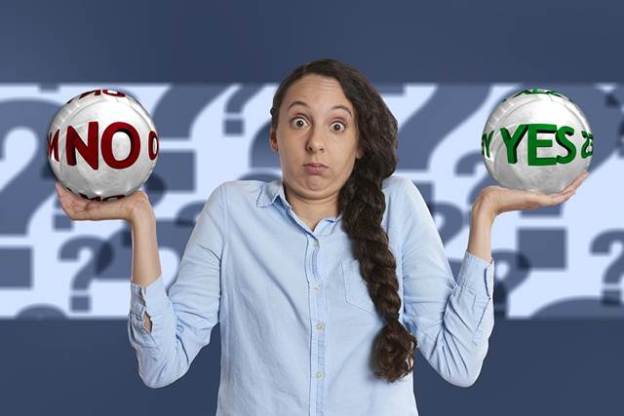
Direct and Indirect Quotations

When you’re reporting exactly what somebody said—a direct quotation—you put the word or words in quotation marks

Let’s figure out when you need to put single words such as “yes” and “no” in quotation marks.

It all boils down to whether you’re dealing with a direct quotation or an indirect quotation.

Direct Quotations

A direct quotation is when you’re directly quoting what someone said—word-for-word, not paraphrasing. You put direct quotations in quotation marks.

So if you were hanging out with Squiggly in Ghirardelli Square, and you asked him if he wanted some chocolate covered cashews, and he looked at you with big eyes and simply said, “Yes!” you could later report to Aardvark that Squiggly said, “Yes,” and you’d put that in quotation marks since that’s exactly what he said.

Indirect Quotations

An indirect quotation is when you’re reporting what someone said, but not exactly. You’re paraphrasing, and you don’t need to put indirect quotations in quotation marks.

Let’s imagine again that you were hanging out with Squiggly in Ghirardelli Square, but this time when you asked him if he wanted some chocolate covered cashews, he said, “Oh my gosh, you can’t imagine how much I want chocolate covered cashews. I was just looking at them and drooling. Thank you!”

You might report again to Aardvark that you offered Squiggly chocolate covered cashews and he said yes, but this time you wouldn’t put “yes” in quotation marks because Squiggly didn’t actually say the word “yes.” You’re just paraphrasing his dramatically positive response.

Sometimes it can be a little confusing to decide whether to use quotation marks, but remember that the trick is to figure out whether the person literally said the words “yes” or “no,” in which case you need quotation marks, or if you are just conveying the general sense of a positive or negative response, and in that case, you don’t need quotation marks.

More Examples

If you are directly quoting someone, put the word in quotation marks:

  • Sarah smiled and said, “Yes.”
  • I looked up from my desk and said, “No, you can’t have a cookie.”

If you are indirectly quoting someone, don’t put the word in quotation marks:

  • He wondered whether Sarah would say yes.
  • I looked up from my desk and told him no, he couldn’t have a cookie.

By Mignon Fogarty
Source: quickanddirtytips.com

Visit us at First Edition Design Publishing

How Do I Create Believable Characters?

Creating complex, ​well-rounded characters requires time thinking about how your characters look, where they’re from, and what motivates them, among many other things. A good way to help bring your characters to life and to establish a back story for them is to develop answers to a set of questions about them.

While much of the information you develop for your characters during the process will never be shared directly with readers, it will help you to understand the character better and more realistically portray how they will react to situations and other characters in your story. The more you know about your characters, the more realistic your story will be.


  • 01
         Where Does Your Character Live?


  • Novelist and writing professor Michael Adams (“Anniversaries in the Blood”) has said he believes the setting is the most important element of any story. It’s definitely true that character, if not story, in many ways grows out of a sense of place. What country does your character live in? What region? Does he live alone or with a family? In a trailer park or an estate? How did he end up living there? How does he feel about it?

    Knowing where your character lives can help you to understand how he might respond to certain people or situations.


  • 02
           Where Is Your Character From?


    In a similar vein, where did your character’s life begin? Did she grow up running around the woods in a small southern town, or did she learn to conjugate Latin verbs in a London boarding school? Obviously, this influences things like the kinds of people your character knows, the words she uses to communicate, and the way she feels about a host of things in her external world.


  • 03

    How Old Is Your Character?

    Though this might seem like an obvious question, it’s important to make a clear decision about this before you begin writing. Otherwise, it’s impossible to get the details right. For instance, would your character have a cell phone, a ​landline, or both? Does your character drink martinis or cheap beer? Does he still get money from his parents, or worry about what will happen to his parents as they get old?


  • 04

    What Is Your Character Called?

    Would a rose by any other name smell as sweet? According to novelist Elinor Lipman, absolutely not: “Names have subtext and identity. If your main characters are Kaplans, you’ve got yourself a Jewish novel, and if your hero is Smedley Winthrop III, you’ve given him a trust fund. Nomenclature done right contributes to characterization.” Your character’s name provides a lot of information about ethnicity, age, background, and social class.


  • 05

    What Does Your Character Look Like?

    Is your character tall enough to see over the heads of a crowd at a bar or to notice the dust on the top of a refrigerator? Does she deal with weight issues and avoid looking at herself in the mirror? Though you need not have a crystal clear picture of your character in mind, physical details help you imagine how your character moves through the world, and this, in turn, helps your readers believe in the character.​


  • 06

    What Kind of Childhood Did Your Character Have?

    As with real people, many things about your character’s personality will be determined by his background. Did his parents have a good marriage? Was he raised by a single mom? How your character interacts with other people—whether he’s defensive or confident, stable or rootless—may be influenced by his past.


  • 07

    What Does Your Character Do for a Living?

    As with all of these questions, how much information you need depends in some part on the plot, but you’ll need some idea of how your character makes money. A dancer will look at the world very differently from an accountant, for instance, and a construction worker will use very different language from either one. How they feel about a host of issues, from money to family, will be in some part dependent on their career choices.


  • 08

    How Does Your Character Deal with Conflict and Change?

    Fiction involves some element of conflict and change. They’re part of what makes a story a story. Is your character passive or active? If someone confronts her, does she change the subject, head for the minibar, stalk off, or do a deep-breathing exercise? When someone insults her, is she more likely to take it, come up with a retort, or excuse herself to find someone else to talk to?


  • 09

    Who Else Is in Your Character’s Life?

    Relationships and how people interact with others reveals character. They’re also excuses for dialogue, which break up exposition, offering another way of providing necessary information. Think about who will best help you convey this information and what kinds of people would realistically be in your character’s world in the first place.

  • 10

    What Is Your Character’s Goal or Motivation in This Story or Scene?

    In longer stories or novels, you will have to ask this question repeatedly. Many of your character’s actions will result from the intersection of what he’s trying to achieve and his personality, which is composed of everything you’ve invented in answering questions about him. When in doubt about how your character should behave, ask yourself what your character wants from the situation and think about the answers you’ve given to all of the questions.

    By
    Source:thebalancecareers.com

    Visit us at First Edition Design Publishing


Capturing an Unhappy Relationship: A Writer’s Roadmap

Relationships are a complicated beast, and if you write romance like me, then you’re wed (pun intended) to the HEA (happily ever after) ending. But the reality is, we have a divorce rate of around 1in 2 marriages; so as much as it’s fun to delve into the romanticised ideal of soulmates wandering hand-in-hand into the sunset, the challenges of relationships can just as equally lead to hearts broken and relationships fractured.

Which is what this week’s article’s about.

Capturing the unwinding of threads of a relationship is complex. Just like the real world, our characters have a history of weaving those threads together in little steps and big steps, usually with the intent that their fabric will be as tight as Egyptian cotton. But people evolve, circumstances change, and sometimes a relationship isn’t strong enough. Usually these ruptures don’t happen quickly; they involve little tears and big tears over days, months and sometimes years.

If you’re looking to capture this heart-breaking (or cathartic) process in your story, either with your main characters or with those memorable secondary characters (your MC’s parents, best-friends or children), then consider these four predictors of relationship breakdown (they are a wonderful way to capture ‘show, don’t tell’ and to create some interesting moments into your story):

  1. Contempt

Far more toxic than frustration, contempt is a virulent mix of anger and disgust which involves seeing your partner as beneath you. Apart from its direct consequences of either belittling or angering a partner, contempt involves one character closing themselves off to their partner’s needs and emotions. If you constantly feel smarter than, better than, or more sensitive than your significant other, you’re not only less likely see his or her opinions as valid, but, more importantly, you’re far less willing to try to put yourself in their shoes to try to see a situation from their perspective.

If one or both of your characters are contemptuous of the other as they interact, you’ve just captured one of the cornerstones of an unhappy relationship. Consider these examples:

  • Jane sends Jo a list of groceries for tonight’s dinner. When Jo gets home, Jane realises that Jo picked up self-raising flour instead of plain flour. Jane becomes frustrated, asking Jo what sort of idiot doesn’t know the difference between the two. She even posts it on Facebook so her sisters can see what she has to live with.
  • Barry is organising his next fishing weekend with his two sons. Daria laughs as they are packing their tackle boxes, pointing out to their sons that she caught the biggest fish last time she went out in their godforsaken tin-can-of-a-boat.
  1. Criticism

Like contempt, criticism involves turning a behaviour (something your partner did) into a statement about his or her personal character (the type of person he or she is). As many of us have experienced or observed, fault-finding and belittling behaviour adds up. Over time, darker feelings of resentment and contempt are likely to brew.

  • Alex has a habit of leaving her cereal bowl—soggy, uneaten weeties and all—on the coffee table every morning. Sam makes sure she makes note of it each day as she collects them, pointing out what a lazy and inconsiderate partner Alex is.
  • After a sleepless night, Jake overheats baby Bobby’s mashed pumpkin. When Bobby spits it out and starts screaming, Sally scoops him up, shouting over the top that when it comes to parenting Jake couldn’t raise a sweat let alone a child.
  1. Defensiveness

Defensiveness involves a sense of protectiveness and guardedness about our thoughts and feelings. A character who is being defensive will often play the victim in tough situations with their partner; at times that may be justified, others not so much.

  • A couple are late to a cousin’s wedding. Ashleigh is the first to say, “It wasn’t my fault!” as they slip into a back pew.
  • Jane is online to her best friend, typing furiously that she never got a chance to tell her husband about the dint in the car door because all he does is watch YouTube. If he gets upset about it, he can’t say she didn’t try to tell him.
  1. Stonewalling

If your character can sense an argument brewing, they feel the tension tightening between their shoulders, notice their voice amping up a few decibels, and their response is to shutdown or walk away, you’ve got a stonewaller. Stonewalling can be just as toxic for a relationship as criticism or contempt because it keeps your characters from addressing their underlying issues. When perspectives don’t get a chance to be explored, then frustration is likely to morph into resentment.

  • Ian and Sarah are arguing about their credit card debt. When Ian asks Sarah exactly how much those shoes cost, she turns and walks away. Picking up her phone, she retreats to the bedroom.
  • During a parent teacher interview, Jacqui suggests that maybe their son isn’t succeeding in math because of the children he’s sitting next to. Her husband, Jed, rolls his eyes at the teacher, shifts his seat forward, and tells the teacher that their son just needs more challenging work as he’s obviously bored. Jed starts enquiring about extension work.

John Gottman, the guru of relationship therapy and founder of the Gottman Institute, has said that these four factors are tell-tale signs that all is not well with a married couple. In fact, when the frequency of these four behaviours are measured within the span of a 15-minute conversation, Gottman and his fellow psychologists can predict which marriages will end in divorce with striking precision.

By Tamar Sloan
Source: psychwriter.com.au

Visit us at First Edition Design Publishing

The Halo Effect: Your Readers are Applying it

So the hero in my latest release has a few unlikeable traits (as in, pretty unethical and unsavoury behaviours), which would be fine in some genres, but not so much in romance. I realised that if I was going to have an online stalker who has come to some pretty dark conclusions about humanity, I needed to address this fairly early on in the book if I wanted my readers to fall in love with him alongside my heroine. Actually, if I wanted them to read past the second chapter!

I decided on the strategy I was going to use, but I began to reflect on the psychology behind Blake Snyder’s famous tactic. The tactic (which some of you would have guessed by now) we’ll discuss shortly; the science behind is the bit we’re going to delve into first, and it’s called the ‘halo effect.’

The halo effect

The halo effect is a type of cognitive bias in which our overall impression of a person influences how we feel and think about his or her character. Essentially, your overall impression of a person (“Gosh, he’s nice!”) impacts your evaluations of that person’s specific traits (“He’s probably also smart!”). We assume that because Johnny is good at A, then he must be good at B, C, and D. Conversely, it also works the other way (called the horn effect); if Danny is bad at A, then he must be bad at B, C, and D.


Psychologist Edward Thorndike first coined the term in 1920. Thorndike asked commanding officers in the military to evaluate a variety of qualities in their soldiers. These characteristics included such things as leadership, physical appearance, intelligence, loyalty, and dependability. He found that high ratings of a particular quality correlated to high ratings of other characteristics, while negative ratings of a specific quality also led to lower ratings of other characteristics. Soldiers were far more likely to be assessed as good in all areas or bad in all areas, even when there was no obvious correlation between the traits.

So yes, first impressions count out in the real world (which means they also do in your story).

Check out these other examples of the halo effect:

  • We tend to perceive celebrities as attractive and successful, meaning we also tend to see them as intelligent and funny.
  • Teachers are subject to the halo effect when evaluating their students. A teacher who sees a well-behaved student might tend to assume this student is also bright, diligent, and engaged (it’s actually how I see many students slip through the cracks in our educational system).
  • The halo effect can also impact how students perceive teachers. In one study, researchers found that when an instructor was viewed as warm and friendly, students also rated him as more attractive, appealing, and likable (I’m glad I made it a point to smile at my students during my teaching years!).
  • In the work setting, the halo effect is most likely to show up in a supervisor’s appraisal of a subordinate. In fact, the halo effect is probably the most common bias in performance appraisal. The supervisor may give prominence to a single characteristic of the employee, such as enthusiasm, and allow the entire evaluation to be coloured by how he or she judges the employee on that one characteristic. The employee could have areas they have yet to achieve competence in, but if they show enthusiasm, the supervisor may very well give them a higher performance rating than is justified.
  • Marketers take advantage of the halo effect to sell products and services. The iPod is a great example—a popular product, it functioned as a great launching pad for the iPhone.

What’s more, researchers have found that attractiveness is a factor that can be influential in the halo effect. The truth is, we tend to rate attractive people more favourably for their personality traits than those who are less attractive. Several different studies have found that when we rate people as good-looking, we also tend to believe that they have positive personality traits and that they are more intelligent. If a prospective employer views an application as attractive, they are more likely to rate the individual as intelligent, competent, and qualified (and no, that’s not fair). What’s more, one study even found that jurors were less likely to believe that attractive people were guilty of criminal behaviour (so crime writers out there—consider making your murderer attractive if you’re looking for them to get away with it).

Harnessing the halo effect in your story

Deliberate use of the halo effect can be a powerful writers tool. The idea is to create the impression you want the reader to build upon early on. If you’re looking to create a good impression, you can do this by showing your character as funny or smart, and possibly attractive. Your readers brain will extrapolate from there without even realising it. My character was certainly smart, and the reader got that sense from his hacking knowledge and sharp dialogue. And yes, he’s good looking, but he’s also significantly scarred. Capturing a romance reader in this scenario was going to be a challenge.

The literary device that I used was Save the Cat; a term coined by the late Blake Snyder—a scene relatively early in the story where the reader meets the hero and he/she does something ‘nice.’ Often it will have a heroic flavour, like oh, saving a cat. If that action has enough emotional impact, your reader will start making generalisations about the character’s other personality traits.

In my particular scene, chapter two in fact, we’re introduced to Erik, who is stalking his peers online without them knowing of his existence. What’s more, the reader realises he’s been doing this for some time, and he does not have a very high opinion of humanity. By the end of the scene he also saves one of said peers from being blackmailed by his brother.

On the other side of the coin, you have the ‘kick the dog’ scene. If you want to create a first impression of your villain, then have them commit some act of unpleasantness. If a villain is kicking a dog in chapter two, my brain is going to put two and two together and conclude this dude isn’t very nice in other areas of his life. It’s fascinating that this cognitive shortcut happens outside of my awareness will set up my expectations for the remainder of the book.

The cool bit is that this allows you, the author, to either confirm these suspicions, or blow them off the page.

Source: psychwriter.com.au

Visit us at First Edition Design Publishing
8 Ways To Balance A Writing Career While Making Family A Priority

Note: This is a guest post by Lisa Hall-Wilson, she’s an award-winning freelance journalist and author. She teaches writing classes online and writes historical and speculative fiction. Visit her website at LisaHallWilson.com. You can also find her on Facebook.

I have been a stay-at-home mom off and on for eighteen years. For the last twelve years, I’ve also been a writer.

I went from knowing nothing to having my own freelance business and being a national award-winning freelance journalist and author. One thing I had to learn was how to carve out time for my writing career while keeping my family a priority. You can, too.

I think “balance” isn’t the right concept. I don’t balance my priorities, I set priorities for short seasons.

For me, trying to keep all the balls in the air all the time was exhausting and inevitably I failed at all of it.

By making writing and family a priority for a short season (I’m talking a few hours, days or a week at a time), it all seems to balance out. My kids understand that I have deadlines and wordcounts to make and will hang out later, and sometimes I don’t touch my laptop for four or five days because it’s family time. I never neglect one or the other for very long.

There are different seasons with raising kids, so I’ll try and point out the adjustments I made in each stage.

  1. Make use of empty time

Empty time is all those soccer practices, swim lessons, auditions, rehearsals, and music lessons that you’re stuck waiting around for. I’m not talking about games or meets where you need to pay attention – that’s family time. But, in those multiple hours a week where I’m just waiting it out, I bring a printed manuscript, my laptop, my phone, or a notebook. Whether I’m editing, emailing, writing, reading/studying, or brainstorming, making use of those 20 min to 1 hour time slots is a game changer.

Now my are older and are into different activities so I spend more time in the car waiting and working and make sure my devices are fully charged before I leave. In winter, (I live in Canada, it gets cold in the car) I look for a nearby library or coffee shop. Bring some headphones and music that drowns out the noise of the crowd and get to work!

  1. Make use of play time

When my kids were younger, we lived in an apartment so I had to go with them when they went outside. In these times I brought interruptible work, so what I mean by that is work that I could pick up and set down and still accomplish things. This works even if you have to sit by a window or on the deck while the kids play. I would do a lot of editing or reading/highlighting moreso than writing at these times. I made sure I set aside one play time a day where they had my full attention.

  1. Write while they sleep

Whether we’re talking about toddlers or teenagers, making use of quiet time in the house when you have it is essential. The times of day they sleep will change so you have to be flexible. I am more likely to stay up late than get up early, so I’ve done that lots.

There was a season where I would work from 10PM to 3AM, sleep until 8AM and get up with the kids for school, go to a part-time job, sleep for a few more hours in the afternoon, do the supper/hang out with the family until 10PM or so, and start over. When they were in bed by 7PM, I wrote from 7 – 9PM each night because I had to be alert during the day and then spent time with my husband. It’s important when you’re writing in the outlier hours to take at least two days off a week from that schedule. If I didn’t, I was miserable and so was everyone else.

  1. Set aside time for your work

You need to set aside dedicated time to write. If you have a spouse or partner, work out a mutually-agreed upon arrangement where they will take the kids or help guard the quiet of your workspace for a determined amount of time. I had a couple of hours here and there during the week where everyone was home, but I could shut myself in a room and get work done.

It’s important to take those moments like play time and sports waiting to plan your writing time. Nothing is worse than getting those two hours and then lose a half hour staring at a blank screen. What was it Churchill used to say? If you fail to plan you plan to fail. This is not time to reread everything you wrote the day before and edit, you have other times for that. This is dedicated writing time.

  1. Weekends away

This was a game changer for me. My writer’s group splits the cost of an Air BnB rental, we bring our own food, and write. We don’t eat meals together, plan side trips, any of that. This is not a social time for me, it’s writing time.

I can get 20,000 to 25,000 words down (original stuff – not editing) on a novel between a Friday evening and Sunday noon. But I also make sure I am prepared with an outline, character sketches, etc. to make the best use of that time.

  1. Office Hours

In the seasons where I’ve been home full-time, my office hours are school hours. This is not time to clean, volunteer, lead groups studies, spend time on Facebook. I treat those hours like an outside job as much as I can. I try not to work outside my office hours, but it’s hard if I’m neck deep in a story or facing a deadline – and there will be those seasons.

Summer holidays are hard because I don’t have a door on my writing space and I’m constantly interrupted. But at the end of the day, I’m OK with losing writing time because my kids want to talk with me. They’ll be out of the house soon, so I’m not going to rush that. Always make time for life.

  1. Go on an adventure!

I do my best to take my kids on “an adventure” a few times a month. When they were younger, we’d go for a hike and look for caterpillars. We’d collect leaves and see how many different ones we could find. We walked everywhere. We built snow forts and snow slides or went tobogganing (sledding). Now we go to the mall, a bookstore or movie.

When we get home, all they want to do is play quietly, rest, or read. We had family time, and now they’ll give you writing time usually without complaint. Setting priorities for a short season. This is how it works.

In the summer, I’ll take a whole day and go on an adventure (like the beach), and then they’re OK if I spend a couple of evenings writing. I focus on them entirely for that whole day, and they give me the freedom to focus entirely on my writing for a couple of evenings.

  1. Be kind to yourself

Sometimes life throws you a curveball and you have to step away from the keyboard. Someone gets sick, money is tight and you have to take a part-time job – whatever. Life happens. Resist the urge to feel guilty about this and sneak in time to write when you can. Write every day, even if it’s ten minutes while locked in the bathroom with a notebook. It all counts and keeps your passion for writing alive.

Also, take care of yourself physically and mentally. Go outside – fresh air always helps when I’m stuck on a story. Reliving traumatic events to write authentically requires that I take care of myself mentally and take breaks. Talk it out with a friend or spouse.

Some of these ideas may seem like they’re just a few drops in the bucket when you want to write full-time, but these snatches of time add up cumulatively.

Source: positivewriter.com
By Bryan Hutchinson

Visit us at First Edition Design Publishing
How to Captivate Hurried Readers with a Magic Opening Line

Can I skip the opening sentence for this post?

Pleeeease?

Let’s say you skip reading the first few sentences and start with the fourth?

Or fifth?

I don’t like the pressure of writing a first sentence.

What if I fail to engage readers? What if I’m boring them? What if I’ve wasted my time on this article because my first line sucks?

The task of writing a first sentence can paralyze even the most acclaimed writers. In an interview with the Atlantic, Stephen King admits he can spend months, or even years, on writing the opening lines for a new book.

Sounds crazy, right?

As business writers, we don’t have the luxury of time. We have other things to do than worrying about one line of text.

So what can we do?

Let me share with you a trick for writing a first sentence super-fast. But first, let’s define what a good opening line is.

Okay?

An outrageously good opening sentence

This is how the novel “Nervous Conditions” by Tsitsi Dangarembga starts:

I was not sorry when my brother died.

Why is this sentence good?

It entices you to read on.

That first sentence creates drama because it instantly raises two compelling questions in readers’ minds: Why did the brother die? And why was the author not sorry? A reader reads on because he wants to find out the answers to these two questions.

Stephen King says it like this:

An opening line should invite the reader to begin the story. It should say: Listen. Come in here. You want to know about this.

One of the most famous opening lines

This is how “The Catcher in the Rye” by J.D. Salinger starts:

If you really want to hear about it, the first thing you’ll probably want to know is where I was born, and what my lousy childhood was like, and how my parents were occupied and all before they had me, and all that David Copperfield kind of crap, but I don’t feel like going into it, if you want to know the truth.

This famous opening line is 63 words long.

Is such a long sentence a good idea?

Ben Blatt analyzed what makes a good novel great, and he also reviewed first sentences. His conclusions are not clear cut, as he summarizes in his book “Nabokov’s Favorite Word is Mauve:”

The first sentence is only as popular as the rest of the book, and brevity alone will not make a first sentence great.

Our literary heroes may write lengthy first sentences.

But when writing for the web, we need to remember our readers. They’re not curled up on a comfy sofa with a book and a glass of Rioja. They’re hurrying across the web, searching for interesting articles to read and share. Who has the patience to start reading a block of text?

So, instead of following J.D. Salinger’s 63-word mammoth sentence, take your cue from Toni Morrison, the master of short first sentences, like this one from “Tar Baby:”

He believed he was safe.

From “Paradise:”

They shoot the white girl first.

From “God Help the Child:”

It’s not my fault.

Each of these sentences makes you curious to read on.

Your first sentence has two purposes. First, get people to read your first sentence—a short sentence works better because it’s easy to read. Then, make sure they want to read your second sentence.

The worst opening lines

Ben Blatt quotes the opening line of the book “Paul Clifford” by Edward Bulwer-Lytton as one of the most ridiculed opening lines ever:

It was a dark and stormy night; the rain fell in torrents, except at occasional intervals, when it was checked by a violent gust of wind which swept up the streets (for it is in London that our scene lies), rattling along the house-tops, and fiercely agitating the scanty flame of the lamps that struggled against the darkness.

Not only is that sentence awfully long, its worst crime is that nothing happens. Nothing grabs attention. Nothing makes me curious. It’s simply a description of the weather. So what?

Of course, in business we rarely write about the weather, but you may have come across similar opening lines that fail to whet your appetite for reading more. For instance:

Many ways exist to choose your words.

As you know, Rome wasn’t built in one day.

In business, you have to take risks.

Duh!

The above opening lines may be short, but they’re obvious statements, killing readers’ interest. There’s no incentive to read on.

A little-known shortcut for web writers

Getting nervous about writing a good first sentence?

No need for nerves, when you know this blog writing trick …

Unlike novels, a blog post is often a conversation with our readers. And what easier way to engage readers than asking them a question?

A few examples:

Do you hear that nagging voice, too? (source)

Do you ever feel a pang of envy? (source)

Has it happened to you, too? (source)

In a face-to-face meeting, you often start a conversation with a question, like: Cup of tea? How did your meeting go? Or: How’s business?

Why not do the same in your writing?

The one magic opening line doesn’t exist

So, no need to search for it anxiously.

Instead, remember your reader.

Imagine him hurrying across the web. He’s feeling restless. He’s impatient because he’s been wasting his time reading lousy blog posts.

How can you engage him? How can you make him read your first sentence? And then the next?

A good writer draws a reader in, and doesn’t let him go until the last word.

By
Source: enchantingmarketing.com

Visit us at First Edition Design Publishing
Top 3 Reasons Censoring Your Writing Is Holding You Back

There will be tough love today, and even a bit of cursing. If it’s too much for you, feel free to leave now.

Do you worry what others think about you? Do you sit at your computer screen, paralyzed to type what you desperately want to say for fear of what your mom, husband, brother, friend, or best friend from second grade might say? Truth is, most of our family and friends won’t read our books or give them much thought. We only THINK they will.

Stop censoring yourself!

Maybe you have shared your writing and been burned, relationships severed, friendships or family relationships strained or even ended. It’s terrifying, all those what if’s.

Others people’s problems are other people’s problems. Don’t take that shit personally. #WriteWhatScaresYou

Fuck that shit. As Cheryl Strayed says, you need to write like a motherfucker. What does she mean by that? Does she mean to write with papers everywhere, cartoon balls of trash flying across the room, keys tapping to the beat of Copacabana? (Let’s hope not. We’ll never get that song out of our heads.)

No. She means that you need to own it. Own your shit. Write your shit. Ignore the voices of others, get in your head, your heart, grab your soul and write the shit out of that shit. This resonates with me because that’s how I wrote Broken Places (my latest release) and Broken Pieces. Let’s deconstruct.

Censoring Your Writing 

Why are you censoring yourself? If I came up to you, stood over your shoulder, read your latest paragraph, and told you, “You can’t say that!” what would you say to me? Because if you said that to me, I’d tell you to go the hell. Not only because this is my book, but because who are you to tell me what to write? Isn’t this my book? My work? My story? My name?

This person telling you what to write — does their name go on that book cover? Are they the ones spending countless hours writing and rewriting the work? No. So, fuck em.

I get it, though. People attempt to tell us daily what we should or shouldn’t write about, right? It amazes me, to be honest, that others who don’t know our story, or who think they know our story intimately but can’t possibly because they don’t live in our heads and don’t feel our emotions or live our lives, want to censor us for what we may or may not say. What makes them so scared? That’s the real question, isn’t it?

Scenario #1:

I shared a Brené Brown quote the other day about having courage and vulnerability when sharing your story, and someone replied that when she’d done so, people had chastised her, she’d lost good friends (and even family members) because her truth upset them too much, so she’s done. She’s ‘taking a break from truth.’

This saddens me deeply. I’m not judging her — she’s had enough of that. What saddens me is she’s allowing others to make that decision for her, letting them dictate what is okay or not okay to share, because they are embarrassed she shared her abuse story; now others know and can’t deal, which is another form of censoring her and shaming her for something she didn’t do.

Censoring: The Loop of Shame

When someone abuses us, we often don’t tell because we are ashamed. When (or if) we do tell, we are shamed because it’s embarrassing and shameful to us — what child (in many of these cases, as was the case with me) wants to say that an adult used our body for physical pleasure? It’s sick and twisted, and yet here we are, alone, forced to wrap our young, innocent minds around these confusing acts, with nobody to talk to, nobody to help us understand that we did nothing wrong.

Fast forward to adulthood: we choose to write about it as a form of catharsis, healing, therapy, or simply sharing so others will know they are not alone, only to have our loved ones shame us for sharing, or further chastise us for going public in some way. Shaming a survivor is one of the most selfish acts there is.

We survived the abuse — dealing with your discomfort isn’t our issue. It’s yours. If you can’t get over yourself, oh well. Survivors don’t have to accept that. We have a basic human right to speech. We have a right to tell our story.

Scenario #2

One fellow, T, shared his story in a public Facebook post, and with his permission, I’m sharing his story here with you today. T’s sister immediately chimed in to scold him for ruining the family name, embarrassing her, accusing him of lying, of creating current drama when all that happened in the past, and on and on. I complimented T on his courage and she came after me, warning me to “keep my mouth shut, to stay out of their family business, etc.,” even though this was all on his public wall.

What I love about the survivor community is that we support each other, and we understand that many people don’t understand that we have a right to tell our stories. We don’t do it for pity or attention (more on that in a moment), but as a way to heal and bond with others who have also survived, and to help educate non-survivors what it means to live the lives we do, to deal with all this on the daily.

Real or Imagined Censorship and Risk

Sure, there’s risk involved in opening up those dusty doors of honesty. I’m not immune to the coughs and sputters of family and friends, even strangers who may or may not judge me for my words, or who place blame on me for their behavior. I’ve been called a liar, an opportunist, one person even went so far as to accuse me of ‘prostituting myself for profit and attention,’ and I’m told often to just move on (as if I haven’t).

I find it interesting that people equate sharing my story with victimhood, or ‘being stuck in the past,’ when that’s not the case at all, yet they are determined to tell me that yes, that must be so. It’s sadly comical, the judgments people make about survivors.

Truth is, those are not my issues.

Scenario #3

I wrote a guest post recently as part of my Broken Places blog tour and the host shared it, as hosts kindly do. Someone on Twitter replied that basically I am ‘playing the victim’ by sharing my story, that I’m somehow magically compelling people to “feel sorry for me.” Fortunately, people supported me without me saying a word (I don’t respond to those types of comments). If you know me at all, you know that I am anything but a victim…yet, these comments aren’t uncommon for survivors.

I’m not offended. I’m not religious. If anything, I want to thank this person for reinforcing I’m on the right path to help remove the stigma of childhood sexual abuse (or any abuse survivors) have to face. This person is a light for me — further helping me realize I still have a lot of work to do. In a strange way, I find comfort knowing my advocacy work is not done, and I have many more people to reach with my story, giving voice to others’ stories, and sharing my platform so other survivors can share their stories.

Ignorance needs an audience so sexual abuse survivors have one, too.

By
Source: rachelintheoc.com

Visit us at First Edition Design Publishing
How to Show and not Tell Intelligence

Although the concept of intelligence and what exactly it means for a person to be intelligent are the subject of considerable controversy and debate, it’s widely accepted that intelligence is valued in our society. In fact, if you’re a sapiosexual, you find intelligence as the most sexually attractive feature in a prospective partner. I’m not going into the evolutionary theories for this (including that intelligent men have a higher sperm count and women intuitively understand this and so are drawn to them), so you’ll have to take my word for it. Intelligence is attractive, and a trait we see in many a hero (and villain in fact). In the landscape of writing, this is a trait you can harness to add layers to your character.

Although every psychologist who has endeavoured to define intelligence has come up with their own definition, intelligence is broadly understood as the ability to perceive or infer information, and to retain it as knowledge to be applied towards adaptive behaviours within an environment. The key as a writer is to create a character who presents as intelligent in a plausible manner. Sure, you can slip in their above average IQ scores as they munch over breakfast, or point out they have seven PhD’s, but what if your character is an adolescent? Or what if they live on the planet X where IQ tests aren’t used because the sentient species have acknowledged the limitations of cognitive testing?

What if you want to show, not tell?

Well, you’ve come to the right blog post. I undertook some research, and along with my professional understanding of intelligence (IQ testing is a regular part of my practice in schools), I considered it in terms of character development. If you’re looking to craft an intelligent character, then check out the following traits (quick caveat: they don’t all have to be present for a person to be considered intelligent, but each of these traits are understood as strong indicators of above-average cognitive capacity):

High Verbal Functioning

People with a high IQ have strongly developed verbal skills. Your character is likely to be able to verbalise meaningful concepts and express themselves articulately and maybe even eloquently. This means dialogue, internal and external, is going to be important in representing an intelligent character.

Strong Reasoning Capacity

A person with high intelligence is able to detect underlying concepts and relationships, and use reasoning to identify and apply rules. Abstract thinking is a strength, as is attentiveness to detail. Many detectives in crime novels demonstrate strong reasoning capacity, and every time they solve the murder by linking the dots that seem to live in different postcodes we’re wowed by their intellect.

Good Memory

Intelligent people not only notice this nuanced information in life, but they also maintain this information in conscious awareness. This process, which requires attention and concentration, allows them to manipulate and play with said information in their mind. I’d rather not recollect the amount of times I’ve looked like I’ve lost valuable IQ points because I can’t remember the of age of my firstborn child!

Fast thinking

Smart people are fast thinkers. They can do all of the above, and they do it quickly. They are able to scan information accurately, make decisions, and implement those decision rapidly. These characters will drop one-liners in the blink of an eye, or be the first to recognise that the name of their victim isn’t on the list of missing people following the earthquake that levelled New York.


But it’s important to note that high intelligence doesn’t necessarily mean your character is any of the following;

Emotionally Intelligent

Emotional intelligence; the capacity to be aware of, control, and express one’s emotions, and to handle interpersonal relationships judiciously and empathetically, is quite different to cognitive intelligence. Whilst people who do well on standardized tests of intelligence tend to be more successful in the classroom and the workplace, emotional intelligence is correlated with better social relations, better family and intimate relationships, and better psychosocial wellbeing.

Think of Sheldon in Big Bang Theory—with his borderline autistic tendencies, he’s an accomplished physicist, but he’s socially inept and emotionally naïve, which has been mined over 11 series of hilarious interactions. It’s worthwhile to consider whether your character has both of these qualities.

Wise

You’ve probably heard the saying there’s knowing that a tomato is a fruit…and understanding a tomato doesn’t belong in a fruit salad. In the same way, intelligence (knowledge of information and using it adaptively) isn’t necessarily wisdom (the ability to think and act using knowledge, experience, understanding, and insight). Your character may have acquired the knowledge (impressively and quickly), but wisdom is the proper use of that knowledge. Whilst trawling the internet I found this little nugget: Intelligence is knowing that Frankenstein was the doctor. Wisdom is knowing that Frankenstein was the monster.

Nice

Just because your character is smart, it doesn’t mean they’ll be nice. In fact, intelligent people can be less trusting and less compliant with rules (think of Tony Stark in Ironman; he’s brilliant, but socially irreverent to the point of egocentrism). Intelligence can give rise to suspicion (and if were to extrapolate that, to conspiracy theories), selfishness (you just need to read Richard Dawkins The Selfish Gene to know selfishness is smart), and subversiveness (which could be a good thing in your story, but also may make them unlikeable).

Emotionally Stable

Intelligence doesn’t equate with emotional stability, in fact, it’s possible that higher IQ is linked with higher incidents of some mental health diagnoses (including anxiety, depression, bipolar disorder, and schizophrenia). Although the link isn’t clearly understood, it’s probably not important to our story building motivations. What is important, though, is to understand that your character may be in the top two percent of the IQ bell curve, but their physiology and environment (e.g. a traumatic childhood) will also play a factor in their emotional life.

By Tamar Sloan
Source: psychwriter.com.au

Visit us at First Edition Design Publishing