Tag Archives: Writer’s Digest

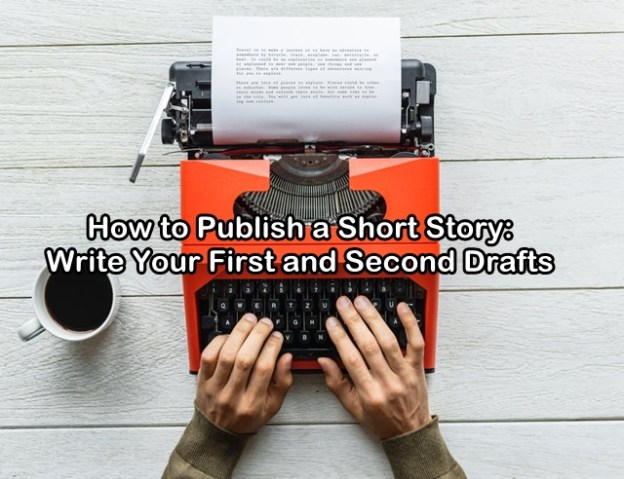
How to Publish a Short Story: Write Your First and Second Drafts

Two weeks ago, I urged you to come on a publication journey with me, one where I walk you through the process of planning, writing, and submitting a short story. This is the second post in the four-part series on how to publish a short story. By the end, you’ll have a story ready to send out to publications!

If you’re a little late to the party, never fear! You can still participate. Look back at the first two steps and then join me back here.

This week, we’re going to concentrate on writing and the first edit.

NOTE: Throughout this series, DO NOT post your work in the comments. I’m going to ask you to submit to a publisher at the end of this series, and posting it here would be considered publishing it. Our Becoming Writer community is a great place to workshop your story before you submit it.

Writing Your Story

By now, you should have a publication in mind and have the answers to a couple basic questions. Maybe you brainstormed or did a full outline. Bonus points if you’ve got a draft! (But don’t worry if you don’t.)

Now pick up the pen and write the thing!

This series is focused on how to submit stories and isn’t meant to be a masterclass in short story writing, but I’ve tried to include as many basics as I can. For further information on writing shorts, check this out.

If you’ve got a draft already, this post will still be useful to you, so don’t skip reading it!

3. First Draft: Write in One Sitting

Smile. This is the fun part.

Short stories are meant to be consumed in a single sitting, so it makes sense to write them in one. This isn’t as daunting as it seems. You’ll find your enthusiasm will drive you to the end and the story will flow much better.

Sit down and write. Write quickly. Write badly. Just write.

This is not the time to worry about your word count. Wait, what? I know. I told you to pick out a publication and they’ve given you a word count to stick to. Ignore that for the moment.

Right now, your job is to tell your story. The story will let you know when it’s finished. Overwriting is fine, and actually encouraged, at this stage. On the opposite end, if you’re lacking in words, that’s okay, too. You can always fill in more description later.

For now, just let it flow.

But do remember the four questions I gave you the last time and keep them in mind as a roadmap for going forward. Don’t worry if you get a little lost or off-track. Sometimes stories insist on a life of their own. Don’t panic. That’s normal.

4. Break Time

When you’ve written the last word and are riding that rush of excitement, I need you to do something vitally important: TAKE A BREAK! This is so important, I’ve included it as one of the steps instead of simply mentioning it in passing.

Put the story away and out of your mind. I recommend a three-day hiatus at this stage. That’s just enough for you to forget what you wrote and why you wrote it that way, but not enough time to lose interest in the story.

Don’t look at it. Don’t edit it. Don’t even think about it.

Read a book, get some sleep, or work on another story. Fight the urge to edit right away!

5. Second Draft: Get Critical

This is the less fun but crucial part. Your first draft is not perfect.

Say it with me now: MY FIRST DRAFT IS NOT PERFECT!

You’ve had a break and hopefully you’ve forgotten why you loved this specific turn of phrase or that overlong description. Now you’re going to get brutal. You’re going to cut, add, and rearrange with all the mercy of a general on a battlefield.

First things first: Make sure your story is a story! This might sound obvious, but sometimes it’s not.

When I first started writing shorts, it was all nonsense. Halfway decent prose, but utter nonsense. There was no point. There was no character development. There was no climax. It took a long time for me to realize I was getting rejected because I hadn’t written a story.

A short is different from a novel. You don’t have time to ramble. But a short story is still a story and needs to read like one. It must contain all the elements I mentioned mine lacked. And it must have a beginning, middle, and end.

Here are a few short story fundamentals to achieve that goal:

Elements of a Short Story: What Should Be

  1. Start with action: No overly complicated scene setting or a ton of character inner musings needed. Get the story moving.
  2. Show, don’t tell: Telling seems like a good way to get to the point, right? Nope. A short story is still a story, not a sequence of events spat out in synopsis form by a robot. This happens, then this happens, and finally this happens, is an outline, not a narrative.
  3. Good pacing: Good shorts don’t spend too much time on description and rush through the action. They flow well from one scene to the next and none of those scenes are unnecessary.
  4. Climax and efficient build up to it: Every single word in a short story needs to drive the reader to the climax. Move toward that climax efficiently. If there’s something that doesn’t serve this purpose, chop it. And make sure your climax is in there!
  5. Satisfying resolution: Your ending must wrap up your story. It needs to be clear, there can be a twist or surprise (but make sure that surprise isn’t coming out of nowhere), and there needs to be a change from the way things were in the beginning.

Common Short Story Mistakes: What Shouldn’t Be

  1. Overcomplicated plot: Again, keep it simple. Shorts revolve around one central theme, action, upheaval, or event. If you’ve got a bunch of B plots, your story probably isn’t suited for the structure of a short.
  2. Too much backstory and world-building: Only tell us what we need to know, when we need to know it. You can know every little detail about your character’s third-grade experience or the ecosystem of your fictional planet, but is it necessary for your reader to know? This is a general rule when writing, but especially so for shorts. You don’t have the space to tell us everything. Stick to the point.
  3. Bad dialogue: This is one of the things I see the most with short stories. One way to fix this is to read your dialogue aloud, preferably with a partner. If it sounds funny coming out of your mouth, it’s not right. Remember, people rarely use another person’s name when talking to them and contractions are your friend.
  4. Head hopping: Stay in one point of view. There’s not enough time or space in a short to skip around.
  5. Abrupt ending: Make sure you haven’t just cut off your story to stay in the word count. (The climax is not the ending!) Take us all the way through.

Write, Write, Write!

For the next two weeks, concentrate on getting through the first and second drafts using the tips above. This might get frustrating at points. You may want to give up. Don’t. You’ll get through it.

And most importantly: Your writing DOES NOT suck! (We all need that little reminder now and then.)

Still wondering how to publish a short story? Don’t worry. In the next post, I’ll go over getting feedback and the nitpicky edits of the third draft. Soon, your story will be publication ready!

Which short story elements do you think you do the best? Which do you think you need to work on? Let me know in the comments.

By Sarah Gribble
Source: thewritepractice.com

Visit us at First Edition Design Publishing
Style Guides: Essential Writing Resources for Professionals

When we’re writing, we run into a lot of technical issues. Where do the quotation marks go? When is it correct to use a comma? How should titles be formatted?

Some of these questions are answered by the rules of grammar, spelling, and punctuation. But other questions are not addressed by grammar: there’s no official rule for how to format a title.

We writers need trusted resources that we can use to resolve all these issues, especially if we want to produce work that is both grammatically correct and stylistically consistent.

That’s what style guides are for. Style guides answer grammatical questions and provide guidelines for consistency.

What is a Style Guide and Should I Use One?

A style guide is a manual that establishes rules for language (including grammar and punctuation) and formatting. Within academia, these guides also provide standards for citations, references, and bibliographies. Many disciplines have their very own style guides, such as the Publication Manual of the American Psychological Association.

These manuals promote proper grammar and ensure consistency in areas where grammar is unclear. Style guides answer all those burly writing questions that are absent from the rules of grammar: Did you use a serial comma in the first paragraph, but leave it out in the third? Have you used italics in one post to refer to a book title, but in another post used quotation marks?

Basically, a style guide is an all-purpose writing resource.

If you’re serious about writing, then you should definitely use a style guide. Since a style guide’s primary function is to render a work consistent and mechanically sound, every project will benefit from its application. That includes creative writing, freelance writing, and blogging!

In many cases, a style guide is not only appropriate, it’s mandatory. If you’re writing for submission, it’s a good idea to check a publication’s submission guidelines to see if they require writers to use particular style guide.

By establishing standards, a style guide will help you streamline your work. Once you are accustomed to using a particular set of guidelines, the writing process will flow more smoothly, because you won’t have to stop and deliberate on grammar and style. Your readers will be pleased too, since inconsistency causes confusion.

Which Style Guide Should I Use?

There are lots of different style guides, from the The AP Stylebook to the The Chicago Manual of Style. Which one should you use?

In many cases, the matter of which style guide to use is not up to the writer. As mentioned, publishers will provide guidelines explaining which style guide is required.

Most newspapers adhere to The Associated Press Stylebook on Briefing on Media Law (often called The AP Stylebook), whereas a small press publisher might ask you to use The Elements of Style (often referred to as Strunk and White). Professors and teachers generally require students to use the MLA Handbook for Writers of Research Papers, Sixth Edition.

What about freelance writers, bloggers, fiction writers, and everyone else?

writing resourcesThe most popular style guide for general use is The Chicago Manual of Style, and this is also the style guide commonly used for manuscripts (i.e. novels and anthologies). Many other writing guides are based on Chicago or will defer to it for any areas of style that they do not specifically address. It covers formatting, includes rules for good grammar usage, and provides a roadmap that ensures your work is mechanically consistent.

For general use, Chicago is by far one of the best writing resources on the market, and for me, it’s been one of the best investments I’ve made for my own writing career.

Do you use a style guide, and if so, which one? Are there other writing resources that you can’t live without? Share your favorites in the comments.

By Melissa Donovan
Source: writingforward.com

Visit us at First Edition Design Publishing

Your Story Matters (Or… What a Reader Wants You to Know)

Hi, dear Villagers! *waves*

Let me take a brief moment to introduce myself. I’m Carrie, aka MeezCarrie, of ReadingIsMySuperPower. And I LOVE STORY!! I love short stories. I love epic stories. I love in between sized stories. I love contemporary stories. Historical stories. Mystery stories. Amish stories. Even some speculative and YA stories.

But most of all? I love THE Story. The one that starts with the ultimate ‘once upon a time’ – “In the beginning, God created the heavens and the earth” (Genesis 1:1) – and ends with the best ‘happily ever after’ ever (Revelation 21:4)

Because we are all part of that Story.

Yes, we all have a story in progress that is our own life. But everyone we meet does, too. And all those stories-in-progress are part of the Big Story that God is telling. Let me tell you – that is SO exciting to me!

I’m one of the new Seekerville bloggers, but I’m not seeking publication. I’m content to read other people’s stories and talk (incessantly) about them. But that up there? What I just said about being part of God’s Story?

That means I’m sorta like all the rest of y’all.

In a small way.

Ok.. not at all the same.

BUT… I am part of the greatest Story in the world. And so are you. That’s pretty stinkin’ incredible. The Author and Finisher of my Faith is telling a Story about me and about you. And He has promised to keep writing it until it’s completed – not when I die or when you die, but until the day Jesus returns. (Philippians 1:6)

Back in November, I had the pinch-me privilege of speaking with Cynthia Ruchti at the Art of Writing Conference just ahead of the 2017 Christy Awards gala. We talked about the darts of author discouragement and how to dodge them. After our session, a woman came up to me in tears. She whispered, “I didn’t know anybody else knew how I feel.” And then we both were in tears lol!

Author friends – can I encourage you a moment? You’re not alone. Writing may be a solitary career but the discouragements are consistent. Fear of rejection. The reality of rejection. Fear of the  possibility of a bad review. The depths of despair over an actual bad review. Your family doesn’t take you seriously. Your friends don’t take you seriously. It doesn’t pay the bills. It barely pays for coffee.

Oh… wait… I was supposed to be encouraging you. LOL.

I really was headed here, I promise.

You’re not alone. And you’re not left defenseless.

God has given you each other, and He has given you His Word. Community and grace wrapped up in a safe place like Seekerville.

You want to know another secret? YOUR STORY MATTERS.

Yep. I went there: all caps.

Because it’s so incredibly true and so incredibly important to understand.

The story you’re writing matters.

That story you’ve agonized over. The one that’s kept you up all hours of the night. The one that may or may not currently be taunting you with a blinking cursor of ‘I got nothing’. It matters. Even if no one else ever reads it. Even if no agent or publishing house wants it. Even if your beta readers and editors send it back with more tracked changes than you had words to start with.

Your story matters. Believe it. And believe in it.

But you know what? The story that God is writing in you and through you matters most of all. He is making you more like Jesus every day. He knew you before He formed you in your mother’s womb, and He had already had plans for your life. (Psalm 139, Jeremiah 1) He created you as a writer before you even had fully developed hands to hold a pen or tap away on a keyboard. Even better – He knew your role in His Story before you ever made your grand arrival on planet Earth. And that story matters on a scale we can’t even begin to imagine.

Maybe you’re like me and the only thing you write is a blog post… or a grocery list. Your story matters too. God placed you in His Story at just the right time and in just the right place so that you would come to know Him (Acts 17). He pursued you with an everlasting love and has engraved you on the palm of His hand. (Jeremiah 31, Isaiah 49). Think about that for a second – you matter so much to the God of the Universe that those nail-scarred Hands have your name on them.

Your story matters. Believe it. And believe in it.

I know good stories. I’m surrounded by them, à la the Dr. Seuss method of decorating. All the crannies, all the nooks, etc. This Big Story that God is telling is a good story. It’s the best story. It’s the standard by which all other stories are measured (whether they realize it or not). It’s also a true story. This fairy-tale to beat all fairy-tales – a prince on a white horse come to vanquish the enemy and rescue his bride – that’s OUR story (Revelation 19).

So when you’re tempted to throw in the towel and give up on your story – the one you’re writing or the one you’re living – remember this:

Your story matters. Believe it. And believe in it.

By Carrie Schmidt
Source: seekerville.blogspot.com

Visit us at First Edition Design Publishing

5 THINGS WRITERS SHOULD ASK POTENTIAL AGENTS

First Edition Design Publishing

 by:

Categories: Brian Klems’ The Writer’s Dig Tags: Brian Klems.

questions-to-ask-an-agentAn agent has offered me representation, but I don’t know how to tell if she’s right for me. What are the most important questions a writer should ask an agent before signing? —Anonymous

There are hundreds of questions you could ask an agent, from the sensible “What attracted you to my book?” to the slightly less sensible “When will you net me my first million?” The key is to choose the ones that will get you the most important information you need to make an informed decision.

Here’s a list of the five most crucial questions you should ask any agent before agreeing to join her client list.

1. Why do you want to represent me and my work?

The agent should be able to answer this easily. Agents generally take on projects that they not only think will sell well, but that they personally admire. This question gives the agent an opportunity to express her interest to you.

[Want to land an agent? Here are 4 things to consider when researching literary agents.]

2. How did you become an agent/get your start in publishing?

You want an agent who has a history in publishing, whether as a junior associate at a well-known agency or perhaps as an editor with a small imprint. You need to be assured that the agent knows the business and has the contacts necessary to give your book its best shot. You might also want to ask if the agent could refer you to one of her clients in your genre as well; getting the perspective of a writer who is in the role you’re about to step into can be invaluable.

3. What editors do you have in mind for my book? Have you sold to them before? Will you continue to market to other editors if you can’t make a deal with your first choices?

This is more of a three-part question, but it’s the overall answer that you want. By asking these questions, you’re checking to see if this agent has connections, and you’re also clarifying her overall game plan. This is key. You want to make sure your expectations are aligned.

[Understanding Book Contracts: Learn what’s negotiable and what’s not.]

4. What books have you sold recently?

This indicates whether the agent has a track record of selling books in your category or genre.

5. Why should I sign with you?

You’re about to enter into a partnership that neither party should take lightly. This is an opportunity for the agent to pitch you, just as you’ve pitched her, and convince you that she’s the right person to represent your work.

You’ll have additional questions more specific to your work, so don’t hesitate to ask them. They’ll simply show the agent that you’re savvy about your book’s target market. Agents are used to these inquiries, so they are unlikely to be surprised by any questions you may have. And if an agent refuses to answer anything on the list above, that should be a red flag that something is amiss.

2014-guide-to-literary-agentsGet the #1 guide to finding contact information, 
“How to Submit” submission guidelines and more for nearly 
every literary agent there is with the Guide to Literary Agents
Order now from WD and get a steep discount.

Thanks for visiting The Writer’s Dig blog. For more great writing advice, click here.

*********************************************************************************************************************************

brian-klems-2013Brian A. Klems is the online editor of Writer’s Digest and author of the popular gift book Oh Boy, You’re Having a Girl: A Dad’s Survival Guide to Raising Daughters.

Follow Brian on Twitter: @BrianKlems
Sign up for Brian’s free Writer’s Digest eNewsletter: WD Newsletter


First Edition Design eBook Publishing

Visit: www.firsteditiondesignpublishing.com


Writer’s Digest Dumps Author Solutions


First Edition Design Publishing

Publisher – Aggregator – Master Distributor

From David Gaughran:

I have some huge news: Writer’s Digest has terminated its partnership with Author Solutions.

Abbott Press – the imprint launched by Writer’s Digest, parent company F+W Media, and white-label vanity press provider Author Solutions – is still operational, but all ties to Writer’s Digest have been cut.

It appears that Abbott Press will now be run directly as yet another Author Solutions brand but Writer’s Digest and F+W Media will have no further connection with it.

. . . .

Writer’s Digest and F+W Media refuse to comment, despite being given several opportunities, but I’ve had this news confirmed by multiple sources. As Author Solutions only tends to allow early termination of partnership agreements if the partner signs a series of non-disclosure agreements, a formal announcement or comment is unlikely.

However, it’s clear from the websites of Writer’s Digest and Abbott Press that all links between the companies are in the process of being severed.

. . . .

Author Solutions aggressively pursues strategic partnerships to lend credibility to its scammy practices. More importantly, these partners help keep the pipeline of email addresses and phone numbers flowing. As I detailed two weeks ago, Author Solutions needs huge numbers of leads because it only converts 5% of queries into customers.

Author Solutions first floated a partnership in 2010, but Jane Friedman – then publisher of Writer’s Digest – was unhappy with the idea and the direction the company was taking in general, and resigned.

. . . .

This is a huge partner for Author Solutions to lose – the biggest so far by some stretch.


Visit: www.firsteditiondesignpublishing.com

 First Edition Design eBook Publishing