Tag Archives: Writers Write

How to Captivate Hurried Readers with a Magic Opening Line

Can I skip the opening sentence for this post?

Pleeeease?

Let’s say you skip reading the first few sentences and start with the fourth?

Or fifth?

I don’t like the pressure of writing a first sentence.

What if I fail to engage readers? What if I’m boring them? What if I’ve wasted my time on this article because my first line sucks?

The task of writing a first sentence can paralyze even the most acclaimed writers. In an interview with the Atlantic, Stephen King admits he can spend months, or even years, on writing the opening lines for a new book.

Sounds crazy, right?

As business writers, we don’t have the luxury of time. We have other things to do than worrying about one line of text.

So what can we do?

Let me share with you a trick for writing a first sentence super-fast. But first, let’s define what a good opening line is.

Okay?

An outrageously good opening sentence

This is how the novel “Nervous Conditions” by Tsitsi Dangarembga starts:

I was not sorry when my brother died.

Why is this sentence good?

It entices you to read on.

That first sentence creates drama because it instantly raises two compelling questions in readers’ minds: Why did the brother die? And why was the author not sorry? A reader reads on because he wants to find out the answers to these two questions.

Stephen King says it like this:

An opening line should invite the reader to begin the story. It should say: Listen. Come in here. You want to know about this.

One of the most famous opening lines

This is how “The Catcher in the Rye” by J.D. Salinger starts:

If you really want to hear about it, the first thing you’ll probably want to know is where I was born, and what my lousy childhood was like, and how my parents were occupied and all before they had me, and all that David Copperfield kind of crap, but I don’t feel like going into it, if you want to know the truth.

This famous opening line is 63 words long.

Is such a long sentence a good idea?

Ben Blatt analyzed what makes a good novel great, and he also reviewed first sentences. His conclusions are not clear cut, as he summarizes in his book “Nabokov’s Favorite Word is Mauve:”

The first sentence is only as popular as the rest of the book, and brevity alone will not make a first sentence great.

Our literary heroes may write lengthy first sentences.

But when writing for the web, we need to remember our readers. They’re not curled up on a comfy sofa with a book and a glass of Rioja. They’re hurrying across the web, searching for interesting articles to read and share. Who has the patience to start reading a block of text?

So, instead of following J.D. Salinger’s 63-word mammoth sentence, take your cue from Toni Morrison, the master of short first sentences, like this one from “Tar Baby:”

He believed he was safe.

From “Paradise:”

They shoot the white girl first.

From “God Help the Child:”

It’s not my fault.

Each of these sentences makes you curious to read on.

Your first sentence has two purposes. First, get people to read your first sentence—a short sentence works better because it’s easy to read. Then, make sure they want to read your second sentence.

The worst opening lines

Ben Blatt quotes the opening line of the book “Paul Clifford” by Edward Bulwer-Lytton as one of the most ridiculed opening lines ever:

It was a dark and stormy night; the rain fell in torrents, except at occasional intervals, when it was checked by a violent gust of wind which swept up the streets (for it is in London that our scene lies), rattling along the house-tops, and fiercely agitating the scanty flame of the lamps that struggled against the darkness.

Not only is that sentence awfully long, its worst crime is that nothing happens. Nothing grabs attention. Nothing makes me curious. It’s simply a description of the weather. So what?

Of course, in business we rarely write about the weather, but you may have come across similar opening lines that fail to whet your appetite for reading more. For instance:

Many ways exist to choose your words.

As you know, Rome wasn’t built in one day.

In business, you have to take risks.

Duh!

The above opening lines may be short, but they’re obvious statements, killing readers’ interest. There’s no incentive to read on.

A little-known shortcut for web writers

Getting nervous about writing a good first sentence?

No need for nerves, when you know this blog writing trick …

Unlike novels, a blog post is often a conversation with our readers. And what easier way to engage readers than asking them a question?

A few examples:

Do you hear that nagging voice, too? (source)

Do you ever feel a pang of envy? (source)

Has it happened to you, too? (source)

In a face-to-face meeting, you often start a conversation with a question, like: Cup of tea? How did your meeting go? Or: How’s business?

Why not do the same in your writing?

The one magic opening line doesn’t exist

So, no need to search for it anxiously.

Instead, remember your reader.

Imagine him hurrying across the web. He’s feeling restless. He’s impatient because he’s been wasting his time reading lousy blog posts.

How can you engage him? How can you make him read your first sentence? And then the next?

A good writer draws a reader in, and doesn’t let him go until the last word.

By
Source: enchantingmarketing.com

Visit us at First Edition Design Publishing
Top 3 Reasons Censoring Your Writing Is Holding You Back

There will be tough love today, and even a bit of cursing. If it’s too much for you, feel free to leave now.

Do you worry what others think about you? Do you sit at your computer screen, paralyzed to type what you desperately want to say for fear of what your mom, husband, brother, friend, or best friend from second grade might say? Truth is, most of our family and friends won’t read our books or give them much thought. We only THINK they will.

Stop censoring yourself!

Maybe you have shared your writing and been burned, relationships severed, friendships or family relationships strained or even ended. It’s terrifying, all those what if’s.

Others people’s problems are other people’s problems. Don’t take that shit personally. #WriteWhatScaresYou

Fuck that shit. As Cheryl Strayed says, you need to write like a motherfucker. What does she mean by that? Does she mean to write with papers everywhere, cartoon balls of trash flying across the room, keys tapping to the beat of Copacabana? (Let’s hope not. We’ll never get that song out of our heads.)

No. She means that you need to own it. Own your shit. Write your shit. Ignore the voices of others, get in your head, your heart, grab your soul and write the shit out of that shit. This resonates with me because that’s how I wrote Broken Places (my latest release) and Broken Pieces. Let’s deconstruct.

Censoring Your Writing 

Why are you censoring yourself? If I came up to you, stood over your shoulder, read your latest paragraph, and told you, “You can’t say that!” what would you say to me? Because if you said that to me, I’d tell you to go the hell. Not only because this is my book, but because who are you to tell me what to write? Isn’t this my book? My work? My story? My name?

This person telling you what to write — does their name go on that book cover? Are they the ones spending countless hours writing and rewriting the work? No. So, fuck em.

I get it, though. People attempt to tell us daily what we should or shouldn’t write about, right? It amazes me, to be honest, that others who don’t know our story, or who think they know our story intimately but can’t possibly because they don’t live in our heads and don’t feel our emotions or live our lives, want to censor us for what we may or may not say. What makes them so scared? That’s the real question, isn’t it?

Scenario #1:

I shared a Brené Brown quote the other day about having courage and vulnerability when sharing your story, and someone replied that when she’d done so, people had chastised her, she’d lost good friends (and even family members) because her truth upset them too much, so she’s done. She’s ‘taking a break from truth.’

This saddens me deeply. I’m not judging her — she’s had enough of that. What saddens me is she’s allowing others to make that decision for her, letting them dictate what is okay or not okay to share, because they are embarrassed she shared her abuse story; now others know and can’t deal, which is another form of censoring her and shaming her for something she didn’t do.

Censoring: The Loop of Shame

When someone abuses us, we often don’t tell because we are ashamed. When (or if) we do tell, we are shamed because it’s embarrassing and shameful to us — what child (in many of these cases, as was the case with me) wants to say that an adult used our body for physical pleasure? It’s sick and twisted, and yet here we are, alone, forced to wrap our young, innocent minds around these confusing acts, with nobody to talk to, nobody to help us understand that we did nothing wrong.

Fast forward to adulthood: we choose to write about it as a form of catharsis, healing, therapy, or simply sharing so others will know they are not alone, only to have our loved ones shame us for sharing, or further chastise us for going public in some way. Shaming a survivor is one of the most selfish acts there is.

We survived the abuse — dealing with your discomfort isn’t our issue. It’s yours. If you can’t get over yourself, oh well. Survivors don’t have to accept that. We have a basic human right to speech. We have a right to tell our story.

Scenario #2

One fellow, T, shared his story in a public Facebook post, and with his permission, I’m sharing his story here with you today. T’s sister immediately chimed in to scold him for ruining the family name, embarrassing her, accusing him of lying, of creating current drama when all that happened in the past, and on and on. I complimented T on his courage and she came after me, warning me to “keep my mouth shut, to stay out of their family business, etc.,” even though this was all on his public wall.

What I love about the survivor community is that we support each other, and we understand that many people don’t understand that we have a right to tell our stories. We don’t do it for pity or attention (more on that in a moment), but as a way to heal and bond with others who have also survived, and to help educate non-survivors what it means to live the lives we do, to deal with all this on the daily.

Real or Imagined Censorship and Risk

Sure, there’s risk involved in opening up those dusty doors of honesty. I’m not immune to the coughs and sputters of family and friends, even strangers who may or may not judge me for my words, or who place blame on me for their behavior. I’ve been called a liar, an opportunist, one person even went so far as to accuse me of ‘prostituting myself for profit and attention,’ and I’m told often to just move on (as if I haven’t).

I find it interesting that people equate sharing my story with victimhood, or ‘being stuck in the past,’ when that’s not the case at all, yet they are determined to tell me that yes, that must be so. It’s sadly comical, the judgments people make about survivors.

Truth is, those are not my issues.

Scenario #3

I wrote a guest post recently as part of my Broken Places blog tour and the host shared it, as hosts kindly do. Someone on Twitter replied that basically I am ‘playing the victim’ by sharing my story, that I’m somehow magically compelling people to “feel sorry for me.” Fortunately, people supported me without me saying a word (I don’t respond to those types of comments). If you know me at all, you know that I am anything but a victim…yet, these comments aren’t uncommon for survivors.

I’m not offended. I’m not religious. If anything, I want to thank this person for reinforcing I’m on the right path to help remove the stigma of childhood sexual abuse (or any abuse survivors) have to face. This person is a light for me — further helping me realize I still have a lot of work to do. In a strange way, I find comfort knowing my advocacy work is not done, and I have many more people to reach with my story, giving voice to others’ stories, and sharing my platform so other survivors can share their stories.

Ignorance needs an audience so sexual abuse survivors have one, too.

By
Source: rachelintheoc.com

Visit us at First Edition Design Publishing

How to Show and not Tell Intelligence

Although the concept of intelligence and what exactly it means for a person to be intelligent are the subject of considerable controversy and debate, it’s widely accepted that intelligence is valued in our society. In fact, if you’re a sapiosexual, you find intelligence as the most sexually attractive feature in a prospective partner. I’m not going into the evolutionary theories for this (including that intelligent men have a higher sperm count and women intuitively understand this and so are drawn to them), so you’ll have to take my word for it. Intelligence is attractive, and a trait we see in many a hero (and villain in fact). In the landscape of writing, this is a trait you can harness to add layers to your character.

Although every psychologist who has endeavoured to define intelligence has come up with their own definition, intelligence is broadly understood as the ability to perceive or infer information, and to retain it as knowledge to be applied towards adaptive behaviours within an environment. The key as a writer is to create a character who presents as intelligent in a plausible manner. Sure, you can slip in their above average IQ scores as they munch over breakfast, or point out they have seven PhD’s, but what if your character is an adolescent? Or what if they live on the planet X where IQ tests aren’t used because the sentient species have acknowledged the limitations of cognitive testing?

What if you want to show, not tell?

Well, you’ve come to the right blog post. I undertook some research, and along with my professional understanding of intelligence (IQ testing is a regular part of my practice in schools), I considered it in terms of character development. If you’re looking to craft an intelligent character, then check out the following traits (quick caveat: they don’t all have to be present for a person to be considered intelligent, but each of these traits are understood as strong indicators of above-average cognitive capacity):

High Verbal Functioning

People with a high IQ have strongly developed verbal skills. Your character is likely to be able to verbalise meaningful concepts and express themselves articulately and maybe even eloquently. This means dialogue, internal and external, is going to be important in representing an intelligent character.

Strong Reasoning Capacity

A person with high intelligence is able to detect underlying concepts and relationships, and use reasoning to identify and apply rules. Abstract thinking is a strength, as is attentiveness to detail. Many detectives in crime novels demonstrate strong reasoning capacity, and every time they solve the murder by linking the dots that seem to live in different postcodes we’re wowed by their intellect.

Good Memory

Intelligent people not only notice this nuanced information in life, but they also maintain this information in conscious awareness. This process, which requires attention and concentration, allows them to manipulate and play with said information in their mind. I’d rather not recollect the amount of times I’ve looked like I’ve lost valuable IQ points because I can’t remember the of age of my firstborn child!

Fast thinking

Smart people are fast thinkers. They can do all of the above, and they do it quickly. They are able to scan information accurately, make decisions, and implement those decision rapidly. These characters will drop one-liners in the blink of an eye, or be the first to recognise that the name of their victim isn’t on the list of missing people following the earthquake that levelled New York.


But it’s important to note that high intelligence doesn’t necessarily mean your character is any of the following;

Emotionally Intelligent

Emotional intelligence; the capacity to be aware of, control, and express one’s emotions, and to handle interpersonal relationships judiciously and empathetically, is quite different to cognitive intelligence. Whilst people who do well on standardized tests of intelligence tend to be more successful in the classroom and the workplace, emotional intelligence is correlated with better social relations, better family and intimate relationships, and better psychosocial wellbeing.

Think of Sheldon in Big Bang Theory—with his borderline autistic tendencies, he’s an accomplished physicist, but he’s socially inept and emotionally naïve, which has been mined over 11 series of hilarious interactions. It’s worthwhile to consider whether your character has both of these qualities.

Wise

You’ve probably heard the saying there’s knowing that a tomato is a fruit…and understanding a tomato doesn’t belong in a fruit salad. In the same way, intelligence (knowledge of information and using it adaptively) isn’t necessarily wisdom (the ability to think and act using knowledge, experience, understanding, and insight). Your character may have acquired the knowledge (impressively and quickly), but wisdom is the proper use of that knowledge. Whilst trawling the internet I found this little nugget: Intelligence is knowing that Frankenstein was the doctor. Wisdom is knowing that Frankenstein was the monster.

Nice

Just because your character is smart, it doesn’t mean they’ll be nice. In fact, intelligent people can be less trusting and less compliant with rules (think of Tony Stark in Ironman; he’s brilliant, but socially irreverent to the point of egocentrism). Intelligence can give rise to suspicion (and if were to extrapolate that, to conspiracy theories), selfishness (you just need to read Richard Dawkins The Selfish Gene to know selfishness is smart), and subversiveness (which could be a good thing in your story, but also may make them unlikeable).

Emotionally Stable

Intelligence doesn’t equate with emotional stability, in fact, it’s possible that higher IQ is linked with higher incidents of some mental health diagnoses (including anxiety, depression, bipolar disorder, and schizophrenia). Although the link isn’t clearly understood, it’s probably not important to our story building motivations. What is important, though, is to understand that your character may be in the top two percent of the IQ bell curve, but their physiology and environment (e.g. a traumatic childhood) will also play a factor in their emotional life.

By Tamar Sloan
Source: psychwriter.com.au

Visit us at First Edition Design Publishing
10 Cliffhangers That Make Readers Turn The Page

Have you read a book you feel compelled to carry on reading? You know the kind of book I’m talking about. You read it past your bedtime and during your lunch breaks. You read it because you want to not only know what happens next, but you also wonder what is really going on.

Chances are the author is using a series of cliffhangers to keep you interested.

What Is A Cliffhanger?

According to Oxford Dictionaries it is ‘a dramatic and exciting ending to an episode of a serial, leaving the audience in suspense and anxious not to miss the next episode’.

The term itself originated with a Thomas Hardy serial when one of his protagonists, Henry Knight, was left hanging off a cliff.

Writers use cliffhangers as a literary device at the end of scenes, chapters, and books. These end without the questions raised being resolved. The reader has to carry on reading to find out what happens.

The History Of Cliffhangers

One of the most famous examples of using cliffhangers can be found in One Thousand and One Nights. Scheherazade tells a series of stories to the king for 1,001 nights, ending each on a cliffhanger, to save herself from execution.

They were also an important element of Victorian serial novels, including those by Charles Dickens, a pioneer of the serial publication of narrative fiction.

Television series are notorious for ending seasons on major cliffhangers. The most famous example was the ‘Who Shot JR Ewing?’ ending in Dallas.

Today

Modern writers are using this device more often because readers can easily be tempted away from books. Instead of ending each scene satisfactorily, it has become quite commonly used to prolong suspense.

Cliffhangers are the clickbait that get the reader to turn the page. James Patterson has used this technique successfully using short chapters that end without major resolutions.

Here are 10 ideas for cliffhangers:

1. An Unanswered Question

This is the most common cliffhanger. Ask a provocative question or make sure that the one that started the scene is still unanswered.

2. A Loss

The loss can be physical or emotional. It can be a tangible thing or a relationship, but try to make it something that the protagonist thinks he or she can’t do without.

3. Dangle A Carrot

Show the character that something he or she wants desperately is there, but out of reach.

4. A Glimmer Of Hope

A pronouncement is made that something something that is needed, new, different, or exciting will happen soon.

5. A Physical Threat

Put the character, or somebody that he or she loves in immediate danger. If you have created empathy between your readers and your character, they have to carry on reading.

6. A Sense Of Foreboding

Use foreshadowing and body language. Use signs and symbols. Let your characters know that they will be going off into a dangerous place or a risky situation.

7. A Ticking Clock

End with a sense of urgency. A deadline has to be met.

8. An Accident

This can be a physical accident or a slip of the tongue. Set off an alarm. Reveal a secret. Break a leg.

9. Unexpected News

This includes any important information, or even a person, that shows up unexpectedly. End a scene with the protagonist receiving devastating news

10. An Unmade Decision

A character has a decision that needs to be made.

By Amanda Patterson
Source: writerswrite.co.za

Visit us at First Edition Design Publishing
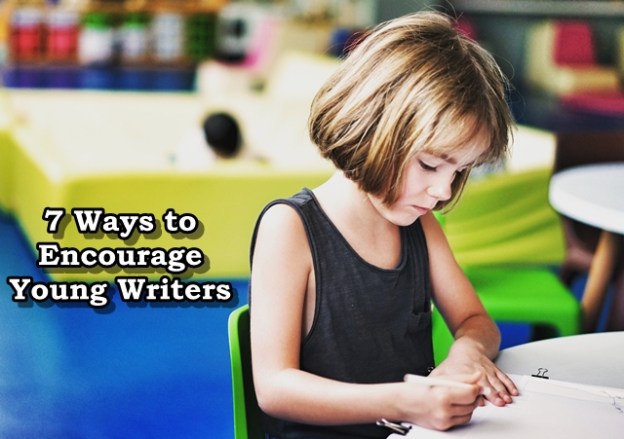
7 Ways to Encourage Young Writers

I wrote my very first novel on the rainbow-colored pages of a Hello Kitty notebook. I was eight. It definitely read like an eight-year-old’s first novel, but it also was over 80 pages of a story with characters, a plot, and dialogue. I had a lot of maturing and growing to do, but even then I knew I was a WRITER. My parents encouraged this every step of the way and their support fostered creativity and faith in myself as a writer. Because of this new age of digital media, we have many more opportunities than ever before. This can be a great thing, but it also has some pitfalls. Here are 7 ways to encourage young writers.

A Note to Parents: These suggestions may not be suitable for young writers of all ages, especially the ones related to the internet. I would recommend you continue to use the common sense and boundaries that you already have in place with regards to these!

A Note to Young Writers: If you are reading, I’m so glad you are here! Please contact me if you have questions or need more resources. I would love to help you on your writing journey.

7 Ways to Encourage Young Writers

1. Buy a domain.

Do this right now. Immediately. Domains are a commodity and it would be great for you to own your child’s name.com right now. It costs less than $10 to buy and keep one as a placeholder, even if you don’t want a website yet. (More thoughts on owning your own name.) Do make the domain private (a paid service) so your family address, email, and other information cannot be accessed. If you DO choose to actually make a site, this will represent your young writer, so do be professional. Consider gifting this as a graduation present, as I have known some parents to do.

2. Get a Twitter handle.

Many social media platforms come and go. Twitter is, I think, in it for the long haul. Facebook also might be, but with it’s ever-changing algorithms for pages, I would recommend Twitter. I have also found that Twitter is a great place to make connections with other writers and reveals less than a Facebook profile. (Some tips for using Twitter!) Encourage your child to use it as a WRITER, not simply as interaction with friends. (If your child uses Twitter with friends, perhaps set up a separate Author Twitter handle.) Read these tips on how to use Twitter as an author.

3. Find community through Wattpad.

Wattpad is a place where writers can register, post their work, and read the work of others. Many people use it to reveal their work chapter by chapter, receiving comments and shares from other Wattpad users. Writers can be inspired by other writers, connect with new readers, and be part of a community. *A word of caution to parents: Not ALL writing on Wattpad is appropriate for all ages. Check it out with and for your child and make appropriate boundaries.

4. Set up good work habits & goals. 

Writing should stay fun. But young writers can also learn about writing as a craft. Whether that is taking classes, attending a conference (like the Teen Book Con here in Houston), or simply setting up a time to write each day, young writers can learn good habits now that will help in the long run. Encourage your child to both foster creativity and also discipline.

5. Consider self-publishing on Amazon.

Every year in elementary school, I entered the Young Authors competition (and even won a few years). It was my favorite time of year because I got to write a book, then bind it together and hold it in my hands. There is something magical about holding your own book in your hands!! My nephew just published his first book on Amazon & Create Space and I couldn’t be prouder! But I use the word “consider” seriously. The only flip side to self-publishing is that the internet has a long shelf-life. Perhaps later on, your child might be embarrassed for that work to represent him or her. That work will carry his or her name (which could be a privacy concern) and will represent him or her. If you do decided to make the book available to the public, take it seriously. Hire an editor to make the work polished. Make sure the book formats correctly and also has a slick cover!

My nephew with his self-published book, flanked by proud grandparents!

6. Start an email list. 

This may sound like a strange one, but if your young writer does want to become a serious published author one day, starting an email list would be an asset. For now, it could be dormant like a website. Maybe it would be friends and family to start with, but your young writer could collect emails and add them to the list along the way. If he or she does publish on Amazon or Wattpad or has any fun writerly news, this email list could be the place to share it. No one EVER regrets starting an email list too early. (Read how to start an email list.) An email list is a valuable digital commodity and would be a huge resource to start early.

7. Encourage reading. 

I don’t know any writers who were not also voracious readers as children. Read with your child and to your child. Take your young writer to author readings and to the library. Budget for books. Spend time in book stores. Allow for extra time at night for reading before bed. Mix up the kinds of books for your child—maybe encourage him or her to read one classic for every two or three modern or YA books. Readers don’t always write. But writers always READ.


How were you encouraged by your parents as a writer? Or how have you fostered creativity and writing habits in your child? 

Source: createifwriting.com

Visit us at First Edition Design Publishing

How to Become a Writer: Where to Start

If you want to become a writer but feel uncertain how to begin, you are not alone.

Writing, and especially fiction writing, can seem like a mysterious art, even to those who practice it. So if you’re starting from nowhere, it may take some work to convince yourself you can do it. Yet, in all honesty, becoming a writer is not a difficult matter. To become a best-selling novelist or win the Booker Prize may be difficult. But to become a writer or even a published writer is relatively easy.

Recently, I received three emails from people, each of whom want to become a writer. They all expressed very typical concerns. Below is what they said and how I would answer them.

Incidentally, I don’t pretend my advice on this subject is brilliant or original. There are no magic answers to these questions, only the same simple answers that have worked for most beginning writers.

The Student Writer

Here’s what the first person wrote in an email:

I found the articles on this site educative and inspiring. I am hoping to be a writer too but am still in school. please advice me on what to do.

I’m not sure whether this person is in high school or university. But it doesn’t matter. Here’s what to do if you are in a similar situation. Simply put, the best thing to do if you want to become a writer, regardless of your age, is to write regularly. Even if you write for just 10 minutes a day or one day a week. Even if you have to get up an hour before everyone else to get some quiet time.

The hard thing in the beginning is to make yourself devote time to writing. Yet writing is something you can only learn by doing – just like riding a bicycle or skiing. Some people have theorized that it takes 10,000 hours to master any skill. Writing is like that. And the more you write, the better you get at it—the greater your sense of how words should flow as they express thoughts, observations, and feelings. There are no shortcuts here. You just have to keep doing it until it becomes as natural as walking.

Remember too that a writer is simply someone who writes. If you are writing, you have already become a writer. The readership comes later.

The second thing that will help you become a writer is to read a lot. To some extent, it doesn’t matter what you read – anything from comic books to popular magazines is more grist for the mill. However, it cannot hurt to delve into the classics. There is a reason the great poets and authors are revered. The more of their language you can get into your head, the better.

When you feel ready and have a small body of work you feel good about, seek out other writers who can help you. Share your work and get their comments. If all they do is criticize and tear your work to shreds, don’t give up. Take their advice to heart and try to do better. Eventually you will get more compliments than criticism.

Once you reach the stage where you are getting positive feedback, look for places where you can publish. Maybe you start with a blog or a student newspaper. Today there are many more places online than ever before where you can publish your words. Eventually, you may find people who will pay you.

Bonus Video from ClueTV: Neil Gaiman

Stuck at the Idea Stage

This person is in the grip of an idea, but not sure what to do with it:

i want to write a book and i have a title but don’t have any clue at all about how to get started. i need some advice badly.

The person didn’t say if they want to become a writer of fiction or nonfiction. A title isn’t much to go on either, but if it’s an idea that won’t let go, it is a good starting point.

If you’re at this stage, I suggest you try to flesh out that idea. Play the part of an objective observer and start asking yourself questions about the title. Any questions will do. Invent answers that feel right.

After doing this for a while, you should have a better idea what this book will be about. At that point, I recommend you make some kind of an outline. If this will be fiction, perhaps start with the 8 Elements of Plot. If the book is to be nonfiction, try to come up with a one paragraph summary of your topic and the core message of the book. Decide who will be your audience. You want to tell them something they will be glad to know. Then decide on the arguments, evidence, ideas, information, etc. you need to prove your thesis. Those may become chapters. Doing some research on your topic will give you more ideas.

Once you have an outline you are happy with, you just have to start writing. Maybe the first draft won’t be any good. That’s all right. Just keep writing until you have a complete draft. Then go back and revise, rewrite, add new chapters, cut ones that don’t work, etc. Share your words and ideas with other people and get their feedback. Maybe it will take you ten drafts to get it right. That’s okay. It’s a learning process.

When you work on your second book, you will have an easier time because you already know what has to be done and that you can do it.

Bonus Video:
Important Advice from Ira Glass On How to Become a Writer

Child Writers

The third email came from a professed child:

hiya, I’m 11 yrs old and I really want to write a novel, even if I do get it finished, do you think that the publisher will except me as I don’t want to do self publishing.

Sometimes our most profound dreams and ambitions come to us at 11 years of age, before adolescence overshadows them. I myself first wanted to become a writer when I was 11. I taught myself to type on my father’s old manual typewriter and spent many evenings churning out science fiction short stories. It was a much more rewarding activity than many others I could have pursued at that time.

My advice to anyone this young who wants to become a writer is that, if possible, you should follow that dream. You’ll be very glad you did. Even if you never become a professional writer, you will become a better writer. And writing is a skill that is more valuable than most people realize, no matter what your profession.

It’s also important to remember that getting published isn’t everything and that writing a novel can be a fun activity even if it never gets published. Artists often make hundreds of drawings and paintings before they sell one. Great actors often start in amateur theatre. Similarly, writers often have to write several “practice novels” or short stories in order to develop their skills.

Besides, some people have published books at a young age, so who can say what will happen? Whether a book gets published depends on many factors, including the quality of the writing, the subject matter, the publisher’s preferences, what’s popular at the time, etc. Luck plays a big role too.

So if your dream is to become a writer, start by writing for your own enjoyment. Later on, you can look for a readership.

Also, you and your parents should check out the Young Writers Program at NaNoWriMo. It’s an annual fun challenge in which you try to write a novel in 30 days. You decide what length of novel to go for. They have a great workbook full of helpful advice on planning. You can challenge your friends to see who can write the most words before the contest is over.

You don’t have to show anyone what you’ve written unless you want to, so no one will criticize your novel. It’s all about quantity, not quality, and having fun.

And the best part is that you will become a writer over the course of the month.

So grab the pen. The empty page is waiting. You have nothing to lose, and much to gain…

By By Glen C. Strathy
Source: how-to-write-a-book-now.com

Visit us at First Edition Design Publishing

 

CHARACTER MOTIVATION THESAURUS

A compelling goal is one of the cornerstones of strong fiction, but conveying why the character is driven to achieve it is what draws readers in and makes them care. Explore all angles of character arc by digging deep into what is motivating your protagonist, the obstacles that could stand in their way, and how sacrifices may play a role if the character is to succeed.

ACHIEVING SPIRITUAL ENLIGHTENMENT

AVOIDING CERTAIN DEATH

AVOIDING FINANCIAL RUIN

BEATING A DIAGNOSIS OR CONDITION

BECOMING A LEADER OF OTHERS

BEING ACKNOWLEDGED OR APPRECIATED BY FAMILY

BEING THE BEST AT SOMETHING

CARING FOR AN AGING PARENT

CARRYING ON A LEGACY

CATCHING THE BAD GUY OR GIRL

COMING TO GRIPS WITH A MENTAL DISORDER

COPING WITH A LEARNING DISABILITY OR ILLNESS (KIDLIT)

DEALING WITH BULLIES (KIDLIT)

DISCOVERING ONE’S TRUE SELF

DOING THE RIGHT THING (KIDLIT)

EMBRACING A PERSONAL IDENTITY (KIDLIT)

ESCAPING A DANGEROUS LIFE ONE NO LONGER WANTS TO LIVE

ESCAPING A KILLER

ESCAPING CONFINEMENT

ESCAPING DANGER (KIDLIT)

ESCAPING HOMELESSNESS

ESCAPING INVADERS

ESCAPING WIDESPREAD DISASTER

EXPLORING ONE’S BIOLOGICAL ROOTS

FINDING A LIFELONG PARTNER

FINDING FRIENDSHIP OR COMPANIONSHIP

FITTING IN (KIDLIT)

GIVING A CHILD UP

HAVING A CHILD

HELPING A LOVED ONE RECOGNIZE THEY ARE HURTING THEMSELVES AND OTHERS

NAVIGATING A CHANGING FAMILY SITUATION (KIDLIT)

OBTAINING SHELTER FROM THE ELEMENTS

OVERCOMING ABUSE AND LEARNING TO TRUST

OVERCOMING ADDICTION

OVERCOMING A FEAR (KIDLIT)

PROTECTING ONE’S HOME OR PROPERTY

PURSUING JUSTICE FOR ONESELF OR OTHERS

PURSUING MASTERY OF A SKILL OR TALENT

REALIZING A DREAM

RECONCILING WITH AN ESTRANGED FAMILY MEMBER

RESCUING A LOVED ONE FROM A CAPTOR

RESISTING PEER PRESSURE (KIDLIT)

RESTORING ONE’S NAME OR REPUTATION

RIGHTING A DEEP WRONG

STOPPING AN EVENT FROM HAPPENING

SURVIVING THE DEATH OF A LOVED ONE

TRYING SOMETHING NEW (KIDLIT)

TRYING TO SUCCEED WHERE ONE HAS PREVIOUSLY FAILED

WINNING A COMPETITION

Source: onestopforwriters.com

Visit us at First Edition Design Publishing
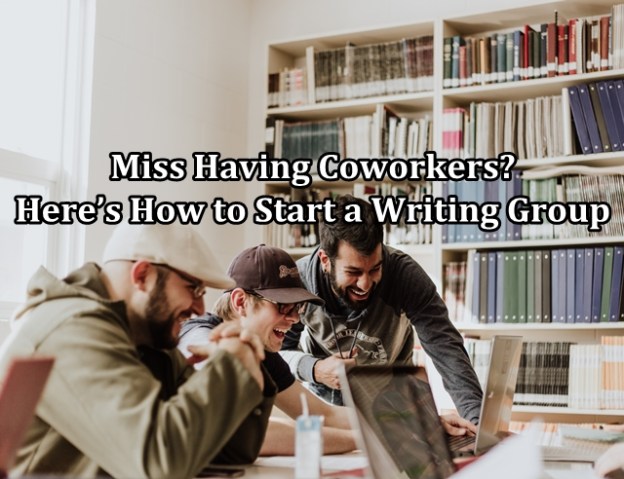
Miss Having Coworkers? Here’s How to Start a Writing Group

Writing can be a lonely road.

Though working solo has many benefits, everyone has moments when they wish they could stop by a coworker’s desk to ask a question, get feedback on an idea or simply share a crazy client story.

I worked on my own for several years before going in-house as a staff writer for a personal finance website. And, while I missed the freedom of working remotely, I loved the daily banter with my colleagues. Not only was the camaraderie enjoyable, it often sparked my creativity.

So, when I returned to freelancing a year ago, I wanted to bring a bit of that feeling along with me — and I started a writers mastermind group.

What is a mastermind group?

Napoleon Hill, author of The Law of Success and Think and Grow Rich, is largely credited with introducing the word “mastermind” in the 1920s, though the concept has been around far longer than that.

Organized by entrepreneurs across industries, a mastermind is a group of peers who meet regularly to set goals, overcome challenges and use their collective brainpower to accelerate business growth.

Famous mastermind participants include Franklin Roosevelt, Andrew Carnegie, Bill Gates — even the Knights of the Round Table!

And they’re still very much in vogue today. As the legendary online entrepreneur Pat Flynn writes: “A mastermind group is mandatory to achieve online success… I would not be where I’m at today if it weren’t for the mastermind groups that I’ve been a part of.”

My mastermind consists of five female freelance writers. We meet once a month over Google Hangouts to share highs and lows, resources and encouragement.

I always look forward to our call, as it’s one of the only times I get to have honest conversations about writing with people who understand what I’m talking about. I also learn so much from my fellow group members, and love the support we provide each other.

5 steps for starting a writers’ mastermind group

Becoming part of a writers mastermind can certainly be a boon for your career — and your mental health.

So, rather than waiting around to be invited to one, why not start one yourself? Here are five steps to follow.

1. Outline your goals and rules

The first thing to figure out is what you want to gain from your mastermind. Collect your thoughts in a Google Doc that you can share with potential members.

For example, here was my mastermind’s main goal: “To grow our writing careers while traveling the world — and without going crazy.”

In the document, I also included secondary goals about accountability, perspective, support and inspiration, as well as the proposed schedule and rules. Some examples: “Show up every month (if you miss three calls, you’ll be asked to leave the group)” and “Listen openly and without judgment.”

Though I’m generally not a stickler for rules, I thought they were important to mention. That way, potential members would take the group seriously, as well as understand the type of environment I hoped to create.

2. Determine your meeting cadence

Most mastermind groups meet once a week or once a month.

My mastermind meets from 3-5 p.m. EST on the first Wednesday of every month. Having a regular time makes it easier for us to fit the meeting into our schedules (and to remember when it’s occurring!).

Determining your meeting cadence will also determine your meeting structure. In many weekly masterminds, for example, each member offers a brief update, then one person is in the “hot seat” with the rest of the meeting focused on their business and goals.

Since my mastermind only meets once a month, we all take turns sharing our highs, lows and goals, then it’s an open floor for any member to discuss challenges they’re facing.

3. Choose your tribe

This is the most important step in creating a writers mastermind: Who are you going to invite?

Here’s some common advice for choosing your mastermind’s members:

  • Invite three to five other people: Any more, and your sessions will go too long; any less, and it’ll be overly detrimental if someone can’t make it.
  • Choose peers: Try to find people in similar stages of their careers. If someone’s significantly further along, it’ll probably feel more like a coaching session for them — rather than an open exchange with peers.

In terms of the type of writing your members do, I’ve found it helpful that all of my mastermind’s members are freelance writers. I purposely also chose people who enjoy traveling, since it’s something we can all bond over.

To find my members, I turned to my personal network: Three were writers I’d met at conferences, and one was a friend of another member.

4. Create a shared space

You’re going to need somewhere to record the ideas generated during your calls and continue the conversation in between.

For my mastermind, I created a private Facebook group where we ask questions and share resources. We also have a few documents where we’ve written out successful pitches (though, to be honest, we don’t use this as much as we should).

If you’re not into Facebook, you could do this via Slack or another platform; choose what works best for you.

5. Get going

Now all that’s left to do is get started! It probably won’t be perfect, but you’ll be able to fix any bumps along the way — with the help of your new mastermind buddies.

Or, as those in the tech world would say, “Ship fast and iterate.”

One year into our writers mastermind, we’re still figuring out how to improve our processes. For example, we recently began assigning one notetaker per meeting, since so many good ideas are shared in the moment (and it’s tough to remember them all).

Bumps aside, starting a writers mastermind group was one of the highlights of my year.

It’s been so helpful to chat with these fellow writers; to know they’re on my side when I’m having a rough day (or month), to know they’re there for my silly questions and to know we’re all helping each other progress in our writing careers.

This may be my first mastermind — but I can tell you with confidence it won’t be my last.

This post contains affiliate links. That means if you purchase through our links, you’re supporting The Write Life — and we thank you for that!

By Susan Shain
Source: thewritelife.com

Visit us at First Edition Design Publishing
 

Is It Unhealthy to be a Workaholic Writer?

If you’re a hard-working writer, are you a workaholic?

And if you are, is that necessarily a bad thing?

With all writers have to manage today, including consistent marketing, maintaining an online presence and oh, yeah, writing and editing, it’s important to step back every once in awhile and say, “Am I overdoing it?”

What is Workaholism and How Does it Apply to Writing?

If you’re under the spell of workaholism, you may feel guilty when you’re not working, and tend to neglect your own well-being because you’re over-focused on work.

Not sure if you qualify? Ask yourself these questions:

  • Do you feel compelled to write or work on writing-related tasks while on vacation?
  • Do you cancel social plans so you can catch up on writing-related activities (such as blogging, posting to social media, marketing, etc.)?
  • Do you regularly engage in writing work during meals?
  • Do you work on writing stuff even when you’re ill?
  • Do you sacrifice sleep or exercise to get your writing work done?
  • Do you feel compelled to work on writing-related activities even when you’re all caught up?
  • Do you feel like your work-life balance is out of whack?
  • Are you neglecting your hobbies and other enjoyable activities so you can get your writing work done?

We’ve all experienced insane working periods in our writing careers, perhaps around a book launch or when wrapping up edits for a publisher. Sometimes, you have to let other things slide to get the writing done or the book out, but then the question is: Do you slow down after that, or do you continue to work at the same pace?

How Workaholism Can Damage a Writer’s Health

The problem with workaholism is the more you work, the less time you have for other things in your life.

That means you’re likely to skip out on important stuff like your daily exercise routine, preparing healthy and wholesome meals, or taking time out to relieve stress. Overwork is also likely to interfere with your sleep, depriving you of that important 7-8 hours you need each night.

All of us can survive a few weeks under these conditions, but longer than that and you’re putting your health at risk. Lack of exercise, grabbing meals on the run, and regular sleep deprivation all increase risk of overweight and obesity, type 2 diabetes, and cardiovascular disease.

In a 2016 study, researchers found that workaholics experienced more sleep problems than non-workaholics, and were also more at risk for cardiovascular disease. A separate review of 25 studies involving over 600,000 people found similar results, with those working longer hours having a higher risk of stroke.

Workaholism has been linked with an increased risk of mental and emotional health problems, too, like burnout and depression.

Don’t We Have to Work Hard to Be Productive?

There’s no doubt that a successful writing career requires hard work, but there is a fine line between putting in the time and overdoing it to the point you’re no longer productive.

A number of studies have actually linked workaholism to decreased productivity, finding that those who work longer hours typically complete fewer projects. The more hours we work, the less effective the brain is, and we’re likely to make more mistakes that we have to fix later. We also make poor decisions (about plot and characterization, perhaps?).

Worse, workaholism can lead to a drop in creativity—definitely not something writers want. Stress itself is a creativity killer, and if you add overwork to it, your ability to create an original and inspiring story declines rapidly.

In a 2008 study, researchers found that compared with working less than 40 hours per week, working more than 55 hours a week was linked with lower scores on a vocabulary test (bad news for those working with language).

Of all things the mind needs for creative thought, it’s space, and when we fill all our time with work (and other activities, like perusing social media), we fail to give it that space, leading to dull thought.

When Workaholism Might be Okay for Writers

Despite a plethora of research on the potential negative effects of workaholism, we also have some recent studies showing that under certain circumstances, workaholism may not be as damaging as we thought.

What circumstances are those? The main ones involve your attitude about the work: Are you enthusiastic about it? Do you enjoy it? Do you love it?

In one recent study, for example, researchers questioned about 750 employees. They found that yes, workaholism was related to high blood pressure and high blood cholesterol (risk factors for heart disease), but only when work “engagement” was low—in other words, when the employees felt they were wasting their time on projects they didn’t care about.

In those participants whose engagement was high, on the other hand, the opposite was true—they were actually less likely to suffer from these sorts of health risks. These were the participants who enjoyed their jobs, got absorbed in what they were doing, and felt like their tasks were worthwhile.

Interestingly, researchers also found that highly engaged employees:

  • had more support at work and at home for the work they were doing,
  • were skilled at time management,
  • and had a high level of intrinsic motivation for their work—they loved doing it regardless of the outside rewards.

Help for Overworked Writers

Looking at the results of these studies, we can conclude a few things that are likely true for writers.

  1. Working hard at what you love is more likely to help you than hurt you.

When you love writing, you’re unlikely to suffer from negative consequences by spending a lot of time on it, as long as you make sure to take care of yourself and don’t neglect the other things that matter in your life. Indeed, if writing is your calling, you’re more likely to suffer from not pursuing it wholeheartedly than you are from working some extra hours on it.

  1. When writers feel overworked, it likely has something to do with projects other than writing.

I think the reason why more and more writers are feeling overworked these days has little to do with the writing itself, and a lot more to do with the marketing responsibilities we’re now faced with. Most writers don’t like marketing and feel uncomfortable and out of their element when trying to do it, which puts this task squarely in the “don’t like” category mentioned above—the one that can lead to negative health outcomes if we pursue it too heavily.

Yet marketing can take a lot of time, particularly if we’re really trying to get some attention on a book or on our careers in general. There’s not only the work itself, but the education that’s involved—we have to learn how to do it, and since it doesn’t come naturally to most of us, that can take longer than we’d like.

Trying to complete all our marketing tasks on top of our writing can lead to overwork, burnout, depression, and all the other negative effects of workaholism. What are the solutions? Every writer has to find his or her own way, but I’ve found the following five tips to be helpful:

  1. Write first: Since writing is the thing that energizes and engages you, it must be your top priority. Sometimes marketing can take over, but if you find yourself getting depressed or exhausted, take a step back. Return to the writing, and let the other stuff go. You can always get back to it later.
  2. Try to make marketing fun: Instead of feeling pressured to market in certain ways, try to find methods you can actually enjoy. Be open to a wider variety of marketing techniques. This will help increase your engagement so you’re less likely to suffer the negative effects of working long hours.
  3. Always put self-care first: Eating well, exercising regularly, and getting enough sleep need to come first. Make these things a priority in your life, and you’ll be more likely to stay productive and creative…and healthy!
  4. Take more time off: America is a country that leaves vacation days on the table. Don’t be a part of this statistic. Make sure you take your vacation every year, and schedule at least one writing getaway in addition to help recharge your batteries.
  5. Find the support you need: Writing groups, book clubs, writing friends, and understanding family members give us the support we need to make sure our lives don’t go totally off the rails, balance-wise. Getting out to lunch with friends, taking the weekend for the family, or enjoying some wine and treats with the members of a book club can be like fresh air on an otherwise busy, busy week. Cultivate these relationships and keep them strong!

Read more about workaholism and how it affects writers, and how you can improve productivity and time management, in Colleen’s book, Overwhelmed Writer Rescue. Get your free chapter here!

Colleen M. Story
Source: writersinthestormblog.com

Visit us at First Edition Design Publishing
 

Finding Writing Inspiration In The Present And The Past

“Let the world burn through you. Throw the prism light, white hot, on paper.”
~Ray Bradbury, Writers Digest~

When Anne Frank said “I can shake off everything as I write; my sorrows disappear, my courage is reborn”, she perfectly summed up why countless individuals turn to writing both as a career choice and a hobby. The USA, in particular, is a writer’s hotspot with more than 44, 000 authors and writers reportedly working in the United States in 2016 according to the United States Department of Labor.

If you are a writer, whether a blogger, freelancer or seasoned novelist, you will know how important finding the right inspiration is. It is easy to write when you are inspired, making the task at hand so enjoyable that you may even find yourself forgetting to eat or sleep. On the other hand, when you are lacking inspiration, you can become so discouraged and disheartened that you can’t write at all.

If you are a writer, whether a blogger, freelancer or seasoned novelist, you will know how important finding the right inspiration is

Take a trip down memory lane

There are numerous ways through which you can find inspiration by exploring the past with reading being just one of them. It is perfectly acceptable for a writer to draw inspiration from reading the works of others.  One activity that can prove to be particularly beneficial is the reading of old books and newspapers. Spending a couple of hours reading through the classic literature of authors such as Mark Twain, Jane Austen, George Orwell and J.R.R Tolkien can you inspire you to greatness, and even if it doesn’t it will end up giving your vocabulary a boost. Visiting your local library to view old newspaper archives is a good way to jog your memory and get your creative juices flowing, especially if you are looking to base your written piece around real-life events.

Looking through old photographs or listening to people telling tales of bygone times are other superb ways of finding inspiration by examining the past. Be sure to harness the emotions evoked by these trips down memory lane as they can turn out to trigger some of your best ideas when it comes to writing a possible award-winning piece.

Looking through old photographs or listening to people telling tales of bygone times are other superb ways of finding inspiration by examining the past.

Embrace the present

As much as we can be inspired by the past, the present can offer its own share of inspiration, often courtesy of modern-day technology such as movies & television, music, and the internet. Many conventional writers think of movies and television as a curse to the creative spirit when in fact they could both spark some pretty good ideas in an artistic mind. Browsing the internet can open up a whole new world of inspiration. There are countless of resources available to aspiring writers on the internet ranging from virtual scrapbooks such as Pinterest to motivational blogs, vlogs and writing communities on various social media platforms and independent sites. Taking the time to read interesting articles and explore new web pages can help you add a fresh perspective to your written work. Whatever research you need to conduct is just a couple of click away thanks to the internet.

Regardless of how much you love writing there will be days that you need added inspiration.  While the above guidelines can help you enter an inspired state every writer has to find his own unique source of inspiration. Don’t feel disheartened if you don’t draw inspiration from any of the suggestions mentioned as true motivation often stems from the most unlikely of sources.

By Jane Sandwood

Source: twodropsofink.com

Visit us at First Edition Design Publishing