Category Archives: ebook

How to Identify your Book’s Target Audience in 3 Easy Steps

“I’ve written a book with a capable heroine main character that my little sister would like… with a villain my crazy uncle would relate to… with a sci-fi setting my science teacher would get lost in… with a love interest my bff would ship… so who is my book actually for? Everyone? Or just one of these people??”

Oh yeah. We’ve all been here. Our books- like ogres- have layers. And that means they’re beautiful, complex works of art with aspects that many different people would like.

Although all those people may like your book, you can’t cast such a wide net. You need to fish with one niche lure and target that exact “perfect buyer.” So how do you do it? How do you figure out who your perfect buyer is/identify your book’s target audience?


Easy, friend. You simply follow these three steps:


  • Compare your book to similar books
  • Create your perfect buyer avatar
  • Be where your people are (and sell, baby!)


What does all this sparkly stuff mean? Let’s find out.


1. Compare Your Book to Similar Books

Now when I say “compare your book to similar books” I don’t mean the terrible thing we all do where we read an amazing book written by a best-selling author with years of experience, compare it to our own work of fiction, then immediately use our books for kindling.


Nah, bruh. That’s straight up unhealthy. What I mean is, dissect your book and make connections from your story to other popular novels out there. See how your work is similar to another popular work or series out there.


So for example, let’s say that your main character is a she-elf who lives in a magical forest. Let’s say her best bud is a morphing dragon and the two travel the world in search of lost treasure. What other books would this story most relate to?

Perhaps you thought of:


The Hobbit


The Lord of the Rings


Or even Eragon


That means the readers who loved those books would also enjoy your novel!


Now what if your novel has more complex elements than this? What if your book is a morph of two genres? Like a sci-fi/fantasy or a contemporary/fantasy mix? Again, always consider similarities between your book and another popular series out there. Even if your story relates to books in various genres, you are still narrowing in on a smaller audience than you might think.


So take a moment to write down two to three books that are similar to yoursno matter how small the similarity! What’s the point? The readership for these books are your readership too!


So what do you do with this information? Find forums, Facebook groups, Twitter hashtags and otherwise celebrating these books and join them! Discover why these books are so celebrated amongst your potential audience. Likewise, read one or two of these books yourself so you know what your reader expects from your story too.


So now that we’ve cast a smaller net and figured out a readership that is similar to your own, it’s time to think even smaller. Yep, I’m talking about one perfect reader.


2. Create your Ideal Reader Avatar

Your ideal reader is out there. But before you hunt for them, you must create them. What in the heck do I mean by that?


Consider right now who your ideal buyer would be: What do they do for fun? What are their favorite books? What social networks do they use? How old are they? What do they drink at Starbucks? What brands do they wear?


(Does any of this info really matter Rae??)


Believe it or not it does, precocious petunia. See, by figuring out these seemingly insignificant details about your perfect reader, you’re also figuring out who your real-life ideal buyer is too– someone who would looooove your book as much as they love playing RPGs or watching Black Panther on loop. You write for this *ONE* particular person, and you are going to sell to this sort of person as well.


More importantly, once you have that ideal reader avatar figured out, you can start honing in on where to find them and how to market YOUR BOOK to them in a way that will interest them. So how do you mold your ideal reader from the raw clay of imagination?? You take this free download and fill it in accordingly, friend!:

There are no right or wrong answers here. This worksheet asks the questions that matter to you as a teen-bean writer. Answer the questions based on what YOU want most in a perfect potential reader– not what you think matters most, or what you think your potential reader might be like. The more details you add, the more you’ll start to figure out who your real-life ideal reader is, where they can be found, and how you can sell your book to them!


Yeah, this avatar may be imaginary and yeah you may never find an exact living replica of this avatar, but you will start to figure out who your target audience is, what they generally look like, do for fun, and most importantly- what they READ!


3. Hang Where They Hang and Sell your Book, Baby!

Where are your readers gathering? What social networks are they on? If your audience is more teen based, then you’ll want to forgo networks like Facebook or Pinterest. Pay more attention to networks like Twitter, YouTube, Snapchat and Instagram instead. There are marvelous ways to connect with potential readers on these sites and pitch your book in creative ways.


But don’t limit yourself to just an online presence. Check out local cafes, bookstores and any other relevant shops your ideal reader might be at and ask to hang posters promoting your book. Or take it a step further and ask to display some of your books (signed) in their storefront. I know many small bookstores will support local authors so be sure to emphasize that you are a local, self-published author.


Take it a step further by joining book fairs, cons that your ideal reader would be at and get a booth for yourself. And don’t limit yourself to just book fairs. This is where figuring out your ideal reader’s other interests come in handy. If your ideal reader also loves Pokemon, Mega Man and Spiderman, then try to get a booth at comic con and sell your books there too. Or simply bring business cards with you to these cons, a few free books to hand out and get to know potential readers face to face in this super awesome environment! Heck, even farmer’s markets are a fantastic (and fairly cheap) way to set up a booth and get the word out there to your ideal potential reader, if that’s where they’d be found!

By Rae Elliott
Source: barelyharebooks.com

Visit us at First Edition Design Publishing
 

How to Stay Motivated When You’re Not Making Progress

Writer’s block is real. Every writer, at one point or another, has experienced this debilitating inability to make any real progress in his or her work.

Note: This is a guest post by Jordan Conrad, he’s the founder and publisher of WritingExplained.org. With free articles on English usage and basic grammar, Writing Explained is an essential resource for editors, freelancers, and authors alike. Connect with Jordan on Twitter at @Writing_Class.

Like a 17th century galleon in the equatorial doldrums, we endure a bout of creative stillness, when productivity starves to death in a windless mental seascape where nothing is visible on any horizon.

Well, maybe that’s a little melodramatic. Nevertheless, a lack of progress can be discouraging for anyone, and sometimes it’s difficult to maintain the motivation needed to complete a long project.

If you’re not feeling motivated, it’s not a reflection of your abilities as a writer. Creativity can seem to ebb and flow according to its own schedule, and we all have to find a way to cope with the slow periods in anticipation of the next big spark.

What to Do When Progress Eludes You

Let’s take a look at a few ways to deal with writer’s block. Whenever I feel less than inspired, I start here.

I hope you can use these same strategies to stay motivated in your own writing when it seems as if you aren’t making any progress.

Strategies for Staying Motivated

Take it one day at a time.

Try to write every day, even if it’s only a small amount. It doesn’t have to be your best work—you can always go back and revise it later.

Sometimes it only takes one tiny, unexpected breakthrough to get back on track. These breakthroughs will come much easier if you’re actively writing.

Remember that progress is a relative term.

You don’t have to write an entire book in a single day. Progress can be measured in small amounts.

Even if you only write a few words or sentences, you are still making progress. Those are sentences that you hadn’t written at the beginning of the day, so even if it’s only a little bit, you’re that much closer to being finished.

Set manageable goals.

Too often, writers get bogged down by word counts and page numbers. If you wanted to be at 3,000 words and you’re only at 750, those last 2,250 probably aren’t all going to come at once.

Likewise, the page number indicator at the bottom of your word processor window can sometimes do more harm than good. If your page count is far behind where you expected, it might be better not to look at it—or to find a way to turn it off.

You can’t finish an entire project in one sitting, so set small goals for yourself. You’ll get a confidence boost when you achieve them, and that little boost can keep you motivated to reach your next goal.

Try writing 500 words instead of 5,000, or a single page instead of ten.

Try working on something else for a while.

This works best if you, like many writers (including this author), always have multiple projects running at the same time.

Stuck on one project? There are probably five or ten more that could use your attention. Pick one you’re excited about and work on that one for a while. That should get your creative juices flowing again, and you might be able to transfer that excitement back over to the one that has you at a standstill.

The new project doesn’t even have to be in the same medium. Are you also a photographer, a musician, or a maker in addition to being a writer? Take a break from writing and shoot some portraits, or learn a new song, or 3D print something.

Take a break and do something fun.

Your brain is like a muscle—if you strain it for too long, you will use up your cognitive resources. It’s important to take breaks every so often to give your mind a chance to recharge and rebalance.

Try doing something you enjoy, even if it’s not productive. If you enjoy video games, devote half an hour to one of your favorites to reward yourself.

Breaks can quickly become distractions, though, so set strict time limits and stick to them.

You can combine this technique with setting manageable goals to build a contingent reward system that will keep you motivated. Alternate periods of productivity with enjoyable activities, so that you make progress without wearing yourself out. Like a carrot on a stick, contingent rewards can help you boost your productivity without burning out and getting discouraged.

End Note

There are times in every writer’s life where progress seems to come only in short fits and spurts, and projects come grinding to an unexpected halt. This is part of the natural creative cycle for many writers, and it’s usually just a matter of time before the juices start flowing again.

Still, a lack of progress is never enjoyable, and there are strategies you can use to stay motivated when your work isn’t going how you planned.

The above are all strategies I use personally, but there are many more out there. Don’t be discouraged if progress eludes you—if you’re patient for long enough and keep these tips in mind, it’s only a matter of time before you’re up and writing again.

By Bryan Hutchinson
Source: positivewriter.com

Visit us at First Edition Design Publishing

How to Sell Books in Your Local Community

Often times when writers dream of becoming bestselling authors, we picture worldwide success, with our novels translated into dozens of different languages and adapted into major motion pictures. One of the most important things to keep in mind, though, is that learning how to sell books is a process that starts small and, usually, starts locally.

Your Book Marketing Depends on You

Learning how to sell books is an extremely important skill as an author.

If you are a traditionally published author, you may have a team of people who will help you with marketing, but even then, it is mostly up to you to sell your work. If you are a self-published author, it is completely left to you.

Selling locally is a great way to start because it gives you an in-person advantage. You can be far more personal with people than you can ever be online, which gives a greater sense of who you are and what your books are like.

4 Ways to Sell Books in Your Community

Not sure how to sell books to the people in your local community? Here are four things you can do to get started.

1. Set up an event at your local bookstore

As scary as it can be, you have to take the first step when it comes to promoting yourself. If you wait around for someone else to invite you to an event or ask you to do a signing, you may be waiting around forever.

Take the initiative to send an e-mail or walk into your local bookstore and ask if they would consider hosting a book signing or a presentation/Q&A.

Whatever event you have in mind, make sure you have a clear idea of what it will be so you can properly pitch it. Remember to always be polite and offer the suggestion in a way that will show the bookstore how it will benefit them, as well.

Especially if it is an indie bookstore, talk about how you can promote the location and urge your readers to purchase books through them. The event should be mutually beneficial.

2. Create promotional material

There are a variety of websites you can use to create catchy posters and business cards for a relatively inexpensive price. If you are not comfortable with doing the graphic design yourself, consider asking an artistic friend for some help (make sure you pay them for their time, return the favor however you can, or at least take them out for a cup of coffee afterwards).

Once you have said posters, go to your local library and coffee shop and ask if it would be all right to hang them on their community boards. Wherever you can, put one up.

It might be a good idea to include a QR code on the post that goes to your blog or someplace where readers can easily purchase your book.

Business cards are a must, as well. Make sure they have your name, headshot, and links to your website and social media pages. Whenever you meet someone new in your community, give them a business card. It’s a great and easy way to keep in touch with new friends and let them know about your books.

3. Go to events in your community

One of the best ways to get your community connected with your book is for you to connect with your community.

Whenever there is a local, bookish event, try to attend it (and take your business cards with you!). Authors love to chat with other writers and going to a signing or release party is a great way to start networking.

Others who are attending the event are likely to be big readers, too. Talk to them! Ask them what kinds of books they like, if they’re long-time or recent fans of the author hosting the event, and so on. Once you get into a conversation, you can mention your own book and maybe even swap contact information.

Events at bookstores are not the only ones you should attend, either. Go to classes at your local library or an open mic at a coffee shop. You never know who you’ll end up talking to or who might be interested in buying your book.

4. Write an elevator pitch

These are a must for any book. Any person advising you on how to sell books will eventually tell you to write an elevator pitch.

Simply put, an elevator pitch is, as the name suggests, a pitch for your book that you can relay in the time it would take to ride an elevator with someone. It should be short and snappy, no more than a few lines.

Not sure how to get started writing your elevator pitch? Condensing your book into a one- or two-line premise is a great place to start.

After you’ve written your pitch, rehearse it until you can repeat it in your sleep. This way, when you chat with a fellow reader/writer at an author signing and they ask the inevitable question, “What’s your book about?” you won’t have to stammer and desperately search for the right words.

Writing a glowing description of your book can take days and endless revisions. You don’t have to think of it on the spot.

With an in-person pitch, though, you have to think on your feet. If you’re like me and you don’t like coming up with something on the fly, it would be a good idea to write and revise an elevator pitch you can easily memorize and repeat with a smile.

For an example of what this should look like, here is a pitch I wrote recently for one of my novels:

Lila, an immortal witch, falls for Melody, a mortal witch hunter. The two end up on the run when the demon Angelique decides Lila would be the perfect addition to her team in the upcoming apocalyptic war against humanity.

The pitch should introduce your main character(s) and the antagonist/conflict.

How to Sell Books in Person

Selling books locally is a lot different from networking online, but it comes with several advantages. People are more likely to buy your product if they feel like they have connected with you on a personal level. Plus, getting to know your readers (or potential readers) is such an important part of being an author.

And remember, it isn’t a big deal if you don’t make a sale right away. Sometimes you make a friend first, and maybe later that friend will become a customer, and a long-time fan.

How do you promote your work in your community? Do you have any other tips for how to sell books in your local community, or strategies that have worked for you? Let us know in the comments.

By The Magic Violinist
Source: thewritepractice.com

Visit us at First Edition Design Publishing

6 Tricks to Help You Finish Your Work in Progress (WIP)

We all want to finish the books or short stories we start, but sometimes we struggle. We could spend months or even years working on the same project and feel as though we aren’t making any headway. I did a poll once in the Goodreads book club I run for the Insecure Writer’s Support Group, and “I won’t ever finish WIP” tied for third place as the biggest insecurity our members had.

Note: This is a guest post by Chrys Fey, she is the author of Write with Fey: 10 Sparks to Guide You from Idea to Publication and an editor for Dancing Lemur Press. Visit her blog, Write with Fey, for more tips and connect with her on Twitter. Enter her Rafflecopter giveaway by July 6th for the chance to win a writer’s notebook, coffee mug, and tote bag.

Many writers share this fear. It’s normal until it becomes a serious fear and doubt weighs you down.

Don’t let doubt extinguish your sparks!

If this sounds like you, here are five tips to help you finish your WIP.

1) Set a daily and weekly writing goals.

With a manageable weekly goal, you’ll be able to strive toward a specific page/word count by the end of that week. The key, though, is to set a realistic goal. I see many writers beat themselves up for not meeting a goal that was rather grand and out of their scope to begin with. This isn’t healthy.

Set a goal you know you can meet. Then tack on an additional 10% to that page/word count to give yourself a little bit of a challenge, which is always good practice. I can usually write 1,000 – 2, 000 words in a single day. For a week, that could be 7,000 – 14,000 words. Incredible, right? And that’s not even tacking on the extra 10% to give myself a push.

In the beginning, it will be difficult to write each day and meet your goal, but as long as you stick to it and DON’T GIVE UP, it’ll become easier. And, believe it or not, your daily/weekly writing goals will suddenly seem too easy. Yes, really.

If something crops up that makes it impossible for you to write one day, that is okay. I’ll say it again…THAT IS OKAY! Don’t punish yourself for not writing because of other responsibilities. And some days, you may only be able to write a few hundred words. If that happens, pat yourself on the back, because although your day was crazy or you were mentally exhausted, you still WROTE.

2) Schedule Writing Time

I know you’ve heard this tip before, but it’s an important one.

Whatever your writing goals are, schedule writing time to get some work done. Do you have a lunch break? Pack your lunch and bring a notebook to work so you can write. Can you write after dinner? Or while yours kids are doing their homework or after you tuck them into bed? What about early in the morning? Find the perfect time for you and stick to it. All you need is a good thirty minutes here and there throughout your day.

However, you don’t need to write EVERY day. I know people suggest that and I often say it, but some writers only have the weekends. Great! Follow these tips so you can make the most out of your weekends. If you can slot out time every day, give yourself a day or two to relax and rejuvenate. This is important. You don’t want to burn yourself out.

Maybe you are a full-time writer and have long chunks in the day that you can dedicate to writing, like I do. Something that a full-time writer can struggle with is getting started. Those long stretches of time when you “should” be writing can be daunting. Start by sitting down telling yourself you only need to commit to thirty minutes of writing. That’s it. And who knows? You could end up writing long past that.

But what if you draw a mental blank, you ask?

Let’s see tip #2.

3) Be a plotter.

Pantsing, sorry to say, can slow your progress if you don’t know what to write next. Try plotting out your book. Or be a pantser who plots. At the end of every writing session, plan out what you need to write next. This will help you to get back into your story faster and provides you clear map of where you need to go.

4) Limit how much you edit as you go.

So, you have your word count goals, you schedule writing time, and you plot out what you need to write next, but you still write too slow. Let me ask you one thing…do you edit as you go?

Editing as you write can hinder your progress, and this is coming from someone who does edit as she writes. Restrict how often you do this. Don’t read back through a paragraph you just wrote. Instead, wait until you complete a whole page, and then don’t read the entire thing but rather the last few sentences you added. By doing this, you’re not slowing your progress. And reading over the last few sentences you did can help you to figure out what to write next.

5) Dedicate a month to finish your WIP.

You can join NaNo, National Write a Novel Month in November, or pick another month that is more convenient, and challenge yourself to write anywhere from 20,000 words (which is about 100 pages) to 50,000 words (which is a good-sized novel). Or if you have a certain number of chapters left, aim to complete them by the end of the month. Whatever you need to write to finish your WIP, that’s your goal. Before you begin, create detailed chapter outlines, write don’t edit, and schedule time each day to pound away at your keyboard.

If a month is too much, dedicate a week to writing. This was what I did at first when I had to get back into writing after a heavy doubt of depression. I focused on writing every day for one week. That single week turned to two weeks. And in those two weeks, I wrote over 20,000 words!

It is possible, which leads me to…

6) Believe you will.

Mind over matter, right? If you believe you’ll do something and do whatever you can, you will achieve it. So many of us doubt ourselves. No wonder we struggle to write or meet a goal when we’re always knocking ourselves down, saying we write too slow, we’ll never finish, our writing is awful, and worse. Work on developing the right attitude. Repeat mantras daily to motivate yourself and especially when negative thoughts creep in. A simple mantra like “I will finish my book” can boost your confidence. Eventually, when it’s meant to be done, you will finish your book. Believe it!

Sometimes, the reason we struggle to write is completely out of our control, such as a health issue or depression. Last year, my depression went to an all-new level, impacting my health and my creativity. I couldn’t write and didn’t write for 7 months. That is a long time for a writer to not do what brings her life and joy. First, I had to get back to a positive state of mind and wrestle my way out of depression. I did this by reading a lot of non-fiction books, feeding my mind, and seeking new faith. When I finally felt like myself again, I still struggle to get words down.

So, what did I do to finally write? Well, I started with tip #1. Then I worked my way down the list until I was incorporating all of these tips.

With these tricks under your belt, you’ll surely be able to finish your WIP.

By Bryan Hutchinson
Source: positivewriter.com

Visit us at First Edition Design Publishing

Attend the 2018 Romance Writers of Australia Conference

The hottest date in a romance writer’s calendar is fast approaching – the Romance Writers of Australia Conference from 17-19 August 2018.

This year the conference is in Sydney’s Sofitel Wentworth Hotel and registrations are open to the public.

With workshops from bestselling author Rachel Bailey on The Anatomy of a Romance Novel and from the screenwriter and producer of Fight Club, Ross Grayson Bell, the conference is bound to be steamy and action packed.

This conference is chock full of authors, editors and agents from international and Australian publishers including Hachette, Harlequin, IngramSpark and Kobo.

According to the Media Release:

“Conference delegates can also choose from more than 40 seminars and workshops spanning everything from the craft of writing to business and marketing. The conference gives delegates a rare opportunity to skip the slush pile and pitch directly to editors and agents.

“Escape Publishing (Harlequin) managing editor Kate Cuthbert will give a keynote address detailing the focus and aims of the sex positive movement, while leading academics and authors Dr Amy Matthews, Dr Lynn Ward and Elizabeth Rolls will issue a feminist challenge in their keynote presentation: to find new ways to name the female ‘nether regions’ in romance novels.”

The Romantic Book of the Year (RUBY) Award will also be presented at the gala dinner on Saturday 18 August 2018.

This is an opportunity romance writers don’t want to miss!

Want more details?

Want to register?

Head to Romance Writers of Australia’s website for more information.

Source: writerscentre.com.au

Visit us at First Edition Design Publishing
5 Things a Writer Needs to Know About a Character with a Mental Illness

To make a character real, they need to mirror the reality that we experience. This is a challenge, because the world each person lives in is highly individual and deeply diverse. As a psychologist, working with people affected by mental health diagnoses is what makes my job so challenging and yet so rewarding. As a reader and an editor, I love to read characters living with these backgrounds. I love it because I learn something new every time. But when it isn’t captured authentically, if the character is the stereotypical depressed mother who can’t get out of bed, or maybe even absent, then I wish they knew the following:

  1. It’s Everywhere

About 1 in 5 adults will experience a mental illness at some stage of their lives. Mental health issues can affect anyone, irrespective of gender, race, culture or socioeconomic background. If you haven’t experienced mental health challenges yourself, then someone you know and love has.

As a writer, this means it wouldn’t be uncommon to find a character dealing with something similar in your book. It can be your protagonist dealing with anxiety, your villain having a diagnosis of narcissistic personality disorder, or your hero’s mother suffering from Munchausen’s by Proxy. In fact, because of its prevalence, the inclusion of some sort of mental health challenges for a character in your book will lend your story authenticity.

  1. Stigma is Alive and Well

We’ve all read the articles or seen the Facebook clips, heck, I personally advocate the message that mental illness are legitimate as a physical illness; they can be chronic, debilitating, and treatable.

But the reality is that gender equality, acceptance of diverse sexual orientations, and equal opportunity for those living with disabilities has been something people have been fighting for a long time, and we’re not quite there yet. Mental health stigma is a very real experience for many sufferers of mental illness, but what amplifies these adverse effects is the internalising of mental health stigma.

The belief that there is something fundamentally flawed with you because you aren’t able to ‘snap out’ of it tends to be incorporated into a person’s self-concept. It can be a barrier to help-seeking and treatment and can undermine your self-esteem. If you have a character with a mental health diagnosis, then be cognizant that it’s hard to feel good about yourself when you’re fighting a pain no one can see.

  1. Each diagnosis is a snowflake

The diversity within any single mental health condition is significant, and every writer needs to be cognisant of this. A label such as obsessive compulsive disorder or attention deficit hyperactivity disorder is going to give you a broad understanding of what you’re going to see in your character. But what that looks like for your particular person on the page is going to be a nuanced product of their history, biology, and social context.

It’s considering each of these variables; the interaction of their psychology with the environment that has moulded them (and will continue to do so), is how you’ll move away from stereotypes and two-dimensional characters.

  1. Mental Health is a Roller-Coaster

If you have a character living with a mental health condition, then the usual ups and downs that life likes to pitch at you are going to be amplified. Your key refusing to slot into the keyhole of your front door can feel like the last, fragile straw that breaks you; whilst a smile from a stranger can be enough to bolster your plummeting self-esteem.

Mental health conditions take what our brain does in its everyday life (feel worried about something that could happen, feel sad at the prospect of tomorrow, believe that our workmate doesn’t like us) and dials it up. The emotions are stronger, the thoughts are more powerful, and the urges they provoke are harder to resist. This can vary from the desire to eat an entire New York Cheesecake to desperately needing to control your world to plotting a way to end the prime-minister’s new immigration policy.

Incorporating these challenges authentically can be tricky as some of the choices these characters make can be difficult to understand. Understanding the emotional and cognitive foundation of your character’s mental illness is essential.

  1. Great Characters do Great Things

For all their challenges, mental health diagnoses are a painful opportunity to discover some amazing things about ourselves. The darkness they bring only makes the light brighter. People that live with mental illness need to learn to be flexible, self-aware and resilient, and if that doesn’t capture a character arc, I don’t know what does. If you drag a character into some deep wells of sadness, fear, or disillusionment, then you’ve just created a moving contrast for the heights that humanity can reach for. What’s more, these challenges (like any) are a wonderful way to explore the power of connection. There are supports out there. There are people passionate about helping. So remember, capturing the hardships of mental illness is only the half the picture. It’s the stories of human triumph over adversity that is the other side of the mental health label.

What’s your thoughts? Do you have a character with a mental illness? How did you make sure they were authentic and realistic?

By Tamar Sloan
Source: psychwriter.com.au

Visit us at First Edition Design Publishing
Using Poetry to Reflect Upon the Civil War – Part 3: Walt Whitman

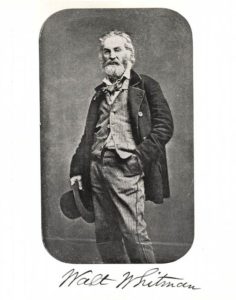
Walt Whitman (1819-1892) is known as “America’s Poet,” and for good reason. His poetry captured the spirit of a country that was growing, expanding, tearing down, and building up, while still carrying the weight of its past.

Whitman may also be known as the poet of America’s Civil War. He wrote some 71 poems about the conflict, both during the war and after. Many of these poems were incorporated into various editions of Leaves of Grass. The first edition of Leaves of Grass , published in 1855, held just 12 poems. He kept revising, editing, and adding until the final edition had more than 400 poems, including many of the ones he wrote about the Civil War.

Walt Whitman

Whitman was 41 when the war began. The Civil War began with a burst of enthusiasm on both sides (mirrored 53 years later in Europe with the outbreak of World War I). You can read that enthusiasm in Whitman’s early war poems, including “Drum Taps,” “Cavalry crossing a ford,” and “Song of the Banner at Day-Break.” These are almost poems of celebration and patriotism, and to read them today is to make one wonder, with the benefit of hindsight, whether Whitman really knew what he was writing about.

The substance and tenor of his Civil War poems changed in December 1862. His younger brother George had been wounded at the Battle of Fredericksburg that month, and Whitman headed south in a desperate search to find him. He did find him, and it turned out that George had only been lightly wounded.

He had been one of the fortunate ones. The battle had been horrific for both sides, but especially for the Union forces. Some 1,300 Union soldiers had been killed and more than 9,000 were wounded. Many of them ended up in hospitals in Washington, D.C., and it was there that Whitman traveled, after assuring himself that George was safe.

Whitman spent the next 11 years in Washington. He spent the war years visiting the wounded and dying in hospitals. It changed his view of the war completely. He could see the devastation and destruction firsthand. He watched young men and boys die. He wrote letters for the injured. His poems about the war became darker.

Some of the poems, including one of the most famous ones about the war, involve Abraham Lincoln. Whitman was a deep admirer of the president, and often saw him in his carriage on the streets of Washington. In many ways, Lincoln represented what was right about America, including his determination to preserve the Union. His assassination in April 1865 devastated Whitman. And it resulted in one of the best known and best loved poems in American history.

O Captain! My Captain! (1865)

O Captain! my Captain! our fearful trip is done,
The ship has weather’d every rack, the prize we sought is won,
The port is near, the bells I hear, the people all exulting,
While follow eyes the steady keel, the vessel grim and daring;
But O heart! heart! heart!
O the bleeding drops of red,
Where on the deck my Captain lies,
Fallen cold and dead.

O Captain! my Captain! rise up and hear the bells;
Rise up—for you the flag is flung—for you the bugle trills,
For you bouquets and ribbon’d wreaths—for you the shores a-crowding,
For you they call, the swaying mass, their eager faces turning;
Here Captain! dear father!
This arm beneath your head!
It is some dream that on the deck,
You’ve fallen cold and dead.

My Captain does not answer, his lips are pale and still,
My father does not feel my arm, he has no pulse nor will,
The ship is anchor’d safe and sound, its voyage closed and done,
From fearful trip the victor ship comes in with object won;
Exult O shores, and ring O bells!
But I with mournful tread,
Walk the deck my Captain lies,
Fallen cold and dead.

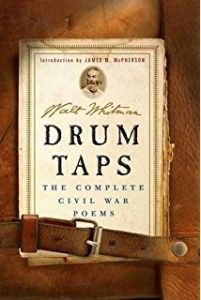
Drum Taps Walt WhitmanIn 2015, for the 150th anniversary of the end of the Civil War, a special edition of Whitman’s poems was published. Drum Taps: The Complete Civil War Poems includes all 71 poems, several short essays by Whitman, an introduction by Civil War historian James MacPherson, the original introduction to the Drum Taps collection published in 1915, and numerous photographs and artworks from the Civil War period. It’s a beautiful volume, itself an artifact of memory and remembrance.

Walt Whitman was the American everyman. His poetry celebrated the energy and drive associated with this relatively young nation, and it initially celebrated the onset of the Civil War. He embraced wild-eyed and enthusiastic patriotism and partisanship. But as the human deaths and suffering mounted, he could no longer ignore the costs. And so his poetry changed, and because it did, our understanding of the Civil War changed as well.

By
Source: tweetspeakpoetry.com

Visit us at First Edition Design Publishing
Grammar Rules: Fewer vs. Less

It’s a battle between words: fewer vs. less. Are they interchangeable? Do these words have different meanings? How can we use them correctly?

Many people don’t realize that these two words do not share the same meaning and therefore cannot be used interchangeably. As a result, both fewer and less are often used incorrectly.

The difference in meaning may be subtle, but it’s significant and remarkably easy to remember. Let’s see what Dictionary.com has to say about these two words:

fewer: adjective 1. of a smaller number: fewer words and more action.

less: adjective 1. smaller in size, amount, degree, etc.; not so large, great, or much: less money; less speed.

The grammar rules are clear; let me break them down for you.

Fewer vs. Less? Which is Correct?

Fewer and less respectively refer to a number of items or an amount of something. The easiest way to remember which of these adjectives to use in a given situation is this:

Fewer should be used when the items in question can be counted:

He has fewer books than his best friend has.

Less is used when the amount of something cannot be counted:

He has less interest in reading than his best friend has.

Note that books can be counted item by item. However, interest is not a thing that can be counted, although we can discuss how much of it someone has.

The basic difference here is countability. Use fewer for countable nouns like individuals, cars, and pens. Use less for uncountable nouns such as love, time, and respect.

Do note, however, that there are some sticky spots to watch out for when determining whether you should use fewer or less. For example, you might need less paper but you will need fewer sheets of paper. You have fewer pennies but less money. You want fewer chocolate bars but less candy.

Fewer or Less

Now you know how to tell the difference between fewer vs. less.

Do you have questions about correctly using fewer or less or any other word
pairs? Maybe you have something to add to this linguistic look at tricky adjectives. Share your thoughts by leaving a comment, and let’s discuss.

By Melissa Donovan
Source: writingforward.com

Visit us at First Edition Design Publishing
36 Tips for Writing Just About Anything

There’s a lot more to writing than typing words.

Writing well takes years of study, practice, and experience. It requires diligence, attention to detail, and dedication to the craft. Each project has a unique set of requirements and different types of writing have different rules.

For example, when we’re writing fiction, we have one set of concerns (character, plot, and setting, to name a few), and when we’re writing poetry, we have en entirely different set of issues to deal with.

Writing becomes natural with practice, but there are countless elements to deal with in any given project.

Tips for Writing

Here are thirty-six tips for writing just about anything. You can use this as a checklist when you start a new writing project and refer back to it whenever you get stuck. However, keep in mind that these tips don’t address the specifics of fiction, poetry, or nonfiction; they’re general tips for writing anything rather than specific tips for form and genre.

  1. Start with a plan. To reach a destination, you must know where you’re going. We can freewrite in our journals and jot down ideas on scraps of paper, but bigger projects will go more smoothly if there’s a plan in place.
  2. Be prepared. What do you need in order to complete this project? Set up a space and schedule time to work on the project. Gather any supplies, materials, and resources you’ll need.
  3. Eliminate distractions. It’s impossible to write if you’re interrupted or distracted every few minutes. Turn off your phone, close your browser, and let others know you’re working.
  4. Know your audience. This is one of the most common tips for writing, and while it’s not mandatory, it means less revising once you’ve completed your first draft. Are you turning in this piece to an instructor? Submitting it to a magazine? Self-publishing? Who will read it?
  5. Be familiar with your genre. Sci-fi fans don’t want to read a book written by someone who’s never read any sci-fi books. If you don’t know your genre, you can’t possibly know your audience. Besides, if you don’t read a particular genre, why would you want to write it?
  6. Choose a style guide. There’s one style guide for journalism, one for medical writing, and another for everything else. If you’re submitting this project to a target publication or an agent (or if you’re self-publishing it), make sure you know which style guide you should follow.
  7. Brainstorm and outline. Nothing ruins a good writing session like realizing you have no idea what you’re trying to accomplish. Take a few minutes to jot down all ideas related to the project, and then spend some time drawing up an outline. You don’t have to follow it to the letter, but it will come in handy as a kind of road map.
  8. Conduct credible research. Most writing projects require some research. Whether you need the population of a city or the distance to another planet, check your facts and make sure your logic lines up. Also, make sure your sources are credible.
  9. Take breaks and stay healthy. If you’re writing for long periods, take a ten-minute break every hour. If you’re working on a long-term project, make sure you stay healthy by eating nutritious foods and getting plenty of exercise. It might take time away from your writing, but it will also make your writing better.
  10. Don’t procrastinate, and reward yourself when you reach goals. Writing requires a tremendous amount of discipline. It’s easy to procrastinate if there isn’t a boss hovering over your shoulder and pointing at the clock. Establish milestones for your project and reward yourself whenever you reach one.
  11. Stay inspired. Passion ebbs and flows, and so do ideas. But you can keep yourself motivated by figuring out what inspires you and regularly imbibing in it. Maybe books on the craft of writing keep you excited about your project. Reading or watching movies in your genre might help you stay motivated and inspired.
  12. Think about voice. In writing, voice is the tone of a piece — the author’s unique style. A children’s book shouldn’t sound like it was written by a college professor, and an academic essay shouldn’t sound like it was written by a child. Is your narrative dry, witty, humorous, self-depreciating, or cocky?
  13. Complete a rough draft. While you’re drafting, turn off your inner editor and don’t scrutinize every word or sentence. Let the ideas flow and let the scenes and ideas move forward. You can fix it up later.
  14. Keep it simple: Use clear, concise writing. For some audiences, you might ignore this rule, but keep in mind that the simpler and more accessible your writing is, the more people it will be able to reach.
  15. Use the active voice. Passive voice sounds old-fashioned and outdated. Apply the subject + verb + object construction to your sentences so they are clear and direct.
  16. Use vivid language. Avoid boring, meaningless words (like nice and very) and opt instead for words with pizazz. For example, don’t write very good. Write excellent.
  17. Know when to show and when to tell. The most important parts of a story should be shown. Don’t tell the reader the character was tired if her exhaustion is critical to the plot; show her yawning.
  18. Choose the best possible words. Vivid language helps readers visualize the narrative. You should also choose the most precise, accurate words possible. Don’t say dark red if you mean burgandy.
  19. Let it sit. Once you complete a draft (and after every revision), let your project sit for a while. Short pieces can sit for a few hours. Longer pieces (like a book) may need to sit for a few weeks. Then you can revise with fresh eyes.
  20. Read what you’ve written. Before you revise, save a copy of your original draft and read through the whole thing once. If it’s a book-length manuscript, take notes about major changes that you need to make.
  21. Chop it up. You may need to move large portions of text around. The opening scene might work better at the end. Your thesis statement could be misplaced somewhere in the middle of your paper. Use cut-and-paste with total abandon. Tip: open TextEdit or NotePad in the background and use it to store large chunks of text that you need to move around.
  22. Delete the excess. You may need to delete entire scenes if they are not relevant to the plot. In fact, you may need to delete some of your favorite sentences and paragraphs. Get rid of anything that isn’t essential to the project’s thesis, objective, or plot.
  23. Insert. You may find gaping holes in your draft. Be prepared to add new sentences, paragraphs, even entire chapters.
  24. Rewrite. Depending on how messy your first draft is, you may need to do multiple rewrites. A lot of writers get worn out by this process, but remember — your writing improves with each revision. So dig in and keep rewriting until it feels right.
  25. Edit. Once you have the main structure and concept down, you can edit for detail. This is where you make your sentences clear and concise. Look for grammatical errors, awkward wording, and vague phrasing.
  26. Eliminate unnecessary words. If you can delete a word without affecting the meaning of a sentence, then delete it. Often, articles (a, an, the) can be deleted as can pronouns.
  27. Get rid of the clichés. Better yet, don’t use them in the first place. However, when you’re editing, do your best to weed them out.
  28. Look it up! If you’re not sure about a word’s meaning or spelling, look it up. If you’re not sure whether you’ve structured a sentence correctly or used proper punctuation, look it up. Do not rewrite to get around the rules. Just learn them.
  29. Review the transitions. Each paragraph focuses on a different idea, but each paragraph should also flow naturally from the paragraph that precedes it.
  30. Check for repetition. There’s good repetition and bad repetition. Using the same word or phrase over and over, unnecessarily, is bad. Repeating themes, symbols, and images can be powerful.
  31. Make sure the sentence structures are varied. Sentences should vary in length and structure. Don’t start every sentence with “I” (a common mistake that young and new writers make). Follow long sentences with shorter ones.
  32. Read for flow. After editing, read it again. Does everything make sense? Does the entire thing flow naturally and smoothly? If not, go back and edit some more.
  33. Format your document. Formatting can be done at the beginning or toward the end. I usually format at the beginning, except when writing a long project, like a book, in which case, I wait till the end. Tip: don’t just learn how to format documents; instead, become a master of formatting. For example, if you use Word, learn how to use the Styles feature. You should know how to set spacing, indentations, font face and size, how to align text, and apply bold and italics.
  34. Proofread. No matter how strong your writing skills are, typos will slip past you. When you proofread, you’re looking for basic mistakes and typographical errors. Recommendation: proofread each piece until you can’t find any typos at all.
  35. Get a second opinion. Even though you proofread until you couldn’t find any typos, there are probably a few lingering around. There’s a scientific reason for this, but it doesn’t matter. What does matter is that you get someone else to check your work. If necessary, hire a professional.
  36. Final polish. Ideally, you’ll read through it one last time (after letting it sit again) and you’ll find it squeaky clean. This means it’s done and ready to be served.

And that’s not all…

This list might seem overwhelming, but it covers only the basics. If you’re writing fiction, there is a whole other set of things you need to do. If you’re writing for business or academia, there are additional rules to follow. Remember, there are many considerations for each form and style of writing. That’s why knowing your form and genre is so important.

But these tips for writing are a good start. Not only will they help you write, they’ll help you write well.

Do you have any tips for writing to add to this list? Share any tips that writers can use by leaving a comment, and keep writing!

By Melissa Donovan
Source: writingforward.com

Visit us at First Edition Design Publishing

Do You Need a Creative Writing Degree to Succeed as a Writer?

Young and new writers often ask whether they need a creative writing degree in order to become an author or professional writer.

I’ve seen skilled and talented writers turn down opportunities or refuse to pursue their dreams because they feel their lack of a creative writing degree means they don’t have the credibility necessary to a career in writing.

Meanwhile, plenty of writers with no education, minimal writing skills, and scant experience in reading and writing are self-publishing, freelance writing, and offering copywriting services.

It’s an oft-asked question: Do you need a creative writing degree to succeed as a writer? Is it okay to write and publish a book if you don’t have a degree or if your degree is in something other than English or the language arts?

Before I go further, I should reveal that although I did earn a degree in creative writing, I don’t think a degree is necessary. But there is a caveat to my position on this issue: While I don’t think a degree is necessary, I certainly think it’s helpful. I also think that some writers will have a hard time succeeding without structured study and formal training whereas others are self-disciplined and motivated enough to educate themselves to the extent necessary to establish a successful writing career.

Do You Need a Creative Writing Degree?

First of all, a degree is not necessary to success in many fields, including writing. There are plenty of examples of individuals who became wildly successful and made meaningful contributions without any college degree whatsoever: Bill Gates, Abraham Lincoln, and Walt Disney, to name a few.

In the world of writing, the list of successful authors who did not obtain a degree (let alone a creative writing degree) is vast. Here is a small sampling: Louisa May Alcott, Maya Angelou, Jane Austen, William Blake, Ray Bradbury, Mark Twain (Samuel Clemens), Charles Dickens, Ernest Hemingway, Jack London, Edgar Allen Poe, Beatrix Potter, and JD Salinger.

So you obviously do not need a creative writing degree. After all, some of the greatest writers in history didn’t have a degree. Why should you?

A Creative Writing Degree is Not a Bad Idea

On the other hand, the degree definitely won’t hurt your chances. In fact, it will improve your chances. And if you struggle with writing or self-discipline, then the process of earning a degree will be of great benefit to you.

A college education might indeed be necessary for a particular career, such as a career in law or medicine. In fields of study where a degree is not a requirement, it often prepares you for the work ahead by teaching you specific skills and techniques and by forcing you to become knowledgeable about your field.

However, there is an even greater value in the the process of earning a degree. You become knowledgeable and educated. You learn how to learn, how to work without close supervision, and you are exposed to the wisdom of your instructors as well as the enthusiasm and support of your peers. College is a great environment for development at any age or in any field.

Earning a degree is also a testament to your drive and ability to complete a goal without any kind of immediate reward or gratification. College is not easy. It’s far easier to get a full-time job and buy lots of cool stuff. It’s more fun to spend your nights and weekends hanging out with your friends than staying in and studying. A college degree is, in many ways, a symbol representing your capacity to set out and accomplish a long-term goal.

Know Yourself

If you possess strong writing skills and are somewhat of an autodidact (a person who is self-taught), then you may not need a degree in creative writing. For some such people, a degree is completely unnecessary. On the other hand, if your writing is weak or if you need guidance and would appreciate the help of instructors and peers, maybe you do need a creative writing degree.

If you’re planning on going to college simply because you want to earn a degree and you hope to be a writer someday, you might as well get your degree in creative writing since that’s what you’re passionate about. On the other hand, if you hope to write biographies of famous actors and directors and you already write well, you might be better off studying film (and possibly minoring in creative writing).

You may be the kind of person who needs the validation of a degree. Maybe you’re an excellent writer but you’d feel better putting your work out there if you could back it up (even in your own mind) with that piece of paper that says you have some expertise in this area. Or you might be the kind of person who is confident enough to plunge into the career of a writer without any such validation.

You might find that time and money are barriers to earning a degree. If you have responsibilities that require you to work full time and if you’re raising a family, obtaining a degree might not be in the cards, either in terms of time or money. You might be better off focusing what little free time you have on reading and writing. But there are other options if you’ve got your heart set on a creative writing degree: look for accredited online colleges, find schools that offer night and weekend classes, and open yourself to the idea that you can take ten years rather than four years to complete your higher education.

Finally, some people have a desire to get a degree but they feel they’re too old. I personally think that’s a bunch of hogwash. You’re never too old to learn or obtain any kind of education. When I was just out of high school, I attended a college with many students who were middle-aged and older. I had tremendous respect for them and they brought a lot of wisdom to our classes, which balanced out the youthful inexperience of my other, much younger classmates. I don’t care if you’re eighteen, forty-two, or seventy, if you have a hankering to do something, go do it!

Making Tough Decisions

Ultimately, the decision rests with each of us. Do you need a creative writing degree? Only you can answer that question.

If you’re still not sure, then check with a local school (a community college is a good place to start) and make an appointment with an adviser in the English Department. If you’re in high school, get in touch with your school’s career counselor. Sometimes, these professionals can help you evaluate your own needs to determine which is the best course of action for you. But in the end, make sure whatever decision you make about your education is one that you’ve carefully weighed and are comfortable with.

And whether you earn a degree in creative writing or not, keep writing!

By Melissa Donovan

Sources:

Most Successful People Who Never Went to College
Famous Autodidacts
 

Visit us at First Edition Design Publishing